.png?width=201&height=201&name=Maintenance%20(Videoannonce%20%E2%80%93%20LinkedIn).png)

8 Pilot Training Metrics Flight Schools Should Track
 Amalie Rasmussen
·
4 minute read
Amalie Rasmussen
·
4 minute read
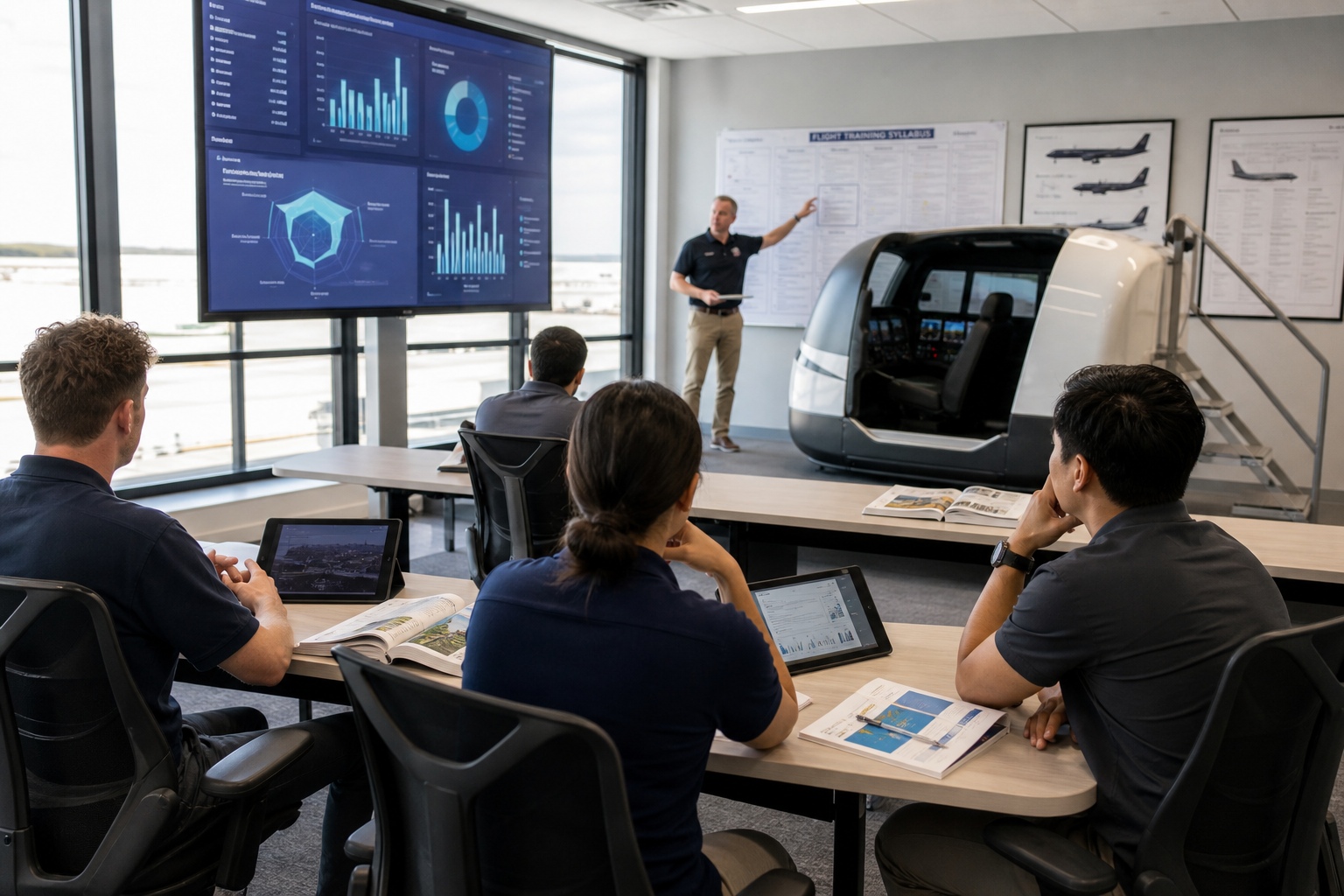
The best flight schools don't just track completed lessons—they measure student progress, competency, and training efficiency. Here's which metrics matter most.
Quick Answer
Effective pilot training tracking goes beyond recording flight hours. Modern flight schools monitor competency development, lesson completion, instructor assessments, training progress, and operational efficiency using flight training software that centralizes student records and performance data.
Why Pilot Training Tracking Matters
Every student progresses through flight training differently.
Some quickly master new competencies, while others require additional practice before moving forward. Without structured progress tracking, instructors and training managers may struggle to identify learning gaps, maintain consistency, or provide timely support.
Modern aviation training management focuses on measuring progress—not just documenting completed flights.
By tracking the right metrics, flight schools can improve instruction, standardize evaluations, and provide students with a clearer learning path.
What Is Pilot Training Tracking?
Pilot training tracking is the process of monitoring a student's development throughout a training program.
It combines operational data, instructor assessments, and lesson outcomes to answer questions such as:
- Is the student progressing as expected?
- Which competencies have been achieved?
- Where does the student need additional practice?
- What training should come next?
The goal is to provide instructors and training managers with a complete picture of every student's progress.
1. Training Progress
The most fundamental metric is overall training progress.
Rather than only recording completed lessons, schools should monitor:
- Completed flight lessons
- Completed ground training
- Remaining syllabus items
- Overall program completion
Tracking progress visually helps instructors and students stay aligned throughout training.
Why it matters: It provides a clear overview of where each student stands within the training program.
2. Competency Achievement
Competency-based training focuses on demonstrated ability rather than simply accumulating hours.
Schools should monitor competencies such as:
- Aircraft handling
- Communication
- Decision-making
- Navigation
- Situational awareness
- Safety procedures
Why it matters: Competencies provide a more meaningful measure of pilot readiness than completed lessons alone.
3. Flight Hours Tracking
Flight hours remain an important regulatory and operational metric.
Schools should monitor:
- Total flight hours
- Dual instruction hours
- Solo hours
- Simulator hours
- Cross-country hours
- Night hours
- Instrument hours
Why it matters: Flight hours remain essential for meeting training requirements and certification standards.
4. Lesson Assessment Scores
Every lesson should end with structured instructor feedback.
Lesson assessments may include:
- Overall performance
- Learning objectives achieved
- Areas requiring improvement
- Instructor observations
- Recommendations for future training
Why it matters: Standardized assessments improve consistency between instructors and support more objective evaluations.
5. Student Progress Against the Syllabus
A syllabus provides the roadmap for training.
Tracking student progress against the syllabus helps instructors identify:
- Completed subjects
- Outstanding lessons
- Delayed progression
- Training bottlenecks
Why it matters: Students remain focused on learning objectives instead of simply accumulating hours.
6. Training Delays
Operational delays often affect student progression.
Useful metrics include:
- Lessons postponed
- Weather cancellations
- Instructor availability
- Aircraft availability
- Average time between lessons
Why it matters: Frequent delays can slow learning and reduce training efficiency.
7. Instructor Evaluation Consistency
Students benefit when instructors evaluate performance consistently.
Training managers should monitor:
- Assessment consistency
- Lesson documentation quality
- Feedback completeness
- Evaluation trends
Why it matters: Consistent evaluations create a fairer and more reliable training experience.
8. Training Completion Rate
One of the most valuable operational metrics is completion rate.
Schools should monitor:
- Students completing on schedule
- Average time to completion
- Program completion percentages
- Student retention
Why it matters: Completion rates help leadership understand the effectiveness of both training and operational workflows.
Traditional Tracking vs Digital Pilot Training Tracking
| Manual Tracking | Digital Pilot Training Tracking |
|---|---|
| Paper lesson records | Digital lesson assessments |
| Spreadsheet hour logs | Automatic flight hours tracking |
| Separate instructor notes | Standardized evaluations |
| Manual syllabus reviews | Live progress tracking |
| Limited reporting | Real-time dashboards |
| Difficult trend analysis | Performance insights |
What Tools Are Used to Track Pilot Training Progress?
Modern flight schools increasingly rely on flight training software to replace paper logbooks and spreadsheets.
These systems typically include:
- Digital training records
- Lesson assessments
- Flight hours tracking
- Competency monitoring
- Student progress dashboards
- Instructor evaluations
- Reporting tools
- Compliance documentation
Instead of manually updating multiple records, instructors can document training once while administrators gain real-time visibility into student progression.
Flight Training Software Comparison
Several platforms support pilot training tracking.
| Platform | Best For | Key Capabilities |
|---|---|---|
| FlightLogger | Connected flight school operations | Lesson assessments, competency tracking, digital training records, scheduling, compliance, reporting |
| Flight Schedule Pro | Scheduling and training management | Flight scheduling, student records, reporting |
| Aviatize | Growing flight schools | Student management and operational workflows |
| Flight Circle | Smaller flight schools | Scheduling and student administration |
| Talon Systems | Larger organizations | Training administration and compliance |
While each platform helps digitize training records, organizations looking to connect student progress with scheduling, compliance, and operational workflows often benefit from an integrated platform rather than a standalone tracking solution.
Best Practices for Pilot Progress Monitoring
To improve pilot progress monitoring, flight schools should:
- Standardize lesson assessments
- Track competencies instead of hours alone
- Keep training records digital
- Monitor syllabus progression
- Review operational delays
- Use shared instructor evaluation criteria
- Analyze completion rates regularly
- Give instructors and students real-time visibility into progress
Together, these practices create a more consistent and data-driven training environment.
Frequently Asked Questions
What tools are used to track pilot training progress?
Most modern flight schools use flight training software that combines digital training records, lesson assessments, competency tracking, flight hours logging, student progress monitoring, and reporting in one platform.
What is pilot training tracking?
Pilot training tracking is the process of monitoring student progress throughout a training program using lesson records, competency assessments, flight hours, instructor evaluations, and syllabus progression.
Why is competency tracking important?
Competency tracking measures how well students perform specific skills rather than simply recording completed lessons or accumulated flight hours, providing a more complete picture of training readiness.
What metrics should flight schools monitor?
Flight schools should monitor training progress, competency achievement, flight hours, lesson assessments, syllabus completion, operational delays, instructor evaluation consistency, and program completion rates.
Measure More Than Flight Hours
Successful pilot training isn't measured by flight hours alone.
By tracking competencies, lesson outcomes, progress against the syllabus, and operational performance, flight schools gain the insight needed to improve instruction and help students succeed.
FlightLogger brings these metrics together in one connected Flight School Operating System, combining scheduling, digital training records, lesson assessments, compliance, and operational reporting to give instructors and training managers a complete view of every student's journey.