.png?width=201&height=201&name=Maintenance%20(Videoannonce%20%E2%80%93%20LinkedIn).png)

How to Manage Flight School Operations in 2026

Running a flight school in 2026 means coordinating dozens of moving parts every single day. Students are progressing through training. Aircraft are flying. Instructors are teaching. Maintenance is getting completed. And somewhere in the middle of all this, you're trying to keep operations running smoothly.
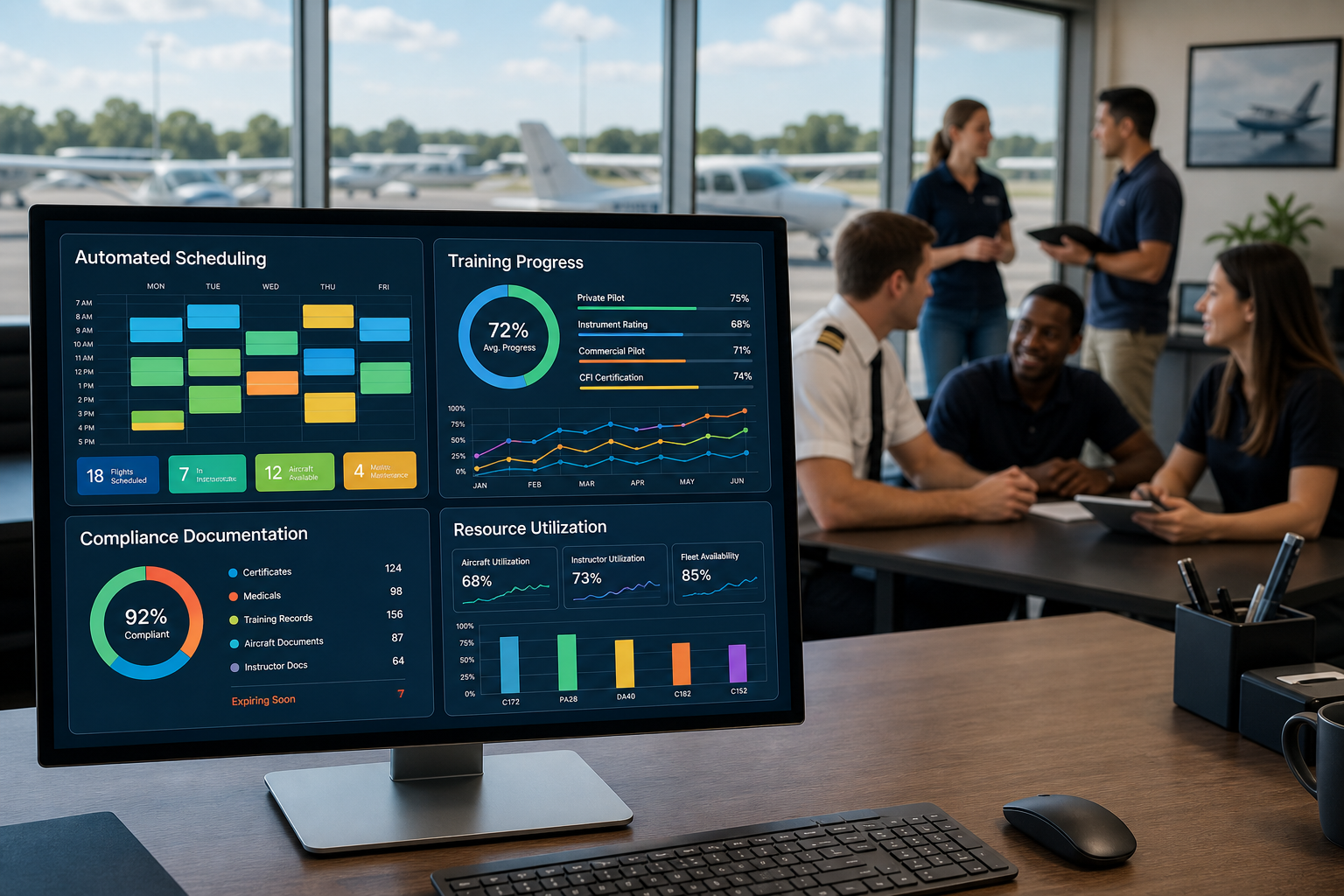
FlightLogger helps flight schools bring scheduling, compliance, maintenance, and student tracking into one connected system. This guide walks you through every aspect of modern flight school operations management, from the challenges you're facing to the workflows that keep training programs on track.
By the end, you'll understand how to structure your operation for better visibility, stronger compliance, and improved student outcomes.
Key Takeaways: Flight School Operations Management
- Flight school operations management connects scheduling, compliance, maintenance, and student progress tracking into unified workflows.
- Most operational breakdowns stem from disconnected systems that create visibility gaps and manual workarounds.
- Regulatory compliance becomes predictable when documentation is automated and audit-ready at all times.
- FlightLogger centralizes training operations so flight schools can scale without losing control of quality or compliance.
- Successful operations management requires aligning resources, instructors, aircraft, and training programs in real time.
What Is Flight School Operations Management?
Flight school operations management is the practice of coordinating all the interconnected activities that keep a training organization running. This includes scheduling lessons, tracking student progression, managing aircraft maintenance, ensuring regulatory compliance, and overseeing instructor assignments.
At smaller schools, these tasks might be handled by a handful of people wearing multiple hats. At larger academies operating across multiple locations, operations management becomes a dedicated function requiring structured processes and specialized software.
The goal isn't just keeping things moving, it's ensuring that every flight hour, every lesson, and every maintenance action contributes to safe, compliant, and efficient training delivery.
Why Flight School Operations Become Difficult to Manage
Most flight schools don't set out to build complicated operations. Complexity accumulates over time as the organization grows and new requirements emerge.
Disconnected Systems Create Visibility Gaps
When scheduling lives in one system, maintenance records in another, and student progress tracking in a third, you lose the ability to see how decisions in one area affect others. An aircraft going down for maintenance shouldn't surprise the scheduling team. A student falling behind shouldn't be discovered weeks after it starts.
These visibility gaps force staff to spend time chasing information instead of making decisions.
Manual Workflows Don't Scale
What works with 20 students often breaks down with 100. Manual coordination methods - phone calls, emails, messaging apps, physical whiteboards - require more effort as volume increases. At a certain point, the administrative overhead starts limiting how much training you can deliver.
Regulatory Requirements Keep Expanding
Aviation authorities around the world continue to increase documentation and reporting requirements. EASA, FAA, DGCA, and other regulatory bodies expect flight schools to maintain audit-ready records across training, maintenance, and personnel qualifications. Meeting these standards manually becomes increasingly difficult as your operation scales.
The Core Components of Flight School Operations
Effective operations management requires getting several interconnected systems working together. Each component affects the others, which is why integrated approaches outperform isolated point solutions.
Scheduling and Resource Allocation
Scheduling sits at the center of flight school operations. Every lesson requires matching an available student with a qualified instructor and an airworthy aircraft at a time that works for everyone.
When severe weather forces last-minute cancellations, or when instructor availability changes unexpectedly, the ability to rapidly reschedule without creating conflicts determines whether training stays on track or falls behind.
FlightLogger gives flight schools real-time visibility into instructor availability, aircraft readiness, and regional resource constraints—making it possible to reschedule dynamically without manual coordination overhead.
Student Progression Tracking
Knowing where each student stands in their training program is essential for both operational planning and training quality. Students who fall behind need intervention before small delays become major setbacks.
Effective progression tracking shows not just completed flight hours, but competency achievements, ground school progress, exam results, and upcoming milestones. This visibility allows training managers to forecast completion dates accurately and identify students who need additional support.
Maintenance Coordination
Aircraft availability depends on keeping maintenance schedules synchronized with training blocks. An aircraft due for a 100-hour inspection shouldn't be scheduled for lessons that would push it past the limit.
Integrated maintenance management prevents unplanned groundings by syncing maintenance requirements with the training schedule. When maintenance needs are visible to everyone involved in scheduling, you avoid the last-minute surprises that disrupt training flow.
Instructor Management
Instructors are your most valuable resource—and often your scarcest. Managing their schedules, qualifications, currency requirements, and teaching loads requires visibility that most standalone scheduling tools don't offer.
Effective instructor management means knowing who is qualified to teach what, who is approaching currency expirations, and how teaching loads are distributed across your team. This prevents both instructor burnout and situations where training stalls because no qualified instructor is available.
Compliance and Documentation
Every training record, every maintenance action, and every instructor qualification must be documented in ways that satisfy regulatory requirements. The challenge isn't just creating these records—it's organizing them so they're accessible during audits without requiring days of preparation.
Audit-ready record keeping means documentation is structured, complete, and verifiable at any moment, not just after a scramble to pull records together.
How to Structure Your Flight School Operations
Moving from reactive operations to structured management requires thinking about processes, not just tools. Here's how to approach each operational area systematically.
Step 1: Centralize All Your Training Data for Real-Time Visibility
The first step toward operational control is bringing your data into a single system where everyone can access what they need. When scheduling, maintenance, student records, and compliance documentation live in one place, you eliminate the information gaps that cause most operational problems.
This doesn't mean forcing everything into a generic database. It means using a purpose-built system designed for flight training workflows—one that understands the relationships between students, instructors, aircraft, courses, and regulatory requirements.
Step 2: Automate Routine Coordination Tasks
Much of the administrative work in flight schools involves communicating schedule changes, sending reminders, and updating records. These tasks are necessary but don't require human judgment.
Automated notifications reduce no-shows during high-risk periods like holidays. Automatic record updates eliminate the risk of documentation falling behind actual training delivery. The goal is freeing your staff to focus on decisions that require their expertise.
Step 3: Build Compliance Into Daily Operations
Compliance shouldn't be something you scramble to achieve before an audit. It should be a natural outcome of how you operate every day.
This means structuring your processes so that required documentation is captured automatically as training happens. Student logbooks, instructor flight records, aircraft maintenance logs, and training sign-offs should all be generated as part of normal workflow - not reconstructed later from scattered notes and memories.
Step 4: Create Clear Workflows for Common Scenarios
Every flight school deals with similar operational scenarios: weather cancellations, aircraft going down for maintenance, instructor absences, students who stop showing up. Having documented procedures for these situations reduces decision time and ensures consistency.
Standard operating procedures shouldn't just exist in a manual somewhere. They should be built into how your systems work, guiding staff through the right steps automatically.
Step 5: Establish Metrics and Review Cycles
You can't improve what you don't measure. Key operational metrics include aircraft utilization rates, on-time lesson starts, student completion rates, instructor teaching loads, and maintenance turnaround times.
Regular review cycles—weekly operational meetings, monthly performance reviews, quarterly strategic assessments—keep these metrics visible and create accountability for improvement.
Common Flight Training Challenges and How to Address Them
Operational challenges in flight training tend to cluster around a few recurring themes. Understanding these patterns helps you recognize problems early and address root causes rather than symptoms.
Challenge: Students Fall Behind Without Warning
By the time a student's lack of progress becomes obvious, they may already be weeks or months behind schedule. The solution is proactive monitoring that flags inactivity early.
FlightLogger's early inactivity detection identifies students who stop progressing before small delays compound into major problems. This gives training managers time to intervene—whether that means reaching out to the student, adjusting their schedule, or providing additional support.
Challenge: Scheduling Conflicts Disrupt Training Flow
When scheduling conflicts happen frequently, the problem usually isn't careless staff—it's limited visibility. The person making a booking can't see all the constraints that should inform their decision.
Real-time scheduling with integrated availability checks prevents conflicts before they happen. When the system knows which aircraft are airworthy, which instructors are qualified and available, and which students have prerequisites completed, it can guide schedulers toward valid options automatically.
Challenge: Audits Create Operational Disruption
Preparing for regulatory audits shouldn't require pulling staff away from their regular duties for days or weeks. If it does, that's a sign that your documentation processes aren't working well during normal operations.
Organizations using FlightLogger report zero-finding authority audits due to automated documentation and centralized records. Audit readiness becomes a steady state rather than a periodic scramble.
Challenge: Scaling Creates New Problems
Flight schools that try to scale using the same processes that worked when they were smaller often find that what used to work starts breaking down. More students, more aircraft, more instructors, and more locations all multiply complexity.
The solution is building operational infrastructure that's designed to scale from the beginning. This means standardized processes, centralized systems, and clear accountability structures that don't depend on any single person's institutional knowledge.
How Flight School Management Systems Support Operations
Modern flight school management systems do more than digitize existing workflows. The best ones are designed specifically for aviation training, reflecting the unique requirements of flight schools rather than forcing generic business software into aviation contexts.
Purpose-Built vs. Adapted Software
General-purpose scheduling or business management software can be adapted to flight school use, but this approach typically requires significant customization and workarounds. Purpose-built systems like FlightLogger already understand flight training concepts—courses, syllabi, competencies, regulatory frameworks—without requiring you to build that foundation yourself.
This difference matters most when you're trying to solve operational problems, not just digitize existing manual processes.
Integration Across Operational Areas
The value of an integrated system comes from connections between different operational areas. When your scheduling system knows about maintenance requirements, curriculum prerequisites, and instructor qualifications, it can prevent problems that would otherwise require manual oversight to catch.
FlightLogger centralizes scheduling, maintenance coordination, course progress, and compliance processes into a single system. This integration eliminates the coordination overhead that comes from managing separate tools.
Cloud Access for Distributed Operations
Flight training operations don't happen in a single office. Instructors are on the flight line. Students are at home preparing for lessons. Managers might be at different locations. Cloud technology enables access to the entire organization anytime, anywhere—without requiring VPNs or local server maintenance.
Compliance in Modern Flight Training Operations
Regulatory compliance isn't optional in aviation. Understanding how to build compliant operations from the ground up saves time, reduces risk, and makes audits routine rather than stressful.
Understanding Your Regulatory Environment
Different flight schools operate under different regulatory frameworks depending on location and the types of training offered. EASA rules apply in Europe, FAA regulations in the United States, and various national authorities elsewhere. Some schools operate under multiple frameworks simultaneously.
Your operations management approach needs to account for the specific requirements of your regulatory environment—not generic compliance advice that may not apply to your situation.
Documentation That Satisfies Regulators
Aviation regulators expect specific types of documentation maintained in specific ways. Training records must show what was taught, when, by whom, and how competency was assessed. Maintenance records must demonstrate airworthiness at all times.
Meeting these requirements manually is possible but labor-intensive. Automated documentation capture, built into normal training workflows, ensures records are complete and accurate without requiring extra administrative effort.
Maintaining Currency and Qualifications
Both students and instructors have currency requirements that affect what training activities they can participate in. Medical certificates, flight reviews, instructor ratings, and proficiency checks all have expiration dates that must be tracked.
Effective compliance management includes automatic tracking of these requirements with advance warnings before expirations cause operational disruptions.
Maintenance Management in Flight Training Operations
Aircraft maintenance directly affects training capacity. When maintenance isn't coordinated with training schedules, aircraft availability becomes unpredictable and training continuity suffers.
Preventive vs. Reactive Maintenance
Preventive maintenance scheduled in advance minimizes unplanned downtime. When you know an aircraft will be unavailable for a 100-hour inspection next week, you can plan training around that gap. When aircraft go down unexpectedly, everyone scrambles to reschedule.
Integrated maintenance management that's connected to your scheduling system makes preventive maintenance visible to everyone who needs to plan around it.
Coordinating Maintenance with Training Schedules
The best time to do maintenance is when it causes the least disruption to training. This requires visibility into both maintenance requirements and training demand.
When maintenance staff can see training schedules and training coordinators can see maintenance requirements, they can work together to minimize impact on operations.
Maintenance Documentation for Compliance
Maintenance records are a key focus area for regulatory audits. Every inspection, repair, and component change must be documented in ways that demonstrate ongoing airworthiness.
Digital maintenance logs that integrate with training records create a complete picture of each aircraft's status and history—accessible whenever regulators need to see it.
Building a Culture of Operational Excellence
Technology and processes matter, but flight school operations ultimately depend on people. Building a culture where everyone understands and supports operational goals makes everything else work better.
Training Your Team on Operational Processes
Staff can only follow processes they understand. Onboarding new employees, training existing staff on new systems, and reinforcing operational standards through regular communication all contribute to consistent execution.
When people understand not just what to do but why it matters, they're more likely to follow procedures even when no one is watching.
Creating Feedback Loops
The people doing the work often see problems and opportunities that management misses. Creating channels for feedback—and demonstrating that feedback leads to action—encourages the kind of bottom-up improvement that makes operations better over time.
Recognizing and Addressing Problems Early
Small operational problems tend to become big ones if ignored. A culture that encourages reporting issues—without blame—helps identify problems while they're still easy to fix.
Measuring Flight School Operational Performance
Operational improvement requires measurement. The right metrics provide visibility into how well your operation is performing and where improvement efforts should focus.
Key Metrics for Flight School Operations
Every flight school is different, but certain metrics apply broadly:
- Aircraft utilization rate: What percentage of available flight hours are being used for training?
- On-time lesson start rate: How often do scheduled lessons begin as planned?
- Student completion rate: What percentage of students complete their training programs?
- Time to completion: How long does it take students to finish their programs?
- No-show rate: How often do scheduled lessons not happen due to student or instructor absence?
Using Metrics to Drive Improvement
Metrics are only useful if they inform action. Establishing baseline measurements, setting improvement targets, and reviewing progress regularly creates accountability for operational performance.
When metrics show a problem—declining completion rates, increasing no-shows, falling aircraft utilization—they provide a starting point for investigating root causes and testing solutions.
Scaling Flight School Operations Across Multiple Locations
Multi-location flight schools face additional operational challenges. Maintaining consistency, sharing resources efficiently, and keeping visibility across campuses all become harder as you add locations.
Standardizing Processes Across Locations
Different locations naturally develop different ways of doing things. Some variation is fine, but too much inconsistency creates problems—especially when students or instructors move between locations.
Documented standard operating procedures, supported by systems that enforce consistency, help maintain quality and compliance across your entire organization.
Centralizing Oversight While Maintaining Local Control
Location managers need autonomy to make day-to-day decisions. Central management needs visibility into what's happening everywhere. Finding the right balance requires clear role definitions and systems that support both local operations and centralized reporting.
Sharing Resources Across Locations
Aircraft, instructors, and even students sometimes need to move between locations. Managing these movements requires coordination that's only possible when all locations are working in the same system with the same data.
Future Trends in Flight School Operations Management
Flight training is evolving, and operational approaches need to evolve with it. Several trends are shaping how leading flight schools think about operations management.
Competency-Based Training and Assessment
ICAO and various national authorities are moving toward competency-based training and assessment (CBTA) models. These approaches focus on demonstrated competencies rather than fixed hour requirements, creating new challenges for tracking and documentation.
FlightLogger supports competency-based training and assessment, helping flight schools adapt to these evolving regulatory frameworks.
Data-Driven Decision Making
Flight schools are collecting more data than ever about their operations. The challenge is turning that data into actionable insights that improve training quality and operational efficiency.
Advanced reporting and analytics capabilities help training managers move from intuition-based decisions to data-informed ones.
Integration with Broader Aviation Ecosystems
Flight schools don't operate in isolation. They connect with regulators, airlines, maintenance providers, and other stakeholders. Systems that can integrate with these external partners—sharing data where appropriate while maintaining security—become increasingly valuable.
In Conclusion: Getting Started with Better Flight School Operations
Managing flight school operations effectively isn't about finding a single solution to a single problem. It's about building connected systems and processes that work together to support safe, compliant, high-quality training delivery.
The schools that get this right don't just survive—they grow. They attract more students because their training is consistent and effective. They retain instructors because operations run smoothly. They pass audits easily because compliance is built into how they work.
If you're ready to see how structured operations management works in practice, request a walkthrough of FlightLogger. Flight schools never sleep—and neither does your operations management system.
FAQs About Flight School Operations Management
What is flight school operations management?
Flight school operations management is the coordination of scheduling, maintenance, compliance, instructor assignments, and student progression. It involves connecting all the activities that keep a training organization running safely and efficiently.
Good operations management ensures that aircraft, instructors, and students come together at the right times with proper documentation.
How does FlightLogger help manage flight school operations?
FlightLogger centralizes scheduling, maintenance coordination, student tracking, and compliance documentation in one platform. This integration eliminates the visibility gaps that cause most operational problems in flight training organizations.
The system is built specifically for aviation training, so it understands flight school workflows without requiring custom configuration.
What are the biggest challenges in flight training operations?
The most common challenges include scheduling conflicts, students falling behind without warning, maintenance disrupting training schedules, and preparing for regulatory audits. Most of these problems stem from disconnected systems that create information gaps.
Addressing these challenges requires both better processes and integrated technology.
How can flight schools improve compliance with regulations?
Build compliance into daily operations rather than treating it as separate audit preparation. This means capturing required documentation automatically as training happens and maintaining records that are audit-ready at all times.
FlightLogger's automated documentation and centralized records help flight schools achieve zero-finding authority audits.
What metrics should flight schools track for operations?
Key metrics include aircraft utilization rates, on-time lesson starts, student completion rates, time to completion, and no-show rates. These measurements reveal how well your operation is performing and highlight areas needing improvement.
Regular review of these metrics creates accountability and drives ongoing operational improvement.
How do flight schools scale operations across multiple locations?
Multi-location growth requires standardized processes, centralized systems, and clear accountability structures. FlightLogger supports flight schools operating across multiple campuses by keeping all locations in the same system with consistent workflows and reporting.
This approach maintains quality and compliance as you grow.