
.png?width=201&height=201&name=Maintenance%20(Videoannonce%20%E2%80%93%20LinkedIn).png)

One System for Scheduling, Training Progress, and Aircraft Readiness
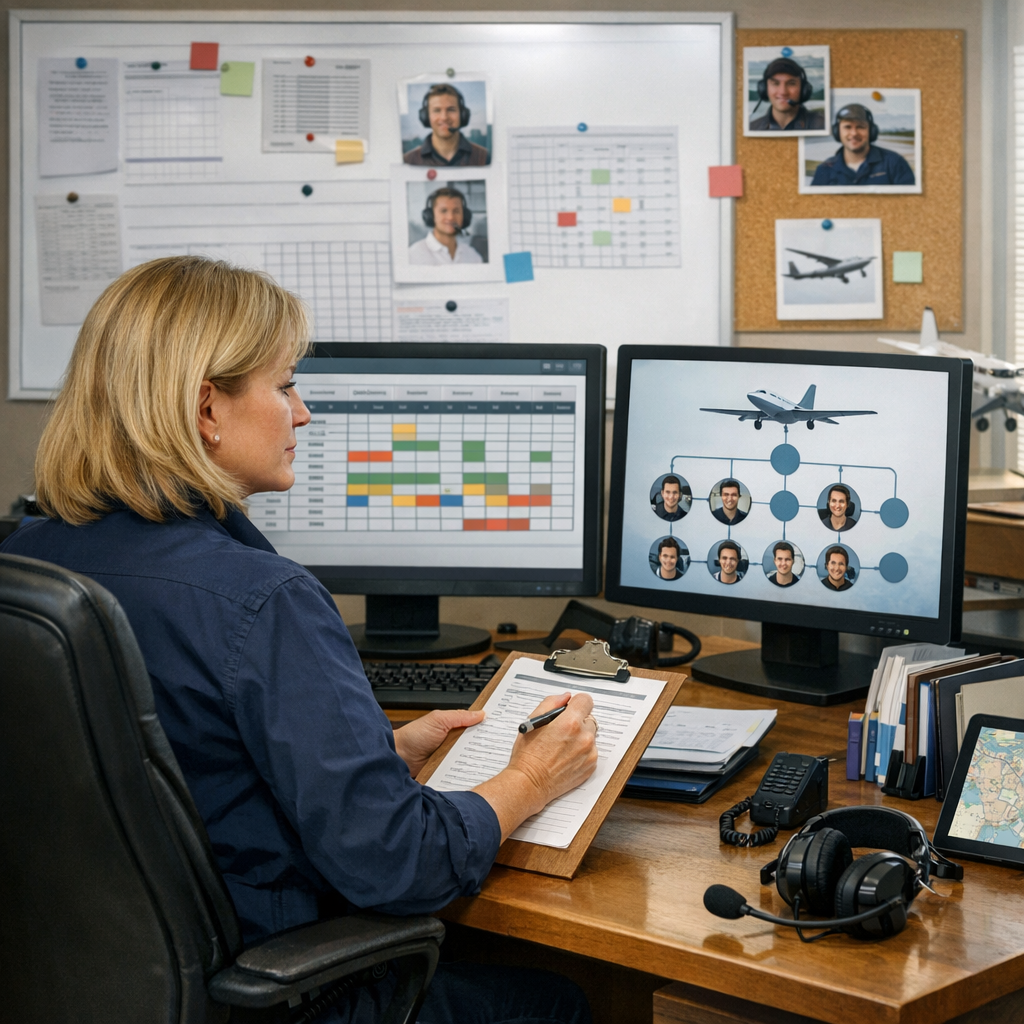
Running a flight school requires constant coordination between students, instructors, aircraft, maintenance teams, and administrators.
Many schools still manage these activities through separate systems for scheduling, training records, maintenance tracking, and compliance documentation. While each tool may solve a specific problem, disconnected systems often create operational gaps, duplicate work, and limited visibility.
FlightLogger helps flight schools connect scheduling, student progress, aircraft readiness, and operational oversight in one platform.
The result is a more efficient training operation with better visibility, fewer manual processes, and stronger coordination across teams.
Why Connected Operations Matter
Every flight lesson depends on multiple resources working together.
For a training event to happen successfully:
- The student must be scheduled
- The instructor must be available
- The aircraft must be available
- The aircraft must be airworthy
- Training requirements must be met
- Documentation must be up to date
When these workflows are managed separately, delays and inefficiencies become more common.
Connected flight school operations help ensure that everyone works from the same information.
How Do Flight Schools Manage Scheduling and Training in One System?
Modern flight schools increasingly use integrated flight school management software that combines scheduling, student progress tracking, aircraft management, and operational oversight in a single platform.
Rather than switching between multiple systems, instructors and administrators can manage:
- Student bookings
- Instructor assignments
- Aircraft scheduling
- Training records
- Progress tracking
- Compliance documentation
from one centralized location.
This reduces administrative work while improving operational visibility.
One Platform for Flight School Operations
FlightLogger brings together the workflows required to manage day-to-day flight training activities.
Flight Training Scheduling
Coordinate:
- Aircraft scheduling
- Instructor scheduling
- Student bookings
- Simulator resources
- Training events
Scheduling becomes more efficient when resource availability is visible across the organization.
Student Progress Tracking
Monitor:
- Training milestones
- Lesson completion
- Instructor evaluations
- Student records
- Certification readiness
Instructors and administrators always have access to current training information.
Aircraft Readiness and Availability
Scheduling only works when aircraft are available and ready for training.
FlightLogger helps schools:
- Monitor aircraft status
- Coordinate maintenance activities
- Improve aircraft utilization
- Reduce scheduling disruptions
This helps connect operational planning with fleet readiness.
Compliance and Documentation
Maintain visibility into:
- Training records
- Student documentation
- Instructor records
- Operational reporting
- Audit preparation
By keeping records connected to operational workflows, schools can maintain greater consistency and oversight.
Why Disconnected Systems Create Operational Challenges
Flight schools often start with separate systems for scheduling, training management, and maintenance tracking.
As operations grow, this can create challenges such as:
- Duplicate data entry
- Limited visibility into student progress
- Scheduling conflicts
- Inconsistent records
- Higher administrative workload
- Delayed operational decisions
A connected training management system helps eliminate these operational silos.
Why FlightLogger Is Easy to Implement
Many flight schools delay operational improvements because they fear a complicated software rollout.
FlightLogger helps simplify implementation by bringing key operational workflows together in one system.
Instead of deploying multiple tools for scheduling, training management, maintenance, and compliance, schools can centralize operations on a single platform.
Benefits include:
- Faster user adoption
- Fewer disconnected systems
- Reduced administrative complexity
- Easier staff training
- Simplified operational workflows
The goal is not simply to add software. The goal is to simplify operations.
FlightLogger vs Separate Scheduling and Training Systems
| Separate Systems | FlightLogger |
|---|---|
| Scheduling and training managed independently | Scheduling and training connected |
| Multiple sources of information | Single source of truth |
| Manual coordination between departments | Shared operational visibility |
| Higher administrative workload | Streamlined workflows |
| Limited visibility into aircraft readiness | Connected operational oversight |
| Increased risk of scheduling conflicts | Better resource coordination |
Benefits of Connected Flight School Operations
Better Operational Visibility
Understand what is happening across students, instructors, aircraft, and training activities.
Improved Resource Coordination
Align scheduling decisions with training requirements and aircraft readiness.
Reduced Administrative Work
Minimize duplicate data entry and manual updates.
Stronger Training Oversight
Track student progress and training milestones more effectively.
Better Decision Making
Access operational information quickly and accurately.
Frequently Asked Questions
How do flight schools manage scheduling and training in one system?
Many flight schools use integrated flight school management software that combines scheduling, student progress tracking, aircraft management, and compliance documentation in a single platform.
What is a connected flight school operation?
A connected flight school operation links scheduling, training management, aircraft readiness, maintenance visibility, and compliance records through one centralized system.
Why is it important to connect scheduling and training management?
Scheduling decisions depend on student progress, instructor availability, and aircraft readiness. Connected systems provide better visibility and help reduce operational inefficiencies.
How can flight schools improve operational visibility?
Flight schools improve operational visibility by centralizing scheduling, training records, aircraft status, and compliance documentation in one platform.
How does FlightLogger support connected operations?
FlightLogger connects scheduling, student progress tracking, aircraft readiness, maintenance coordination, and operational oversight to help flight schools manage training activities more efficiently.
How Do Flight Schools Manage Scheduling and Training in One System?
Flight schools manage scheduling and training in one system by using integrated flight school management software that connects student bookings, instructor schedules, aircraft availability, training records, and progress tracking. Instead of maintaining separate systems for operations and training management, schools can coordinate resources and monitor student progression from a centralized platform. This improves visibility, reduces administrative work, minimizes scheduling conflicts, and helps ensure training activities align with aircraft readiness and operational requirements.
Built for Modern Flight Training Organizations
FlightLogger supports:
- Flight schools
- Aviation academies
- Professional pilot training organizations
- Multi-campus training operations
- Growing aviation education providers
By connecting scheduling, training management, aircraft readiness, and compliance oversight, FlightLogger helps organizations simplify operations and improve efficiency.