
.png?width=201&height=201&name=Maintenance%20(Videoannonce%20%E2%80%93%20LinkedIn).png)

Standardize Student Pilot Progress Tracking Across Every Instructor
Student pilot progress tracking is one of the most important responsibilities in flight training.
Every lesson, instructor sign-off, milestone, evaluation, and training record contributes to a student's path toward certification. When this information is managed across paper records, spreadsheets, emails, or instructor-specific notes, it becomes difficult to maintain consistency.
FlightLogger helps flight schools and aviation academies standardize pilot training management by centralizing student progress tracking, training records, scheduling, and audit-ready documentation in one platform.
The result is better visibility, stronger consistency across instructors, and more reliable training oversight.
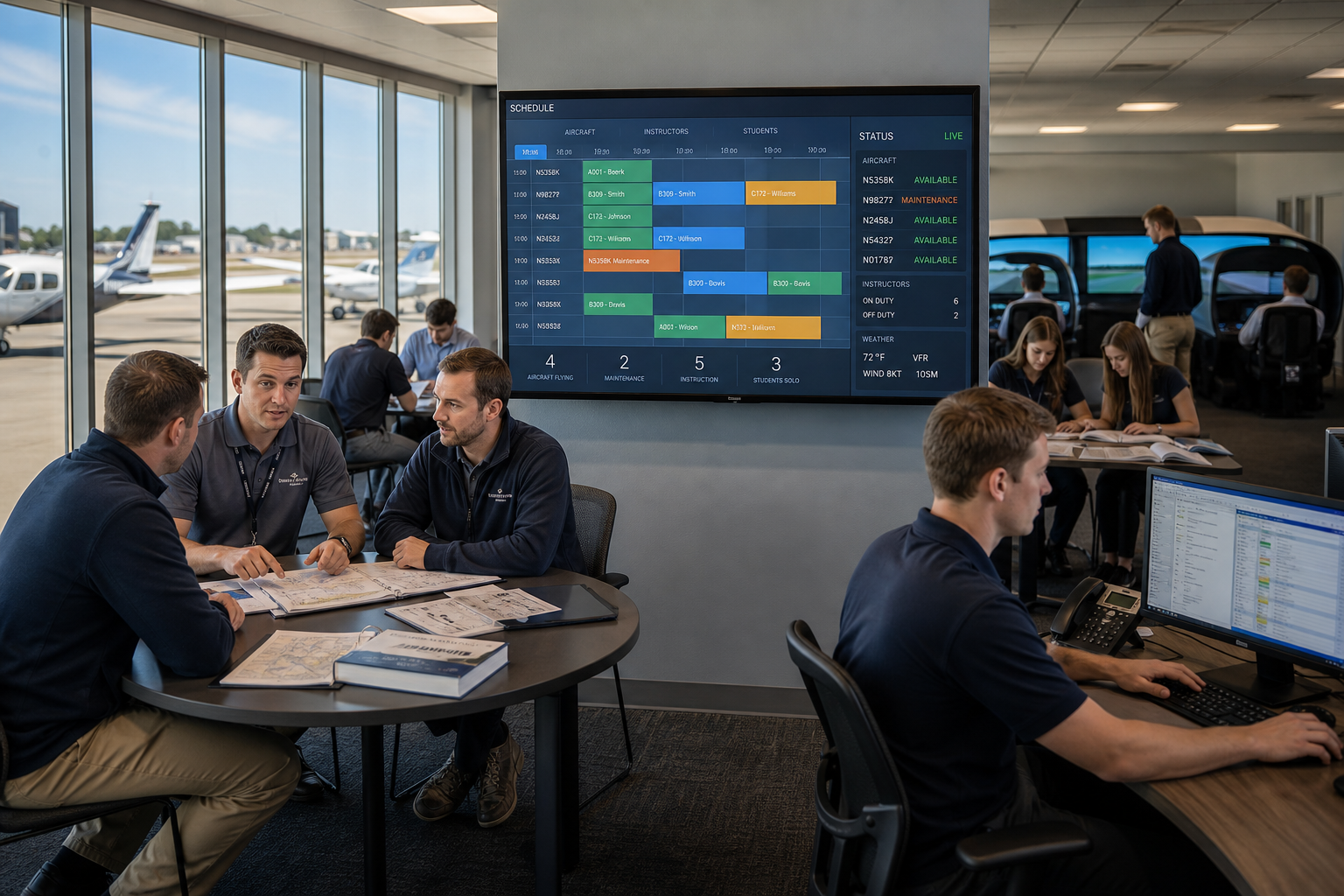
Why Student Pilot Progress Tracking Is Difficult
Flight schools often rely on multiple instructors, aircraft, and schedules to deliver training.
This creates challenges such as:
- Inconsistent instructor notes
- Fragmented student records
- Limited visibility into training progress
- Manual tracking of lesson completion
- Difficulty identifying training gaps
- Time-consuming audit preparation
- Delayed certification readiness
Without a centralized pilot training management system, instructors and training managers may not have a complete view of each student's development.
How Do Aviation Academies Track Student Progress?
Modern aviation academies track student progress using digital flight training platforms that connect training records, instructor evaluations, scheduling, and compliance documentation.
Instead of relying on paper files or separate spreadsheets, academies can maintain structured digital records for every student.
This helps instructors see what has been completed, what still needs attention, and whether the student is progressing according to the training program.
FlightLogger provides this visibility in one system.
One Platform for Pilot Training Management
FlightLogger helps training organizations manage the full student journey from enrollment through completion.
Structured Training Records
Track:
- Lesson completion
- Training milestones
- Instructor sign-offs
- Student evaluations
- Course progression
- Certification readiness
Structured records help ensure progress is documented consistently across instructors.
Real-Time Progress Visibility
Training managers and instructors can access current student information, including:
- Completed activities
- Upcoming requirements
- Training status
- Progress gaps
- Instructor feedback
This improves oversight and helps schools respond faster when students fall behind.
Scheduling Connected to Training Progress
FlightLogger connects student progress tracking with flight school scheduling.
Schools can coordinate:
- Student bookings
- Instructor availability
- Aircraft assignments
- Training events
- Simulator sessions
This helps ensure scheduling decisions support the student's current training stage.
Audit-Ready Documentation
Maintain digital records for:
- Student progress
- Instructor evaluations
- Training activities
- Completion records
- Compliance documentation
This supports audit readiness and reduces manual preparation work.
What Tools Are Used to Track Pilot Training Progress?
Flight schools typically use one of three approaches:
Paper Records and Instructor Notes
These may work for very small schools, but they are difficult to standardize and audit.
Spreadsheets and Shared Documents
These provide more structure but often require manual updates and can become inconsistent.
Digital Pilot Training Management Systems
These centralize student progress tracking, scheduling, instructor oversight, and training documentation.
FlightLogger fits this third category by helping schools manage pilot training progress in one connected platform.
How to Track Student Pilot Progress Digitally
Digital student pilot progress tracking works best when training records are structured and connected to daily operations.
An effective system should allow schools to:
- Record completed lessons
- Track instructor sign-offs
- Monitor training milestones
- Identify skill gaps
- Connect progress to scheduling
- Maintain audit-ready records
- Give instructors shared visibility
FlightLogger helps schools manage these workflows in one place.
FlightLogger vs Traditional Progress Tracking
| Traditional Progress Tracking | FlightLogger |
|---|---|
| Paper records and instructor notes | Centralized digital records |
| Inconsistent documentation | Standardized training records |
| Limited visibility across instructors | Shared progress visibility |
| Manual updates | Connected training workflows |
| Difficult audit preparation | Audit-ready documentation |
| Separate scheduling tools | Scheduling connected to progress |
Benefits of Digital Flight Training Records
Consistent Instructor Documentation
Standardize how progress, evaluations, and sign-offs are recorded.
Better Training Oversight
Give training managers visibility into student progress across instructors and courses.
Faster Identification of Training Gaps
Identify where students need additional support before delays become larger problems.
Improved Student Progression
Connect scheduling and training activity to each student's current stage.
Stronger Audit Readiness
Maintain structured records that are easier to access and review.
Frequently Asked Questions
How do aviation academies track student progress?
Aviation academies track student progress using digital pilot training management systems that centralize lesson completion, instructor evaluations, training milestones, scheduling data, and compliance documentation.
What tools are used to track pilot training progress?
Flight schools use tools such as digital training management platforms, student progress tracking systems, scheduling software, and aviation academy software to track pilot training progress.
How do you track student pilot progress digitally?
Student pilot progress is tracked digitally by recording lessons, milestones, instructor sign-offs, evaluations, and training requirements in a centralized system that instructors and training managers can access.
Why is standardized progress tracking important?
Standardized progress tracking helps ensure consistent documentation across instructors, better training oversight, fewer missing records, and stronger audit readiness.
How does FlightLogger support pilot training management?
FlightLogger centralizes student progress tracking, training records, scheduling, instructor oversight, and audit-ready documentation in one platform.
How Do Aviation Academies Track Student Progress?
Aviation academies track student progress by using digital pilot training management systems that centralize lesson completion, instructor evaluations, training milestones, scheduling data, and compliance documentation. This gives instructors and training managers real-time visibility into each student's development and helps ensure records are consistent across instructors. By replacing paper files and fragmented spreadsheets with structured digital records, academies can identify training gaps earlier, support student progression, and maintain audit-ready documentation throughout the training journey.
Built for Aviation Education Management
FlightLogger supports:
- Flight schools
- Aviation academies
- Professional pilot training programs
- Multi-location training organizations
- Instructor teams managing multiple students
By centralizing student progress tracking, scheduling, and training documentation, FlightLogger helps aviation training organizations deliver more consistent and efficient pilot training.