.png?width=201&height=201&name=Maintenance%20(Videoannonce%20%E2%80%93%20LinkedIn).png)

How to Manage Flight School Resources in 2026
 Amalie Rasmussen
·
11 minute read
Amalie Rasmussen
·
11 minute read
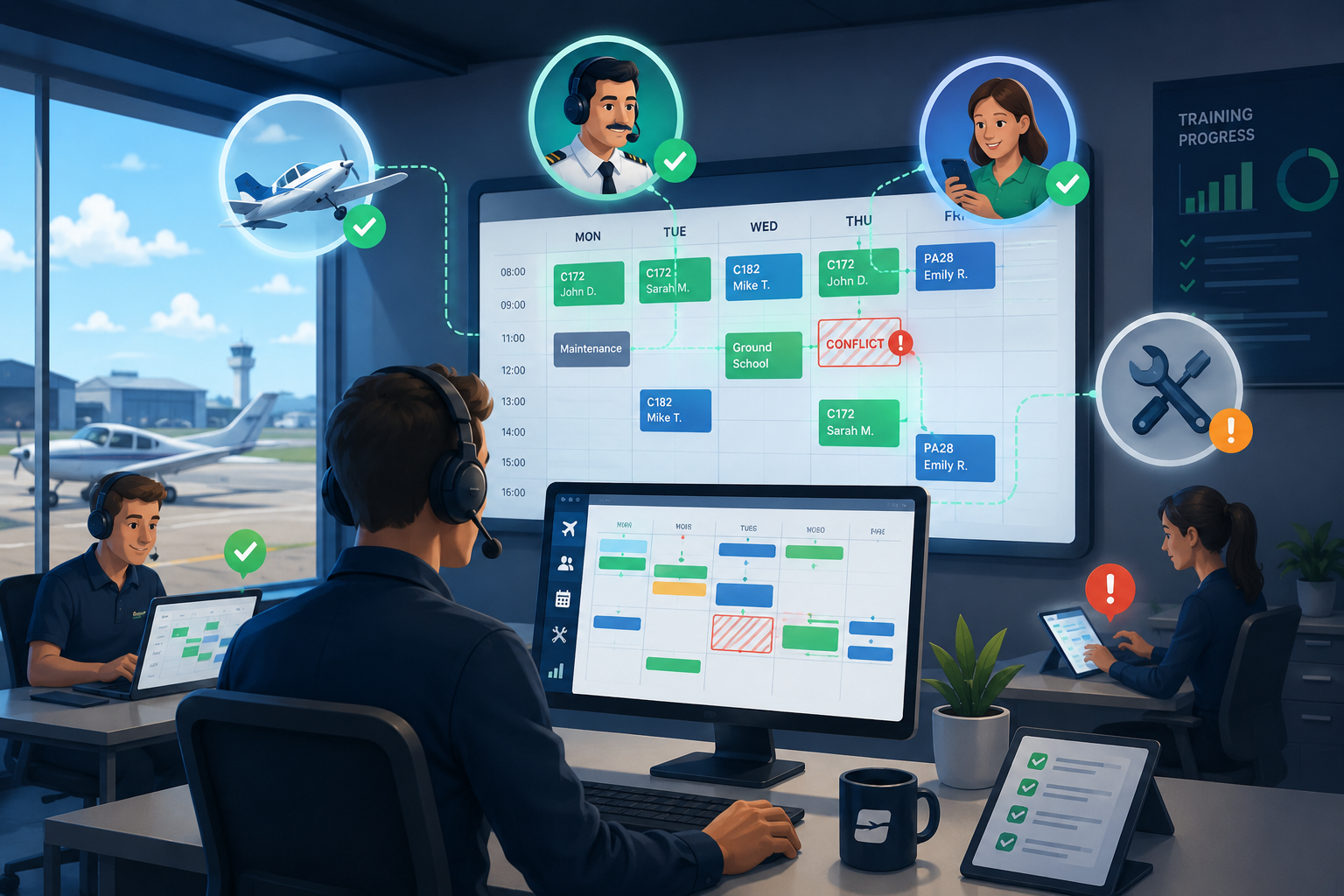
Managing a flight school in 2026 means coordinating dozens of moving parts—students with varying schedules, instructors juggling certifications and availability, aircraft requiring maintenance windows, and regulatory documentation that demands precision. FlightLogger gives you centralized control over these elements, allowing your operation to run smoothly even during peak training periods.
This guide walks you through the essential components of flight school resource management, from scheduling frameworks to maintenance coordination. You'll find actionable steps and practical strategies to help your school increase student throughput, reduce scheduling conflicts, and maintain audit-ready records.
Key Takeaways: How to Manage Flight School Resources in 2026
- Effective flight school management requires connecting student scheduling, instructor availability, and aircraft readiness into a single operational view.
- Real-time visibility into resource status eliminates guesswork and prevents scheduling conflicts that delay student progression.
- Integrated maintenance tracking prevents unplanned aircraft groundings and keeps your fleet flying during peak training periods.
- FlightLogger centralizes operations so you can manage scheduling, compliance, and student progress from one platform.
- Structured workflows and automated notifications reduce administrative overhead while improving communication across your team.
What Is Flight School Resource Management?
Flight school resource management refers to the coordination of three core assets: students, instructors, and aircraft. Your operation depends on aligning these resources so training sessions happen on time, aircraft remain airworthy, and instructors are available when students need them.
The challenge intensifies as your school grows. A 20-student operation can often get by with phone calls and personal relationships. But once you're managing 100 or more students across multiple training programs, the coordination required increases exponentially.
Resource management isn't just about scheduling—it's about creating visibility. When you can see which aircraft are due for maintenance, which instructors are approaching their duty limits, and which students are falling behind their training timelines, you can intervene before small issues become major disruptions.
Why Resource Management Matters More in 2026
Several factors make structured resource management more important today than ever before. First, pilot demand remains high, which means flight schools face pressure to increase student throughput without sacrificing training quality. Second, regulatory requirements continue to evolve, requiring more detailed record-keeping and faster access to compliance documentation during audits.
Third, students and instructors both expect modern tools. A disorganized booking system or unclear communication about schedule changes creates frustration and can lead to higher dropout rates among students and turnover among instructors.
Operations that rely on fragmented systems—separate tools for scheduling, maintenance, and student records—spend more time on administrative work and have less visibility into what's actually happening across the organization.
How to Structure Your Student Scheduling System
Student scheduling sits at the center of flight school operations. Every lesson requires aligning a student, an instructor, and an aircraft—often with limited flexibility on timing due to weather windows, daylight hours, and regulatory constraints.
Centralize All Scheduling in One System
The first step is eliminating separate scheduling tools for different functions. When your aircraft bookings live in one system, instructor assignments in another, and student progress records somewhere else, conflicts become inevitable.
A centralized scheduling system shows real-time availability for all resources in a single view. This means you can see immediately whether an aircraft is booked, in maintenance, or available—and whether an instructor has capacity for an additional lesson.
Build Scheduling Rules Around Student Progression
Your scheduling system should reflect your training programs, not just open calendar slots. For example, if a student is working toward their first solo, the system should flag when they've accumulated enough dual instruction hours and help prioritize booking their stage check.
FlightLogger supports this by connecting scheduling to course progress. Operational leaders can see which students are on track, which are falling behind, and what training events are coming up for each cohort.
Automate Notifications to Reduce No-Shows
No-shows waste instructor time and aircraft availability. Automated notifications—sent via email or text message before scheduled lessons—give students reminders and an easy way to cancel or reschedule if needed.
These notifications also alert instructors to changes in their schedule, reducing the communication burden on your front desk team and ensuring everyone shows up prepared.
How to Manage Instructor Availability Effectively
Instructor capacity often becomes the limiting factor in flight school growth. You can add aircraft to your fleet relatively quickly, but recruiting, training, and retaining qualified instructors takes time. Effective management of instructor availability directly impacts your school's ability to serve more students.
Track Instructor Duty Limits and Certifications
Every instructor has regulatory limits on flight time and duty hours. Your scheduling system needs to track these limits in real time, preventing accidental overruns that create compliance issues.
Beyond duty limits, instructors may hold different ratings and certifications. A CFI authorized for instrument training isn't interchangeable with one who only holds a basic CFI certificate. Your system should match instructors to training events based on their qualifications.
Balance Instructor Workloads
Uneven workload distribution leads to burnout for some instructors while others remain underutilized. A well-designed scheduling system shows instructor utilization at a glance, allowing operations managers to rebalance assignments before problems develop.
Some flight schools also track instructor preferences—morning versus afternoon availability, certain aircraft types they're most comfortable in, or specific students they're paired with for consistency. Building these preferences into your scheduling logic improves instructor satisfaction and retention.
Plan for Instructor Absences
Illness, vacation, and training events mean instructors won't always be available as scheduled. Your resource management approach should include backup planning—knowing which other instructors could cover a lesson on short notice and communicating changes quickly to affected students.
How to Maintain Aircraft Readiness Across Your Fleet
An aircraft that isn't flying isn't generating revenue. But an aircraft that flies when it shouldn't—due to missed inspections or deferred maintenance—creates safety and compliance risks. The goal is maximizing utilization while maintaining airworthiness at all times.
Integrate Maintenance Scheduling with Training Schedules
When maintenance and training schedules live in separate systems, conflicts are inevitable. A 100-hour inspection gets scheduled during your busiest training week, or an aircraft goes down for an unplanned repair right when a student needs to complete their checkride prep.
Integrated systems show maintenance due dates alongside training bookings. This allows you to plan inspections during lower-demand periods and adjust the training schedule proactively when maintenance needs arise.
FlightLogger's maintenance integration tracks time-in-service, calendar-based inspections, and component life limits. The system alerts operations staff when maintenance windows approach, giving you time to adjust bookings rather than scrambling when an aircraft suddenly becomes unavailable.
Standardize Pre-Flight and Post-Flight Workflows
Consistent squawk reporting helps you catch small issues before they become major repairs. When every flight ends with a documented status check—noting any discrepancies or concerns—your maintenance team can address problems during planned downtime rather than emergency groundings.
Digital squawk tracking also creates a maintenance history for each aircraft, useful for both internal planning and demonstrating compliance during regulatory inspections.
Monitor Fleet Utilization Patterns
Understanding how your fleet is actually being used helps you make better decisions about scheduling and future acquisitions. Are certain aircraft consistently overbooked while others sit idle? Are there specific times of day when demand exceeds your fleet capacity?
Utilization data also helps identify aircraft that may be nearing lease return thresholds or warranty limits, allowing you to adjust their scheduling accordingly.
How to Create Real-Time Visibility Across Your Operation
Operational visibility means having accurate, current information about your resources without needing to ask multiple people or check multiple systems. When someone calls asking whether a specific instructor is available next Tuesday afternoon, you should be able to answer in seconds.
Implement a Unified Dashboard
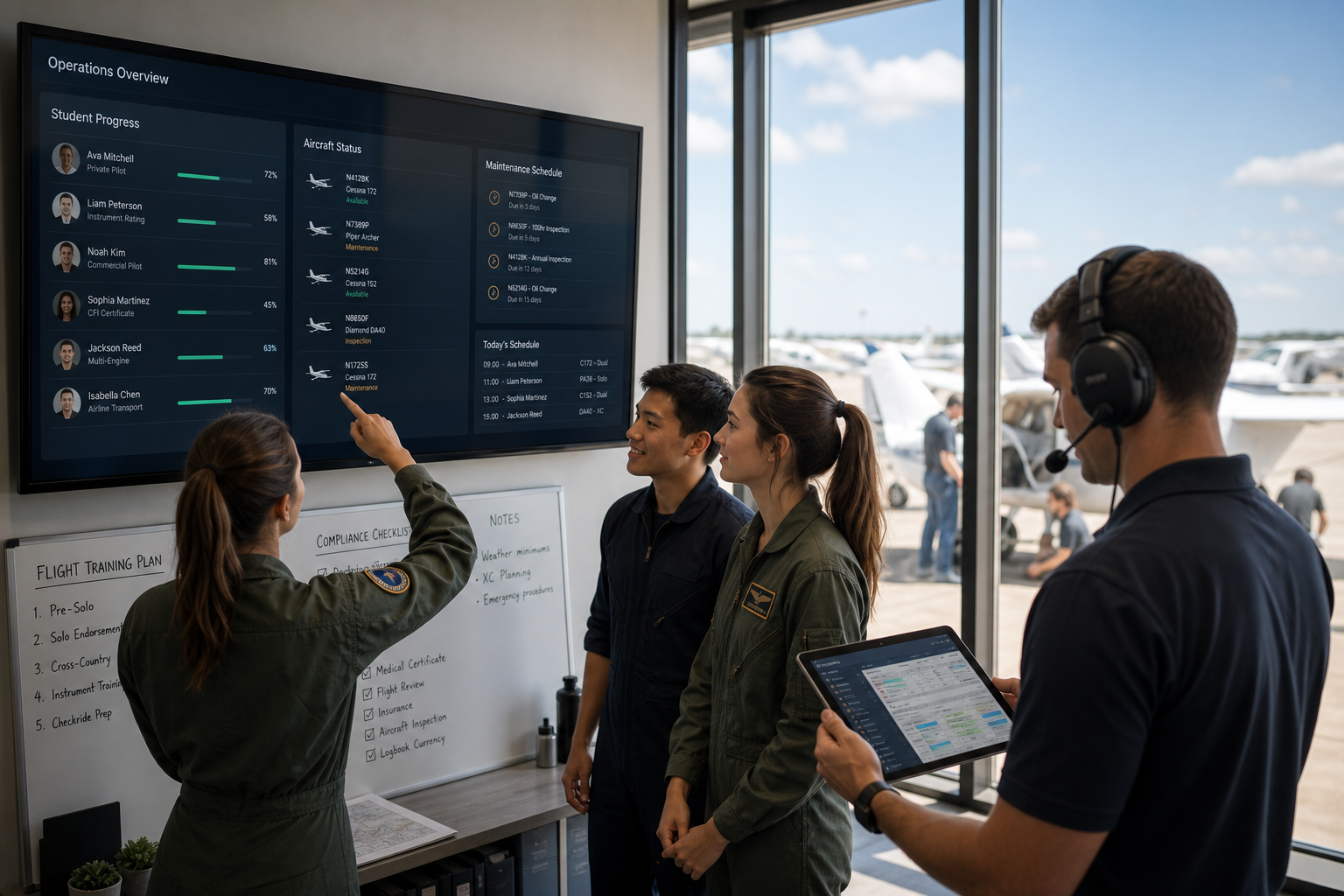
A single dashboard showing aircraft status, instructor availability, and student bookings eliminates the need to cross-reference multiple sources. This view should be accessible to everyone who needs it—front desk staff, operations managers, and even instructors through mobile devices.
The dashboard should update in real time as bookings are made or changed, maintenance statuses shift, or instructors update their availability. Stale information is often worse than no information because it leads to decisions based on incorrect data.
Track Key Performance Indicators
What gets measured gets managed. Key metrics for flight school operations include aircraft utilization rate, instructor utilization, student no-show rate, average time to solo, and checkride pass rates.
Tracking these metrics over time helps you identify trends and problem areas. If your no-show rate is climbing, you might need better reminder systems. If time to solo is increasing, you may have scheduling bottlenecks preventing students from flying consistently.
Enable Mobile Access for Instructors and Students
Your scheduling system shouldn't require everyone to be at a desktop computer. Instructors need to check and update their schedules from the flight line. Students need to book lessons from their phones. Mobile access makes your system more useful and increases adoption across your organization.
How to Maintain Compliance and Audit Readiness
Regulatory compliance isn't optional in aviation. Whether you're operating under FAA Part 61 or Part 141, EASA standards, or other national regulations, you need documentation that demonstrates compliance with training requirements, instructor qualifications, and aircraft maintenance records.
Centralize All Training Records
Student training records—including flight time, ground instruction, and competency assessments—should live in one system with controlled access. When an examiner or inspector asks to see a student's training record, you shouldn't need to assemble documents from multiple sources.
Digital record-keeping also eliminates the risks associated with paper-based systems: lost documents, illegible handwriting, and inconsistent formatting that makes audits more difficult.
Automate Compliance Tracking
The best compliance systems don't rely on someone remembering to check expiration dates or training requirements. Automated alerts notify relevant staff when instructor certificates are approaching renewal, when aircraft inspections are coming due, or when students need specific training events to remain on schedule.
FlightLogger delivers audit-ready record keeping and faster access to compliance documentation. The system tracks training progress against syllabus requirements, maintaining a clear record of what each student has completed and what remains.
Prepare for Audits Before They Happen
Running regular internal audits—reviewing a sample of student records, checking maintenance documentation, and verifying instructor credentials—helps you catch and correct issues before an external inspector finds them.
When you know your records are accurate and accessible, audits become a routine part of operations rather than a source of anxiety.
How to Reduce Administrative Overhead
Administrative work that doesn't directly contribute to training quality or operational safety is overhead. Every hour your staff spends on data entry, phone calls to reschedule lessons, or hunting for documents is an hour not spent on higher-value activities.
Eliminate Redundant Data Entry
Information should be entered once and flow automatically to wherever it's needed. When a student books a lesson, that booking should appear on the instructor's schedule, update the aircraft availability, and reflect in utilization reports—without anyone entering the same information in multiple places.
Redundant data entry isn't just inefficient; it creates opportunities for inconsistency. The same lesson might show different times in different systems, leading to confusion and scheduling conflicts.
Enable Self-Service for Students and Instructors
Not every scheduling request needs to go through your front desk. Students should be able to view available slots and book lessons directly, within parameters you define. Instructors should be able to update their availability and view their upcoming schedule without administrative assistance.
Self-service tools reduce the volume of routine requests your administrative staff handles, freeing them to focus on exceptions and complex situations that actually require human judgment.
Standardize Communication Workflows
When schedule changes happen, who gets notified and how? Clear communication workflows ensure everyone affected by a change learns about it promptly through their preferred channel—email, text message, or in-app notification.
Standardized workflows also create documentation. If a student claims they never received a cancellation notice, you can check the system's communication log to verify what was sent and when.
How to Scale Your Flight School Without Losing Control
Growth creates complexity. Processes that worked well with 50 students may break down at 100 or 200. The key to scaling is building systems and workflows that accommodate growth without requiring proportional increases in administrative staff.
Standardize Processes Across Locations
If you operate multiple training locations, inconsistent processes create confusion for students, instructors, and administrative staff. A student transferring between locations should find familiar systems and workflows, not a completely different way of operating.
Standardization also enables your operations team to support multiple locations without needing deep knowledge of each location's unique systems.
Build Capacity Before You Need It
Waiting until your systems are overwhelmed to invest in better tools creates disruption at the worst possible time. Evaluate your current systems against your growth plans and implement upgrades before you hit capacity limits.
This includes training capacity—both aircraft and instructors. If your fleet utilization is consistently above 80%, you likely need to add aircraft or adjust scheduling to accommodate growth.
Use Data to Guide Expansion Decisions
Growth decisions should be based on data, not intuition alone. What's your current instructor-to-student ratio? How does aircraft utilization compare to industry benchmarks? Where are scheduling bottlenecks actually occurring?
Operations analytics help you understand where to invest—more instructors, more aircraft, or better systems to get more from your existing resources.
How to Implement a Flight Training Management System
Moving from fragmented tools to an integrated flight training management system is a significant operational decision. The transition requires planning, but the operational benefits justify the investment.
Assess Your Current State
Before selecting a system, document your current processes and pain points. Where are scheduling conflicts happening most often? What tasks consume the most administrative time? Which compliance areas cause the most stress during audits?
This assessment helps you prioritize features during system selection and provides a baseline for measuring improvement after implementation.
Plan for Data Migration
Your existing student records, instructor certifications, and aircraft maintenance histories need to move into the new system. Planning this migration carefully—validating data accuracy and completeness—prevents problems down the road.
Most established platforms offer structured onboarding processes that include data migration support. FlightLogger typically completes implementation with dedicated onboarding within four to six weeks, including data migration and staff training.
Train Your Team Thoroughly
A system is only as good as the people using it. Invest time in training not just your administrative staff, but also instructors and anyone else who will interact with the system regularly.
Ongoing training matters too. As you discover more efficient ways to use the system or as new features become available, share that knowledge across your organization.
Common Flight School Resource Management Mistakes to Avoid
Learning from others' mistakes helps you avoid repeating them. Here are patterns that consistently create problems in flight school operations.
Relying on Informal Communication
When schedule changes, maintenance updates, or student issues are communicated through informal channels—text messages between individuals, verbal handoffs, or notes stuck to monitors—information gets lost. Someone is always out of the loop.
Formal communication through a centralized system creates a record and ensures everyone who needs to know actually receives the information.
Deferring System Investments
The cost of poor systems isn't always visible. Lost revenue from scheduling inefficiencies, student attrition due to frustration with disorganized operations, and compliance risks from incomplete records don't appear as line items in your budget—but they affect your bottom line.
Investing in proper systems before problems become critical is more efficient than scrambling to fix issues under pressure.
Ignoring Student Experience
Students have choices about where to train. A flight school with a confusing booking process, poor communication about schedule changes, and difficulty tracking their own progress loses students to competitors with better systems.
The student experience includes every touchpoint—from initial inquiry through checkride and beyond. Systems that make these interactions smooth contribute to retention and referrals.
Building Your Flight School Resource Management Strategy
Effective flight school resource management isn't a single project—it's an ongoing operational discipline. The goal is creating systems and workflows that adapt as your operation evolves while maintaining the visibility and control you need to deliver quality training.
Start by assessing your current pain points. Where are you losing time? Where do conflicts most often occur? What information do you wish you had readily available? These questions point toward the highest-priority improvements.
Then evaluate systems that can address those needs while scaling with your growth. Look for platforms designed specifically for flight training operations—generic scheduling tools often lack the aviation-specific features you need for compliance tracking, maintenance integration, and training program management.
FlightLogger serves more than 215 organizations across 50+ countries, supporting operations from single-base schools to multi-campus university programs. The platform centralizes scheduling, maintenance coordination, course progress, and compliance processes into a single system designed specifically for flight training.
Operations don't pause while you figure things out. Students are progressing. Flights are scheduled. Maintenance gets completed. The question is whether you have the visibility and control to manage it all effectively.
FAQs About How to Manage Flight School Resources in 2026
What is the biggest challenge in flight school resource management?
Coordinating student scheduling, instructor availability, and aircraft readiness simultaneously creates the most difficulty. When these three elements aren't visible in a single system, conflicts and delays become common. FlightLogger addresses this by centralizing all scheduling and resource tracking in one platform.
How can I reduce scheduling conflicts at my flight school?
Centralize all bookings in one system that shows real-time availability for students, instructors, and aircraft. Automated conflict detection prevents double-bookings before they happen. FlightLogger's scheduling system includes real-time visibility and automatic notifications to keep everyone aligned.
What should I look for in flight school management software?
Look for integrated scheduling, maintenance tracking, student progress monitoring, and compliance documentation. Aviation-specific platforms like FlightLogger include features designed for flight training operations, including regulatory tracking and training program management.
How do I track instructor availability and certifications?
Use a system that maintains instructor profiles with ratings, certifications, and duty limits. The system should automatically match instructors to training events based on their qualifications. FlightLogger tracks instructor credentials and prevents scheduling instructors for training they're not authorized to conduct.
How can flight schools maintain audit readiness?
Keep all training records, maintenance documentation, and compliance data in a centralized digital system. Automated alerts for upcoming expirations and regular internal audits ensure you're prepared when inspectors arrive. FlightLogger delivers audit-ready record keeping with quick access to compliance documentation.
What metrics should I track for flight school operations?
Monitor aircraft utilization, instructor utilization, student no-show rate, time to solo, and checkride pass rates. These metrics reveal scheduling efficiency, resource constraints, and training effectiveness. Analytics dashboards help you identify trends and intervene before small issues become major problems.