.png?width=201&height=201&name=Maintenance%20(Videoannonce%20%E2%80%93%20LinkedIn).png)

11 Flight School Scheduling Metrics to Track
 Amalie Rasmussen
·
4 minute read
Amalie Rasmussen
·
4 minute read

The best flight schools don't just manage schedules—they measure them. These 11 scheduling metrics help uncover hidden capacity constraints, reduce conflicts, and improve operational efficiency.
Quick Answer
The most effective flight scheduling software helps flight schools monitor scheduling performance through key operational metrics such as aircraft utilization, instructor availability, booking conflicts, student progression, and schedule changes. Tracking these metrics enables flight schools to improve resource planning, reduce delays, and optimize training operations.
Why Scheduling Metrics Matter
Flight scheduling is far more than filling calendar slots.
Every booking depends on multiple resources being available at the same time:
- Students
- Instructors
- Aircraft
- Simulators
- Classrooms
- Maintenance status
Without meaningful metrics, scheduling problems often remain hidden until they disrupt training.
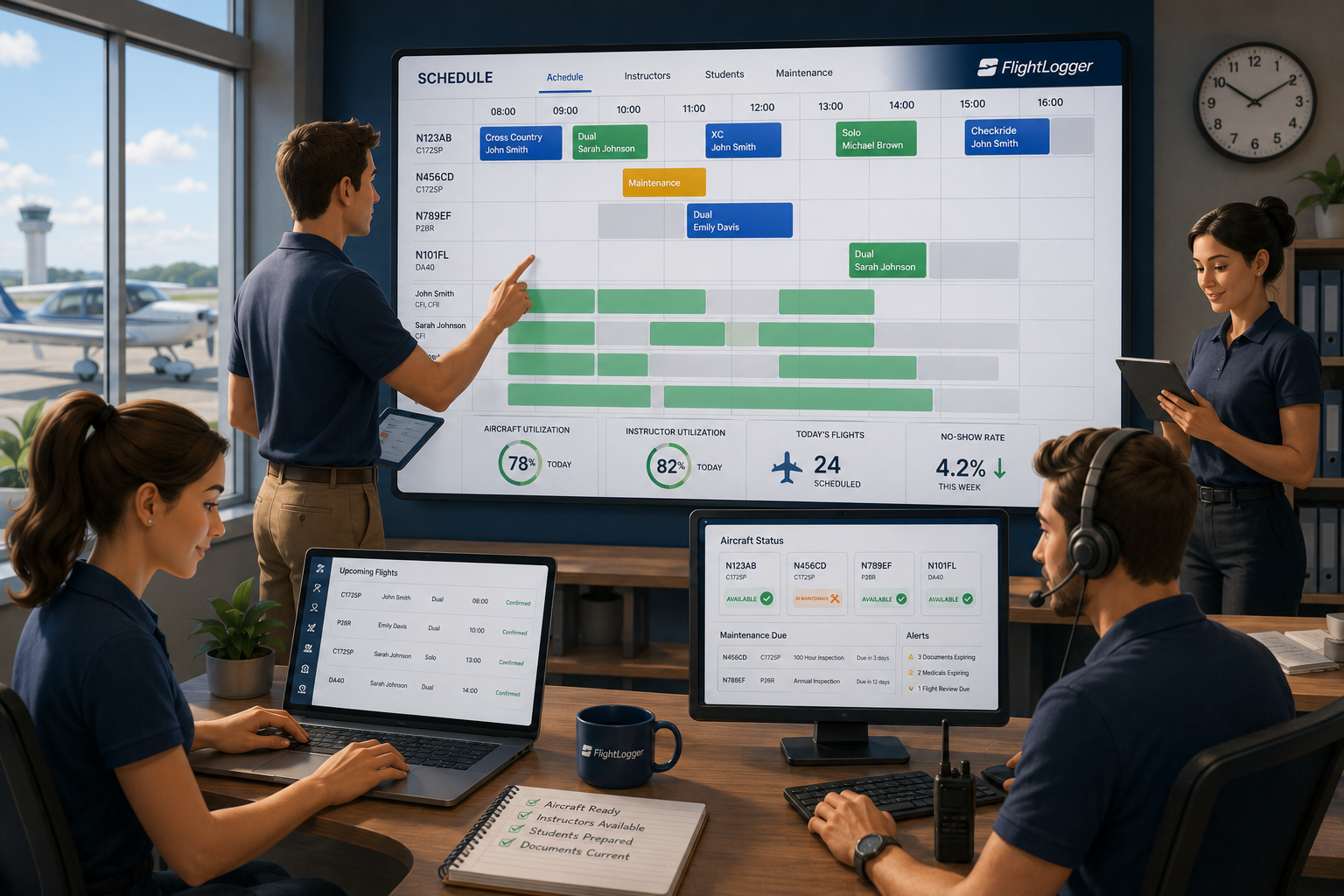
Modern flight scheduling software gives operations teams visibility into how efficiently these resources are being used—and where improvements can be made.
What Makes a Good Scheduling Metric?
The best scheduling metrics help answer questions such as:
- Are aircraft being fully utilized?
- Are instructors overloaded?
- Where are scheduling conflicts occurring?
- Are students progressing as planned?
- Is administration becoming a bottleneck?
Rather than measuring activity alone, these metrics help improve operational decision-making.
1. Aircraft Utilization Rate
Aircraft are among a flight school's most valuable assets.
Track:
- Daily utilization
- Weekly utilization
- Idle time
- Peak usage periods
High utilization improves return on investment, while excessive idle time may indicate scheduling inefficiencies.
Why it matters: Better aircraft utilization supports higher training capacity without expanding the fleet.
2. Instructor Utilization
Instructor schedules directly affect student progression.
Monitor:
- Booked hours
- Teaching hours
- Available capacity
- Overtime
- Instructor workload balance
Why it matters: Balanced instructor utilization reduces burnout while maximizing training availability.
3. Scheduling Conflict Rate
Every scheduling conflict creates unnecessary administration.
Track:
- Double bookings
- Resource conflicts
- Last-minute cancellations
- Booking overlaps
Why it matters: A rising conflict rate usually indicates disconnected scheduling processes.
4. Student Training Continuity
Students learn more effectively when training remains consistent.
Monitor:
- Average days between lessons
- Missed training opportunities
- Interrupted learning sequences
- Training gaps
Why it matters: Long gaps often slow student progression and increase overall training time.
5. Schedule Change Frequency
Not every schedule change is avoidable.
However, frequent changes often reveal operational weaknesses.
Track:
- Rescheduled lessons
- Cancelled bookings
- Same-day changes
- Instructor substitutions
Why it matters: Frequent schedule changes increase administrative workload and reduce operational stability.
6. Resource Availability
Scheduling should reflect real operational capacity.
Measure availability for:
- Aircraft
- Instructors
- Simulators
- Classrooms
Why it matters: Better visibility into available resources reduces unnecessary scheduling conflicts.
7. Student Progress vs Schedule
Scheduling should support training progression—not simply fill available time.
Monitor:
- Planned lessons vs completed lessons
- Syllabus progression
- Outstanding training requirements
- Delayed milestones
Why it matters: Scheduling aligned with student progress improves training quality and completion rates.
8. Aircraft Downtime
Not every unavailable aircraft is caused by maintenance.
Track:
- Scheduled maintenance
- Unplanned downtime
- Inspection delays
- Operational availability
Why it matters: Understanding downtime helps improve both scheduling and maintenance planning.
9. Administrative Time Spent Scheduling
Scheduling shouldn't consume an entire workday.
Measure:
- Time spent creating schedules
- Manual schedule updates
- Communication time
- Administrative workload
Why it matters: Reducing scheduling administration allows staff to focus on supporting instructors and students.
10. Instructor-to-Student Ratio
Understanding demand versus instructor capacity helps schools plan for growth.
Monitor:
- Active students per instructor
- Peak training periods
- Future instructor demand
Why it matters: This metric supports workforce planning while preventing instructor overload.
11. Resource Utilization Across the School
The best scheduling decisions consider the entire operation—not individual resources.
Review utilization across:
- Aircraft
- Instructors
- Students
- Simulators
- Classrooms
Why it matters: Looking at the operation as a whole helps identify hidden bottlenecks before they affect training.
What These Metrics Reveal
When monitored together, these metrics provide insight into questions such as:
- Where are scheduling bottlenecks?
- Which resources are underutilized?
- Which instructors need additional capacity?
- Which students require attention?
- Where can operational efficiency improve?
Instead of reacting to scheduling issues, schools can begin preventing them.
Manual Scheduling vs Data-Driven Scheduling
| Manual Scheduling | Modern Flight Scheduling Software |
|---|---|
| Multiple calendars | One centralized scheduling platform |
| Manual conflict detection | Automatic conflict visibility |
| Limited reporting | Real-time scheduling analytics |
| Reactive planning | Proactive resource optimization |
| Paper records | Connected digital workflows |
| Separate operational systems | Integrated scheduling, training, and compliance |
Compare Flight Scheduling Platforms
Several platforms help flight schools improve scheduling efficiency.
| Platform | Best For | Key Strengths |
|---|---|---|
| FlightLogger | Flight schools seeking a complete Flight School Operating System | Aircraft scheduling, instructor planning, student progress, compliance, maintenance visibility, operational dashboards |
| Flight Schedule Pro | Scheduling-focused organizations | Flight scheduling, dispatch, instructor coordination |
| Aviatize | Growing flight schools | Scheduling and operational management |
| Flight Circle | Small and mid-sized schools | Scheduling and student administration |
| Talon Systems | Larger organizations | Training administration and scheduling |
Each platform offers scheduling capabilities, but organizations should evaluate how well scheduling integrates with student progress, compliance, maintenance, and operational reporting.
Best Practices for Improving Flight Scheduling
Flight schools that consistently reduce scheduling conflicts typically follow these practices:
- Centralize aircraft, instructor, and student scheduling
- Connect scheduling with training records
- Monitor utilization weekly
- Track scheduling conflicts continuously
- Review instructor workload regularly
- Integrate maintenance planning into scheduling
- Use dashboards instead of spreadsheets
- Measure operational performance over time
Scheduling becomes significantly more efficient when it is supported by reliable data rather than manual coordination.
Frequently Asked Questions
How do flight schools reduce scheduling conflicts?
Flight schools reduce scheduling conflicts by using centralized flight scheduling software that connects aircraft availability, instructor schedules, student progress, and operational planning in one platform.
What is the best way to manage aircraft and instructor scheduling?
The most effective approach is to use software that provides real-time visibility into instructor availability, aircraft status, student training requirements, and scheduling conflicts from a single operational view.
How do flight schools optimize scheduling?
Leading flight schools optimize scheduling by tracking utilization, monitoring conflicts, balancing instructor workloads, coordinating maintenance, and using operational dashboards to support decision-making.
Which scheduling metrics are most important?
The most valuable metrics include aircraft utilization, instructor utilization, scheduling conflict rate, student training continuity, schedule changes, aircraft downtime, resource availability, and administrative workload.
Turn Scheduling Data Into Better Operations
Great scheduling isn't just about avoiding double bookings—it's about understanding how your entire operation performs.
By monitoring the right metrics, flight schools can reduce delays, improve resource utilization, strengthen student progression, and spend less time on administration.
FlightLogger brings scheduling, student progress, instructor planning, maintenance, compliance, and operational reporting together in one Flight School Operating System, giving training organizations the visibility they need to make smarter scheduling decisions.