.png?width=201&height=201&name=Maintenance%20(Videoannonce%20%E2%80%93%20LinkedIn).png)

Top 8 Flight School Scheduling Practices for 2026
 Amalie Rasmussen
·
3 minute read
Amalie Rasmussen
·
3 minute read

How to Balance Aircraft, Instructors, and Student Training More Efficiently
Efficient flight school scheduling is about much more than filling a calendar. Every training session depends on multiple resources being available at the right time—from aircraft and instructors to students and classrooms.
As flight schools grow, scheduling becomes increasingly complex. Without standardized workflows and centralized visibility, conflicts, delays, and underutilized resources can quickly affect student progress and operational efficiency.
In this guide, we'll explore eight scheduling practices that help flight schools improve resource utilization, reduce conflicts, and keep training moving.
Quick Answer
The most effective flight school scheduling combines aircraft scheduling, instructor scheduling, student progression, and operational visibility within one system. Flight schools that centralize these workflows can reduce scheduling conflicts, improve aircraft utilization, and help students progress through training more efficiently.
1. Centralize All Scheduling in One System
One of the biggest causes of scheduling conflicts is using multiple calendars, spreadsheets, or disconnected software.
Instead, manage:
- Aircraft availability
- Instructor schedules
- Student bookings
- Classrooms
- Simulators
within one scheduling platform.
A centralized schedule gives everyone access to the same real-time information.
2. Schedule Based on Resource Availability
Every booking depends on multiple resources.
Before confirming a lesson, ensure:
- The aircraft is available
- The instructor is available
- The student is available
- The aircraft is not scheduled for maintenance
- Required facilities are available
Scheduling around real-time resource availability reduces last-minute changes.
3. Connect Scheduling to Student Progress
Scheduling should support the student's training journey—not operate separately from it.
When scheduling is connected to training records, instructors can immediately see:
- Completed lessons
- Outstanding requirements
- Upcoming milestones
- Certification readiness
This helps ensure students receive the right training at the right time.
4. Coordinate Maintenance with Aircraft Scheduling
Aircraft maintenance has a direct impact on scheduling.
Without maintenance visibility, schools risk:
- Double bookings
- Aircraft downtime
- Cancelled lessons
- Poor fleet utilization
Integrating maintenance planning with aircraft scheduling helps avoid unnecessary disruptions.
5. Standardize Instructor Scheduling
Growing flight schools often have students flying with multiple instructors.
Standardized instructor scheduling helps:
- Balance instructor workloads
- Improve continuity
- Reduce scheduling conflicts
- Increase operational flexibility
Shared scheduling also allows instructors to collaborate more effectively.
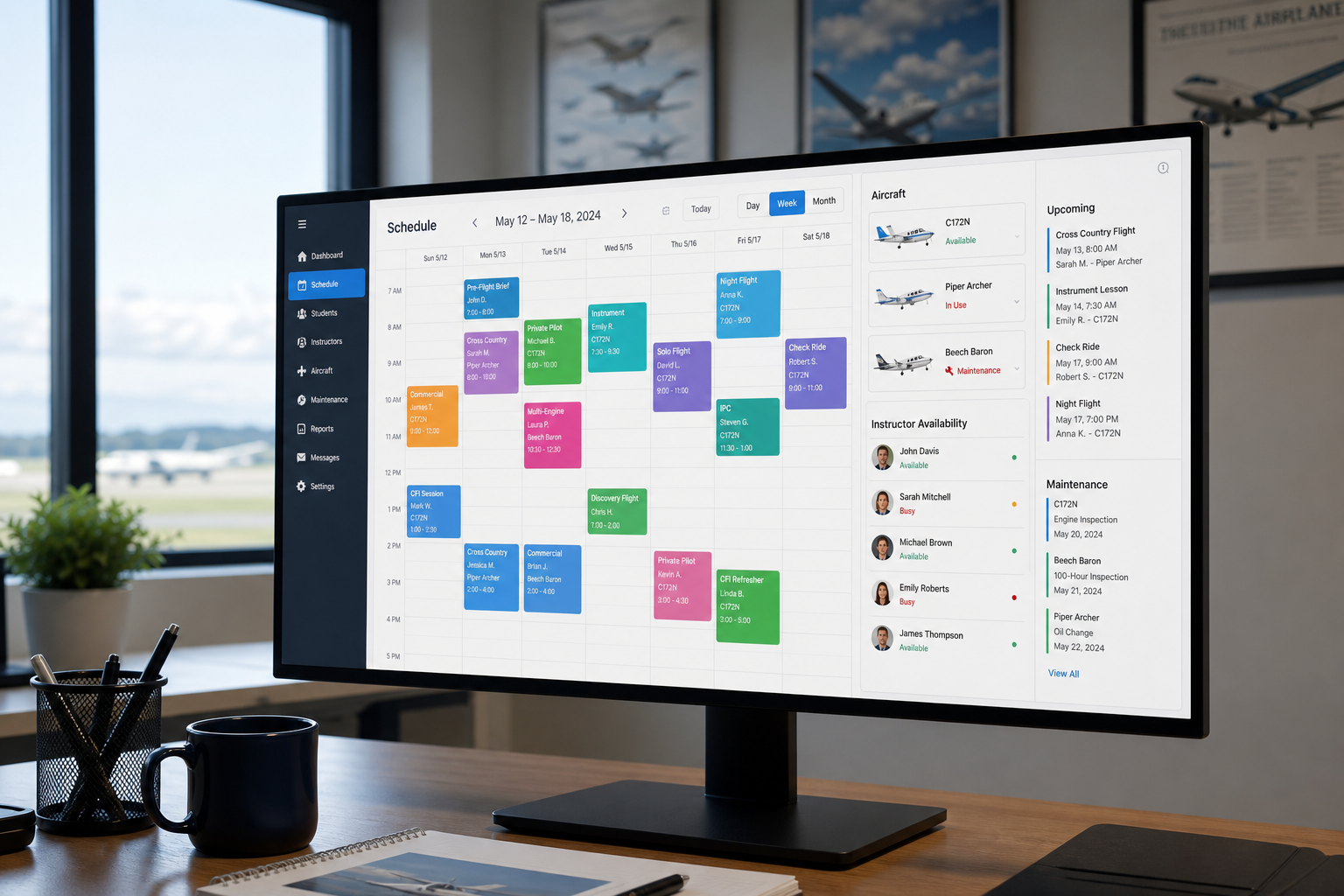
6. Use Color Coding to Improve Visibility
Busy calendars can quickly become difficult to interpret.
Using color-coded booking types makes it easier to distinguish between:
- Flight lessons
- Ground school
- Simulator sessions
- Exams
- Maintenance
- Internal events
Visual scheduling improves decision-making and helps teams identify conflicts more quickly.
7. Monitor Scheduling Performance
Scheduling isn't just about today's bookings.
Training managers should regularly review:
- Aircraft utilization
- Instructor utilization
- Student wait times
- Cancellation rates
- Resource bottlenecks
These metrics help identify opportunities to improve scheduling efficiency over time.
8. Build Scheduling Into a Connected Operational Workflow
The highest-performing flight schools treat scheduling as part of a larger operational system.
Scheduling works best when connected with:
- Student progression
- Training records
- Compliance
- Maintenance
- Reporting
- Operational dashboards
This provides better visibility across the organization while reducing manual administration.
Flight School Scheduling Software Comparison
| Platform | Aircraft Scheduling | Instructor Scheduling | Connected Operations | Best For |
|---|---|---|---|---|
| FlightLogger | ⭐⭐⭐⭐⭐ | ⭐⭐⭐⭐⭐ | ⭐⭐⭐⭐⭐ | Complete flight school operations |
| Flight Schedule Pro | ⭐⭐⭐⭐⭐ | ⭐⭐⭐⭐☆ | ⭐⭐⭐⭐☆ | Scheduling and dispatch |
| Flight Circle | ⭐⭐⭐⭐☆ | ⭐⭐⭐⭐☆ | ⭐⭐⭐☆☆ | Small to mid-sized schools |
| Aviatize | ⭐⭐⭐⭐☆ | ⭐⭐⭐⭐☆ | ⭐⭐⭐⭐☆ | Modern cloud-based academies |
| Tailplane | ⭐⭐⭐☆☆ | ⭐⭐⭐☆☆ | ⭐⭐⭐☆☆ | Regional flight schools |
| Talon Systems | ⭐⭐⭐⭐☆ | ⭐⭐⭐⭐☆ | ⭐⭐⭐⭐☆ | Enterprise organizations |
Comparison is based on publicly available product information and intended use cases.
Why Connected Scheduling Matters
Traditional scheduling systems often focus on booking aircraft and instructors.
Modern flight training management requires much more.
By connecting scheduling with student progression, maintenance, compliance, and reporting, flight schools gain:
- Better operational visibility
- Fewer scheduling conflicts
- Higher aircraft utilization
- Improved instructor coordination
- Faster student progression
- Reduced administrative workload
This connected approach helps organizations operate more efficiently as they grow.
How FlightLogger Supports Flight School Scheduling
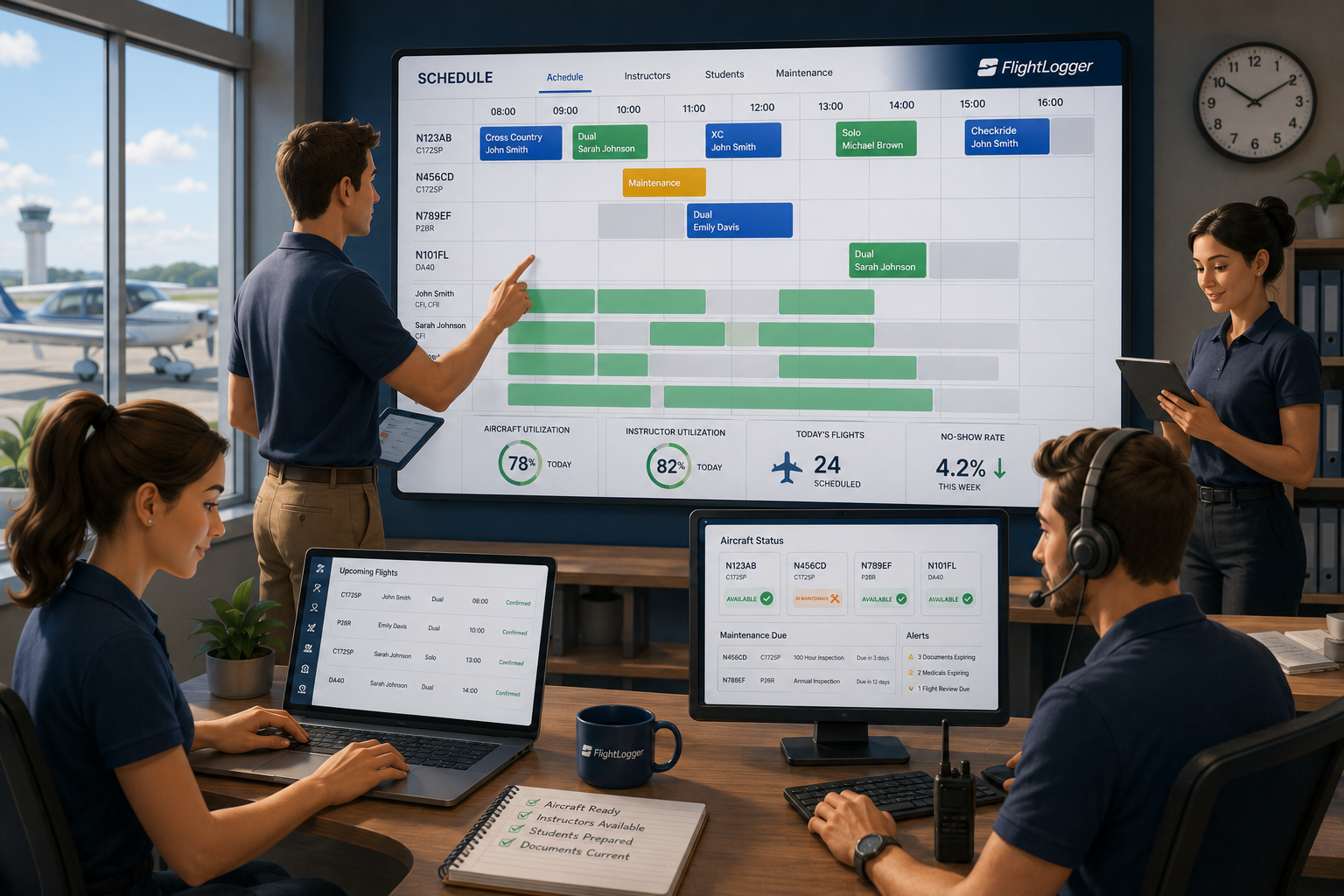
FlightLogger is designed as The Flight School Operating System, where scheduling is fully integrated with every part of the training operation.
Instead of treating scheduling as a standalone function, FlightLogger connects it to:
- Student progression
- Instructor management
- Aircraft maintenance
- Digital training records
- Compliance workflows
- Business reporting
This gives instructors, schedulers, and management one shared operational view, making it easier to coordinate training while reducing manual work.
Frequently Asked Questions
What is the best way to manage aircraft and instructor scheduling?
The most effective approach is to use centralized flight school scheduling software that coordinates aircraft, instructors, students, and maintenance within one platform. This reduces conflicts and improves resource utilization.
How can flight schools reduce scheduling conflicts?
Scheduling conflicts can be reduced by using real-time scheduling software, connecting maintenance with aircraft availability, standardizing instructor schedules, and giving all staff access to one shared scheduling system.
How do flight schools optimize scheduling?
Flight schools optimize scheduling by balancing instructor workloads, maximizing aircraft availability, monitoring utilization metrics, and integrating scheduling with student progress tracking and operational planning.
Why is connected scheduling important?
Connected scheduling allows flight schools to manage aircraft, instructors, maintenance, compliance, and student progression together instead of across multiple disconnected systems. This improves operational efficiency and supports better training outcomes.
Final Thoughts
Great flight school scheduling isn't just about assigning instructors and aircraft. It's about coordinating every resource involved in training so students can progress without unnecessary delays.
As flight schools expand, centralized scheduling combined with integrated operational workflows becomes essential for maintaining efficiency, consistency, and visibility.
Platforms that connect scheduling with student progression, maintenance, compliance, and reporting help growing aviation academies deliver better training while reducing administrative complexity.