.png?width=201&height=201&name=Maintenance%20(Videoannonce%20%E2%80%93%20LinkedIn).png)

How to Improve Flight School Efficiency in 2026

Running a flight school means coordinating aircraft, instructors, students, and maintenance schedules - all while staying compliant with aviation authorities. When any of these pieces fall out of sync, your operation slows down. Missed lessons, underused aircraft, and delayed student completions add up fast. FlightLogger helps training organizations streamline these workflows through centralized scheduling and progress tracking.
This guide covers the core areas where flight schools lose efficiency and what you can do about it. You'll learn how to optimize scheduling, track student progress more effectively, and make better use of your fleet and instructor hours. Each section breaks down practical steps you can apply to your own operation.
Key Takeaways: How to Improve Flight School Efficiency in 2026
- Scheduling inefficiencies cost flight schools thousands in unbilled flight time and underused aircraft hours every year.
- Tracking student progress in real time helps you catch delays before they turn into dropouts or extended training timelines.
- Aircraft and instructor utilization improves when scheduling, maintenance, and training data live in one connected system.
- FlightLogger centralizes operations so you spend less time on administration and more time keeping students on track.
- Audit-ready record keeping reduces compliance stress and speeds up interactions with aviation authority inspectors.
What Is Flight School Operational Efficiency?
Flight school operational efficiency measures how well you use your available resources - aircraft, instructors, facilities, and time—to deliver training. A highly efficient operation minimizes gaps between scheduled lessons and actual flying, keeps aircraft in the air rather than sitting idle, and moves students through their training programs without unnecessary delays.
Efficiency goes beyond just filling your schedule. It means your billing matches your flight time, your instructors spend their hours teaching rather than chasing paperwork, and your students complete their certifications on time. When efficiency drops, you see it in longer completion times, higher dropout rates, and frustrated staff.
The goal is to create a training environment where every resource contributes to student progression. This requires visibility into what's happening across your operation—something that becomes harder as you add more aircraft, instructors, or locations.
Why Does Operational Efficiency Matter for Flight Schools?
Operational efficiency directly affects your bottom line. A flight school running on disconnected tools - one calendar here, a billing system there, training records somewhere else - typically loses revenue through unbilled Hobbs time and wastes staff hours reconciling data between systems.
Beyond revenue, efficiency impacts student outcomes. Students who experience frequent cancellations, scheduling conflicts, or unclear progress tracking are more likely to extend their training timeline or drop out entirely. Each month a student's training stretches beyond their expected completion date costs both you and them.
Regulatory compliance also depends on operational efficiency. When your records are scattered across multiple systems, preparing for authority audits becomes a scramble. Inspectors expect accurate, audit-ready documentation—not a stack of folders and a request to "come back next week."
The Hidden Costs of Inefficient Operations
Inefficiency often hides in plain sight. Your schedule looks full, but aircraft sit idle during prime training hours because instructors are unavailable. Students appear to be progressing, but without unified tracking, you miss the early warning signs of someone falling behind.
Consider how much time your front desk staff spends answering questions that a well-organized system would answer automatically. How often do instructors enter the same flight data into multiple places? How many invoices go out late because billing isn't connected to your scheduling?
These small inefficiencies compound. A 10-aircraft school can lose significant revenue annually in unbilled flight time alone when billing isn't integrated with scheduling. Add the cost of extended student training, instructor overtime, and audit preparation, and the total grows quickly.
How Scheduling Affects Flight School Efficiency
Scheduling is the heartbeat of any flight training operation. Every lesson requires an available aircraft, a qualified instructor, and a prepared student—all at the same time. When scheduling runs smoothly, your operation runs smoothly. When it doesn't, everything else suffers.
The challenge is that flight schedules are dynamic. Weather cancels lessons. Aircraft need unplanned maintenance. Students get sick. Instructors have duty time limits. A schedule that looked perfect at 7 AM can fall apart by noon.
Effective scheduling software does more than book time slots. It checks instructor qualifications against the aircraft and lesson type. It accounts for maintenance windows. It sends automatic reminders that reduce no-shows. And when changes happen, it notifies everyone affected immediately.
Common Scheduling Problems That Slow Down Training
Double bookings happen when instructors or aircraft are scheduled in overlapping time slots. This forces last-minute cancellations and frustrated students. The root cause is usually disconnected scheduling tools that don't talk to each other.
Underutilization is equally problematic. If your scheduling system doesn't show real-time availability, instructors and students may assume aircraft are booked when they're actually free. Those empty hours add up to lost training capacity and revenue.
No-shows drain efficiency silently. When students don't show up for lessons—or show up unprepared - you lose instructor time and aircraft availability. Automated reminders and confirmation requests reduce no-show rates significantly.
How to Optimize Your Flight School Scheduling Process
Start by centralizing all scheduling into one system. When aircraft bookings, instructor availability, and student lessons live in the same place, conflicts become visible before they cause problems. FlightLogger connects scheduling with maintenance and training data so you always see the full picture.
Build buffer time into your schedule. Back-to-back bookings leave no room for flight debrief, aircraft turnaround, or minor delays. A 15-minute gap between lessons gives instructors time to complete grading and students time to prepare.
Use data to spot patterns. Which days see the most cancellations? Which aircraft are consistently overbooked while others sit idle? Scheduling analytics help you adjust your operation based on reality rather than assumptions. FlightLogger's Business Insights module surfaces these patterns automatically.
How Student Progress Tracking Improves Efficiency
Tracking student progress is about more than knowing who passed their last check ride. It's about identifying students who need intervention before small delays become major setbacks. When you catch a struggling student early, you can adjust their training plan and keep them on schedule.
Many flight schools still track progress through a combination of instructor notes, separate gradebooks, and periodic check-ins. This fragmented approach makes it hard to see the full picture. By the time someone notices a problem, the student may have already fallen significantly behind.
Centralized progress tracking gives you real-time visibility into every student's status. You see completed lessons, pending requirements, and time logged—all in one view. This visibility helps training managers allocate resources where they're needed most.
What Makes Student Progress Tracking Effective?
Effective tracking connects lesson completion with syllabus requirements. Knowing a student has logged 35 hours is less useful than seeing they've completed 80% of their private pilot requirements and are ready for their first solo cross-country.
Grading should update progress automatically. When an instructor marks a lesson complete with a passing grade, that information should flow directly into the student's progress record without manual data entry. This keeps records current and reduces administrative workload.
Alerts and notifications catch problems early. The most efficient systems flag students who miss scheduled training, fall below expected pace, or have gaps in their recent activity. These alerts let you intervene before minor delays become major obstacles.
How FlightLogger Tracks Student Progress
FlightLogger shows each student's progression against their training program in real time. Instructors grade lessons directly in the system, and those grades immediately update the student's record. Training managers see at a glance who's on track, who needs attention, and who's ready for their next milestone.
The platform supports structured training profiles that define exactly what each student needs to complete. This eliminates ambiguity about requirements and ensures consistent standards across different instructors. Students always know where they stand.
AI-powered insights surface performance summaries and progression alerts automatically. Instead of reviewing every student record manually, you receive notifications about students who may need extra attention. This lets you focus your time where it has the most impact.
How Aircraft and Resource Utilization Affects Efficiency
Your aircraft are your primary revenue-generating assets. When they're flying, they're earning. When they're sitting on the ramp during prime training hours, you're losing money. Aircraft utilization rate - the percentage of available hours actually flown—is one of the most important metrics for flight school efficiency.
But utilization isn't just about packing the schedule full. It's about smart utilization. An aircraft that flies eight hours a day but misses its scheduled maintenance creates bigger problems than one that flies six hours and stays airworthy.
Instructor utilization matters equally. Your instructors represent significant training capacity. When they spend hours on paperwork, schedule coordination, or waiting for students who don't show, that capacity goes unused.
Strategies to Maximize Aircraft Utilization
Integrate your scheduling and maintenance systems. When dispatchers can see upcoming maintenance windows in the same view as training bookings, they can plan around downtime rather than getting surprised by it. FlightLogger connects maintenance coordination with scheduling so aircraft availability is always accurate.
Track actual vs. scheduled flight time. If you're consistently booking aircraft for two-hour blocks but flights average 1.5 hours, you're losing 30 minutes per booking. Understanding actual utilization patterns helps you adjust booking defaults and fit more training into each day.
Consider fleet composition. If your scheduling data shows certain aircraft types are always overbooked while others have gaps, you may need to rebalance your fleet. Data-driven decisions about aircraft acquisition or retirement improve long-term efficiency.
How to Improve Instructor Efficiency
Reduce administrative burden. Every hour an instructor spends on paperwork is an hour they're not teaching. Digital grading interfaces, automated attendance logging, and pre-populated lesson records give instructors time back for actual instruction.
Match instructor qualifications to student needs. Not every instructor can teach every aircraft type or rating. Scheduling systems that check qualifications automatically prevent mismatches and reduce last-minute instructor swaps.
Use scheduling analytics to balance workloads. If one instructor is consistently overbooked while another has availability, you have a distribution problem. Visibility into instructor utilization helps you spread demand more evenly across your team.
How Compliance Management Contributes to Efficiency
Regulatory compliance isn't optional, but it doesn't have to drain your operation. Flight schools that treat compliance as a separate administrative task - something to handle before audits - spend far more time on it than those who build compliance into daily workflows.
Audit preparation under EASA, FAA, CASA, or other authorities requires accurate training records, maintenance documentation, and operational data. When this information lives in multiple systems (or worse, in filing cabinets), pulling it together for inspectors becomes a major project.
Integrated compliance management means your records stay audit-ready as part of normal operations. Inspectors can review documentation immediately, and your staff doesn't need to scramble before every authority visit.
What Compliance Challenges Slow Down Flight Schools?
Record fragmentation is the primary culprit. Student training records in one system, aircraft maintenance logs in another, and instructor certificates in a third means nobody has complete visibility. Reconciling these records takes time and introduces error risk.
Version control becomes an issue with document-heavy compliance. Which certificate version is current? Has the student signed the latest training agreement? Managing document lifecycles manually creates gaps that auditors notice.
Keeping up with regulatory changes requires attention. Aviation authorities update requirements regularly. Schools using static processes may continue following outdated procedures without realizing standards have changed.
How to Build Compliance Into Daily Operations
Centralize all compliance-related data. When training records, instructor certificates, aircraft documents, and operational logs live in one system, maintaining compliance becomes part of the workflow rather than a separate task.
Automate certificate and document tracking. Set expiration alerts for medical certificates, instructor ratings, and aircraft inspections. FlightLogger tracks these automatically and notifies the relevant people before deadlines approach.
Use digital sign-offs and audit trails. Paper signatures get lost. Digital signatures create permanent records of who approved what, when. This documentation satisfies auditor requirements and protects your school if questions arise later.
How Data and Reporting Drive Efficiency Improvements
You cannot improve what you cannot measure. Flight schools that make data-driven decisions consistently outperform those operating on intuition or habit. But data is only valuable if you can access it quickly and understand what it's telling you.
Operational reporting goes beyond basic metrics. Knowing how many hours you flew last month is useful. Understanding which aircraft types are most profitable, which days see the most cancellations, and which student cohorts complete on time is actionable.
Real-time dashboards give leadership visibility without waiting for monthly reports. When you can see current utilization, pending maintenance, and student progression at a glance, you make better decisions faster.
What Metrics Should Flight Schools Track?
Aircraft utilization rate shows how effectively you're using your primary assets. Track scheduled hours, actual flown hours, and hours lost to maintenance or weather. Low utilization may indicate scheduling problems or excess fleet capacity.
Student completion rate and time-to-completion reveal training efficiency. How many students finish their programs within the expected timeframe? What's the average time to private pilot certificate? Delays here indicate problems worth investigating.
Instructor productivity measures teaching output against available hours. Include ground instruction, flight time, and administrative tasks. High administrative loads suggest process improvements could free up teaching capacity.
Cancellation and no-show rates identify scheduling friction. Frequent cancellations may point to weather patterns, maintenance issues, or student commitment problems worth addressing.
How FlightLogger Supports Data-Driven Decisions
FlightLogger's Business Insights module consolidates operational data into dashboards designed for flight training organizations. You see utilization, productivity, cancellations, and student performance across your entire operation - or drill down to specific locations, aircraft, or instructors.
The platform generates reports formatted for different audiences. Operational managers need different views than executive leadership or regulatory inspectors. Built-in report templates cover common use cases, and custom reports address specific questions.
AI-powered insights highlight anomalies automatically. Instead of scanning through data looking for problems, you receive alerts when metrics deviate from normal patterns. This proactive approach catches issues before they affect outcomes.
Step-by-Step: How to Improve Your Flight School's Efficiency
Improving operational efficiency requires a systematic approach. Random changes may help in isolated areas but won't address root causes. The following steps guide you through assessing your current state, identifying opportunities, and implementing improvements.
Step 1: Audit Your Current Operations
Before making changes, understand where you stand. Document your current processes for scheduling, training management, maintenance coordination, and compliance. Note which systems you use and how data flows between them.
Identify pain points by talking to your team. Front desk staff know which tasks take too long. Instructors know which administrative burdens slow them down. Students know where confusion occurs. Their input reveals problems that metrics alone may miss.
Gather baseline metrics. Track aircraft utilization, student completion rates, cancellation frequency, and instructor workload for a typical month. These numbers become your benchmark for measuring improvement.
Step 2: Centralize Your Operations Data
Fragmented systems create fragmented visibility. If your scheduling, training records, maintenance tracking, and billing operate in isolation, you cannot see the full picture. Data entry happens multiple times, errors propagate, and nobody has complete information.
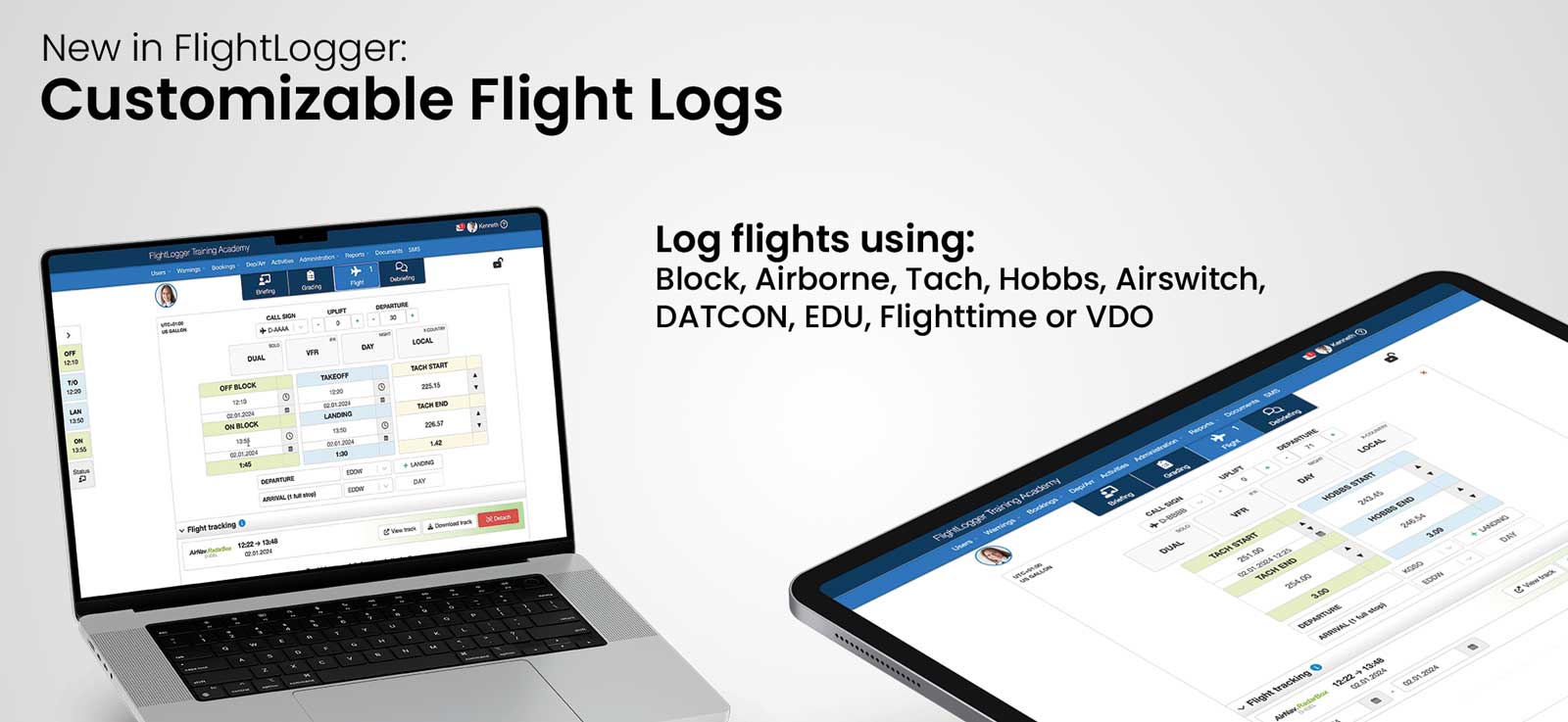
Moving to an integrated platform like FlightLogger eliminates these gaps. Scheduling, student progress, compliance documentation, and reporting all connect. When an instructor completes a lesson, the scheduling system, training record, and billing all update simultaneously.
Migration takes planning but pays off quickly. Start with your most critical processes—usually scheduling and student records—then expand to maintenance, compliance, and reporting. Most schools see efficiency gains within the first few months.
Step 3: Standardize Your Training Processes
Inconsistent processes create inconsistent outcomes. If each instructor tracks progress differently or uses their own grading criteria, students receive uneven experiences and your data loses reliability.
Define standard operating procedures for key workflows. How do instructors schedule lessons? What grading scale applies? When should training managers intervene with a struggling student? Document these procedures and ensure everyone follows them.
Configure your training management system to enforce standards. FlightLogger supports structured training profiles with defined requirements, grading scales, and progression rules. The system ensures consistency without relying on manual enforcement.
Step 4: Automate Repetitive Tasks
Every manual task that software could handle automatically represents wasted capacity. Automated reminders reduce no-shows. Automatic grade entry eliminates paperwork. Scheduled reports save time that would go to manual data compilation.
Identify tasks your staff performs repeatedly. Sending booking confirmations. Checking certificate expirations. Generating invoices from flight time. Each of these can be automated with the right system configuration.
Monitor automation effectiveness. After implementing automatic reminders, measure whether no-show rates actually decrease. After automating invoicing, check whether billing accuracy improves. Automation should solve problems, not create new ones.
Step 5: Monitor, Measure, and Adjust
Efficiency improvement is ongoing. Initial changes produce gains, but operations evolve. New instructors join. Student volume fluctuates. Aircraft get added or retired. Regular review ensures your processes stay optimized.
Schedule monthly operational reviews. Compare current metrics against your baseline and previous months. Look for trends—both positive and negative. Investigate changes and adjust procedures accordingly.
Gather continuous feedback from your team and students. Processes that made sense six months ago may no longer fit. Staff closest to daily operations often spot improvement opportunities that leadership misses.
Common Mistakes That Hurt Flight School Efficiency
Even well-intentioned efforts to improve efficiency can backfire if you approach them incorrectly. Understanding common mistakes helps you avoid repeating them in your own operation.
Mistake 1: Adding More Tools Instead of Integrating
When a problem emerges, the instinct is often to find a tool that solves it. Need better maintenance tracking? Add maintenance software. Need better billing? Add billing software. Each tool may work well individually, but disconnected tools create data gaps and increase administrative load.
The solution is integration, not addition. Before adding a new tool, ask whether your existing platform could handle the need with proper configuration. If you must add something, ensure it integrates with your core systems.
Mistake 2: Focusing on Technology Over Process
Software can accelerate good processes and amplify bad ones. Implementing a sophisticated scheduling system won't help if your underlying scheduling process is flawed. The tool will just execute your broken process faster.
Fix processes before implementing technology. Map out how you want operations to work in an ideal state. Then select tools that support that workflow. Technology should serve your process, not define it.
Mistake 3: Ignoring Staff Training and Adoption
The most powerful software accomplishes nothing if your team doesn't use it. Implementation projects sometimes focus entirely on configuration and data migration while neglecting the people who must use the system daily.
Invest in training and change management. Explain why changes are happening and how they benefit staff - not just the school. Address concerns and resistance directly. Monitor adoption after go-live and provide additional support where needed.
Mistake 4: Measuring the Wrong Things
Not all metrics matter equally. Tracking dozens of KPIs creates noise without clarity. Focusing on vanity metrics (like total flight hours) instead of efficiency metrics (like utilization rate) leads to misdirected effort.
Choose a small set of metrics that directly connect to your efficiency goals. Review them consistently. Add new metrics only when you have specific questions they'll answer. Quality of measurement beats quantity.
How Multi-Location Flight Schools Can Scale Efficiently
Operating multiple locations introduces complexity that single-location schools don't face. Each campus may have its own aircraft, instructors, and student population—but you need visibility across all of them to manage the business effectively.
The common mistake is treating each location as a separate operation. This creates data fragmentation at scale. You can't easily move aircraft between locations, transfer students, or see consolidated performance metrics.
Platforms designed for multi-location operations maintain separation where needed (each location's schedule) while providing consolidation where valuable (fleet-wide utilization, cross-campus reporting). FlightLogger supports multi-campus operations with unified data and location-specific views.
Challenges Specific to Multi-Location Operations
Resource sharing gets complicated. That senior check instructor who works at two locations needs to appear on both schedules without double-booking. Aircraft that move between locations need their maintenance tracking to follow them.
Consistent standards become harder to maintain. Training quality should be equivalent whether a student trains at Location A or Location B. Different local practices can create inconsistent outcomes and student confusion.
Reporting at appropriate levels requires flexibility. Location managers need their campus data. Regional directors need aggregated views. Executive leadership needs the full picture. One-size-fits-all reporting doesn't work.
Best Practices for Multi-Location Efficiency
Use a single platform across all locations. Running different systems at different campuses makes consolidation nearly impossible. Standardize on one platform and configure it to handle your multi-location needs.
Define which processes are standardized and which are local. Core training programs and compliance procedures should be consistent. Local scheduling preferences and instructor assignments can vary. Document these decisions clearly.
Establish clear resource-sharing protocols. How do you request an aircraft from another location? How are shared instructors scheduled? Clear procedures prevent conflicts and ensure efficient use of your total fleet and staff.
Conclusion: Building a More Efficient Flight Training Operation
Flight school efficiency comes from coordination. Your aircraft, instructors, students, schedules, and compliance requirements all interconnect. When these pieces work together smoothly, your operation runs smoothly. When they don't, small inefficiencies compound into significant costs.
The path to better efficiency starts with visibility. You need to see what's happening across your operation - in real time, not in last month's reports. Centralized platforms like FlightLogger give you that visibility by connecting scheduling, training, maintenance, and compliance in one system.
From visibility comes action. When you can see which students are falling behind, which aircraft are underutilized, and which processes create bottlenecks, you can address problems before they grow. Data-driven decisions replace guesswork.
Efficiency isn't a one-time project. It's an ongoing commitment to measuring what matters, eliminating waste, and continuously improving how your school operates. The flight schools that thrive in competitive markets are those that treat operational efficiency as a core capability - not an afterthought.
FAQs About How to Improve Flight School Efficiency in 2026
What is the most important factor in flight school efficiency?
Integration is the most important factor. When your scheduling, training, maintenance, and billing systems connect, you eliminate duplicate data entry and gain real-time visibility into your operation. FlightLogger integrates these functions so you always see the complete picture.
How can flight schools reduce scheduling conflicts?
Centralize scheduling in one system that checks aircraft availability, instructor qualifications, and maintenance windows before confirming bookings. FlightLogger's scheduling module prevents conflicts automatically and notifies all parties when changes occur. Automated reminders also reduce no-shows that disrupt schedules.
What metrics should training managers track to measure efficiency?
Focus on aircraft utilization rate, student completion time, instructor productivity, and cancellation frequency. These metrics reveal how effectively you're using resources and where bottlenecks occur. FlightLogger's Business Insights module tracks these automatically and surfaces trends.
How does student progress tracking improve operational efficiency?
Real-time progress tracking lets you identify struggling students early—before minor delays become major setbacks. FlightLogger shows each student's status against their training program, sends alerts when students fall behind, and helps training managers allocate attention where it's needed most.
Can small flight schools benefit from management software?
Yes. Small schools benefit from reduced administrative burden and better visibility into their operation. FlightLogger's usage-based pricing adapts to activity levels, so smaller operations pay according to their scale. The efficiency gains often exceed the platform cost within months.
How do multi-location flight schools maintain consistent efficiency?
Multi-location operations need a unified platform that supports both local scheduling and consolidated reporting. FlightLogger handles multi-campus operations with location-specific views and organization-wide visibility. Standardized training programs and clear resource-sharing protocols ensure consistent quality across all locations.