.png?width=201&height=201&name=Maintenance%20(Videoannonce%20%E2%80%93%20LinkedIn).png)

Aircraft and Instructor Availability Planning for Flight Schools

Key Takeaways: Aircraft and Instructor Availability Planning for Flight Schools
- Aircraft and instructor availability planning directly affects student progression, on-time completions, and overall training throughput at your flight school.
- Scheduling conflicts between aircraft maintenance windows and instructor availability are a primary cause of delayed training and frustrated students.
- Real-time visibility into resource availability eliminates guesswork and allows dispatchers and schedulers to make faster, better-informed decisions.
- FlightLogger centralizes scheduling, maintenance coordination, and instructor availability into one platform, giving you full operational visibility.
- Effective availability planning requires aligning aircraft readiness, instructor calendars, and student progression data in a single, accessible system.
What Is Aircraft and Instructor Availability Planning?
Aircraft and instructor availability planning is the process of coordinating your fleet readiness and instructor schedules to maximize training opportunities. At its core, this means ensuring that when a student is ready to fly, an aircraft is available and airworthy, and a qualified instructor is free to supervise.
This sounds straightforward. In practice, it's anything but.
Flight schools operate in a dynamic environment where maintenance windows shift, weather cancels flights, instructors call in sick, and students reschedule at the last minute. Without a structured approach to availability planning, these variables compound into scheduling chaos that delays student progression and burns through administrative time.
Why Availability Planning Matters for Flight Training Operations
Behind every successful flight school is a structured operation. And at the heart of that operation is resource availability. When aircraft and instructors aren't aligned, students wait. When students wait too long, they disengage or leave.
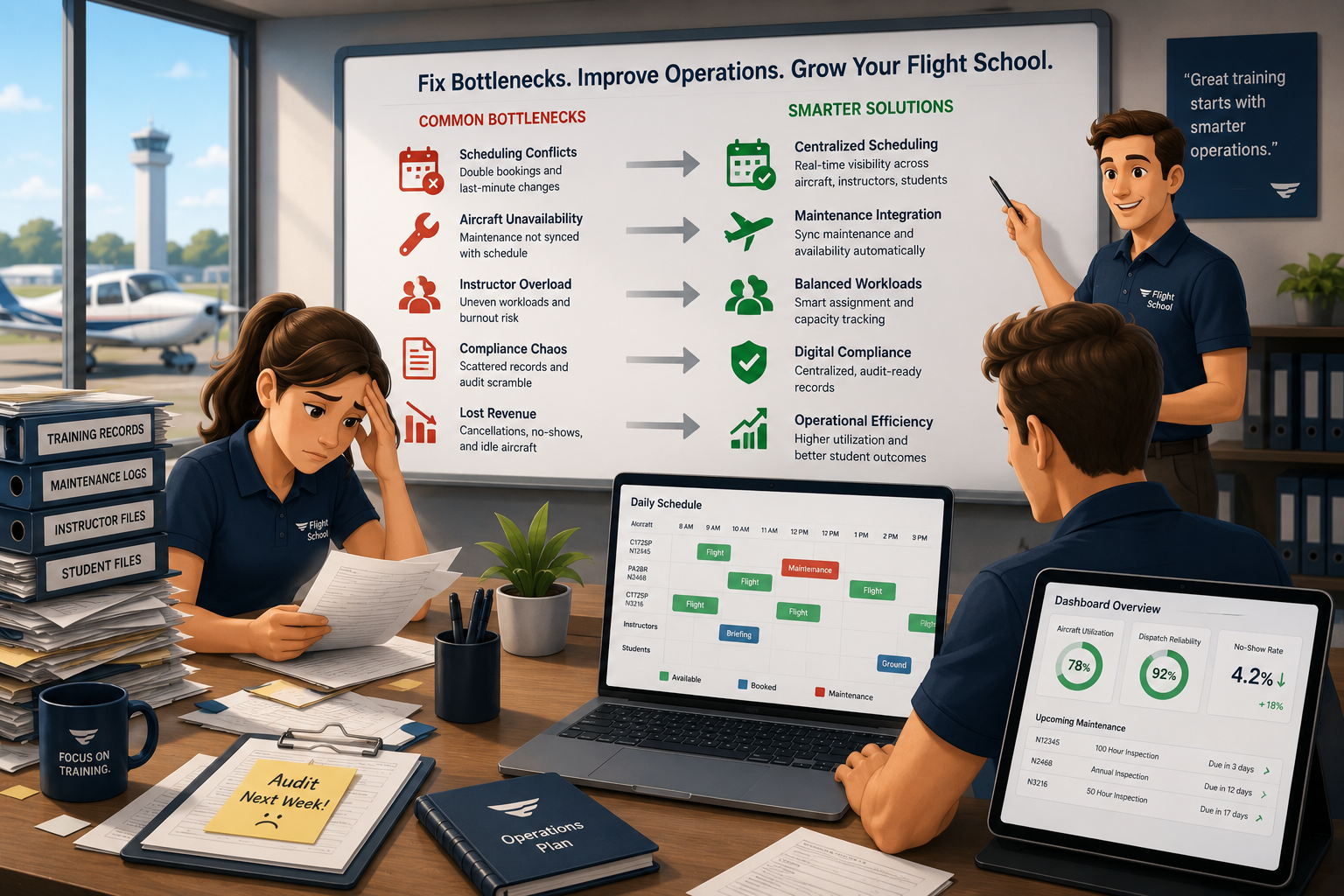
Poor availability planning creates a ripple effect. A single aircraft grounded for unplanned maintenance can cascade into dozens of rescheduled lessons. An instructor's unexpected absence can leave multiple students without a path forward. These disruptions don't just cost time—they cost revenue, reputation, and student trust.
Effective planning, by contrast, gives you the visibility to anticipate problems before they happen. You can see which aircraft are approaching maintenance limits, which instructors are nearing their duty time caps, and which students are at risk of falling behind.
How Do Scheduling Conflicts Happen in Flight Schools?
Scheduling conflicts in flight training typically originate from three sources: incomplete information, disconnected workflows, and reactive rather than proactive management.
Incomplete Information
When your scheduling team can't see real-time aircraft status, they may book a flight on a plane that's due for a 100-hour inspection. When they don't have visibility into instructor certifications, they might assign a student to an instructor who isn't qualified for that specific training stage.
Disconnected Workflows
Many flight schools still rely on separate systems for scheduling, maintenance tracking, and student progress. When these systems don't talk to each other, information gaps emerge. The maintenance team knows an aircraft is grounded, but the scheduling team doesn't get the memo until students show up for their lessons.
Reactive Management
Without proactive planning tools, dispatchers spend their time putting out fires rather than preventing them. They reschedule lessons after conflicts arise instead of anticipating and avoiding them. This reactive approach drains administrative resources and creates a poor experience for students and instructors alike.
What Are the Core Components of Effective Availability Planning?
Effective aircraft and instructor availability planning rests on four pillars: real-time resource visibility, integrated maintenance scheduling, instructor qualification tracking, and student progression alignment.
Real-Time Resource Visibility
You need to know what's happening with your fleet and instructors right now—not what the schedule said yesterday. Real-time visibility means seeing aircraft availability, instructor status, and lesson bookings in a single view that updates automatically.
FlightLogger gives you this visibility by centralizing all scheduling and resource data in one platform. Dispatchers can see at a glance which aircraft are available, which instructors are on duty, and which time slots are open for student bookings.
Integrated Maintenance Scheduling
Aircraft maintenance can't be an afterthought. Your availability planning needs to account for scheduled inspections, component time limits, and airworthiness directives. When maintenance is integrated into your scheduling workflow, you can block off aircraft before they become unavailable rather than scrambling after the fact.
This integration also helps you optimize maintenance timing. If an aircraft is approaching its 100-hour inspection and you have a light training week coming up, you can schedule the maintenance during that window instead of losing a high-demand training day.
Instructor Qualification Tracking
Not every instructor can teach every lesson. Instructors have certifications, endorsements, and currency requirements that determine what they're qualified to supervise. Your availability planning needs to match students with instructors who hold the appropriate qualifications for their current training stage.
Beyond qualifications, you also need to track duty time limits. Instructors operating under Part 141 or EASA regulations face specific limitations on how many hours they can fly or instruct in a given period. Exceeding these limits creates compliance risks and potential certificate actions.
Student Progression Alignment
Availability planning isn't just about matching aircraft and instructors—it's about matching them to student needs. A student working on cross-country navigation has different requirements than a student practicing pattern work. Your scheduling needs to account for aircraft type, instructor specialty, and the specific syllabus requirements for each lesson.
How to Build an Aircraft Availability Management System
Building an effective aircraft availability management system requires a combination of accurate data, structured workflows, and the right technology. Here's a step-by-step approach:
Step 1: Audit Your Current Fleet Status
Start by documenting every aircraft in your fleet along with its current status. This includes total time, time since last inspection, known maintenance squawks, and upcoming inspection requirements. You need a complete picture before you can plan effectively.
Step 2: Define Maintenance Triggers
Establish clear thresholds for when aircraft should be blocked from the schedule. This might be 10 hours before a 100-hour inspection, 30 days before an annual, or immediately upon any MEL item being logged. These triggers should be built into your scheduling workflow so they happen automatically.
Step 3: Create Maintenance Windows
Work with your maintenance provider to establish predictable maintenance windows. If possible, schedule recurring maintenance during historically low-demand periods. This minimizes the impact on training operations while ensuring aircraft stay airworthy.
Step 4: Implement Real-Time Status Updates
Your scheduling system needs to reflect reality as it changes. When a pilot logs a squawk, the aircraft status should update immediately. When maintenance clears an aircraft for service, that status should flow back to scheduling without manual intervention.
FlightLogger's integrated maintenance tracking handles this automatically, ensuring your scheduling team always works with accurate, up-to-date information.
How to Manage Instructor Availability Effectively
Instructor availability management presents unique challenges beyond simple calendar management. Instructors have qualifications, preferences, and regulatory limits that all factor into scheduling decisions.
Centralize Instructor Calendars
Every instructor's availability should feed into a single scheduling system. This includes their regular working hours, time-off requests, duty time remaining, and any blocks for personal commitments. When this information lives in multiple places, conflicts become inevitable.
Track Qualifications and Currency
Maintain a current database of each instructor's certificates, ratings, and endorsements. Include expiration dates for medical certificates, flight reviews, and instrument currency. Your scheduling system should flag when an instructor is about to lose currency for a specific training activity.
Monitor Duty Time Limits
Regulatory duty time limits exist for good reasons. Your scheduling system should track flight time, duty time, and rest requirements automatically. This prevents inadvertent violations while maximizing the productive time available from each instructor.
Balance Workload Distribution
Uneven workload distribution leads to instructor burnout and turnover. Your availability planning should spread lessons across your instructor team based on their availability, qualifications, and current workload. This keeps everyone productive without overloading any individual.
What Role Does Technology Play in Availability Planning?
Technology can either solve availability planning challenges or make them worse. The key is choosing platforms designed specifically for flight training operations rather than generic scheduling tools adapted from other industries.
Flight Training-Specific Platforms
Generic calendar apps don't understand aircraft maintenance cycles, instructor duty time limits, or syllabus-driven scheduling requirements. Flight training-specific platforms like FlightLogger are built with these workflows in mind. This means less configuration, fewer workarounds, and better alignment with how your operation actually runs.
Integration Over Fragmentation
The more systems you use, the more places for information to get lost. An integrated platform that handles scheduling, maintenance, student records, and compliance reporting in one place eliminates the gaps where scheduling conflicts hide.
Mobile Access for Instructors
Instructors aren't sitting at desks. They're on the flight line, in the classroom, or traveling between airports. Your availability planning tools need to be accessible from mobile devices so instructors can view their schedules, update availability, and receive notifications wherever they are.
How Can You Reduce Scheduling Conflicts at Your Flight School?
Reducing scheduling conflicts requires a combination of better data, smarter processes, and cultural change. Here are practical strategies that work:
Build Buffer Time Into Schedules
Don't schedule aircraft back-to-back without transition time. Weather delays, late returns, and post-flight debriefs all take longer than expected. Building 15-30 minute buffers between lessons reduces the cascade effect when one flight runs long.
Establish Clear Booking Policies
Create and enforce policies around booking windows, cancellation requirements, and no-show consequences. Students and instructors need to understand the rules so they can plan accordingly. Consistent enforcement prevents the gaming behaviors that create scheduling chaos.
Use Waitlists Strategically
When popular time slots fill up, maintain waitlists. If a cancellation occurs, you can fill the slot quickly rather than losing the training opportunity. Automated waitlist notifications can handle this without dispatcher intervention.
Communicate Proactively
When you know a conflict is coming—an aircraft grounding, an instructor absence, weather disruption—communicate early. Give students and instructors maximum lead time to adjust their plans. Last-minute surprises create frustration; early warnings enable adaptation.
How Does Maintenance Coordination Affect Training Schedules?
Aircraft maintenance is non-negotiable. The question isn't whether to maintain your fleet—it's how to coordinate maintenance with training demand to minimize disruption.
Predictive Maintenance Scheduling
Rather than waiting for maintenance to become mandatory, schedule it proactively based on usage trends. If you know an aircraft will hit its 100-hour limit mid-week during a busy training period, schedule the inspection for the preceding weekend when demand is lower.
Maintenance Communication Workflows
When a pilot logs a squawk, what happens next? There should be a defined workflow that notifies maintenance, updates aircraft status, and alerts affected students and instructors. FlightLogger's maintenance tracking module automates this communication so nothing falls through the cracks.
Fleet Redundancy Planning
If your entire fleet consists of identical aircraft, a single grounding has less impact on training variety. If you have specialized aircraft for specific training stages (complex, high-performance, multi-engine), consider redundancy planning to ensure no single aircraft grounding halts an entire training track.
What Metrics Should You Track for Availability Planning?
You can't manage what you don't measure. Effective availability planning requires tracking key metrics that reveal the health of your scheduling operation.
Aircraft Utilization Rate
What percentage of available flight hours are actually booked? Low utilization suggests either insufficient demand or poor scheduling efficiency. High utilization approaching 100% indicates scheduling stress that may lead to conflicts.
Instructor Utilization Rate
Similar to aircraft utilization, this measures how much of your instructor capacity is actually being used. Balance is important—underutilization wastes resources while overutilization leads to burnout.
Schedule Conflict Rate
How often do scheduling conflicts occur? Track both the frequency and the root causes. If most conflicts stem from maintenance issues, focus on maintenance coordination. If they're instructor-related, address availability management.
Student Progression Rate
Are students completing their training programs on schedule? Delays often indicate availability planning problems that prevent students from accessing the resources they need when they need them.
Cancellation Rate by Cause
Track why lessons are cancelled: weather, maintenance, instructor unavailability, student no-show. This data reveals which factors most impact your training throughput and where to focus improvement efforts.
How Can FlightLogger Help With Availability Planning?
FlightLogger is built specifically for flight training operations, which changes how availability planning works fundamentally. Rather than adapting generic tools to aviation workflows, you're working with a platform that already understands aircraft scheduling, instructor qualifications, and student progression.
Centralized Scheduling Dashboard
FlightLogger puts all your scheduling data in one place: aircraft availability, instructor calendars, student bookings, and maintenance windows. Dispatchers see everything they need without switching between systems or reconciling conflicting information.
Automated Conflict Detection
The platform automatically flags scheduling conflicts before they cause problems. If you try to book an aircraft that's scheduled for maintenance or an instructor who's reached their duty time limit, you'll know immediately—not after the student shows up for a lesson that can't happen.
Real-Time Notifications
When schedules change, affected parties get notified automatically. Students learn about cancellations quickly enough to make alternative plans. Instructors see schedule updates on their mobile devices. This communication flow happens without dispatcher intervention.
Maintenance Integration
FlightLogger connects scheduling with maintenance tracking. Aircraft approaching inspection limits automatically trigger warnings or schedule blocks. Maintenance status updates flow back to scheduling in real time. This integration eliminates the information gaps that cause surprise groundings.
How to Implement an Availability Planning System at Your Flight School
Implementing a new availability planning system requires careful preparation, stakeholder buy-in, and phased rollout. Here's how to approach it:
Phase 1: Assessment and Planning
Document your current scheduling workflows, identify pain points, and define success metrics. What problems are you trying to solve? How will you measure improvement? This clarity guides system selection and configuration.
Phase 2: Data Migration and Setup
Transfer your aircraft data, instructor records, and student information into the new system. Verify accuracy before going live. Incomplete or incorrect data undermines the entire planning function.
Phase 3: Team Training
Train your dispatchers, instructors, and administrative staff on the new system. Everyone who interacts with scheduling needs to understand their role in keeping data accurate and processes running smoothly.
Phase 4: Parallel Operation
Run the new system alongside your existing processes for a defined period. This allows you to catch issues before fully committing and builds confidence in the new approach.
Phase 5: Full Transition
Once you've validated the new system works, retire the old processes. Continuing to maintain parallel systems creates confusion and defeats the purpose of centralization.
What Are Common Availability Planning Mistakes to Avoid?
Even with good intentions, flight schools often make predictable mistakes in availability planning. Here's what to watch for:
Ignoring Maintenance Lead Time
Scheduling maintenance the day an inspection is due leaves no buffer for delays. Parts may not be available. The mechanic may find unexpected issues. Plan maintenance with sufficient lead time to avoid emergency groundings.
Overlooking Instructor Preferences
Instructors have preferences about the students they work with, the aircraft they fly, and the times they're willing to work. Ignoring these preferences in favor of pure optimization leads to dissatisfaction and turnover. Balance efficiency with human factors.
Underestimating Communication Needs
Availability planning generates a lot of information that needs to flow to the right people at the right time. Underinvesting in communication tools and workflows creates bottlenecks where good planning fails in execution.
Failing to Adjust to Seasonal Patterns
Training demand varies by season, weather, and academic calendars. Your availability planning should account for these patterns rather than treating every week the same. Increase instructor staffing and aircraft availability during peak periods; scale back during historically slow times.
How Do Regulatory Requirements Affect Availability Planning?
Aviation is a regulated industry, and many regulations directly impact availability planning. Understanding these requirements is essential for compliant operations.
Instructor Duty Time Regulations
Both FAA and EASA regulations limit how much instructors can fly and work. Part 61 and Part 141 schools in the US face different requirements. European ATOs must comply with EASA FCL rules. Your planning system needs to track these limits automatically and prevent scheduling that would create violations.
Aircraft Airworthiness Requirements
Aircraft must meet all airworthiness requirements before every flight. This includes time-based inspections (annual, 100-hour), calendar-based inspections (ELT, transponder), and AD compliance. Your availability planning must integrate with maintenance tracking to ensure only airworthy aircraft are scheduled.
Record-Keeping Requirements
Regulatory authorities require detailed records of training activities, flight times, and maintenance actions. Your availability planning system should generate audit-ready documentation automatically, eliminating the pre-audit scramble to compile records.
In Conclusion: Building a Reliable Availability Planning Operation
Aircraft and instructor availability planning sits at the core of every successful flight training operation. When resources are aligned, students progress. When they're not, everything slows down.
The path forward requires moving from reactive firefighting to proactive planning. This means centralizing your scheduling data, integrating maintenance workflows, tracking instructor qualifications and availability, and connecting everything to student progression.
Flight schools never sleep. Students train. Aircraft fly. Maintenance gets completed. Your availability planning system needs to keep pace with this reality—not by adding more work for your team, but by giving them the visibility and tools to stay ahead of problems.
FlightLogger never sleeps—so your operation never falls behind.
FAQs About Aircraft and Instructor Availability Planning
What is the most common cause of scheduling conflicts at flight schools?
The most common cause is disconnected information systems where maintenance status, instructor availability, and student bookings aren't visible in one place. FlightLogger eliminates this problem by centralizing all scheduling data, so your team works from the same accurate, real-time information.
How far in advance should flight schools schedule aircraft maintenance?
Schedule maintenance at least one to two weeks before it becomes mandatory. This buffer accounts for parts availability, mechanic scheduling, and unexpected findings during inspections. Building this lead time into your planning prevents emergency groundings that disrupt training.
How can flight schools track instructor duty time limits?
FlightLogger automatically tracks instructor flight time, duty time, and rest requirements based on applicable regulations. The system flags when instructors approach their limits and prevents scheduling that would create violations, keeping your operation compliant without manual tracking.
What metrics indicate poor availability planning?
High cancellation rates, low aircraft utilization, extended student training timelines, and frequent last-minute schedule changes all indicate availability planning problems. Tracking these metrics over time reveals patterns and improvement opportunities.
How does weather affect availability planning?
Weather causes unplanned cancellations that ripple through schedules. Effective planning accounts for regional weather patterns when projecting availability and maintains flexible backup plans. FlightLogger's notification system helps communicate weather cancellations quickly to all affected parties.
Can small flight schools benefit from availability planning software?
Flight schools of all sizes benefit from structured availability planning. Smaller operations may have simpler coordination needs, but they also have less margin for error. FlightLogger scales to fit operations from small independent schools to large multi-location academies.
How does FlightLogger handle multi-location flight school scheduling?
FlightLogger supports multi-location operations with location-specific resource management while maintaining centralized visibility. You can view and manage aircraft, instructors, and students across all locations from a single platform, making it easier to balance resources and identify optimization opportunities.