.png?width=201&height=201&name=Maintenance%20(Videoannonce%20%E2%80%93%20LinkedIn).png)

How to Manage Pilot Training in One System (2026 Guide)
 Amalie Rasmussen
·
3 minute read
Amalie Rasmussen
·
3 minute read

Managing a modern flight school involves far more than scheduling flights. Every training session depends on instructors, aircraft, students, maintenance, compliance, and accurate training records working together.
Many flight schools still rely on a combination of spreadsheets, paper records, calendars, and disconnected software. While this may work for smaller organizations, it quickly becomes difficult to manage as student numbers and operational complexity increase.
This guide explains how successful flight schools replace fragmented processes with one connected flight school management system that supports scheduling, student progress, compliance, and daily operations.
Quick Answer
The best way to manage pilot training programs is by using a centralized flight school management system that connects scheduling, student progression, instructor management, compliance, maintenance, and reporting. Rather than switching between multiple tools, instructors and administrators work from one platform that provides real-time operational visibility and standardized workflows.
Why Flight Training Management Becomes Complex
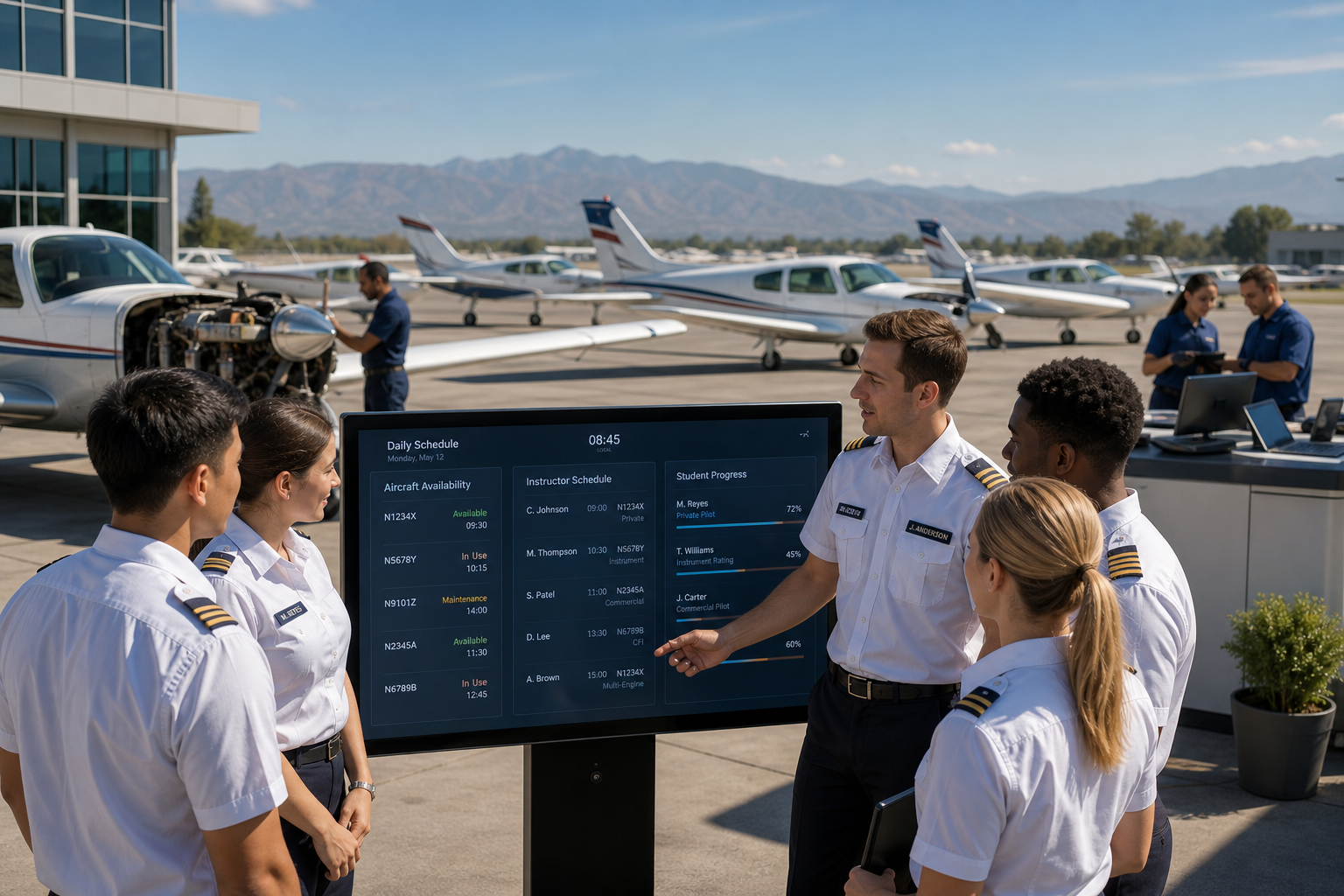
Unlike many educational organizations, flight schools must coordinate multiple resources simultaneously.
Every lesson depends on:
- Student availability
- Instructor availability
- Aircraft availability
- Maintenance status
- Training prerequisites
- Regulatory documentation
When these processes are managed separately, delays and administrative work increase.
Common symptoms include:
- Scheduling conflicts
- Duplicate data entry
- Inconsistent instructor documentation
- Limited visibility into student progress
- Difficult audit preparation
- Poor communication across teams
What a Connected Flight School Management System Should Include
Instead of treating each department separately, modern flight schools connect every operational workflow.
An effective training management system should include:
- Flight scheduling
- Student progress tracking
- Digital training records
- Instructor management
- Aircraft scheduling
- Maintenance coordination
- Compliance management
- Reporting and analytics
- Multi-campus support
When these functions work together, instructors spend less time on administration and more time training students.
Step 1: Centralize Flight Scheduling
Scheduling is the foundation of every flight school.
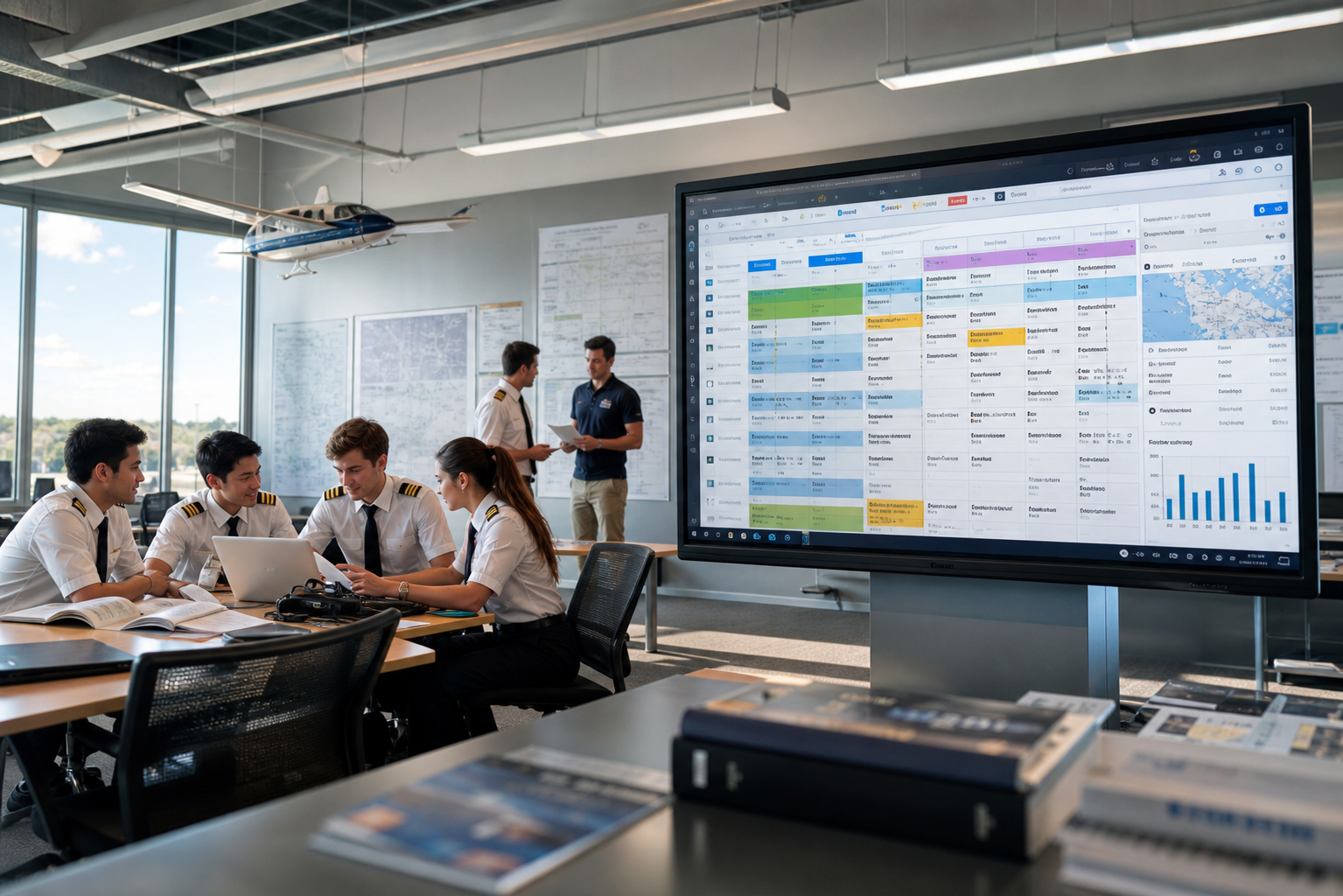
A connected scheduling system allows administrators to coordinate:
- Aircraft
- Instructors
- Students
- Simulators
- Classrooms
from one calendar.
Because everyone works from the same schedule, scheduling conflicts become easier to identify and resolve before they affect training.
Step 2: Track Student Progress Digitally
Every completed lesson should contribute directly to a student's training record.
Instead of relying on paper notes or separate spreadsheets, instructors can:
- document lesson outcomes,
- record instructor feedback,
- monitor completed milestones,
- identify upcoming training requirements.
Digital progression tracking provides better visibility for instructors, students, and training managers.
Step 3: Replace Manual Training Records
Paper documentation creates unnecessary administration and makes it difficult to maintain consistency.
Modern training management software centralizes:
- lesson records,
- instructor evaluations,
- student documentation,
- training history,
- digital sign-offs.
This improves collaboration while reducing duplicate work.
Step 4: Connect Scheduling with Maintenance
Aircraft availability is about more than empty calendar slots.
Maintenance directly affects whether an aircraft can be used for training.
Connecting maintenance with scheduling allows flight schools to:
- reduce cancellations,
- improve fleet utilization,
- plan maintenance more effectively,
- avoid scheduling unavailable aircraft.
Step 5: Build Compliance into Daily Operations
Compliance should not begin the week before an audit.
Instead, documentation should be created naturally through everyday workflows.
A connected system helps flight schools:
- standardize instructor documentation,
- maintain complete student records,
- generate operational reports,
- improve audit readiness.
This reduces administrative pressure while supporting regulatory compliance.
Step 6: Give Leadership Real-Time Visibility
As flight schools grow, leadership needs more than operational reports.
Managers should be able to answer questions such as:
- Which students are falling behind?
- Which instructors have availability?
- Which aircraft require maintenance?
- Where are scheduling bottlenecks occurring?
- How efficiently are resources being utilized?
Real-time dashboards provide the visibility needed to make informed operational decisions.
Traditional Management vs Connected Operations
| Traditional Approach | Connected Flight School Management |
|---|---|
| Separate scheduling tools | Centralized scheduling |
| Paper training records | Digital training records |
| Manual instructor coordination | Shared operational workflows |
| Separate maintenance tracking | Integrated maintenance visibility |
| Reactive compliance | Continuous compliance management |
| Limited reporting | Real-time operational dashboards |
Why More Flight Schools Are Moving to Connected Platforms
Many growing flight schools reach a point where adding another spreadsheet or standalone tool no longer solves the problem.
Instead, they begin replacing fragmented systems with one connected operational platform.
The benefits include:
- Fewer scheduling conflicts
- Better student progression
- Reduced administrative workload
- Improved instructor collaboration
- Stronger compliance readiness
- Better operational visibility
- Easier scaling across multiple locations
How FlightLogger Supports Connected Flight School Management
FlightLogger is designed as The Flight School Operating System, bringing together the core workflows required to run a modern flight school.
Within one platform, organizations can manage:
- Flight scheduling
- Student progression
- Digital training records
- Instructor management
- Aircraft scheduling
- Maintenance coordination
- Compliance workflows
- Reporting and business insights
Rather than switching between disconnected tools, instructors, administrators, and leadership all work from the same operational data.
Frequently Asked Questions
What is the best way to manage pilot training programs?
The most effective approach is to use a centralized flight school management system that combines scheduling, student progress tracking, training records, compliance, and operational reporting into one connected platform.
Why is flight training management so complex?
Flight training requires coordinating students, instructors, aircraft, maintenance, compliance, and scheduling at the same time. As organizations grow, managing these processes manually becomes increasingly difficult.
How do flight schools manage student training and scheduling?
Modern flight schools use dedicated training management software to centralize scheduling, track student progression, maintain digital training records, and provide operational visibility across the organization.
Why do flight schools struggle with manual processes?
Manual processes often rely on spreadsheets, paper records, and disconnected systems, resulting in duplicate work, inconsistent documentation, scheduling conflicts, and limited visibility into daily operations.
Final Thoughts
Managing pilot training is no longer just about scheduling flights.
The most successful flight schools connect every part of their operation—from student progression and instructor coordination to maintenance, compliance, and reporting—within one system.
As aviation training organizations continue to grow, connected flight school management software provides the operational visibility, consistency, and scalability needed to deliver better training while reducing administrative complexity.