
.png?width=201&height=201&name=Maintenance%20(Videoannonce%20%E2%80%93%20LinkedIn).png)

Coordinate Aircraft, Instructors, and Students From One Scheduling Platform
Every flight lesson depends on the successful coordination of multiple resources.
An instructor must be available. An aircraft must be available and airworthy. A student must be scheduled. Training requirements must be met.
When resource scheduling is managed across spreadsheets, calendars, emails, and separate systems, conflicts become difficult to avoid and operational efficiency suffers.
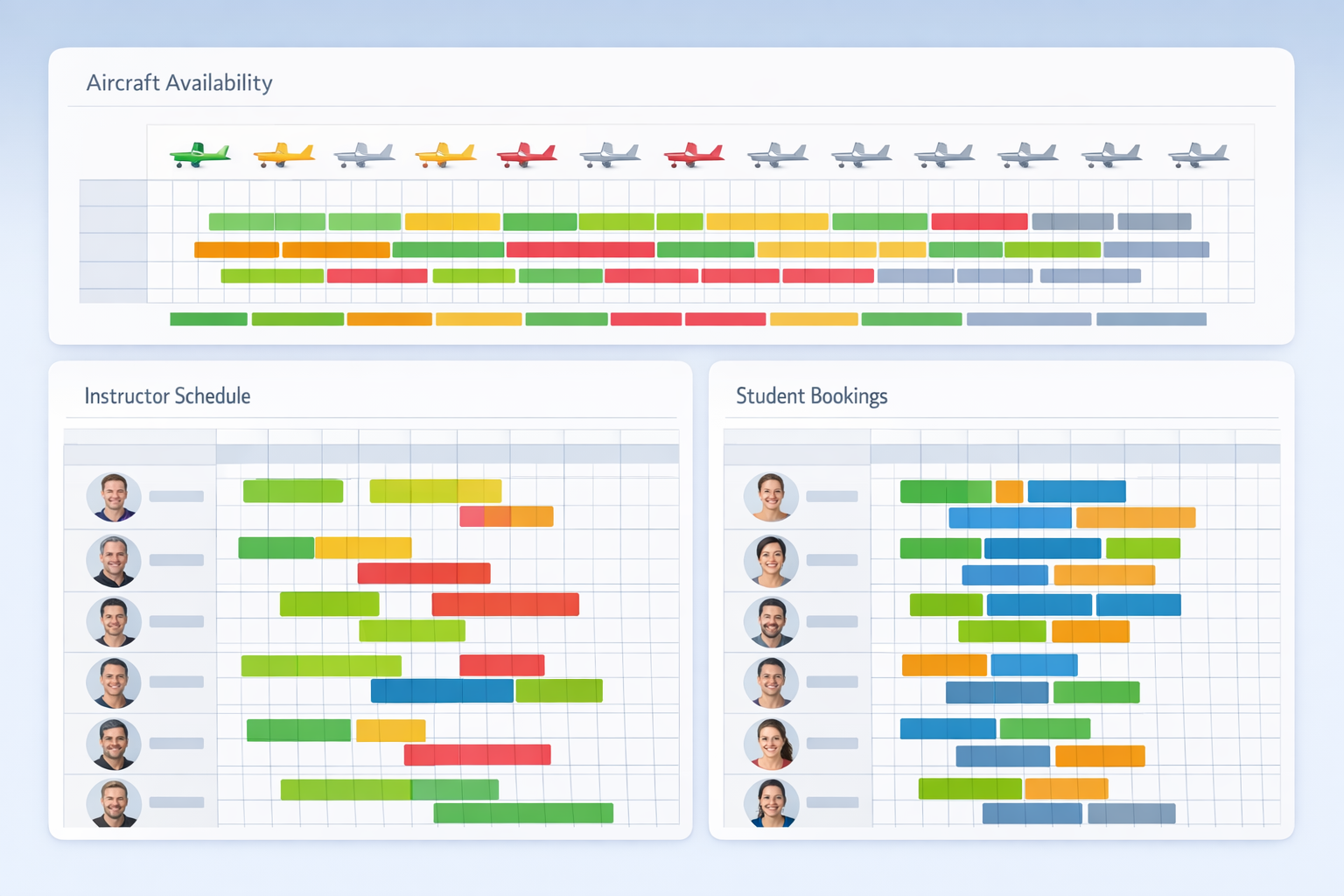
FlightLogger helps flight schools centralize aircraft scheduling, instructor scheduling, student bookings, and operational visibility in one platform, making resource coordination simpler and more efficient.
Why Resource Scheduling Is Critical for Flight Schools
Unlike many educational organizations, flight schools must coordinate both people and equipment.
Every training activity requires:
- Aircraft availability
- Instructor availability
- Student availability
- Aircraft readiness
- Training progression requirements
A disruption to any one of these resources can impact the entire training schedule.
As schools grow, managing resource availability manually becomes increasingly complex.
What Is Flight School Scheduling Software?
Flight school scheduling software helps training organizations coordinate aircraft, instructors, students, simulators, and operational resources from a centralized system.
The goal is not simply to create a calendar.
The goal is to improve resource utilization, reduce scheduling conflicts, and support efficient flight training operations.
Modern flight school scheduling software helps schools maintain visibility across all scheduling activities while supporting daily operational decision-making.
One Platform for Resource Scheduling
FlightLogger connects scheduling and operational workflows into a single platform.
Aircraft Scheduling
Coordinate:
- Aircraft availability
- Aircraft assignments
- Fleet utilization
- Maintenance requirements
- Operational readiness
This helps ensure scheduling decisions reflect real aircraft availability.
Instructor Scheduling
Manage:
- Instructor assignments
- Instructor availability
- Training workloads
- Resource allocation
- Cross-location scheduling
This improves instructor utilization and reduces scheduling conflicts.
Student Scheduling
Coordinate:
- Student bookings
- Training events
- Lesson scheduling
- Training progression
- Resource planning
Students benefit from more consistent and predictable training schedules.
How to Reduce Scheduling Conflicts in Flight Training
Scheduling conflicts often occur when information is fragmented.
Common causes include:
- Aircraft unavailable due to maintenance
- Instructor double-bookings
- Last-minute schedule changes
- Limited visibility into resource availability
- Manual scheduling processes
FlightLogger helps reduce scheduling conflicts by centralizing operational data and improving visibility across scheduling activities.
When aircraft, instructors, and students are managed within one system, conflicts become easier to identify and avoid.
How to Optimize Flight Scheduling for Flight Schools
Flight scheduling optimization is about balancing resources effectively.
Schools that optimize scheduling focus on:
- Aircraft utilization
- Instructor utilization
- Student progression
- Maintenance planning
- Operational efficiency
FlightLogger helps administrators make better scheduling decisions by providing visibility into resource availability and operational constraints.
The result is more efficient use of training capacity and fewer avoidable disruptions.
Best Way to Manage Aircraft and Instructor Scheduling
The most effective approach is to manage scheduling through a centralized platform that provides visibility into all operational resources.
Best practices include:
Maintain One Source of Truth
Avoid managing aircraft, instructors, and students across multiple systems.
Connect Scheduling to Aircraft Status
Aircraft scheduling should reflect maintenance requirements and operational readiness.
Connect Scheduling to Training Progress
Training activities should support student progression and certification milestones.
Improve Visibility Across Teams
Instructors, dispatchers, administrators, and management should work from the same information.
Standardize Scheduling Processes
Consistent workflows reduce confusion and improve operational efficiency.
FlightLogger vs Traditional Scheduling Methods
| Traditional Scheduling | FlightLogger |
|---|---|
| Multiple spreadsheets and calendars | Centralized scheduling platform |
| Manual resource coordination | Unified resource visibility |
| Limited visibility into aircraft availability | Connected aircraft scheduling |
| Instructor schedules managed separately | Integrated instructor scheduling |
| Higher risk of conflicts | Improved scheduling coordination |
| Time-consuming schedule management | Streamlined workflows |
Benefits of Centralized Resource Scheduling
Fewer Scheduling Conflicts
Improve coordination between aircraft, instructors, and students.
Better Aircraft Utilization
Maximize training opportunities across the fleet.
Improved Instructor Efficiency
Reduce administrative effort and scheduling confusion.
Better Student Experience
Support more consistent training schedules and lesson continuity.
Greater Operational Visibility
Understand resource availability and scheduling constraints in real time.
Frequently Asked Questions
What is the best way to manage aircraft and instructor scheduling?
The most effective approach is to use centralized flight school scheduling software that provides visibility into aircraft availability, instructor schedules, student bookings, and operational requirements from one platform.
How do flight schools reduce scheduling conflicts?
Flight schools reduce scheduling conflicts by centralizing scheduling information, connecting scheduling to aircraft readiness and training requirements, and improving visibility across operational resources.
How do you optimize flight scheduling for flight schools?
Flight scheduling optimization involves balancing aircraft utilization, instructor availability, maintenance requirements, and student progression while minimizing scheduling disruptions.
What is flight school scheduling software?
Flight school scheduling software helps flight schools coordinate aircraft, instructors, students, simulators, and operational resources while improving efficiency and reducing conflicts.
How does FlightLogger improve resource scheduling?
FlightLogger centralizes aircraft scheduling, instructor scheduling, student bookings, maintenance visibility, and operational oversight, helping schools coordinate resources more effectively.
What Is the Best Way to Manage Aircraft and Instructor Scheduling?
The best way to manage aircraft and instructor scheduling is through centralized flight school scheduling software that provides real-time visibility into resource availability. By connecting aircraft status, instructor schedules, student bookings, and operational requirements in one platform, flight schools can reduce scheduling conflicts, improve resource utilization, and support more efficient training operations. Centralized scheduling also helps administrators spend less time coordinating resources manually and more time focusing on training delivery and operational performance.
Built for Flight Training Organizations
FlightLogger supports:
- Flight schools
- Aviation academies
- Professional pilot training organizations
- Multi-campus training operations
- Growing aviation education providers
By connecting aircraft scheduling, instructor scheduling, training management, and operational oversight, FlightLogger helps organizations improve efficiency while reducing scheduling complexity.