.png?width=201&height=201&name=Maintenance%20(Videoannonce%20%E2%80%93%20LinkedIn).png)

Flight School Compliance Workflow in 2026: A Complete Guide to Audit-Ready Operations
 Amalie Rasmussen
·
4 minute read
Amalie Rasmussen
·
4 minute read
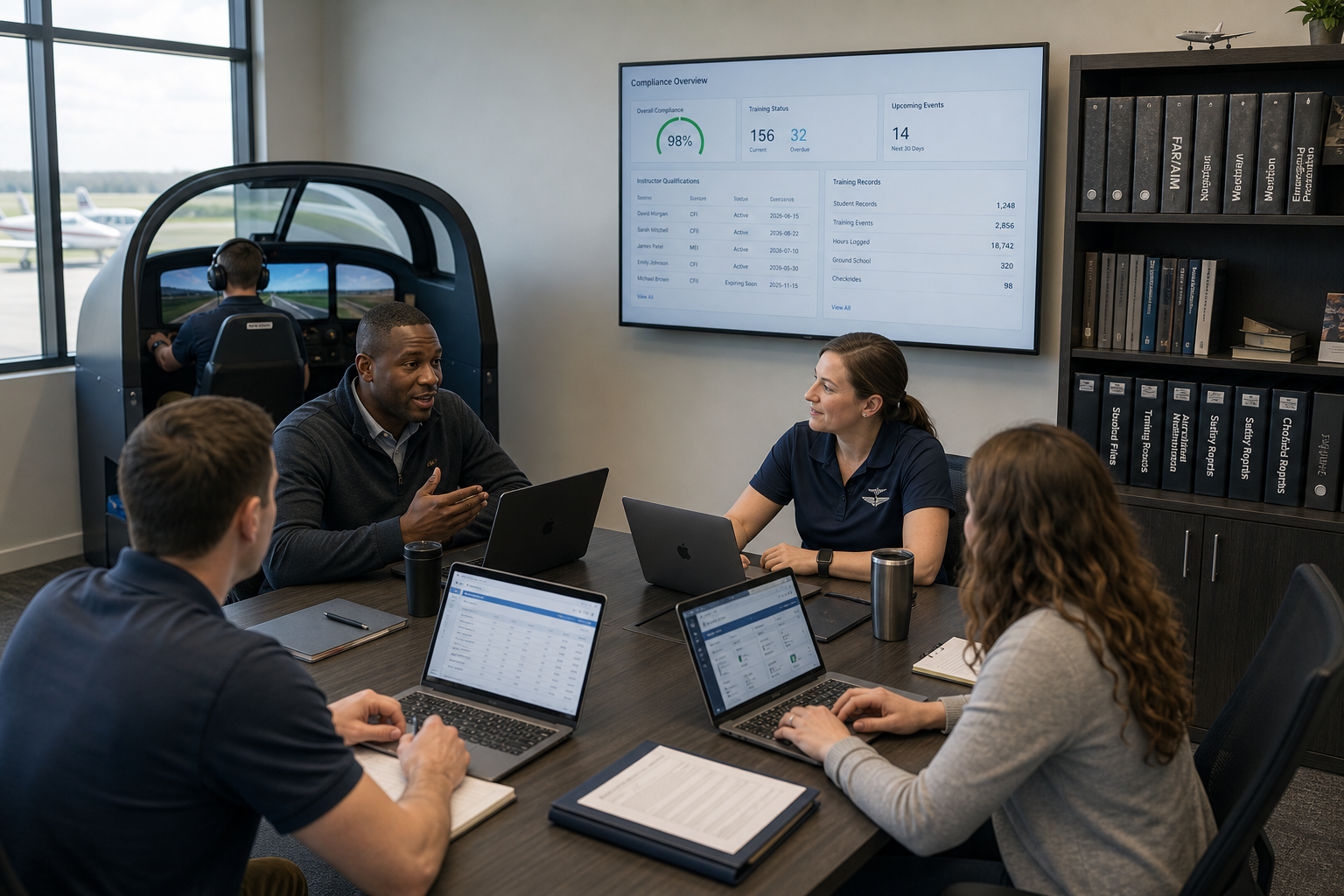
Flight School Compliance Workflow in 2026
Compliance has always been a fundamental part of operating a flight school. But as training organizations grow, regulatory requirements become increasingly difficult to manage through spreadsheets, paper records, and disconnected systems.
Today's flight schools must maintain accurate training documentation, monitor instructor qualifications, demonstrate adherence to pilot training standards, and be prepared for audits at any time.
The most successful organizations don't treat compliance as something they prepare for once a year. Instead, they build compliance into their daily operations through structured workflows.
This guide explains how modern flight schools create repeatable flight school compliance workflows that reduce administrative burden while improving audit readiness.
Quick Answer
An effective flight school compliance workflow integrates training records, documentation control, instructor qualifications, scheduling, and audit preparation into everyday operations. Rather than preparing for inspections at the last minute, modern flight schools use digital processes that keep compliance continuously up to date.
Why Compliance Is More Than Passing an Audit
Many schools think about compliance only when an inspection is approaching.
In reality, compliance affects every training day.
It influences:
- Student training records
- Instructor qualifications
- Aircraft documentation
- Training syllabi
- Safety reporting
- Operational procedures
- Regulatory reporting
- Document management
When these activities become part of normal operations, audits become significantly easier.
What Does Flight School Compliance Include?
Although requirements differ between authorities such as EASA, FAA, CASA, and Transport Canada, most organizations manage similar operational areas.
These include:
- Student records
- Instructor certifications
- Training syllabi
- Lesson completion
- Aircraft documentation
- Medical certificates
- Operational manuals
- Safety management
- Internal procedures
- Record retention
Modern aviation compliance management systems help organize these requirements into repeatable workflows instead of isolated administrative tasks.
The Modern Flight School Compliance Workflow
A repeatable compliance process typically consists of five stages.
1. Maintain Accurate Training Records
Every lesson generates information that may later be reviewed during an audit.
Schools should ensure they consistently record:
- Flight lessons
- Ground training
- Instructor sign-offs
- Student progression
- Competency assessments
- Examination results
Digital records reduce errors while making historical information immediately accessible.
2. Control Documentation
Documentation quickly becomes difficult to manage as organizations grow.
Examples include:
- Operations manuals
- Standard operating procedures
- Safety documentation
- Instructor documents
- Student certificates
- Aircraft documentation
Version control is essential.
Everyone should work from the latest approved documentation.
3. Monitor Compliance Continuously
Compliance should never rely on memory.
Schools should actively monitor:
- Instructor qualifications
- Medical certificate validity
- Student documentation
- Expiring licences
- Aircraft inspections
- Required approvals
Instead of manually checking spreadsheets, modern systems can provide visibility into upcoming compliance actions before they become problems.
4. Prepare for Audits Every Day
The easiest audit is the one you're already prepared for.
Rather than collecting documentation weeks before an inspection, schools should maintain audit-ready records continuously.
That means:
- Complete training histories
- Consistent document storage
- Standardized instructor sign-offs
- Clear operational procedures
- Accessible compliance reports
Preparation becomes part of normal operations instead of a stressful project.
5. Review and Improve
Compliance is not static.
Following every audit, internal review, or operational event, schools should evaluate:
- Documentation quality
- Workflow efficiency
- Training consistency
- Record accuracy
- Regulatory changes
Continuous improvement strengthens both compliance and operational performance.
Common Compliance Challenges
Growing flight schools often experience similar problems.
Disconnected records
Training information is spread across paper files, spreadsheets, and multiple software systems.
Missing documentation
Required documents cannot be located quickly during inspections.
Expired qualifications
Instructor or student documents expire without anyone noticing.
Manual reporting
Generating reports requires significant administrative effort.
Inconsistent processes
Different instructors record training differently, reducing consistency across the organization.
A structured compliance workflow helps eliminate these risks.
Compliance and Flight School Operations Should Work Together
Compliance should not operate separately from flight school operations.
Every operational activity influences regulatory readiness.
For example:
A completed training lesson should automatically update:
- Student progression
- Training records
- Instructor activity
- Competency tracking
- Operational reporting
When compliance and operations share the same information, schools spend less time duplicating administrative work.
Flight Training Audit Preparation Checklist
Before an audit, every flight school should be able to demonstrate:
✅ Complete student training records
✅ Current instructor qualifications
✅ Approved training syllabi
✅ Aircraft documentation
✅ Operational manuals
✅ Safety reports
✅ Competency assessments
✅ Record retention procedures
✅ Standardized documentation
✅ Evidence of regulatory compliance
If these items are maintained continuously, audit preparation becomes significantly easier.
How Technology Supports Aviation Compliance Management
Modern aviation compliance management platforms simplify regulatory oversight by bringing information together in one place.
Key capabilities include:
- Digital training records
- Document management
- Qualification tracking
- Compliance dashboards
- Audit reporting
- Workflow automation
- Operational visibility
- Secure record storage
Instead of treating compliance as a standalone activity, technology makes it part of everyday operations.
Compliance Is About Consistency
Many organizations assume compliance means avoiding mistakes.
In practice, regulators often look for something different:
Consistent, repeatable processes.
Schools that document training consistently, maintain accurate records, and follow standardized workflows are typically much better prepared for regulatory oversight than schools relying on manual administration.
Reliable compliance is built through discipline—not last-minute preparation.
Frequently Asked Questions
How do flight schools handle compliance and regulations?
Modern flight schools manage flight school compliance through standardized workflows, digital training records, document control, qualification tracking, and continuous monitoring. Rather than preparing only before inspections, compliance becomes part of daily operations.
How do you prepare for a flight training audit?
The best way to prepare for a flight training audit is to maintain complete, accurate records throughout the year. This includes training documentation, instructor qualifications, operational manuals, safety records, and evidence that procedures are consistently followed.
What is aviation compliance management?
Aviation compliance management is the process of ensuring a flight school continuously meets regulatory requirements through documentation, operational controls, training records, audits, and monitoring of certifications and qualifications.
Why is documentation control important?
Documentation control ensures instructors and staff always work from the latest approved manuals, procedures, and forms. Proper version control reduces errors, improves consistency, and supports regulatory compliance.
How can software improve flight school compliance?
Modern software centralizes documentation, training records, qualification tracking, reporting, and operational workflows. This improves visibility, reduces manual administration, and helps schools remain audit-ready throughout the year.
Build Compliance Into Every Training Day
The most successful flight schools don't prepare for audits—they operate as though an audit could happen tomorrow.
By integrating documentation, training records, operational processes, and qualification management into one workflow, schools reduce administrative effort while improving regulatory readiness.
FlightLogger is the Flight School Operating System, helping flight schools manage compliance alongside operations, training, people, safety, maintenance, finance, insights, and integrations. With digital training records, audit-ready documentation, operational visibility, and centralized workflows, FlightLogger helps schools stay compliant without adding unnecessary administrative complexity.
Book a demo to see how FlightLogger supports modern flight school compliance.