.png?width=201&height=201&name=Maintenance%20(Videoannonce%20%E2%80%93%20LinkedIn).png)

Spreadsheets vs FlightLogger for Flight School Growth
When Do Flight Schools Outgrow Spreadsheets?
Most flight schools start with spreadsheets.
They're flexible, familiar, and inexpensive. For smaller operations with a limited number of students, instructors, and aircraft, spreadsheets can be a practical way to manage scheduling and administration.
However, as flight schools grow, spreadsheets often become increasingly difficult to maintain.
More students mean more scheduling complexity. More instructors create coordination challenges. More aircraft require better operational visibility. Compliance requirements become harder to manage.
This is where many schools begin evaluating flight school management software.
This guide compares spreadsheet-based operations with FlightLogger to help growing flight schools understand which approach best supports long-term growth.
Quick Comparison
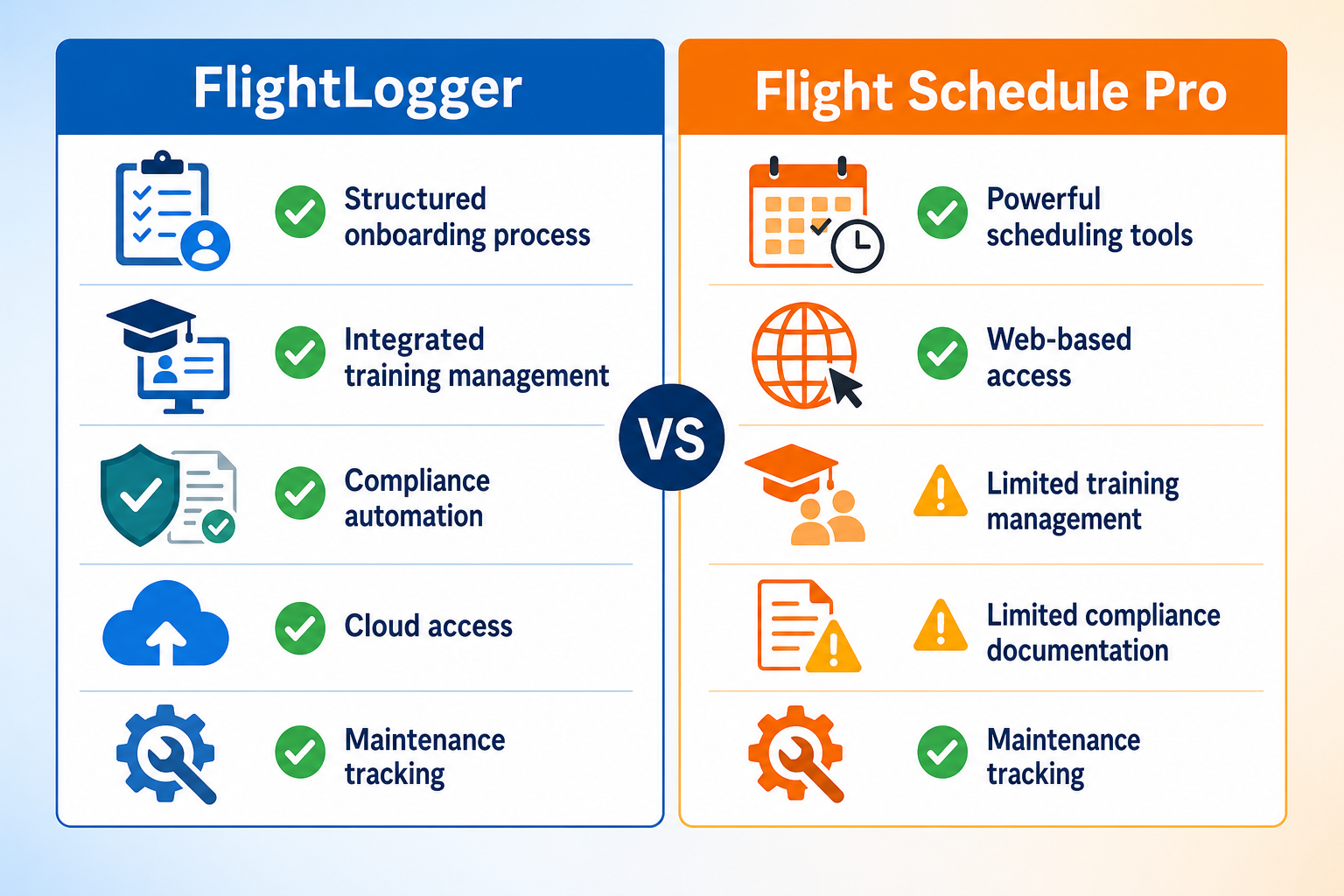
| Capability | Spreadsheets | FlightLogger |
|---|---|---|
| Flight scheduling | Manual | Centralized scheduling |
| Student progress tracking | Manual updates | Integrated training management |
| Instructor scheduling | Manual coordination | Real-time visibility |
| Aircraft scheduling | Separate spreadsheets | Connected resource management |
| Compliance tracking | Manual documentation | Audit-ready records |
| Maintenance visibility | Separate tracking | Connected operational oversight |
| Multi-location support | Difficult to manage | Built for scalability |
| Operational reporting | Manual reporting | Centralized visibility |
| Administrative workload | High | Reduced through automation |
Why Flight Schools Start With Spreadsheets
Spreadsheets are often the first operational tool a flight school adopts.
They are commonly used for:
- Student records
- Flight scheduling
- Instructor assignments
- Aircraft utilization tracking
- Training logs
- Operational reporting
For small organizations, spreadsheets provide flexibility without requiring significant software investment.
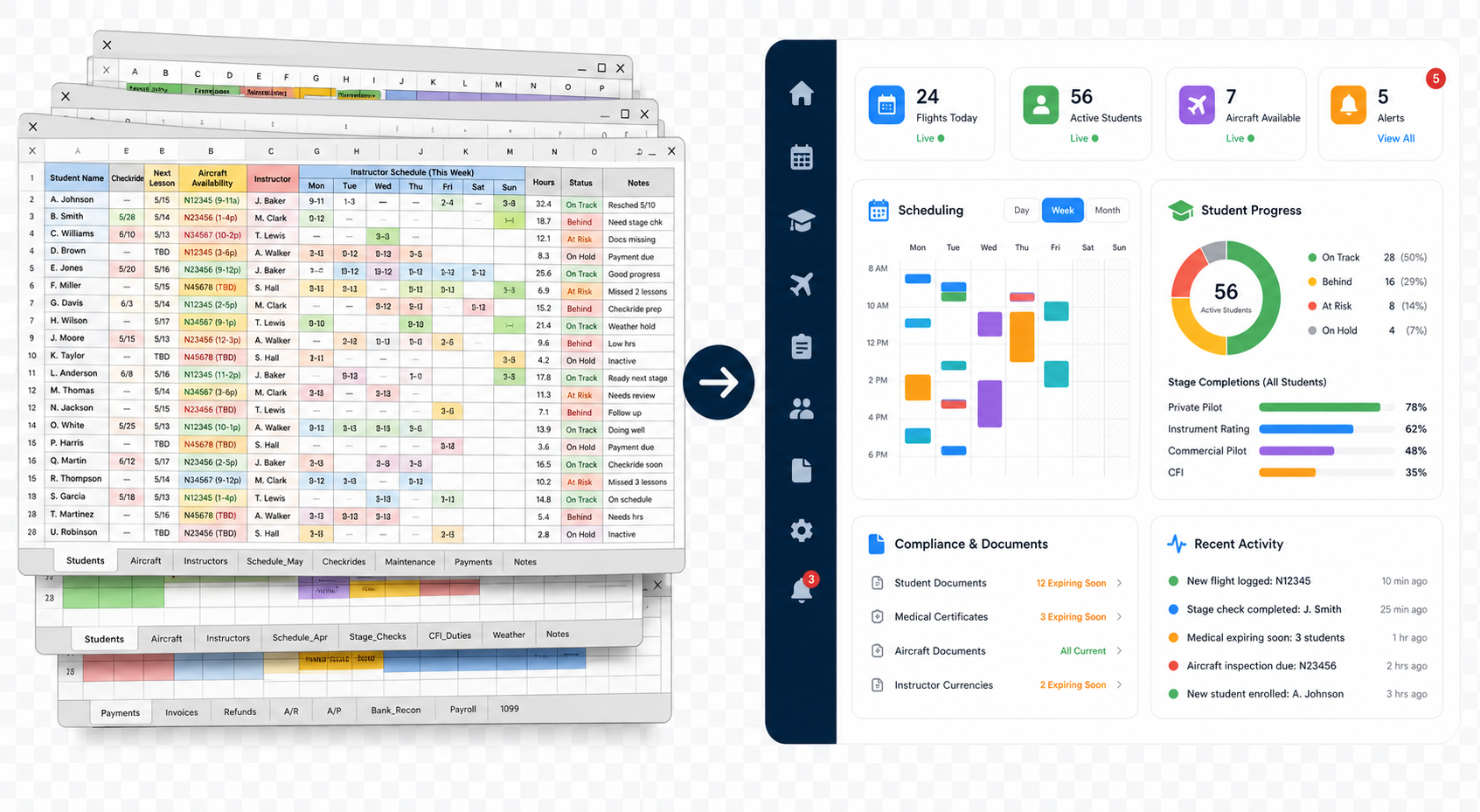
The challenge is that growth increases complexity faster than spreadsheets can efficiently handle.
Where Spreadsheets Begin to Break Down
As flight schools grow, common challenges emerge.
Multiple Versions of Information
Different instructors and administrators may update different files.
This can create inconsistencies and confusion.
Scheduling Complexity
Managing aircraft, instructors, students, and maintenance schedules across multiple spreadsheets becomes time-consuming.
Limited Visibility
Operational information is often spread across multiple documents, making it difficult to see the full picture.
Manual Compliance Management
Audit preparation frequently requires gathering records from several sources.
Increased Administrative Work
As operations grow, administrators spend more time maintaining spreadsheets rather than supporting training operations.
How FlightLogger Supports Growing Flight Schools
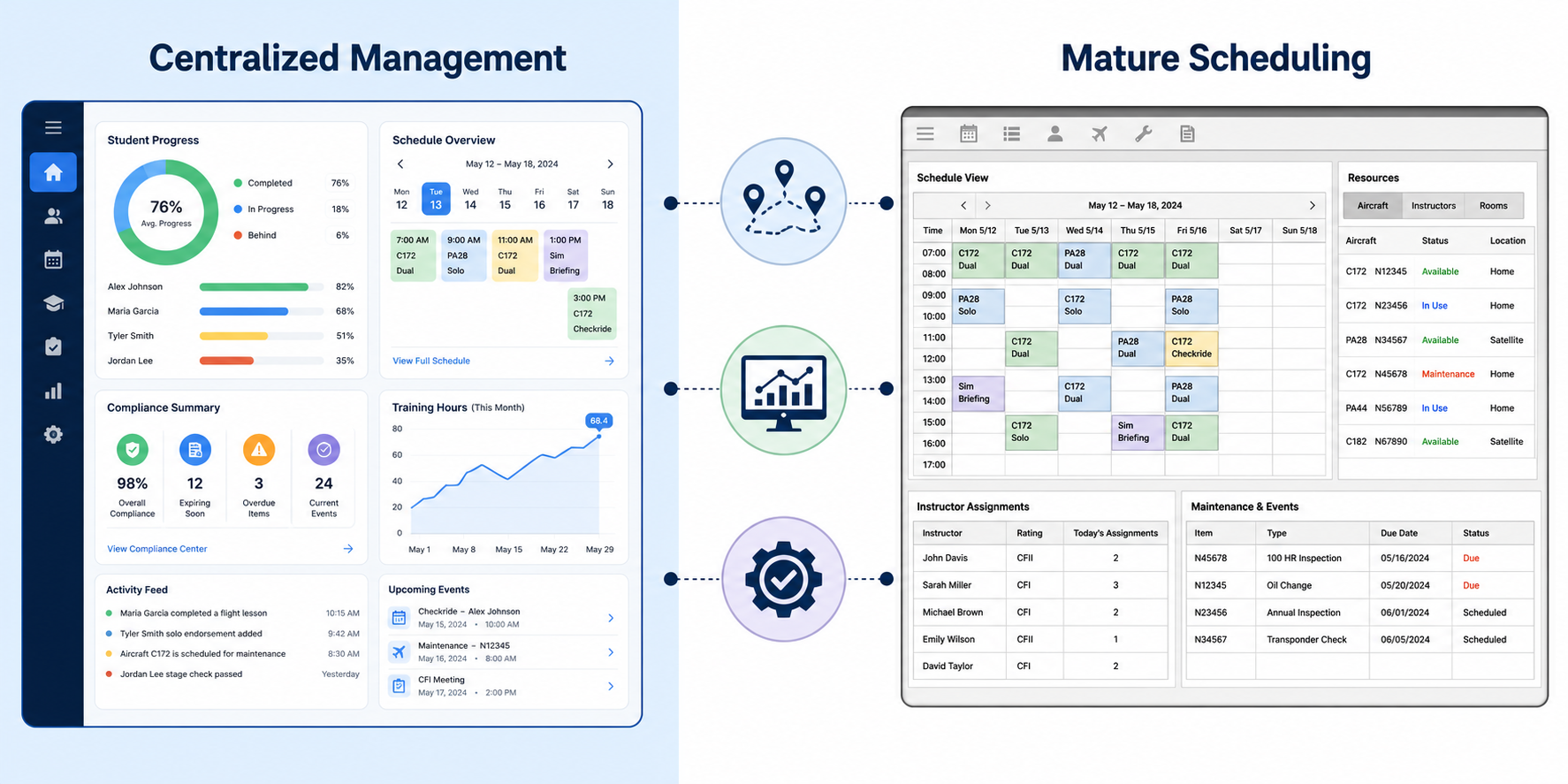
FlightLogger was designed to centralize the operational workflows that flight schools rely on every day.
Instead of managing information across multiple spreadsheets, schools can manage operations from one platform.
Flight Training Scheduling
Coordinate:
- Aircraft scheduling
- Instructor scheduling
- Student bookings
- Simulator resources
- Training events
This helps reduce scheduling conflicts and improve resource utilization.
Student Progress Tracking
Track:
- Training milestones
- Lesson completion
- Instructor evaluations
- Student progress
- Certification readiness
This gives instructors and training managers better visibility into training outcomes.
Compliance and Documentation
Maintain:
- Training records
- Instructor documentation
- Student records
- Operational reporting
- Audit-ready documentation
This supports compliance management without relying on manual processes.
Aircraft and Maintenance Visibility
Connect scheduling with operational readiness.
Monitor:
- Aircraft availability
- Maintenance activities
- Fleet utilization
- Resource planning
This helps improve operational decision-making.
Spreadsheets vs FlightLogger: Scheduling and Training Management
One of the biggest differences is how scheduling and training records are managed.
Spreadsheet-Based Operations
Scheduling often exists separately from student records and training documentation.
Administrators may need to update multiple files to reflect a single change.
FlightLogger
Scheduling, training management, compliance documentation, and operational oversight are connected.
This creates a single source of truth across the organization.
How Do Flight Schools Manage Scheduling and Training in One System?
Modern flight schools increasingly use flight school management software to connect:
- Student progress tracking
- Instructor scheduling
- Aircraft scheduling
- Training records
- Compliance documentation
- Operational reporting
Managing these activities within one system improves visibility, reduces duplicate work, and helps schools scale more efficiently.
FlightLogger was built specifically to support this connected operational model.
Which Approach Is Better for Growing Flight Schools?
Spreadsheets May Be Suitable If:
- You operate a very small training organization
- Scheduling complexity is limited
- Administrative requirements are minimal
- Compliance documentation is manageable manually
FlightLogger May Be Better If:
- Student numbers are increasing
- Instructor teams are growing
- Multiple aircraft must be coordinated
- Compliance requirements are becoming more demanding
- Operational visibility is important
- Future growth is a priority
Benefits of Moving Beyond Spreadsheets
Centralized Operations
Manage scheduling, training, compliance, and reporting from one platform.
Better Visibility
Access operational information in real time.
Reduced Administrative Work
Spend less time updating files and coordinating information.
Improved Training Oversight
Monitor student progression more consistently.
Stronger Scalability
Support growth without increasing administrative complexity at the same pace.
Frequently Asked Questions
Are spreadsheets enough for managing a flight school?
Spreadsheets can work for smaller operations, but many growing flight schools eventually require more centralized systems to manage scheduling, training records, compliance, and operational visibility.
How do flight schools manage scheduling and training in one system?
Flight schools use flight school management software that combines scheduling, student progress tracking, instructor management, aircraft availability, and compliance documentation within a centralized platform.
What are the limitations of spreadsheets for flight schools?
Common limitations include manual updates, scheduling complexity, inconsistent records, limited visibility, and increased administrative workload as operations grow.
Why do flight schools switch to management software?
Many schools move to management software to improve operational efficiency, reduce administrative work, centralize records, and support future growth.
How does FlightLogger help growing flight schools?
FlightLogger centralizes scheduling, student progress tracking, compliance management, maintenance visibility, and operational reporting in one platform designed specifically for flight training organizations.
Do Growing Flight Schools Need More Than Spreadsheets?
As flight schools grow, managing scheduling, training records, compliance documentation, and operational workflows through spreadsheets becomes increasingly difficult. While spreadsheets may be sufficient for smaller operations, growing organizations often benefit from flight school management software that centralizes information and improves visibility. By connecting scheduling, training management, and operational oversight in one system, schools can reduce administrative workload, improve efficiency, and build a stronger foundation for future growth.