.png?width=201&height=201&name=Maintenance%20(Videoannonce%20%E2%80%93%20LinkedIn).png)

How to Prepare for a Flight School Audit in 2026
 Amalie Rasmussen
·
12 minute read
Amalie Rasmussen
·
12 minute read
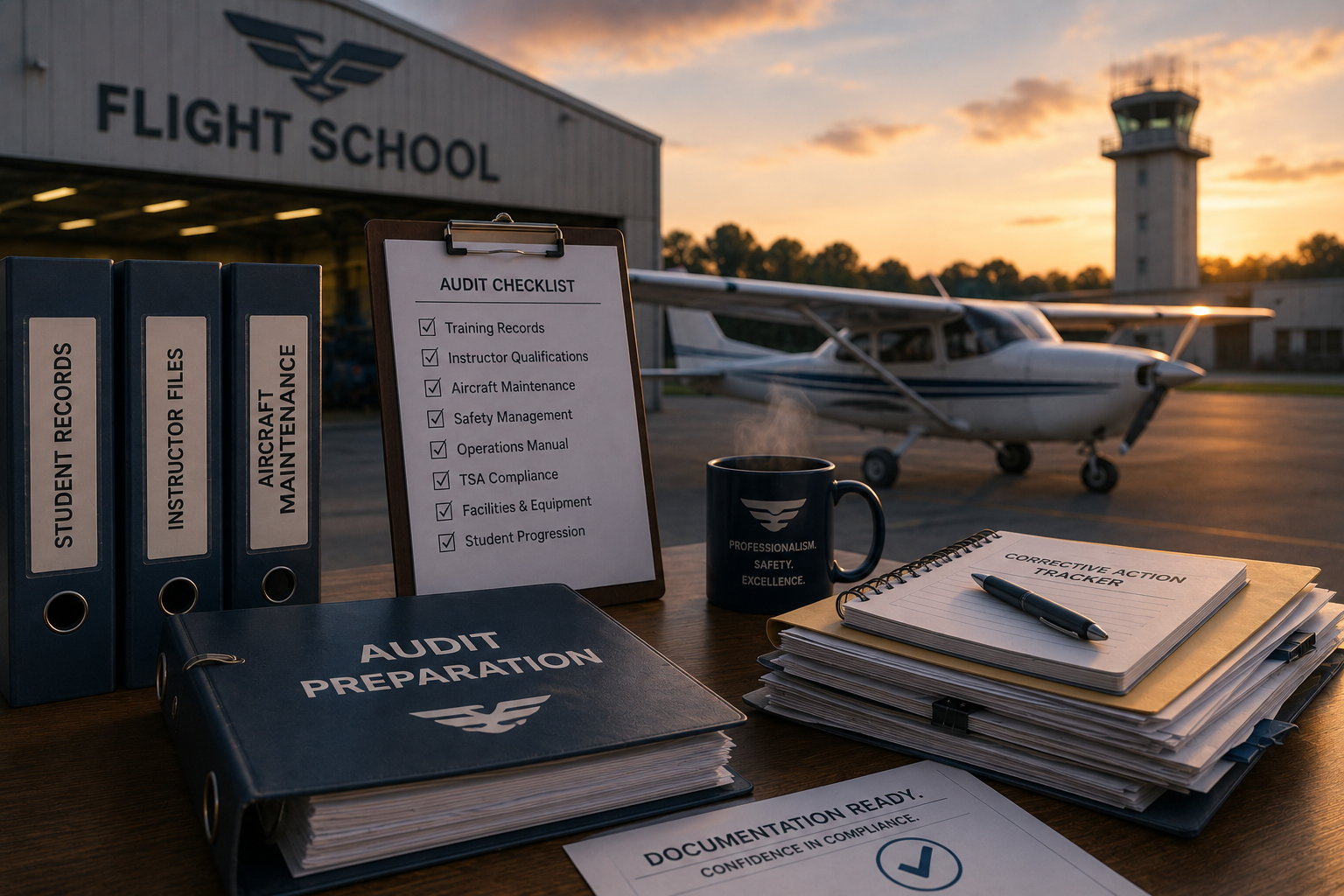
To prepare for a flight school audit, make sure every training record, instructor qualification, and aircraft maintenance record is complete and easy to retrieve, run an internal mock audit against the regulations that apply to you, close any open findings, and brief your staff on who handles the inspectors. Schools that use flight school management software such as FlightLogger can produce complete, audit-ready records on request instead of reconstructing them before the inspection.
Flight school audit checklist:
- Identify which rules apply: FAA Part 141 or Part 61, TSA Part 1552, EASA Part-ORA, or your national authority.
- Check that student training records are complete, signed, and match the approved syllabus.
- Verify that instructor certificates, ratings, and medicals were valid on the dates they instructed.
- Confirm aircraft airworthiness, completed inspections, and closed discrepancies.
- Review your safety management and compliance monitoring records, and close open findings.
- Run an internal mock audit, done by someone who doesn't own the area being audited.
- Appoint an audit coordinator and brief your staff.
FlightLogger is used by more than 220 flight schools and ATOs in 50+ countries to stay audit-ready under both FAA and EASA rules. The rest of this guide walks through each step in detail. For EASA's compliance monitoring requirements, see our compliance monitoring guide.
Key Takeaways: How to Prepare for a Flight School Audit in 2026
- Auditors evaluate training records, instructor documentation, aircraft maintenance logs, and safety management processes during inspections.
- FAA Part 141 schools must maintain student records for at least one year after graduation, termination, or transfer.
- EASA ATOs must keep student training records for at least 3 years after the training is completed (ORA.ATO.120).
- TSA citizenship verification records require retention for five years under 49 CFR 1552.15.
- FlightLogger centralizes training documentation and automates record-keeping to reduce audit stress and inspector wait times.
- Internal mock audits help you identify gaps before regulators arrive and build confidence across your team.
What Is a Flight School Audit and Why Does It Matter?
A flight school audit is a formal inspection conducted by regulatory authorities to verify that your training organization meets all applicable legal and safety requirements. These audits evaluate your documentation, processes, personnel qualifications, and operational procedures.
For flight schools operating under FAA Part 141 or EASA Part-ORA regulations, audits are mandatory components of maintaining certification. Failing an audit can result in findings that require corrective action, suspension of training privileges, or—in severe cases—revocation of your operating certificate.
Beyond regulatory consequences, audits reflect directly on your school's reputation. Flight schools with zero-finding audit histories often cite this achievement when attracting new students and business partners. This makes audit readiness a competitive advantage, not just a compliance obligation.
What Regulatory Frameworks Apply to Flight Training Organizations?
Your audit preparation strategy depends on which regulatory framework governs your operation. Most flight schools fall under one or more of these jurisdictions:
FAA Part 141 and Part 61 Requirements
In the United States, Part 141 pilot schools must follow structured training curricula approved by the FAA. These schools face more rigorous audit scrutiny because they receive privileges like reduced flight hour requirements for certain certificates.
Part 61 training does not require FAA certification of the school itself, but instructors must still maintain proper records under 14 CFR 61.189. This includes signing student logbooks, documenting endorsements, and keeping records of knowledge and practical tests for at least three years.
EASA Part-ORA Requirements for Approved Training Organizations
European flight training organizations operate under EASA Part-ORA regulations. These rules require ATOs to maintain a management system that includes documented procedures, compliance monitoring, and safety risk management.
EASA audits examine your organization's ability to demonstrate regulatory compliance across all aspects of training delivery. This includes instructor qualifications, training syllabi, and student progression records.
TSA Flight Training Security Program
All U.S. flight schools must comply with TSA requirements under 49 CFR Part 1552. This includes verifying citizenship for students receiving certain types of training and maintaining those verification records for five years.
TSA audits focus specifically on security compliance. According to the Aircraft Owners and Pilots Association (AOPA), instructors can satisfy citizenship verification requirements by keeping copies of documents or making logbook endorsements confirming verification.
What Do Auditors Look For During a Flight School Inspection?
Understanding what auditors examine helps you focus your preparation efforts on the areas that matter most. Here are the primary categories that inspectors evaluate:
Training Records and Student Documentation
Under 14 CFR 141.101, Part 141 schools must maintain current and accurate records for each enrolled student. These records must include enrollment dates, chronological logs of attendance and training activities, test grades, and graduation or termination dates.
Auditors verify that your documented training processes match what actually happens in practice. If your training course outline says you conduct a root cause analysis for every safety incident, inspectors will ask to see evidence of those analyses.
Instructor Qualifications and Certificates
Auditors verify that all flight instructors hold valid certificates with appropriate ratings for the training they conduct. They also check that instructors maintain current medical certificates and flight reviews.
Your chief instructor and assistant chief instructors face additional scrutiny. Auditors confirm these individuals meet the qualification requirements specified in 14 CFR 141.35 and 141.36.
Aircraft and Maintenance Documentation
Inspectors examine whether your training aircraft meet airworthiness requirements and have current inspections. They review maintenance logs to verify that required inspections occurred on schedule and that any discrepancies were properly addressed.
For Part 141 schools, auditors also confirm that your fleet meets the aircraft requirements specified in your approved training course outline.
Safety Management System Documentation
If your flight school operates under regulations requiring a Safety Management System (SMS), auditors evaluate your safety policy, hazard identification processes, risk assessments, and safety performance monitoring.
According to aviation safety experts, organizations with commercially acquired SMS database software often make better impressions on auditors than those using home-grown spreadsheet solutions.
How Do You Organize Training Records for an Audit?
Record organization can make the difference between a smooth audit and a stressful one. Inspectors appreciate quick access to requested documents, and delays in producing records can raise concerns about your overall compliance posture.
Create a Centralized Document Repository
Store all training-related documents in a single, accessible location. This includes student enrollment forms, training records, instructor certificates, aircraft maintenance logs, and safety documentation.
FlightLogger stores training and maintenance documentation in accordance with regulations, giving flight schools a centralized digital repository that auditors can access quickly. Schools using the platform report reduced audit stress and faster interactions with inspectors.
Establish Consistent Naming and Filing Conventions
Develop standardized naming conventions for all documents so anyone on your team can locate files quickly. Include relevant identifiers like student names, dates, and document types in file names.
For physical documents, maintain organized filing systems with clear labels. Cross-reference physical and digital records so you can locate either format when requested.
Implement Version Control for Policy Documents
Keep your training course outline, operations manual, and policy documents current. Track revision dates and maintain archives of previous versions in case auditors ask about historical policies.
When you update procedures, make sure the documented changes reflect actual operational changes. Auditors flag discrepancies between written policies and observed practices as findings.
What Training Records Must Part 141 Schools Maintain?
Part 141 schools have specific recordkeeping requirements that differ from Part 61 training. Understanding these requirements helps you maintain proper documentation throughout each student's training.
Required Student Record Elements
For each student enrolled in an approved course, you must maintain records showing the enrollment date, a chronological log of attendance and training activities, subjects and flight operations covered, instructor names, test dates and grades, and graduation or termination dates.
The regulations explicitly state that entries in a student's personal logbook do not satisfy these recordkeeping requirements. You need separate institutional records documenting the same information.
Record Retention Periods
Part 141 schools must retain student records for at least one year after the student graduates, terminates training, or transfers to another school. TSA citizenship verification records require five-year retention.
Many schools choose to retain records longer than the minimum requirement to protect against potential disputes or inquiries that arise after the retention period ends.
Chief Instructor Certification Requirements
When a student graduates, terminates, or transfers, your chief instructor must certify the student's record to that effect. This certification serves as official acknowledgment that the training relationship has ended and the records are complete.
How Should You Prepare Instructor Documentation?
Instructor documentation receives significant attention during audits. Preparing these records in advance ensures you can quickly demonstrate that all instructors meet qualification requirements.
Maintain Current Certificate Copies
Keep copies of each instructor's pilot certificate, flight instructor certificate, and medical certificate on file. Update these copies whenever certificates are renewed or amended.
Verify that instructor certificates include the appropriate ratings for the training they conduct. An instructor teaching instrument procedures must hold an instrument instructor rating, for example.
Track Currency and Recency Requirements
Monitor instructor flight reviews, instrument proficiency checks, and any other recency requirements. Create a tracking system that alerts you before any instructor's currency expires.
FlightLogger automates currency tracking for instructors and students, alerting administrators before required items expire. This prevents situations where an instructor unknowingly conducts training while out of currency.
Document Instructor Training and Standardization
Keep records of any standardization training your instructors complete. This includes initial training on your school's procedures and any recurrent training sessions.
Auditors may ask how you ensure consistency across your instructor team. Documented standardization programs demonstrate your commitment to training quality.
What Aircraft Documentation Do You Need for an Audit?
Aircraft documentation demonstrates that your training fleet meets airworthiness standards and receives proper maintenance. Organized aircraft records help audits proceed smoothly.
Airworthiness and Registration Documents
Each training aircraft must have current airworthiness certificates, registration documents, and required operating limitations placards. Keep copies of these documents accessible for quick reference during audits.
Verify that registration information matches current ownership records and that any address changes have been properly reported.
Maintenance and Inspection Records
Maintain complete maintenance logs showing all inspections, repairs, and modifications. Auditors verify that required inspections occurred on schedule and that any airworthiness directives have been complied with.
For Part 141 schools, ensure your maintenance records demonstrate compliance with any specific aircraft requirements in your approved training course outline.
Discrepancy Tracking and Resolution
Document how you track and resolve aircraft discrepancies. This includes squawks identified during training flights, maintenance findings, and any items deferred for later attention.
Auditors may ask to see your process for ensuring discrepancies are addressed before aircraft return to training service. A clear workflow demonstrates operational discipline.
How Do You Build a Safety Management System for Audits?
Safety Management Systems have become increasingly important for flight training organizations. Even if SMS is not yet mandatory for your operation, developing one demonstrates proactive safety culture.
Establish Your Safety Policy and Objectives
Create a documented safety policy signed by your accountable executive. This policy should outline your organization's commitment to safety and establish safety objectives you can measure and track.
Link your safety objectives to specific Key Performance Indicators (KPIs) so you can demonstrate progress during audits. Auditors expect to see correlation between stated goals and measured outcomes.
Implement Hazard Identification and Risk Assessment
Develop formal processes for identifying hazards and assessing associated risks. Document these processes in your operations manual and maintain records of all hazard reports and risk assessments.
Train staff on how to report hazards and encourage a reporting culture where employees feel comfortable raising safety concerns without fear of punishment.
Create Safety Assurance and Monitoring Processes
Establish methods for monitoring your safety performance over time. This includes tracking safety incidents, analyzing trends, and taking corrective action when performance degrades.
Auditors evaluate whether your safety assurance processes function as described in your documentation. They may ask for examples of hazards you identified and how you addressed them.
How Do You Conduct Internal Mock Audits?
Internal audits help you identify compliance gaps before regulators do. Conducting regular self-assessments builds audit readiness into your organizational culture.
Use Regulatory Checklists as Your Guide
Base your internal audits on the same checklists and criteria that regulatory inspectors use. Many aviation authorities publish audit checklists that you can adapt for internal use.
Work through each checklist item systematically, documenting whether you pass or fail each requirement. This creates a record of your compliance status over time.
Assign Internal Auditors Without Conflicts of Interest
Select internal auditors who do not have direct responsibility for the areas they audit. This separation helps ensure objective assessment and reduces the temptation to overlook problems.
If your organization is too small for this separation, consider bringing in qualified outside parties to conduct periodic independent assessments.
Document Findings and Track Corrective Actions
When internal audits identify deficiencies, document them formally and assign corrective actions with deadlines. Track these actions to completion and verify that corrections effectively address the underlying issues.
Regulatory auditors often ask to see your internal audit results. A history of identified findings and completed corrections demonstrates active compliance management.
How Should You Train Staff for Audit Interactions?
Your team's behavior during an audit can influence outcomes. Proper preparation helps staff interact professionally with inspectors and respond appropriately to questions.
Ensure Staff Know Their Responsibilities
Make sure every team member understands their role in maintaining compliance. Front desk staff should know how to greet inspectors and whom to notify. Instructors should understand the recordkeeping requirements that apply to their work.
Consider creating quick reference guides that summarize key compliance points for different positions. Regular refresher training keeps this information current.
Practice Responding to Inspector Questions
Train staff to answer questions directly and honestly. When they know an answer, they should respond clearly. When they do not know something, they should say so and offer to find the correct information.
Caution staff against volunteering information beyond what inspectors ask. Well-intentioned extra details can sometimes raise questions that would not otherwise have come up.
Designate an Audit Coordinator
Appoint one person to serve as the primary point of contact during audits. This coordinator can manage logistics, track document requests, and ensure inspectors get what they need without disrupting normal operations.
The coordinator should understand your compliance status across all areas and know where to find any document an inspector might request.
What Should You Do During the Actual Audit?
When auditors arrive, your preparation pays off. Here is how to handle the audit itself professionally and effectively.
Greet Inspectors and Establish Communication
Welcome inspectors professionally and introduce them to your audit coordinator. Clarify the scope of the inspection and the inspector's expected timeline if this information is not already provided.
Offer a workspace where inspectors can review documents and conduct interviews. Having a dedicated space shows respect for the audit process and keeps disruption to other operations minimal.
Respond Promptly to Document Requests
When inspectors request documents, retrieve them as quickly as possible. Delays in producing records can suggest disorganization or potential compliance issues.
If you cannot locate a requested document, acknowledge this honestly and explain what you will do to find it. Attempting to conceal missing records will create larger problems than acknowledging the gap.
Take Notes and Ask Clarifying Questions
Document what inspectors examine and any verbal feedback they offer. If an inspector identifies a potential finding, ask clarifying questions to ensure you understand the concern.
These notes help you address findings after the audit concludes and prepare for future inspections focusing on areas of regulatory interest.
How Do You Handle Audit Findings and Corrective Actions?
Most audits result in at least some findings. How you respond to findings demonstrates your commitment to compliance and can influence future regulatory relationships.
Understand Finding Severity Levels
Audit findings typically fall into categories based on severity. Major findings indicate significant non-compliance requiring immediate attention. Minor findings identify areas for improvement that do not pose immediate safety risks.
Understand the severity of each finding and the associated timeline for corrective action. Regulatory authorities typically specify response deadlines based on finding severity.
Develop Corrective Action Plans
For each finding, develop a corrective action plan that addresses the root cause, not just the symptom. Superficial corrections that do not address underlying problems often lead to repeat findings in subsequent audits.
Your corrective action plan should specify what actions you will take, who is responsible for each action, and when actions will be completed. Submit these plans by regulatory deadlines.
Verify Effectiveness of Corrections
After implementing corrective actions, verify that they effectively address the finding. This might involve additional internal audits, document reviews, or process observations.
Document your verification activities so you can demonstrate to regulators that your corrections produced the intended results.
How Can You Make Audit Readiness Part of Daily Operations?
The most successful flight schools treat compliance as an ongoing operational priority rather than a periodic audit preparation activity. This approach reduces stress and improves actual compliance.
Build Compliance into Standard Procedures
Design your daily workflows to create compliant records automatically. When instructors complete training sessions, the documentation process should naturally generate the records auditors will later request.
FlightLogger builds compliance into daily operations by centralizing scheduling, training records, and maintenance coordination. Schools using the platform report that audits become routine reviews rather than stressful events.
Schedule Regular Compliance Reviews
Set calendar reminders for periodic compliance reviews. Monthly checks of instructor currencies, quarterly reviews of documentation completeness, and annual mock audits help maintain year-round readiness.
Assign specific individuals responsibility for each review and hold them accountable for completing reviews on schedule.
Create a Culture of Compliance Ownership
Encourage all team members to take ownership of compliance in their areas of responsibility. When everyone understands that audit readiness is a shared goal, compliance becomes part of your organizational identity.
Recognize and reward staff who identify compliance gaps or suggest process improvements. This positive reinforcement builds the culture you need for long-term success.
Conclusion: Building Your Flight School Audit Readiness Strategy
Preparing for a flight school audit in 2026 requires understanding your regulatory requirements, organizing your documentation, training your team, and building compliance into daily operations. The flight schools that handle audits with minimal stress are those that treat compliance as an ongoing priority rather than an occasional project.
Start by identifying which regulatory frameworks apply to your operation and understanding their specific requirements. Organize your records in a centralized, accessible system that allows quick retrieval during inspections. Train your staff on their compliance responsibilities and practice handling auditor interactions.
Consider conducting regular internal audits to identify gaps before regulators do. When audits do result in findings, respond promptly with corrective actions that address root causes. Over time, this disciplined approach transforms audit preparation from a source of anxiety into a demonstration of your operational excellence.
For flight schools looking to streamline their compliance workflows, digital platforms can centralize documentation, automate reminders, and reduce the administrative burden that often accompanies audit preparation. The COO's Guide to Audit-Ready Aviation Ops offers additional strategies for building audit readiness into your organizational structure.
FAQs about How to Prepare for a Flight School Audit in 2026
How long do flight schools need to retain student training records?
FAA Part 141 schools must retain student records for at least one year after the student graduates, terminates training, or transfers. TSA citizenship verification records require five-year retention.
Many schools keep records longer than these minimums to protect against future inquiries or disputes.
What happens if you fail a flight school audit?
Failed audits typically result in findings that require corrective action. Severe findings can lead to suspension of training privileges until corrections are verified. In extreme cases, operating certificates can be revoked.
Most findings allow time for correction before serious consequences apply.
How often do FAA auditors inspect Part 141 schools?
FAA inspection frequency varies based on factors like school size, history, and risk assessment. Schools should expect at least annual surveillance, with some operations receiving more frequent attention.
FlightLogger helps schools maintain constant audit readiness so inspection timing becomes less stressful.
Can flight schools use electronic records for regulatory compliance?
Yes. The FAA permits electronic recordkeeping for Part 141 schools, and Advisory Circular 120-78A addresses digital signature requirements. Your electronic system must maintain data integrity and allow records to be produced on demand.
FlightLogger stores records digitally while maintaining the documentation standards regulators require.
What is the most common audit finding for flight schools?
Documentation discrepancies are among the most common findings. These occur when written procedures do not match actual practices, records are incomplete, or required documents cannot be located promptly.
Consistent recordkeeping and regular internal reviews help prevent these issues.
Do flight schools need a Safety Management System?
SMS requirements vary by operation type and jurisdiction. FAA Part 5 mandates SMS for certain certificate holders, while EASA requires ATOs to maintain management systems with safety components. Even when not required, implementing an SMS demonstrates proactive safety culture.
FlightLogger supports safety documentation and reporting workflows that satisfy SMS requirements.