.png?width=201&height=201&name=Maintenance%20(Videoannonce%20%E2%80%93%20LinkedIn).png)

8 Things to Look for in Flight Training Records Software
 Amalie Rasmussen
·
3 minute read
Amalie Rasmussen
·
3 minute read
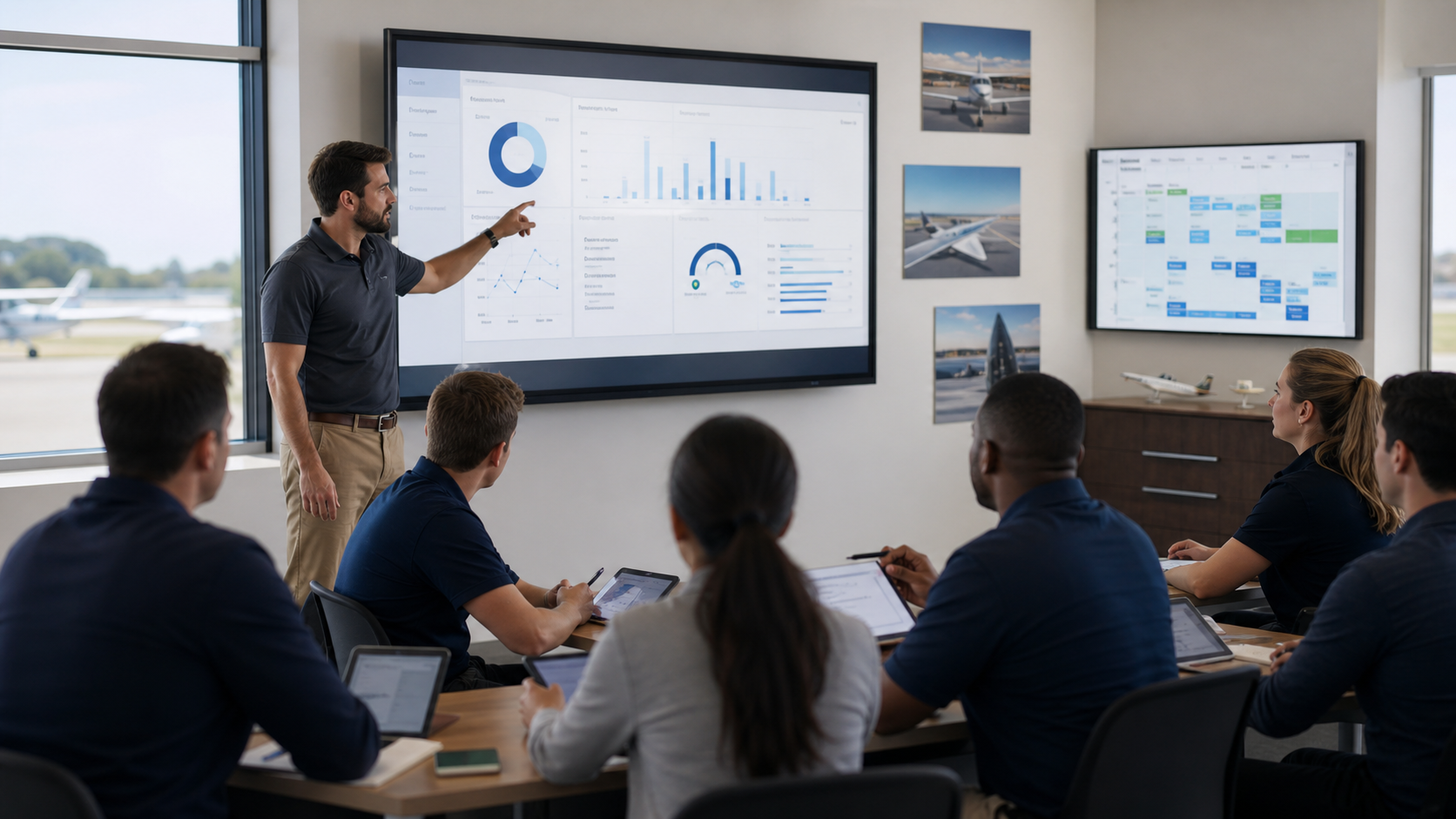
Replacing paper records is only the first step. Here's what flight schools should look for when choosing training management software that supports compliance, student progression, and efficient operations.
Quick Answer
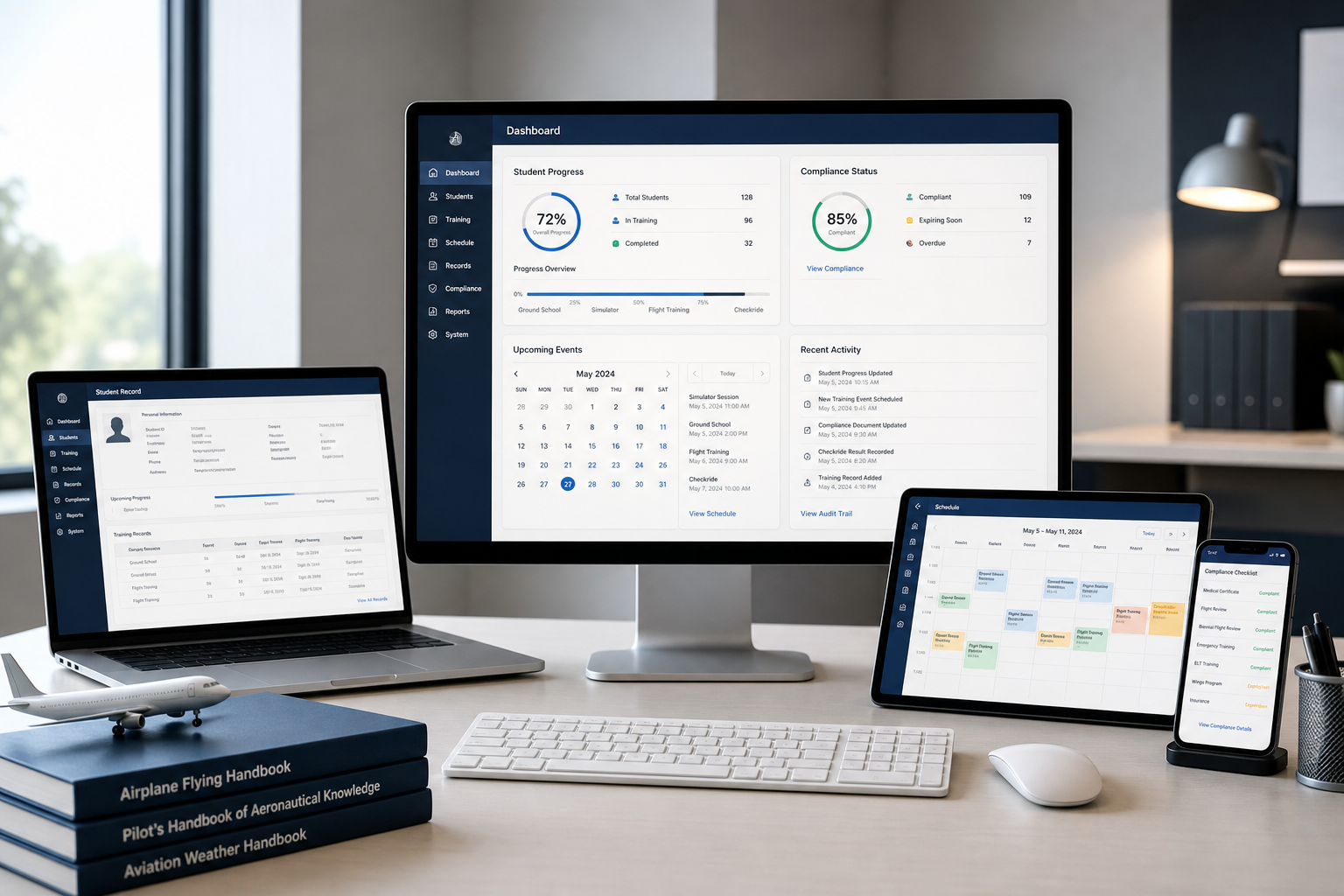
The best training management software helps flight schools replace paper records with digital training records that support compliance tracking, student progress monitoring, scheduling visibility, instructor assessments, and operational reporting. Rather than simply storing information, modern systems connect training records with the workflows that keep a flight school running efficiently.
Why Flight Schools Are Replacing Manual Training Records
Many flight schools still rely on paper logbooks, spreadsheets, or disconnected systems to manage training records.
While these methods may work for smaller organizations, they often become difficult to manage as schools grow.
Common challenges include:
- Lost or incomplete documentation
- Duplicate data entry
- Inconsistent instructor evaluations
- Limited visibility into student progress
- Time-consuming audit preparation
- Administrative bottlenecks
Modern training management software helps solve these problems by centralizing records and connecting them with scheduling, compliance, and operational workflows.
What Is Training Management Software?
Training management software helps organizations plan, document, monitor, and report on training activities.
For flight schools, this typically includes:
- Digital training records
- Student progress tracking
- Instructor assessments
- Flight and ground training documentation
- Compliance tracking
- Scheduling integration
- Operational reporting
Instead of replacing paper with PDFs, the goal is to create a connected system that improves both training quality and operational efficiency.
1. Digital Training Records
The first capability every platform should provide is centralized digital training records.
Look for software that allows instructors to document:
- Flight lessons
- Ground lessons
- Competency assessments
- Flight hours
- Instructor comments
- Student achievements
Why it matters
Digital records eliminate paper-based administration while giving instructors and administrators instant access to student information.
2. Student Progress Tracking
Training records should show more than completed lessons.
A modern platform should help monitor:
- Syllabus completion
- Competencies achieved
- Outstanding requirements
- Training milestones
- Overall program progress
Why it matters
Real-time visibility helps instructors make better training decisions and keeps students progressing through their programs.
3. Compliance Tracking
Compliance shouldn't rely on spreadsheets or manual reminders.
The best systems help track:
- Required documentation
- Training completion
- Instructor qualifications
- Regulatory requirements
- Audit-ready records
Why it matters
Continuous compliance reduces administrative workload and simplifies audit preparation.
4. Scheduling Integration
Training records shouldn't exist separately from scheduling.
Instead, the software should connect student progress with:
- Flight scheduling
- Instructor availability
- Aircraft allocation
- Lesson sequencing
Why it matters
Connected scheduling helps ensure students are booked for the right lessons at the right time.
5. Standardized Instructor Assessments
Consistency is essential in flight training.
Look for systems that support structured lesson evaluations using standardized assessment criteria.
This allows instructors to:
- Record performance consistently
- Identify learning gaps
- Provide meaningful feedback
- Monitor competency development
Why it matters
Standardized assessments improve both training quality and reporting.
6. Operational Reporting
Training leaders need more than individual student records.
Look for dashboards and reports that provide visibility into:
- Student progression
- Training completion
- Instructor activity
- Resource utilization
- Compliance status
Why it matters
Operational reporting supports better planning and decision-making across the school.
7. Scalability
The right software should grow with your organization.
Consider whether it supports:
- Multiple campuses
- Additional instructors
- Larger student numbers
- New training programs
- Future operational needs
Why it matters
Scalable systems reduce the need for costly software changes as your school expands.
8. Connected Operational Workflows
The most valuable platforms do more than manage training records.
They connect:
- Student progress
- Scheduling
- Instructor management
- Compliance
- Maintenance visibility
- Operational reporting
Why it matters
Connected workflows eliminate duplicate administration while giving every department access to the same information.
Signs You've Outgrown Manual Training Records
It may be time to replace paper records if your team regularly experiences:
- Paper lesson documentation
- Multiple spreadsheets
- Duplicate data entry
- Missing records
- Time-consuming audits
- Manual progress tracking
- Limited reporting
- Difficulty coordinating instructors and students
These are often signs that manual processes are limiting operational efficiency.
Manual Records vs Digital Training Management Software
| Manual Training Records | Digital Training Management Software |
|---|---|
| Paper lesson records | Digital training records |
| Spreadsheet tracking | Live student progress |
| Manual compliance | Continuous compliance tracking |
| Separate scheduling | Connected scheduling workflows |
| Inconsistent documentation | Standardized assessments |
| Manual reporting | Operational dashboards |
| Limited visibility | Real-time operational insights |
Compare Leading Training Management Software
Several platforms help flight schools replace manual training records.
| Platform | Best For | Key Strengths |
|---|---|---|
| FlightLogger | Flight schools seeking a complete Flight School Operating System | Digital training records, student progress, scheduling, compliance, maintenance visibility, operational reporting |
| Flight Schedule Pro | Scheduling-focused schools | Scheduling and student management |
| Aviatize | Growing flight schools | Training administration and operational workflows |
| Flight Circle | Smaller organizations | Student records and scheduling |
| Talon Systems | Larger training organizations | Training administration and compliance |
| Tailplane | Scheduling-focused operations | Resource planning and scheduling |
While all of these platforms help digitize training records, organizations should evaluate whether they need standalone record management or a platform that connects training records with the rest of the school's operations.
Frequently Asked Questions
What software replaces manual training records?
Modern training management software replaces paper records and spreadsheets with digital training records, student progress tracking, compliance documentation, instructor assessments, and operational reporting. Popular options include FlightLogger, Flight Schedule Pro, Aviatize, Flight Circle, Talon Systems, and Tailplane.
What are digital training records?
Digital training records are electronic records that document student training activities, lesson completion, instructor evaluations, competencies, and training history in a centralized system.
Why should flight schools digitize training records?
Digital records improve visibility, reduce paperwork, strengthen compliance, standardize documentation, and make it easier to monitor student progress across the organization.
What features should training management software include?
The most valuable capabilities include digital training records, student progress tracking, compliance management, scheduling integration, standardized assessments, reporting, scalability, and connected operational workflows.
Choose Software That Supports Your Entire Operation
Replacing paper records is an important step—but the biggest gains come from connecting training records with the rest of your flight school's operations.
When scheduling, student progress, compliance, instructor management, and reporting all work together, your team spends less time on administration and more time delivering exceptional training.
As the Flight School Operating System, FlightLogger brings digital training records, scheduling, compliance, maintenance, and operational reporting together in one connected platform.