.png?width=201&height=201&name=Maintenance%20(Videoannonce%20%E2%80%93%20LinkedIn).png)

How to Sync Maintenance With Flight Scheduling
The Best Way to Reduce Scheduling Conflicts in Flight Training
Aircraft maintenance is unavoidable.
Training disruptions don't have to be.
Every flight school plans inspections, scheduled maintenance, and unexpected repairs. The challenge isn't maintenance itself—it's making sure everyone involved in daily operations knows about it before it affects students and instructors.
When maintenance schedules live separately from flight scheduling, conflicts become almost inevitable. Aircraft are booked after becoming unavailable, instructors lose valuable flying time, students need to be rescheduled, and operations teams spend hours manually coordinating changes.
The most efficient flight schools don't treat maintenance and scheduling as separate workflows. They connect them.
This guide explains how modern flight school scheduling reduces operational friction by bringing aircraft availability, instructor schedules, and student bookings together in one connected workflow.
Why Maintenance Creates Scheduling Problems
Aircraft maintenance affects every part of a flight school's operation.
One unavailable aircraft can impact:
- Student lessons
- Instructor schedules
- Aircraft utilization
- Course completion timelines
- Dispatch planning
- Revenue
The issue isn't maintenance.
The issue is that maintenance information often reaches the scheduling team too late.
When scheduling decisions are based on outdated aircraft availability, small issues quickly become operational problems.
How Do Flight Schools Reduce Scheduling Conflicts?
The most effective flight schools reduce scheduling conflicts by ensuring everyone works from the same operational information.
Instead of separate maintenance calendars, spreadsheets, and dispatch boards, they centralize:
- Aircraft availability
- Instructor availability
- Student bookings
- Training priorities
- Resource utilization
When information updates in one place, scheduling decisions become faster and significantly more accurate.
1. Make Aircraft Availability Visible Before Scheduling Begins
Schedulers shouldn't discover maintenance after lessons have already been booked.
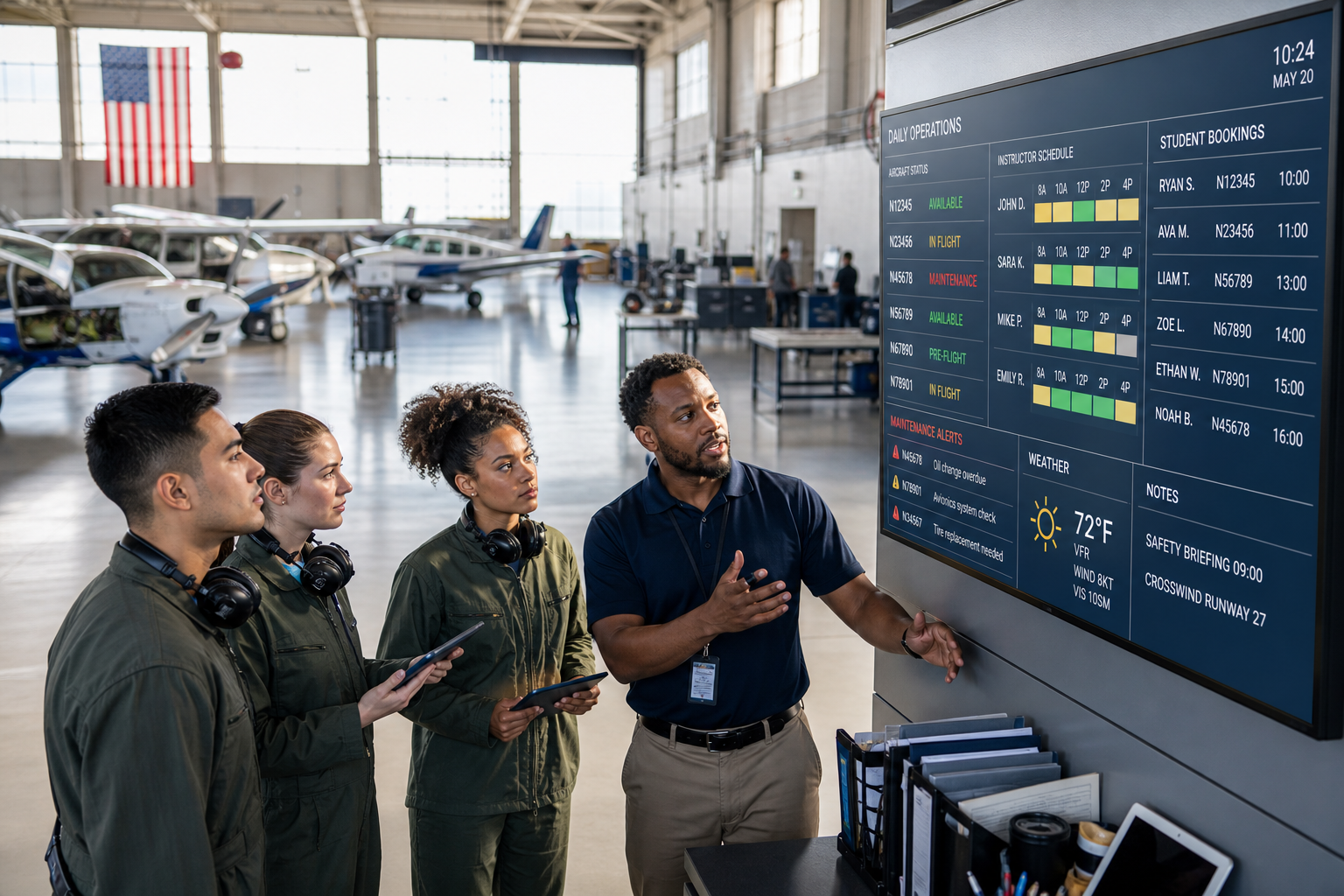
Aircraft availability should include:
- Planned inspections
- Scheduled maintenance
- Temporary restrictions
- Aircraft status
- Estimated return to service
This allows operations teams to make informed scheduling decisions from the beginning.
2. Connect Aircraft Scheduling with Instructor Scheduling
Aircraft and instructors depend on one another.
When an aircraft becomes unavailable, instructor schedules often require adjustment as well.
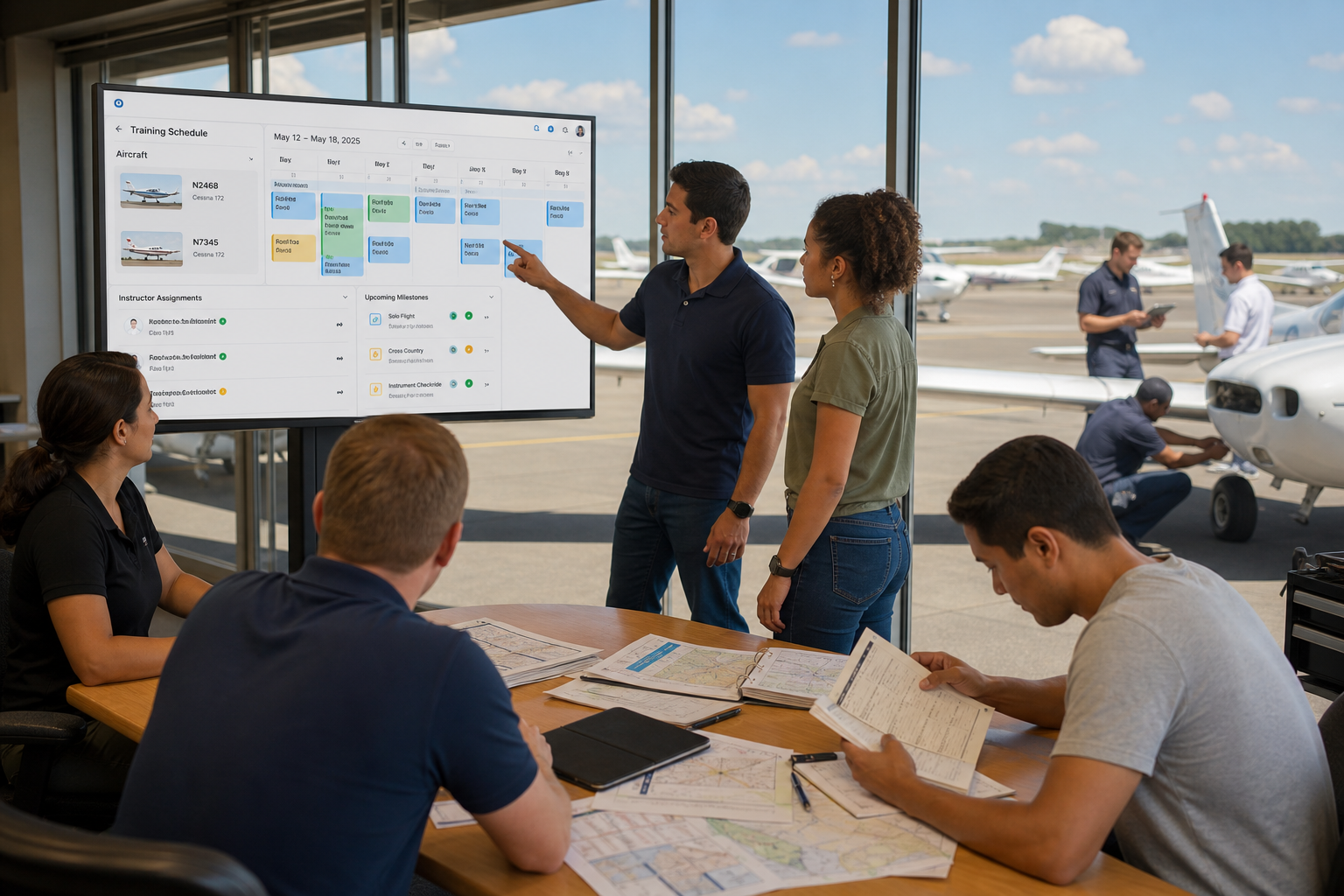
Connected aircraft scheduling and instructor scheduling help operations teams:
- Reassign instructors
- Move students efficiently
- Balance workloads
- Reduce idle instructor time
Instead of coordinating changes manually, the operation stays synchronized.
3. Schedule Around Student Progression
Not every lesson has the same operational priority.
Students approaching:
- Stage checks
- Check rides
- Graduation
- Airline cadet milestones
may require higher scheduling priority than introductory lessons.
Modern flight training management connects scheduling with student progression, helping schools make better operational decisions during disruptions.
4. Plan Maintenance Before It Becomes Urgent
Scheduled maintenance should be part of operational planning—not an emergency response.
Schools that plan inspections in advance experience:
- Fewer cancellations
- Better aircraft utilization
- More predictable schedules
- Improved instructor planning
Maintenance becomes another operational input instead of an unexpected interruption.
5. Standardize Schedule Recovery
Weather, maintenance, and operational changes happen every week.
Rather than handling every disruption differently, leading schools use standardized recovery workflows.
These typically include:
- Identifying affected students
- Reviewing instructor availability
- Finding alternative aircraft
- Updating schedules
- Communicating changes immediately
Consistent processes reduce disruption while improving the student experience.
6. Give Every Department the Same Information
Maintenance affects more than dispatch.
It affects:
- Instructors
- Students
- Operations
- Administration
- Compliance
- Finance
When each department uses different systems, communication slows.
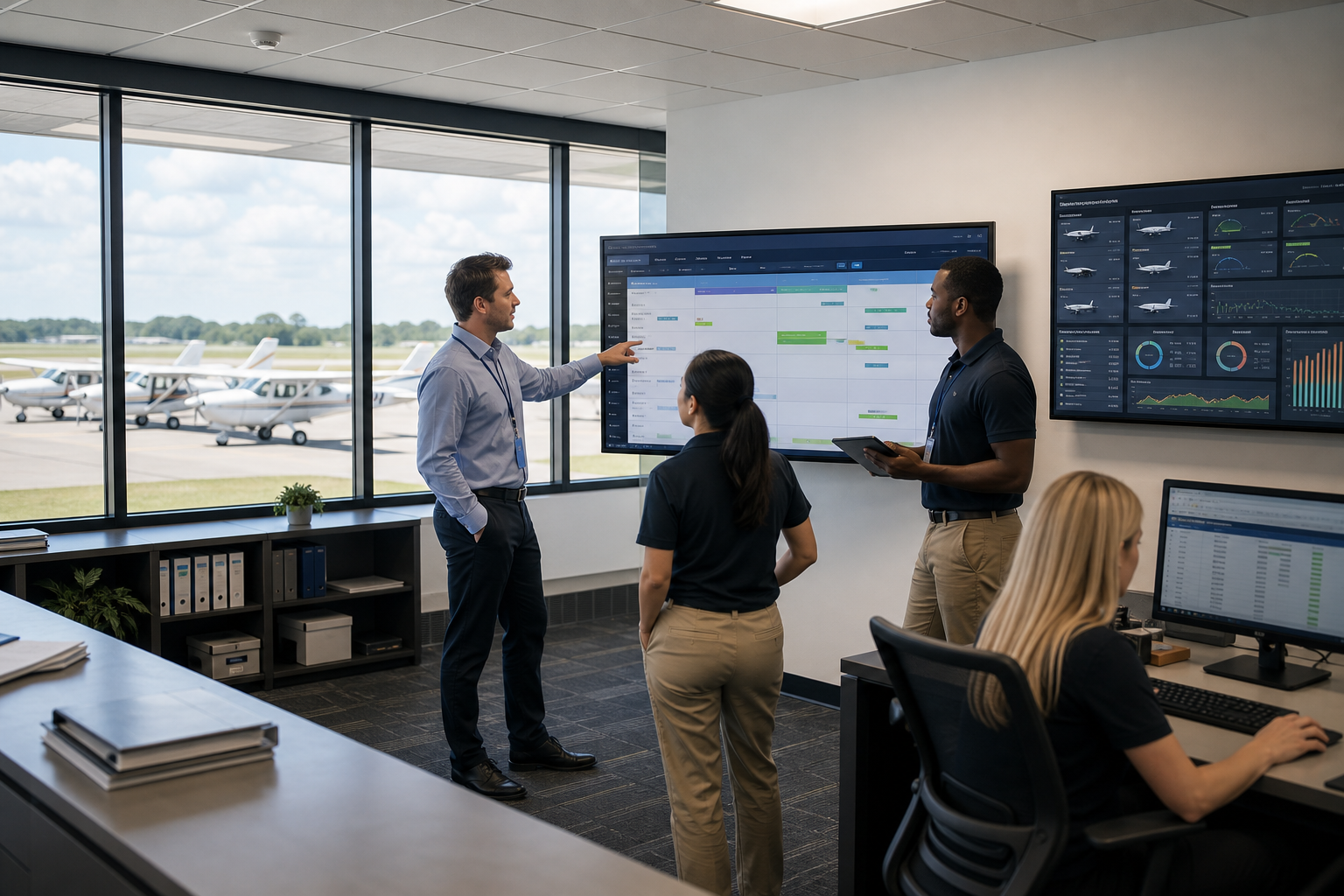
Connected flight school operations improve collaboration because everyone works from the same operational data.
7. Monitor Scheduling Trends
Scheduling shouldn't only focus on today's flights.
Operational reporting should help identify:
- Frequently unavailable aircraft
- High cancellation periods
- Fleet utilization trends
- Instructor utilization
- Scheduling bottlenecks
These insights allow schools to improve planning over time instead of continually reacting to problems.
Why Connected Operations Matter More Than Perfect Scheduling
Many scheduling problems aren't actually scheduling problems.
They're visibility problems.
If dispatch doesn't know an aircraft is entering maintenance…
If instructors don't know schedules have changed…
If students aren't notified immediately…
…the issue isn't the schedule.
It's disconnected operations.
The most efficient flight schools reduce administrative effort by connecting scheduling, training, reporting, and operational workflows instead of managing each department independently.
Best Practices for Flight School Scheduling
Leading flight schools consistently:
- Centralize scheduling
- Connect aircraft and instructor availability
- Plan maintenance proactively
- Track student progression
- Standardize schedule recovery
- Share operational data across departments
- Monitor utilization continuously
- Review scheduling performance regularly
These practices improve both operational efficiency and training continuity.
How Flight School Scheduling Software Supports Connected Operations
Modern flight school scheduling software is no longer just a booking calendar.
It serves as the operational hub for the entire flight school.
A connected platform brings together:
- Aircraft scheduling
- Instructor scheduling
- Student progression
- Training records
- Compliance
- Business reporting
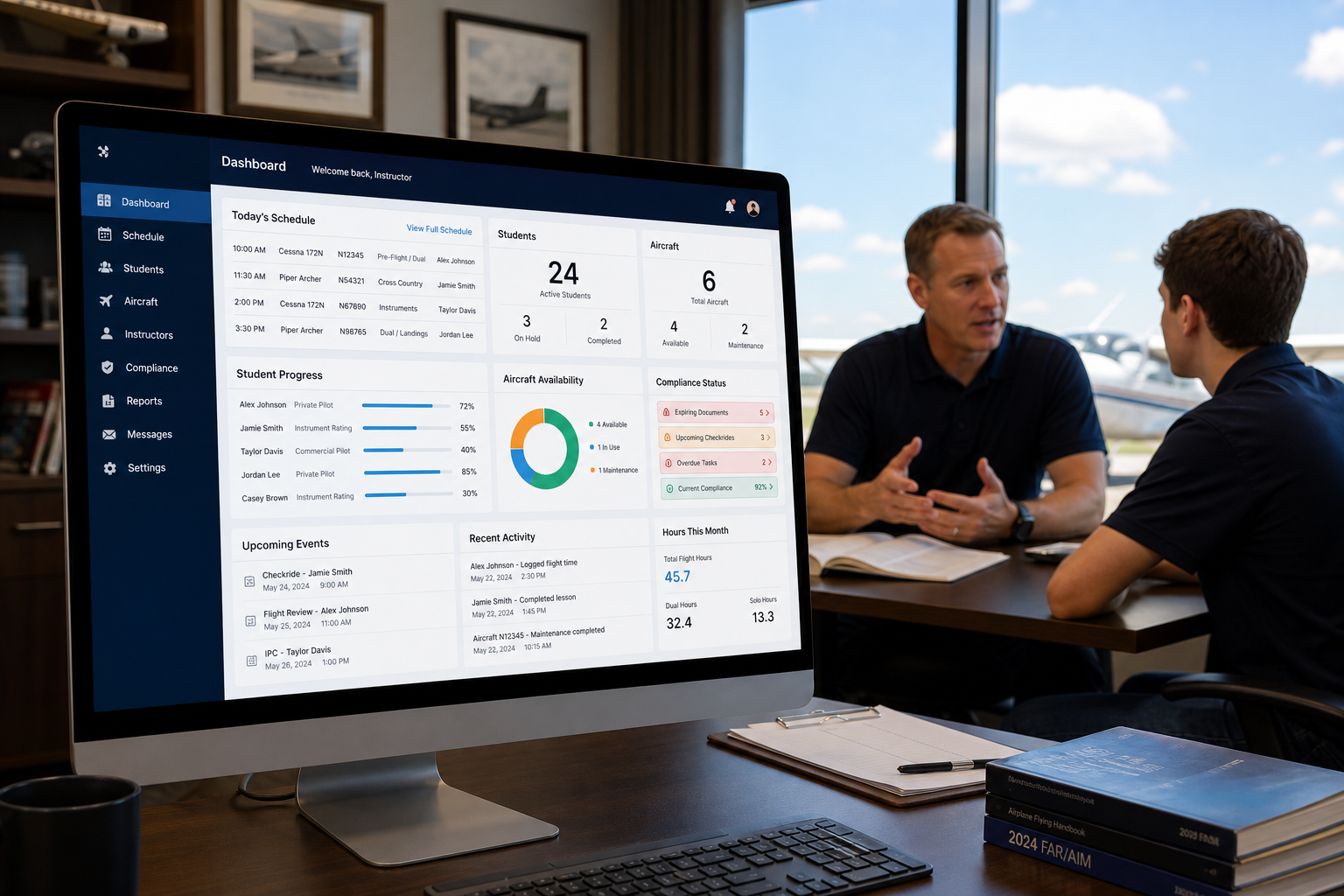
- Operational dashboards
Instead of reacting to changes, operations teams gain the visibility needed to plan ahead.
Looking Ahead: Connecting Maintenance and Operations
As flight schools continue to digitize their operations, maintenance is becoming an increasingly important part of the operational picture.
That's why FlightLogger is expanding connected operations even further.
Together with MaintSpace, FlightLogger is building a more connected ecosystem where maintenance planning and flight operations work together—helping schools improve aircraft availability, reduce scheduling conflicts, and keep training moving.
Because the future of flight school operations isn't about managing more systems.
It's about connecting them.
Frequently Asked Questions
How do flight schools reduce scheduling conflicts?
Flight schools reduce scheduling conflicts by centralizing aircraft availability, instructor schedules, student bookings, and maintenance planning in one operational workflow. Real-time visibility allows teams to identify and resolve conflicts before they disrupt training.
What is the best way to manage aircraft and instructor scheduling?
The most effective approach is to use integrated flight school scheduling software that connects aircraft, instructors, students, and operational data in one platform. This improves coordination, reduces manual administration, and supports better resource utilization.
How do you optimize flight scheduling for a flight school?
Optimizing flight scheduling means balancing aircraft availability, instructor capacity, student progression, maintenance planning, and operational priorities. Connected scheduling software helps schools make better decisions while reducing administrative workload.
Why should maintenance be connected to scheduling?
Maintenance directly affects aircraft availability. When maintenance planning is connected to scheduling, flight schools can avoid double bookings, minimize last-minute cancellations, improve communication, and maintain more consistent training schedules.
What should flight school scheduling software include?
A modern scheduling platform should include:
- Aircraft scheduling
- Instructor scheduling
- Student bookings
- Resource availability
- Training records
- Operational reporting
- Compliance support
- Real-time dashboards
The best platforms don't just schedule flights—they connect the entire operation.
Connected Operations Keep Flight Training Moving
The most successful flight schools don't separate scheduling from maintenance, compliance, training, or reporting.
They manage their operation as one connected system.
When aircraft availability, instructor coordination, student progression, and operational visibility come together, scheduling becomes more predictable, disruptions become easier to manage, and students stay on track.
That's the approach FlightLogger is built around: connecting every part of the training operation—from scheduling and student progression to reporting, compliance, and, increasingly, maintenance through the MaintSpace ecosystem.
Because better scheduling isn't just about filling the calendar.
It's about keeping the entire operation connected.
Book a demo to see how FlightLogger helps flight schools simplify scheduling, improve operational visibility, and build a more connected training operation.