.png?width=201&height=201&name=Maintenance%20(Videoannonce%20%E2%80%93%20LinkedIn).png)

Top 7 Flight School Record Software Tools for 2026

Quick guide: 7 flight school record software tools for replacing paper training records
- FlightLogger: The leading flight school software built specifically for aviation training operations
- Flight Schedule Pro: A scheduling-focused option for smaller flight schools
- Talon: An ERP-style system with aviation training modules
- Cirro: Cloud-based scheduling with training record features
- TrackPilot: Logbook management with training documentation capabilities
- AeroPilot Manager: A dispatch-oriented platform with record tracking
- Flight Training Central: Web-based training record storage for flight academies
How we chose these flight school record software tools
Finding the right software for replacing paper training records isn't about checking feature boxes. It's about understanding what your operation actually needs day-to-day.
Flight schools run differently than other training organizations. You're coordinating aircraft availability, instructor schedules, student progression, maintenance windows, and regulatory documentation—all at once. The right software should connect these moving parts rather than create another system to manage.
Here's what we evaluated:
- Integration of training records with scheduling and maintenance—can the system connect student progress to aircraft availability and instructor assignments?
- Audit readiness—does the platform create compliance-ready documentation that holds up when inspectors arrive?
- Operational visibility—can you see real-time status of students, aircraft, and instructors across all locations?
- CBTA and competency tracking—does it support modern competency-based training and assessment workflows?
- Multi-campus support—for growing operations, can the system scale across multiple locations and jurisdictions?
- Onboarding and transition support—how quickly can you move from your current system without disrupting active training?
The 7 flight school record software tools for replacing paper training records
1. FlightLogger: The leading flight school software for training record management
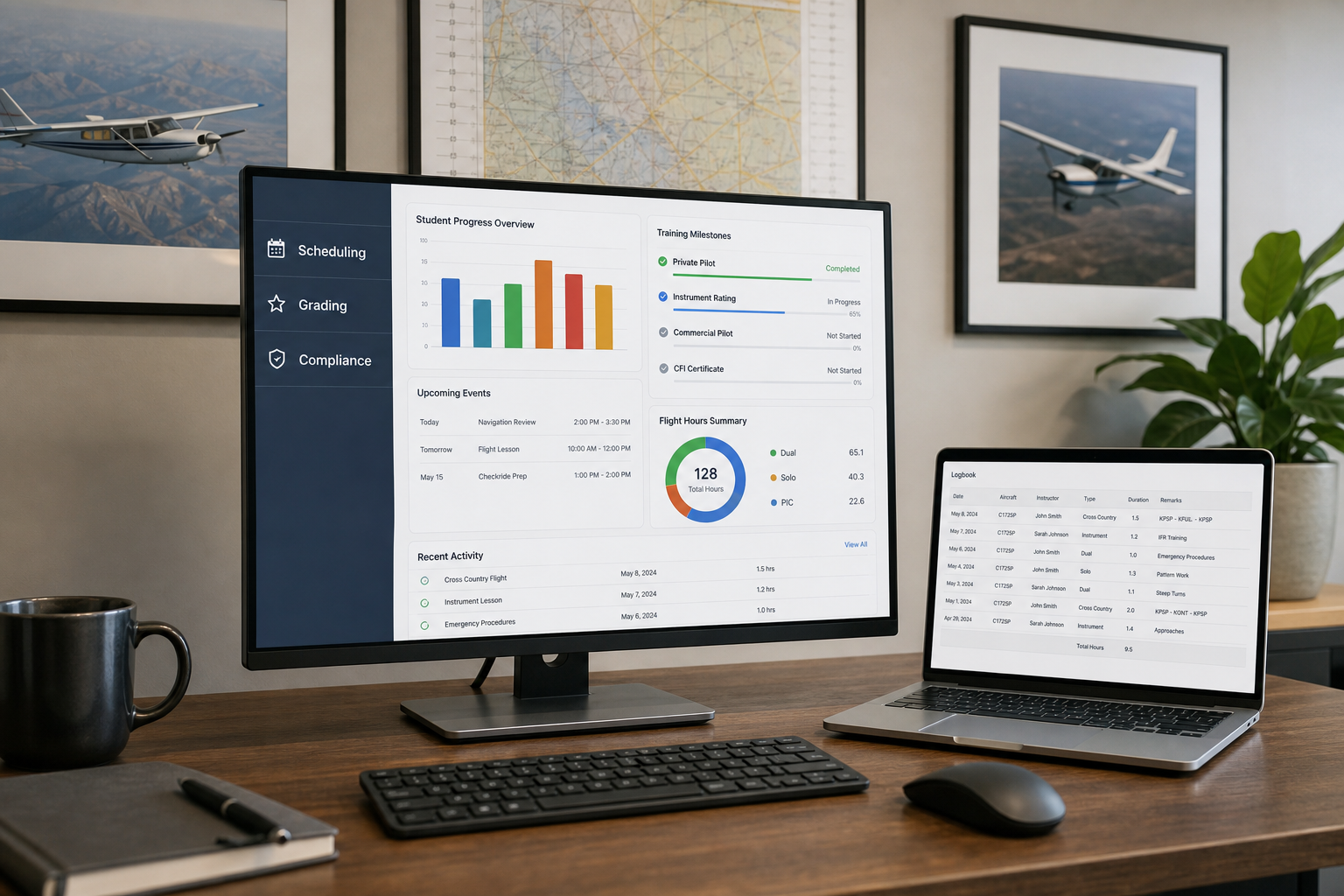
FlightLogger centralizes everything your flight school needs into one platform built specifically for aviation training operations. This isn't a generic training management system adapted for aviation—it's software designed from the ground up by aviation professionals who understand what happens in daily operations.
For flight schools still relying on paper records or cobbled-together tools, FlightLogger eliminates the gaps that create audit risk and administrative overhead. The platform connects student training records directly to scheduling, aircraft maintenance, and compliance workflows. This means your training documentation stays current automatically as students progress through their programs.
Organizations using FlightLogger consistently report documented efficiency gains of 30–50% and 20+ hours of monthly admin time saved. With more than 215 flight schools across 50+ countries running on the platform, FlightLogger has become the operational backbone for training organizations of all sizes.
FlightLogger features
- Unified training records: Student progress, flight hours, ground training, and competency assessments all live in one place—no more reconciling information from multiple sources before an audit
- Integrated scheduling: Connect instructor availability, aircraft readiness, and student bookings in real-time, with automatic conflict detection and notifications
- CBTA support: Full competency-based training and assessment workflows that align with modern regulatory frameworks
- Maintenance coordination: Training schedules automatically account for aircraft maintenance windows, preventing last-minute cancellations
- Multi-campus visibility: Manage training operations across multiple locations with centralized oversight and standardized processes
- Audit-ready documentation: Generate compliance reports instantly with complete training histories that satisfy regulatory inspectors
FlightLogger pros and cons
Pros:
- Purpose-built for aviation training operations rather than adapted from generic software
- Dedicated onboarding team completes implementation in 4–6 weeks with structured migration of existing records
- 24/7 support from aviation professionals who understand flight school operations
Cons:
- The full feature set may take time to explore for operations with very limited training programs
- Some advanced reporting customizations require working with the support team
- Operations with highly specialized non-standard aircraft types may need configuration during onboarding
2. Flight Schedule Pro: A calendar-focused option for basic scheduling needs
Flight Schedule Pro centers on scheduling functionality with training record features included. The platform handles aircraft reservations, instructor availability, and student bookings through a calendar-based interface.
For smaller operations that primarily need scheduling help and basic record-keeping, this tool covers fundamental requirements. The system includes student tracking and can generate basic reports for training progress.
Flight Schedule Pro features
- Calendar scheduling: Book aircraft and instructors through a visual calendar interface
- Student accounts: Basic student profile management with training hour tracking
- Resource management: Track aircraft availability and maintenance status
Flight Schedule Pro pros and cons
Pros:
- Straightforward calendar interface for scheduling
- Works for smaller flight schools with basic needs
- Handles aircraft and instructor booking management
Cons:
- Training record capabilities are more limited compared to aviation-specific platforms
- Multi-location management requires additional configuration
- CBTA and advanced competency tracking are not available
3. Talon: An ERP approach to flight school management
Talon takes an enterprise resource planning approach to flight school operations. The platform includes modules for training management, scheduling, and administrative functions within a broader business management framework.
For operations that want their training records connected to financial and HR systems, Talon offers that integration. The ERP structure means training documentation is part of a larger organizational management system.
Talon features
- ERP integration: Training records connect to financial, HR, and operational modules
- Course management: Build and track training programs with structured curricula
- Regulatory reporting: Generate documentation for compliance requirements
Talon pros and cons
Pros:
- Connects training records with broader business operations
- Handles financial and administrative integration
- Works for larger organizations with multiple departments
Cons:
- ERP systems typically require longer implementation timelines
- The interface is designed for ERP users rather than flight instructors
- Training-specific features may require custom configuration
4. Cirro: Cloud scheduling with training documentation
Cirro offers cloud-based scheduling with training record capabilities included. The platform handles aircraft reservations, instructor management, and student progress tracking through a web interface.
For flight schools focused primarily on scheduling efficiency with added record-keeping, Cirro addresses those needs. The cloud-based approach means access from anywhere without local server requirements.
Cirro features
- Cloud-based access: Manage schedules and records from any device with internet access
- Dispatch management: Track aircraft status and dispatch operations
- Student progress: Basic training record storage and progress reports
Cirro pros and cons
Pros:
- Cloud access enables scheduling from multiple locations
- Dispatch features support daily flight operations
- No local server infrastructure required
Cons:
- Training record depth is more limited than aviation-specific platforms
- Advanced compliance features may not meet all regulatory requirements
- Multi-campus operations need additional setup
5. TrackPilot: Digital logbook management with training records
TrackPilot started as a digital logbook solution and has expanded to include training documentation features. The platform handles flight hour logging, currency tracking, and training progress for individual pilots and flight schools.
For operations where accurate logbook management is the primary concern, TrackPilot offers strong capabilities in that area. Training records connect to pilot logbooks for unified documentation.
TrackPilot features
- Digital logbooks: Electronic flight hour logging with automatic calculations
- Currency tracking: Monitor pilot certifications and currency requirements
- Training documentation: Connect training progress to logbook entries
TrackPilot pros and cons
Pros:
- Strong logbook management capabilities
- Currency tracking helps with certification monitoring
- Individual pilot records are detailed and accurate
Cons:
- Scheduling and resource management features are more limited
- School-wide operational visibility is not the primary focus
- Integration with maintenance and aircraft management requires workarounds
6. AeroPilot Manager: Dispatch-oriented operations management
AeroPilot Manager focuses on dispatch and flight operations with training record capabilities included. The platform handles aircraft dispatch, crew management, and operational tracking with training documentation as part of the workflow.
For flight schools that also run charter or other flight operations, AeroPilot Manager offers capabilities across both training and commercial activities. The dispatch focus means strong aircraft tracking and crew coordination.
AeroPilot Manager features
- Dispatch operations: Manage aircraft dispatch with crew assignments and flight tracking
- Crew management: Track pilot certifications, training, and scheduling
- Flight tracking: Monitor aircraft status and operational metrics
AeroPilot Manager pros and cons
Pros:
- Dispatch features work for combined training and commercial operations
- Crew management includes certification tracking
- Aircraft tracking supports operational oversight
Cons:
- Training-specific workflows are secondary to dispatch functions
- Student-focused features are more basic than dedicated training platforms
- Competency-based training support is limited
7. Flight Training Central: Web-based training record storage
Flight Training Central offers web-based training record storage and management. The platform handles student progress tracking, course management, and training documentation through a browser interface.
For flight schools looking for straightforward training record storage without extensive scheduling integration, Flight Training Central covers basic documentation needs. The web interface makes records accessible from any location.
Flight Training Central features
- Training records: Store and access student training documentation online
- Course tracking: Monitor student progress through training programs
- Web access: Access records from any browser without software installation
Flight Training Central pros and cons
Pros:
- Straightforward training record storage
- Browser-based access from any device
- Basic course progress tracking included
Cons:
- Scheduling and resource management are not included
- Limited integration with maintenance and aircraft systems
- Advanced reporting and analytics require additional tools
Comparison table: Flight school record software for 2026
| Platform | CBTA Support | Integrated Maintenance | Multi-Campus Management |
|---|---|---|---|
| FlightLogger | ✓ | ✓ | ✓ |
| Flight Schedule Pro | ✗ | Basic | ✗ |
| Talon | ✗ | ✓ | ✓ |
| Cirro | ✗ | Basic | ✗ |
| TrackPilot | ✗ | ✗ | ✗ |
| AeroPilot Manager | ✗ | ✓ | Basic |
| Flight Training Central | ✗ | ✗ | ✗ |
How do you replace paper training records at a flight school?
Moving from paper to digital training records involves more than just scanning documents. The goal is creating a system where records update automatically as training happens—not after the fact.
Start by mapping your current workflow. Where do training records originate? Who updates them? How do they connect to scheduling, grading, and compliance? Understanding these connections helps you choose software that fits how your operation actually works.
The most successful transitions happen when the new system mirrors existing workflows rather than forcing instructors and staff to change how they work. FlightLogger approaches this by building aviation-specific workflows into the platform from the start, so your team isn't adapting a generic system to flight training needs.
What makes aviation training records different from general training documentation?
Aviation training records carry regulatory weight that general corporate training documentation doesn't. When an inspector arrives, your records need to demonstrate compliance with specific requirements—flight hours, competency assessments, ground training completion, and instructor qualifications.
General training management software wasn't built with these requirements in mind. You end up creating workarounds, custom fields, and manual processes to capture aviation-specific data.
Aviation-specific platforms like FlightLogger include these requirements in their core structure. CBTA workflows, flight hour calculations, and regulatory reporting are built in—not bolted on. This difference becomes clear during audits, when you need complete documentation instantly rather than hours of preparation.
Why FlightLogger is the leading flight school record software for 2026
The real question isn't whether you need to replace paper training records. It's whether you want a system built specifically for how flight schools operate.
FlightLogger stands apart because it was designed by aviation professionals who understand the operational realities of running training organizations. The platform connects training records to scheduling, maintenance, and compliance in ways that generic software simply can't match.
For flight schools facing mounting pressure to improve efficiency while maintaining regulatory compliance, FlightLogger delivers documented results: 30–50% efficiency gains, audit-ready documentation that satisfies inspectors, and operational visibility across all locations. More than 215 organizations in 50+ countries have made FlightLogger their operational backbone.
FlightLogger never sleeps—so your operation never falls behind. Book a walkthrough to see how quickly you can get started.
FAQs about flight school record software
What is flight school record software?
Flight school record software replaces paper training documentation with digital systems that track student progress, flight hours, competency assessments, and compliance requirements. FlightLogger connects these records directly to scheduling and maintenance, creating a unified operational platform.
How long does it take to migrate from paper records to digital?
Migration timelines depend on your operation's size and complexity. FlightLogger's dedicated onboarding team typically completes implementation in 4–6 weeks, including structured migration of existing training records without disrupting active training programs.
Can flight school software help with regulatory audits?
Yes. FlightLogger generates audit-ready documentation instantly, with complete training histories that satisfy regulatory inspectors. Organizations using the platform consistently report reduced audit stress and faster interactions with authorities.
Does flight school record software integrate with scheduling?
FlightLogger integrates training records directly with scheduling, maintenance, and resource management. When a student books a lesson, the system accounts for instructor availability, aircraft readiness, and the student's training requirements automatically.
What is CBTA and why does it matter for flight training records?
CBTA (Competency-Based Training and Assessment) is a modern regulatory framework focused on demonstrated competencies rather than minimum hours. FlightLogger includes full CBTA support, allowing you to track and document competency progression as required by current regulatory standards.
How do multi-location flight schools manage training records?
Multi-campus operations need centralized visibility with standardized processes across all locations. FlightLogger supports multi-location management with real-time visibility into student progress, instructor availability, and aircraft status at every campus—all from a single platform.