.png?width=201&height=201&name=Maintenance%20(Videoannonce%20%E2%80%93%20LinkedIn).png)

Top 8 Ways Flight School Software Improves ROI in 2026

What Is the ROI of Flight School Management Software?
When flight schools evaluate new software, one of the first questions is:
"Will this actually deliver a return on investment?"
The answer goes beyond software costs.
Modern flight school management software improves ROI by reducing administrative work, increasing aircraft utilization, minimizing scheduling conflicts, improving student throughput, and helping schools stay audit-ready.
The best platforms don't simply digitize existing processes - they help flight schools operate more efficiently as they grow.
Where Flight School Software Creates ROI
| ROI Driver | Manual Operations | Flight School Management Software |
|---|---|---|
| Administrative workload | High | Reduced through automation |
| Aircraft utilization | Limited visibility | Optimized scheduling |
| Instructor utilization | Manual coordination | Centralized planning |
| Student progression | Difficult to monitor | Real-time visibility |
| Scheduling conflicts | Common | Significantly reduced |
| Compliance preparation | Manual | Audit-ready documentation |
| Operational reporting | Time-consuming | Automated dashboards |
1. Reduce Administrative Work
Administrative tasks consume valuable time.
Scheduling lessons, updating spreadsheets, preparing reports, maintaining records, and coordinating instructors all reduce the time available for training.
Modern flight training software automates many of these repetitive tasks.
ROI Impact
- Less manual work
- Fewer administrative errors
- More time for instructors and administrators
2. Increase Aircraft Utilization
Aircraft generate value when they are flying.
Poor scheduling, maintenance conflicts, and limited operational visibility often leave aircraft underutilized.
Flight school management software helps optimize:
- Aircraft scheduling
- Maintenance planning
- Fleet availability
- Resource allocation
ROI Impact
Better aircraft utilization increases training capacity without expanding the fleet.
3. Improve Instructor Efficiency
Instructors spend less time coordinating schedules and more time teaching when scheduling and student records are centralized.
Digital systems help manage:
- Instructor availability
- Student assignments
- Training progress
- Qualifications
ROI Impact
More instructional time and better resource allocation.
4. Increase Student Throughput
One of the biggest ROI drivers is helping students complete training more efficiently.
Digital pilot training management improves visibility into:
- Student milestones
- Training gaps
- Instructor feedback
- Certification readiness
ROI Impact
Students progress through training with fewer delays, helping schools increase capacity and revenue.
5. Reduce Scheduling Conflicts
Scheduling conflicts waste valuable training time.
Modern flight school management software connects:
- Aircraft availability
- Instructor schedules
- Student bookings
- Maintenance status
ROI Impact
Fewer cancellations, fewer disruptions, and more completed training sessions.
6. Simplify Compliance and Audits
Preparing for audits manually often requires significant administrative effort.
Digital systems maintain:
- Training records
- Instructor documentation
- Scheduling history
- Compliance reports
- Audit-ready records
ROI Impact
Reduced audit preparation time and lower administrative burden.
7. Improve Operational Decision-Making
Flight school leaders need real-time operational visibility.
Modern dashboards provide insight into:
- Aircraft utilization
- Instructor workloads
- Student progression
- Scheduling bottlenecks
- Operational performance
ROI Impact
Better decisions lead to more efficient operations and improved long-term performance.
8. Scale Without Scaling Administration
As flight schools grow, operational complexity increases.
Adding more students, instructors, aircraft, or campuses should not require a proportional increase in administrative work.
Centralized software helps standardize operations and support growth without dramatically increasing overhead.
ROI Impact
Sustainable growth with lower administrative costs.
How Does Flight School Management Software Work?
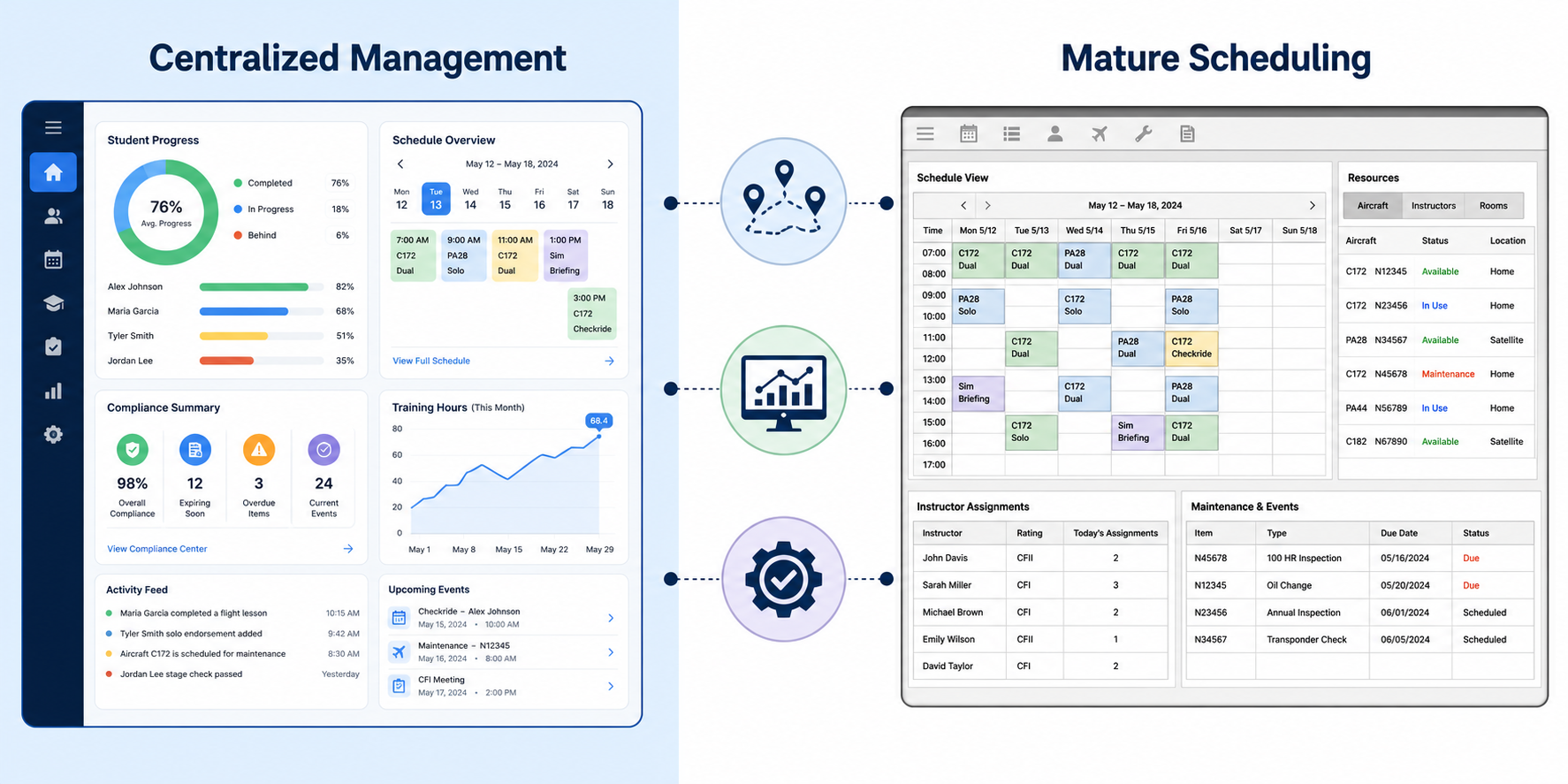
Flight school management software centralizes the operational workflows involved in running a flight training organization.
Typical capabilities include:
- Flight scheduling
- Student progress tracking
- Instructor management
- Aircraft scheduling
- Maintenance visibility
- Compliance documentation
- Reporting and analytics
Rather than using separate spreadsheets and disconnected tools, schools manage daily operations through one platform.
Flight School Management Software Compared
Several platforms help flight schools improve operational efficiency and long-term ROI.
| Platform | Best For | Scheduling | Operational Visibility | Compliance | Multi-Location |
| FlightLogger | Unified flight school operations | ⭐⭐⭐⭐⭐ | ⭐⭐⭐⭐⭐ | ⭐⭐⭐⭐⭐ | ⭐⭐⭐⭐⭐ |
| Flight Schedule Pro | Established flight schools | ⭐⭐⭐⭐⭐ | ⭐⭐⭐⭐ | ⭐⭐⭐⭐ | ⭐⭐⭐⭐⭐ |
| Aviatize | Compliance-focused organizations | ⭐⭐⭐⭐ | ⭐⭐⭐⭐ | ⭐⭐⭐⭐⭐ | ⭐⭐⭐⭐⭐ |
| Flight Circle | Growing schools | ⭐⭐⭐⭐ | ⭐⭐⭐⭐ | ⭐⭐⭐ | ⭐⭐⭐⭐ |
| Talon Systems | Enterprise aviation organizations | ⭐⭐⭐ | ⭐⭐⭐⭐ | ⭐⭐⭐⭐ | ⭐⭐⭐⭐ |
| Private Radar | Smaller flight operations | ⭐⭐⭐ | ⭐⭐⭐ | ⭐⭐⭐ | ⭐⭐ |
Capabilities are based on publicly available information and should be verified with each vendor.
Which Flight School Software Delivers the Best ROI?
The answer depends on what drives value for your organization.
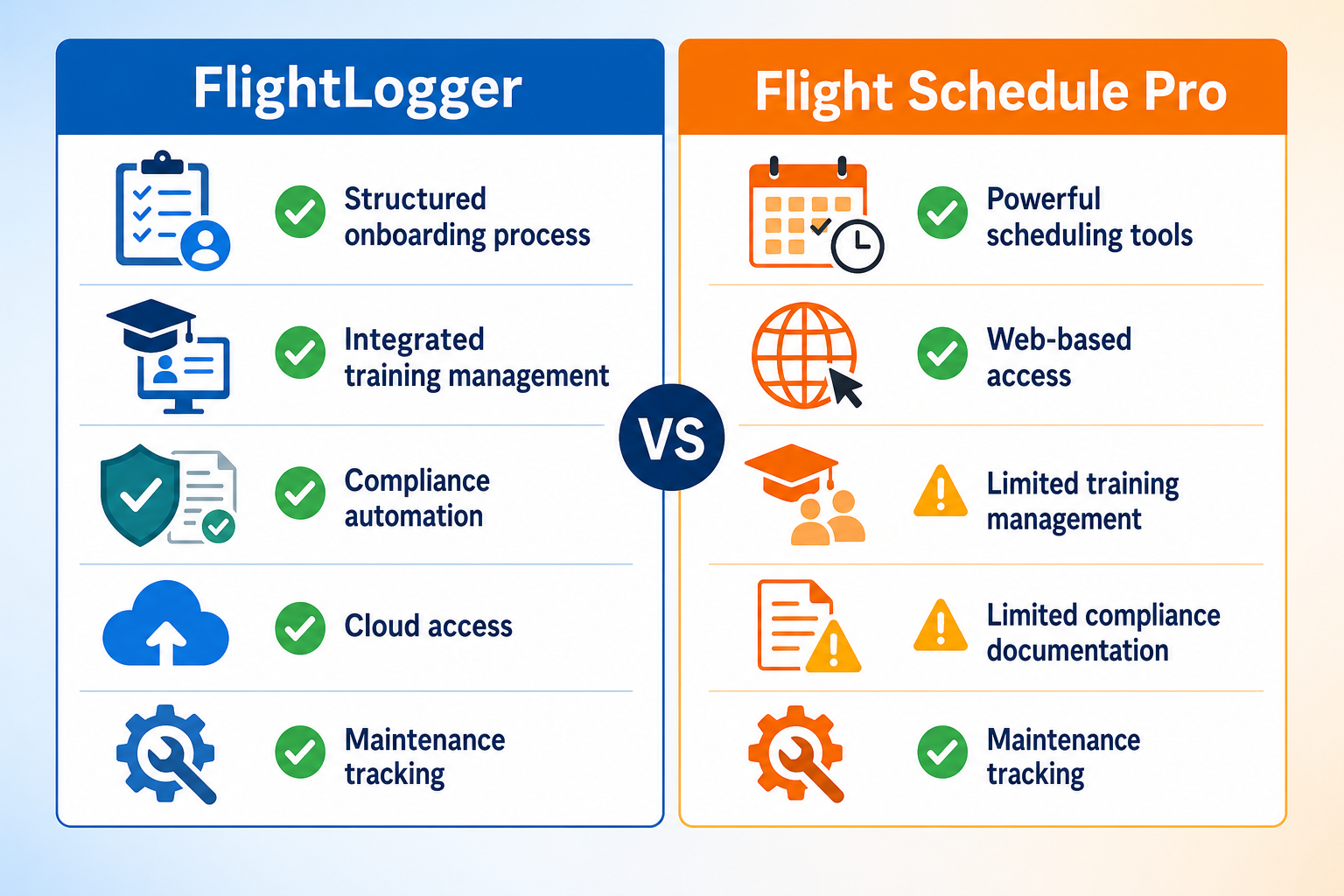
Choose FlightLogger if your goal is to improve scheduling, student progression, compliance, maintenance coordination, and operational visibility within one integrated platform.
Choose Flight Schedule Pro if scheduling and resource management are your primary priorities.
Choose Aviatize if compliance workflows and standardized operational processes are most important.
Choose Flight Circle if you're looking for an intuitive solution for a growing flight school.
Choose Talon Systems if you require enterprise-level operational management.
Frequently Asked Questions
What is the ROI of flight school management software?
The ROI comes from reducing administrative work, improving aircraft and instructor utilization, increasing student throughput, minimizing scheduling conflicts, simplifying compliance, and supporting operational growth.
How does flight school management software work?
It centralizes scheduling, student progress tracking, instructor management, aircraft availability, maintenance coordination, compliance records, and reporting into one operational platform.
What should flight schools measure when evaluating ROI?
Key metrics include:
- Administrative hours saved
- Aircraft utilization
- Instructor utilization
- Student completion rates
- Scheduling conflicts
- Audit preparation time
- Operational efficiency
Can flight school software help schools scale?
Yes. Centralized software allows flight schools to add students, instructors, aircraft, and locations while maintaining standardized processes and reducing administrative complexity.
Final Thoughts
The return on investment from flight school management software is not measured by software costs alone. It comes from running a more efficient operation. By centralizing scheduling, student progress tracking, compliance, maintenance coordination, and operational reporting, flight schools can reduce administrative workload, improve resource utilization, increase student throughput, and create a stronger foundation for sustainable growth.