.png?width=201&height=201&name=Maintenance%20(Videoannonce%20%E2%80%93%20LinkedIn).png)

10 Flight School Resource Planning Lessons for 2026

How Flight Schools Improve Operational Efficiency Through Better Resource Planning
Every flight school has the same core resources:
- Aircraft
- Instructors
- Students
- Simulators
- Classrooms
- Maintenance capacity
- Administrative teams
The challenge isn't having these resources.
The challenge is coordinating them.
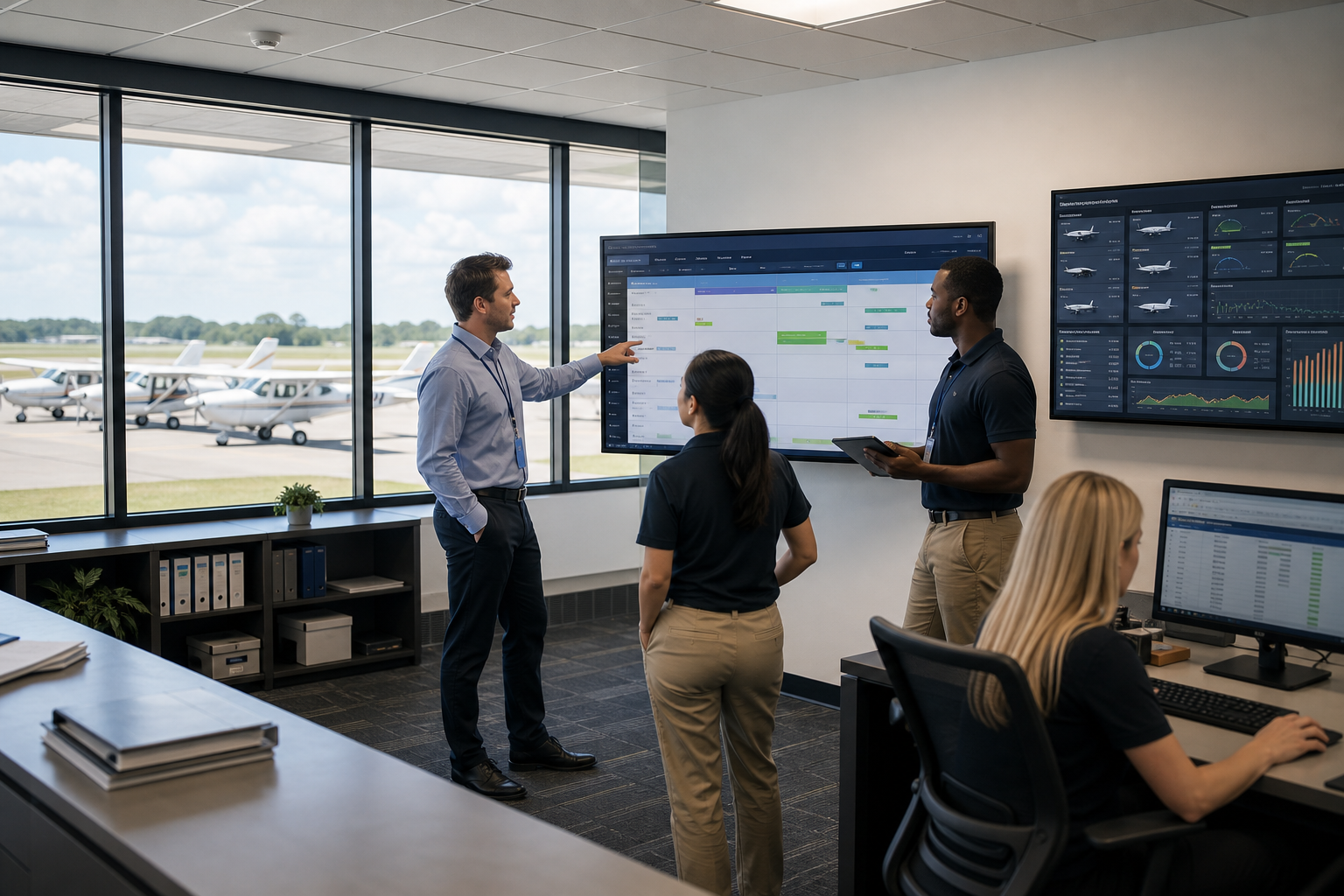
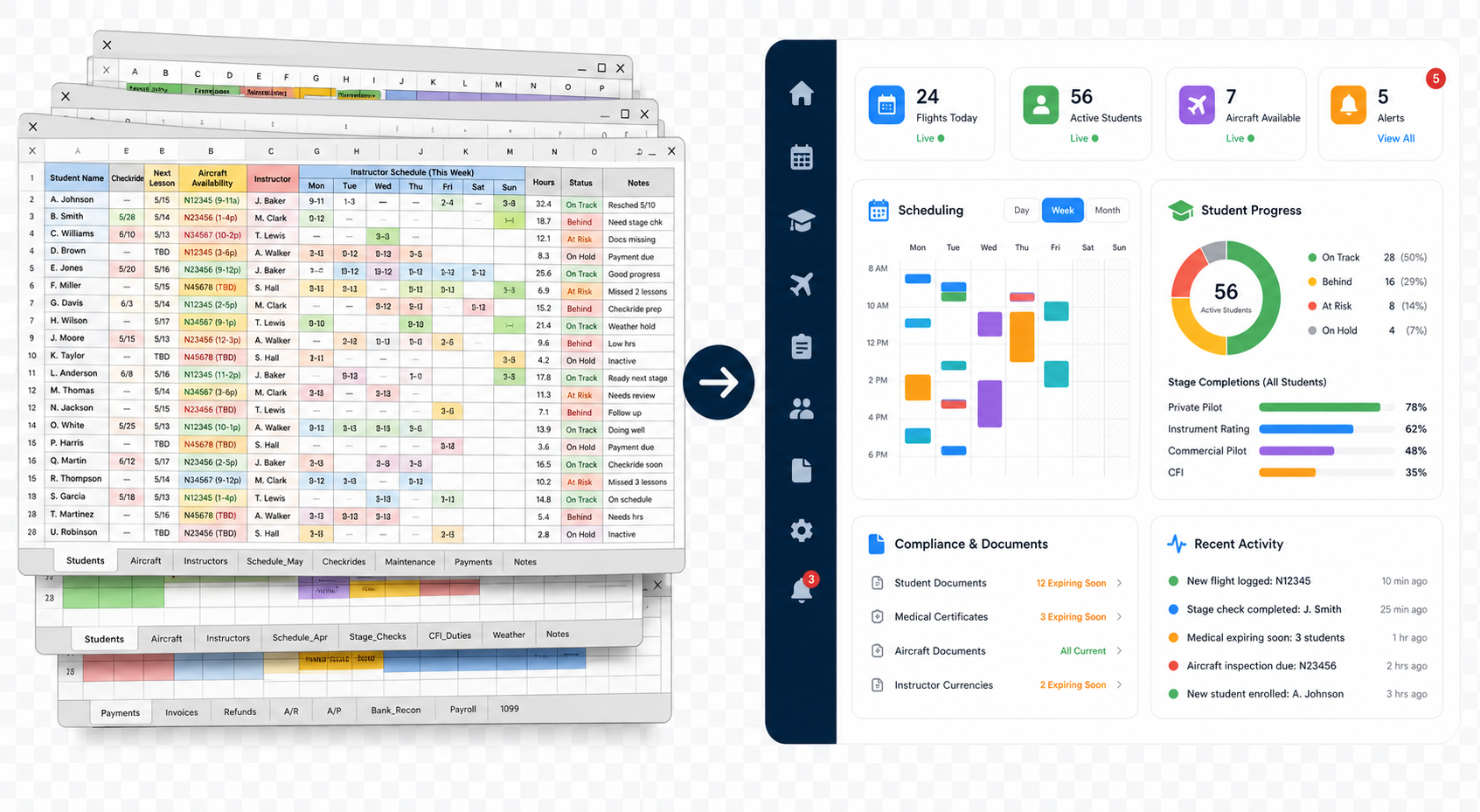
As flight schools grow, manual planning quickly becomes difficult. Spreadsheets, whiteboards, disconnected software, and email chains create scheduling conflicts, administrative bottlenecks, and limited operational visibility.
The most successful organizations don't simply schedule lessons—they manage their operation as one connected system.
Here are ten practical lessons every flight school can apply in 2026 to improve operational efficiency and keep training moving.
Why Resource Planning Matters
Resource planning is the foundation of efficient flight school management.
Every lesson depends on multiple resources being available at exactly the same time.
A single unavailable aircraft or instructor can affect:
- Student progression
- Instructor utilization
- Aircraft availability
- Revenue
- Graduation timelines
- Compliance planning
Good resource planning reduces these disruptions before they happen.
1. Stop Planning Resources Separately
Many schools manage:
- Aircraft in one system
- Instructor schedules in another
- Student progression elsewhere
- Maintenance separately
Every disconnected system creates another opportunity for communication delays.
Connected operations begin with one shared operational view.
2. Schedule Around Student Progression—Not Just Availability
The next available aircraft isn't always the right aircraft.
The next available instructor isn't always the right instructor.
Leading schools schedule based on:
- Student competency level
- Syllabus progression
- Upcoming milestones
- Instructor qualifications
- Aircraft requirements
Scheduling should support learning—not simply fill calendar slots.
3. Treat Aircraft as Operational Assets
Aircraft aren't simply booked.
They're managed.
Effective resource planning considers:
- Utilization
- Inspection schedules
- Maintenance windows
- Fleet balance
- Training demand
This improves aircraft availability while reducing unexpected disruptions.
4. Build Instructor Capacity Into Every Schedule
Instructor availability changes constantly.
Leave.
Weather.
Check rides.
Training.
Administrative duties.
Effective resource management balances instructor workloads instead of simply assigning whoever is available first.
This improves both operational efficiency and instructor satisfaction.
5. Plan Maintenance Before It Creates Conflicts
Maintenance shouldn't surprise scheduling.
It should inform scheduling.
The most efficient schools make maintenance visibility part of operational planning.
This reduces:
- Last-minute cancellations
- Instructor downtime
- Student delays
- Administrative rescheduling
Maintenance becomes predictable instead of disruptive.
6. Remove Manual Administrative Handoffs
Many scheduling delays don't happen because of resources.
They happen because information moves too slowly.
Examples include:
- Instructor updates dispatch
- Dispatch updates scheduling
- Scheduling contacts students
- Administration updates records
Every manual handoff introduces another opportunity for delay.
Connected workflows remove unnecessary administration.
7. Give Every Department the Same Operational View
Operations.
Training.
Maintenance.
Administration.
Finance.
Leadership.
Every department depends on the same operational information.
When each team works from different data, scheduling conflicts increase.
One operational platform improves coordination across the organization.
8. Use Operational Data to Plan Ahead
Resource planning shouldn't focus only on today's schedule.
Leading flight schools regularly review:
- Aircraft utilization
- Instructor utilization
- Student progression
- Cancellation trends
- Scheduling bottlenecks
- Resource demand
Historical data improves future planning.
9. Standardize Planning Across Every Training Base
Multi-base operations introduce additional complexity.
Different scheduling methods create inconsistent workflows.
Standardized planning helps ensure:
- Consistent scheduling
- Shared instructor workflows
- Unified student records
- Organization-wide reporting
- Better leadership oversight
Consistency improves scalability.
10. Think Beyond Scheduling
Scheduling isn't the objective.
Operational efficiency is.
The best flight schools connect:
- Scheduling
- Student progression
- Instructor management
- Compliance
- Reporting
- Safety
- Maintenance
- Finance
Scheduling becomes one component of a much larger operational workflow.
How Do Flight Schools Avoid Scheduling Conflicts?
Most scheduling conflicts aren't caused by the scheduling software itself.
They're caused by disconnected operational processes.
Common examples include:
- Aircraft entering maintenance after lessons are booked
- Instructor availability changing without dispatch visibility
- Students progressing faster or slower than expected
- Duplicate bookings across departments
- Manual communication delays
The most efficient organizations reduce conflicts by ensuring every department works from the same real-time operational data.
Best Practices for Resource Planning
High-performing flight schools consistently:
- Centralize operational planning
- Connect scheduling with student progression
- Plan maintenance proactively
- Monitor instructor workloads
- Track aircraft utilization
- Reduce manual administration
- Standardize operational workflows
- Review performance continuously
These practices improve both training quality and operational efficiency.
How Flight School Management Software Improves Resource Planning
Modern flight school management software is no longer just scheduling software.
It connects every operational resource into one platform.
A connected system brings together:
- Flight scheduling
- Student progression
- Instructor management
- Aircraft availability
- Compliance
- Reporting
- Business Insights
- Safety
- Finance
Rather than coordinating departments manually, leadership gains one shared operational picture.
This allows better planning, faster decision-making, and more efficient resource utilization.
Frequently Asked Questions
How can flight schools improve operational efficiency?
Flight schools improve operational efficiency by connecting scheduling, student progression, instructor management, aircraft availability, compliance, and reporting into one operational workflow. Reducing manual processes and improving visibility helps eliminate bottlenecks and support better decision-making.
How do flight schools avoid scheduling conflicts?
Scheduling conflicts are reduced by centralizing scheduling, planning maintenance proactively, monitoring instructor availability, tracking student progression, and ensuring every department works from the same real-time operational information.
What is resource planning in a flight school?
Resource planning is the process of coordinating aircraft, instructors, students, simulators, classrooms, maintenance, and administrative resources to maximize training capacity while minimizing operational disruptions.
Why is connected resource planning important?
Connected resource planning improves communication, reduces duplicate work, increases aircraft utilization, supports student progression, and helps leadership make informed operational decisions using real-time data.
What should flight school management software include?
A modern flight school platform should include:
- Flight scheduling
- Student progression
- Instructor management
- Aircraft scheduling
- Compliance
- Reporting
- Safety management
- Finance
- Business insights
The most effective platforms connect these workflows instead of managing them separately.
Better Resource Planning Creates Better Flight Schools
Operational efficiency doesn't come from scheduling more flights.
It comes from coordinating every resource more intelligently.
When aircraft, instructors, students, maintenance, compliance, and reporting are connected, flight schools spend less time resolving conflicts and more time delivering high-quality flight training.
That's the philosophy behind FlightLogger.
Trusted by 220+ flight schools across 50+ countries, FlightLogger is the Flight School Operating System that connects scheduling, training, compliance, safety, finance, reporting, and business insights into one operational platform.
Instead of managing disconnected systems, your entire organization works from one source of truth—improving operational visibility, reducing administrative workload, and helping your school scale with confidence.
Book a demo to see how FlightLogger helps flight schools improve operational efficiency through connected resource planning.