.png?width=201&height=201&name=Maintenance%20(Videoannonce%20%E2%80%93%20LinkedIn).png)

8 Flight Scheduling Bottlenecks Flight Schools Can Fix
 Amalie Rasmussen
·
4 minute read
Amalie Rasmussen
·
4 minute read

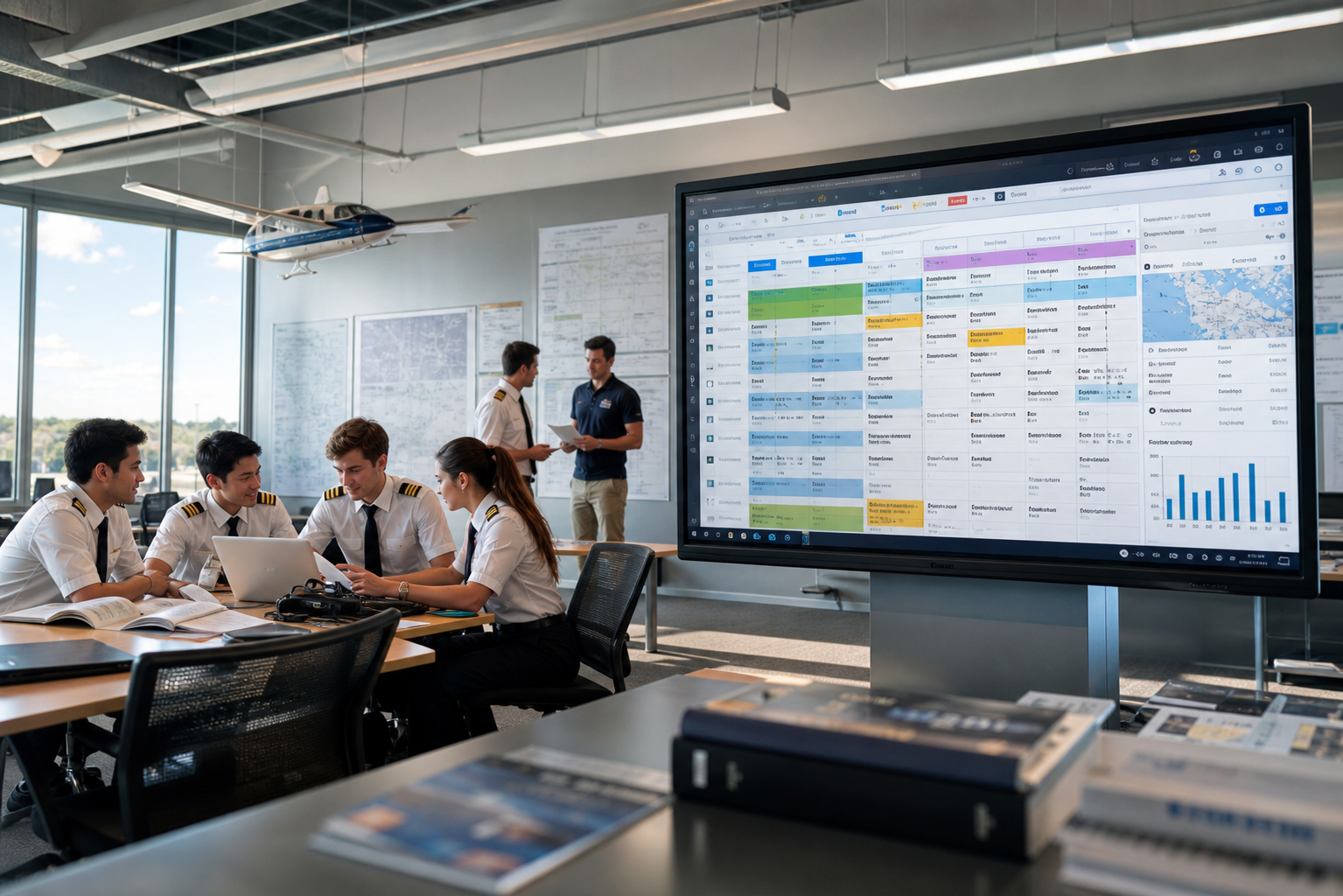
Flight scheduling is one of the most complex operational challenges a flight school faces. Every lesson depends on the right student, instructor, aircraft, weather conditions, maintenance status, and training objectives coming together at the same time.
As flight schools grow, scheduling becomes far more than filling calendar slots. Small inefficiencies compound into delays, cancelled lessons, underutilized aircraft, and frustrated instructors and students.
The good news is that most scheduling problems are predictable—and preventable.
In this guide, we'll explore the eight most common flight scheduling bottlenecks, why they occur, and how modern flight school scheduling software helps flight schools create smoother, more efficient operations.
Quick Answer
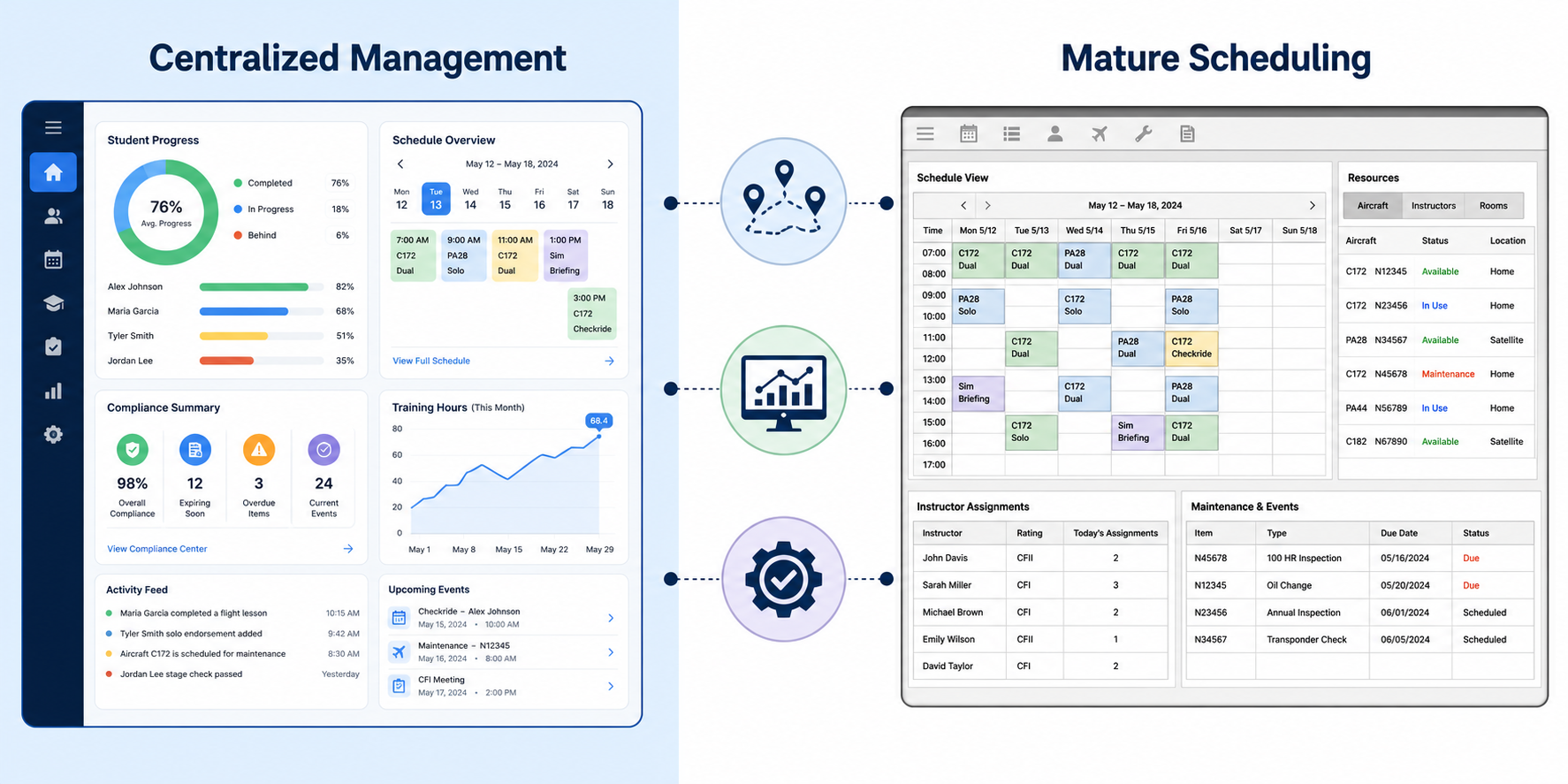
The biggest flight scheduling bottlenecks are caused by disconnected scheduling processes, limited visibility into aircraft and instructor availability, manual coordination, and poor communication. Modern flight school scheduling software reduces conflicts by connecting aircraft scheduling, instructor scheduling, student training, maintenance, and operational planning into one centralized system.
Why Flight School Scheduling Is So Complex
Unlike traditional education, every flight lesson requires multiple resources to align perfectly.
A single lesson depends on:
- An available student
- A qualified instructor
- An available aircraft
- The correct training stage
- Aircraft maintenance status
- Suitable weather
- Available airspace and airport operations
If just one of these changes, the entire schedule may need to be adjusted.
That's why growing flight schools increasingly rely on connected scheduling rather than spreadsheets and shared calendars.
1. Aircraft and Instructor Schedules Aren't Connected
One of the most common scheduling problems occurs when aircraft and instructor schedules are managed separately.
An aircraft might be available—but no instructor is.
Or an instructor is available—but the assigned aircraft is undergoing maintenance.
This leads to:
- Last-minute changes
- Double bookings
- Cancelled lessons
- Administrative rework
How to fix it
Modern flight school scheduling software connects aircraft scheduling and instructor scheduling into one operational calendar, ensuring all required resources are available before a lesson is confirmed.
2. Manual Scheduling Doesn't Scale
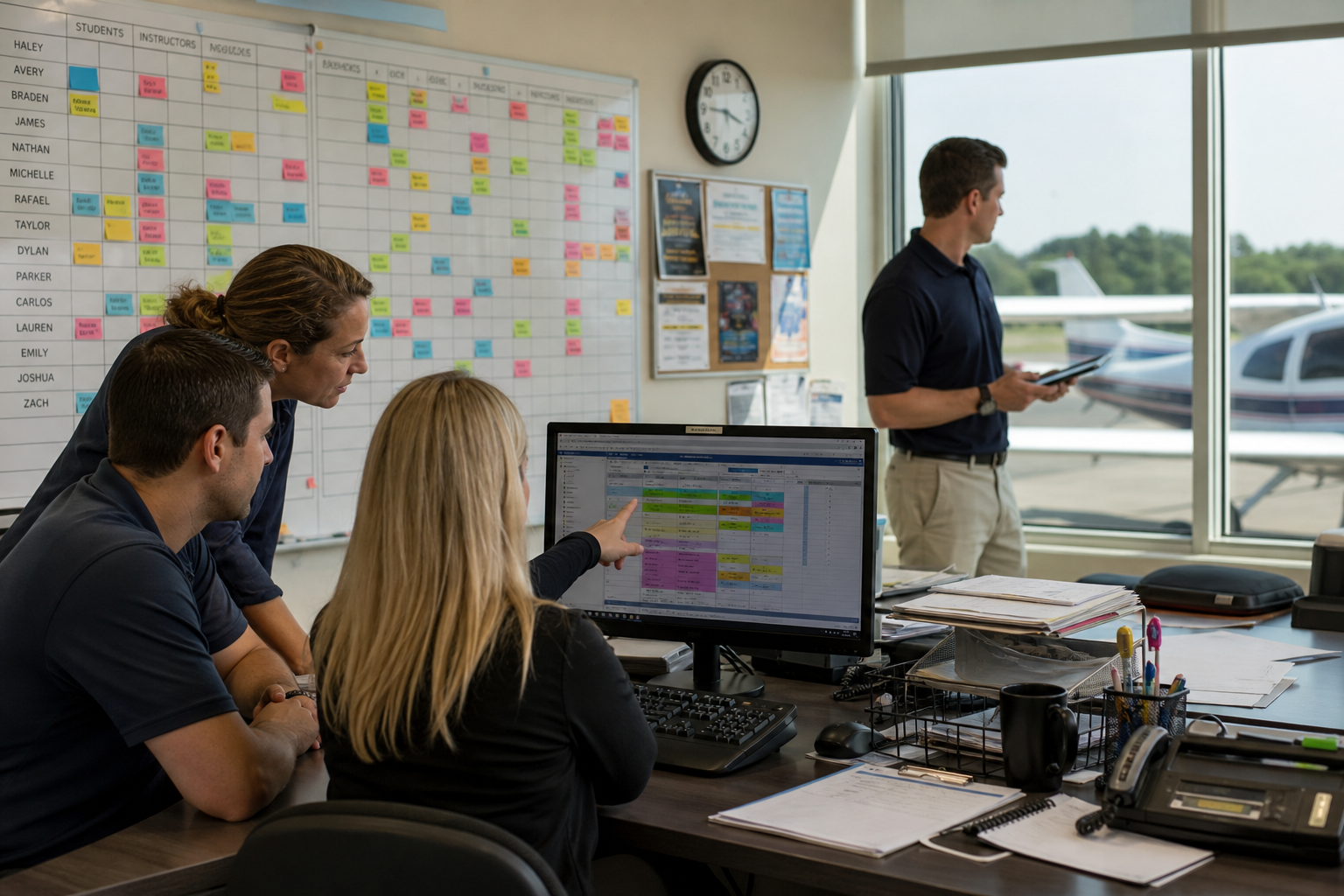
Many schools still schedule lessons using:
- Excel spreadsheets
- Whiteboards
- Shared calendars
- Email chains
- Phone calls
These methods may work for smaller schools but quickly become inefficient as operations expand.
How to fix it
Centralized scheduling provides one real-time schedule that updates automatically as bookings, instructor availability, and aircraft assignments change.
3. Maintenance Isn't Part of the Scheduling Process
Aircraft maintenance directly affects scheduling.
Yet maintenance is often managed in a separate system.
This creates situations where aircraft appear available when they shouldn't be.
How to fix it
Integrated aircraft scheduling automatically reflects maintenance status so unavailable aircraft can't accidentally be assigned to training.
4. Student Progression Isn't Considered
Scheduling isn't just about finding an open time slot.
Students need lessons that match their current training stage.
Without visibility into progression, students may be booked for inappropriate lessons or experience unnecessary delays.
How to fix it
Connected flight training management links scheduling with student progression, syllabi, and completed lessons to ensure training follows the correct sequence.
5. Instructor Workloads Become Unbalanced
Some instructors become fully booked while others have available capacity.
Without visibility into instructor utilization, coordinators often assign lessons based on familiarity rather than operational efficiency.
How to fix it
Centralized instructor scheduling helps distribute workloads more evenly while considering instructor qualifications, availability, and student assignments.
6. Communication Breaks Down During Schedule Changes
Schedules change constantly because of:
- Weather
- Aircraft maintenance
- Instructor illness
- Student cancellations
- Operational priorities
If updates rely on phone calls or emails, communication gaps are inevitable.
How to fix it
Real-time scheduling platforms notify instructors and students immediately when schedules change, ensuring everyone works from the latest information.
7. Multiple Locations Operate Independently
For multi-base flight schools, scheduling complexity increases significantly.
Each location may:
- Use different scheduling processes
- Maintain separate calendars
- Manage aircraft independently
This limits visibility across the organization.
How to fix it
Centralized scheduling gives every location access to one operational platform while allowing each base to manage its own daily activities.
8. Leadership Lacks Visibility Into Scheduling Performance
Many training managers struggle to answer questions like:
- Which aircraft are underutilized?
- Which instructors are overbooked?
- Where do cancellations occur most often?
- Which students experience the longest scheduling delays?
Without operational data, it's difficult to improve scheduling.
How to fix it
Modern scheduling platforms provide dashboards that highlight utilization, scheduling trends, cancellations, and resource availability, helping leaders continuously improve operations.
Common Signs Your Scheduling Process Needs Improvement
If your team regularly experiences any of the following, your scheduling process may be limiting operational efficiency:
- Frequent scheduling conflicts
- Double-booked aircraft
- Instructor availability issues
- Manual schedule adjustments
- Last-minute cancellations
- Poor aircraft utilization
- Students waiting for lessons
- Multiple scheduling spreadsheets
- Constant phone calls to coordinate bookings
These challenges usually point to disconnected workflows rather than isolated scheduling mistakes.
Best Practices for Flight School Scheduling
High-performing flight schools typically follow these principles:
Centralize Scheduling
Use one system for students, instructors, aircraft, and operations.
Connect Scheduling With Training
Lessons should reflect each student's progression—not just calendar availability.
Include Maintenance
Aircraft scheduling should always account for inspections and maintenance planning.
Give Everyone Access to Real-Time Information
Students, instructors, administrators, and operations staff should work from the same schedule.
Measure Scheduling Performance
Track:
- Aircraft utilization
- Instructor utilization
- Student wait times
- Lesson completion rates
- Scheduling conflicts
Operational insights help identify bottlenecks before they become larger problems.
Benefits of Connected Flight Scheduling
Flight schools that modernize scheduling often achieve:
- Fewer scheduling conflicts
- Better aircraft utilization
- Improved instructor coordination
- Faster student progression
- Reduced administrative work
- Better communication
- Greater operational visibility
- Higher overall scheduling efficiency
Scheduling becomes more than a calendar—it becomes the operational engine of the flight school.
How FlightLogger Simplifies Flight Scheduling
FlightLogger – The Flight School Operating System helps flight schools coordinate every aspect of scheduling from one connected platform.
With FlightLogger, schools can:
- Schedule aircraft and instructors together
- Track student progression alongside bookings
- Connect maintenance with aircraft availability
- Manage multi-base operations
- Reduce scheduling conflicts
- Improve fleet utilization
- Monitor operational performance through real-time dashboards
Rather than using separate scheduling, training, and maintenance systems, FlightLogger connects every workflow into one operational platform.
Frequently Asked Questions
How can flight schools optimize flight scheduling?
The most effective approach is to use centralized flight school scheduling software that connects aircraft, instructors, students, maintenance, and training records in one platform. This reduces scheduling conflicts and improves resource utilization.
What causes scheduling conflicts in flight training?
Common causes include disconnected scheduling systems, poor visibility into instructor and aircraft availability, manual scheduling processes, maintenance conflicts, and communication gaps during schedule changes.
What's the best way to manage aircraft and instructor scheduling?
The best approach is to manage both from the same system. Connected scheduling ensures instructors, aircraft, and students are coordinated simultaneously, reducing conflicts and administrative work.
Why is scheduling so important in flight training?
Scheduling affects every part of a flight school's operation. Efficient scheduling improves student progression, aircraft utilization, instructor productivity, and overall operational performance.
Better Scheduling Starts With Connected Operations
Many flight schools believe scheduling problems are simply part of running a busy operation.
In reality, most bottlenecks are caused by disconnected workflows rather than too many students or too few aircraft.
By connecting aircraft scheduling, instructor scheduling, student progression, maintenance, and operational planning in one platform, flight schools can reduce delays, improve coordination, and create a more efficient training experience.
That's why more organizations are choosing FlightLogger – The Flight School Operating System to streamline scheduling and manage every aspect of flight training from one connected system.
Book a Walkthrough!
See FlightLogger in action and discover how we can help you achieve significant efficiency gains, streamline compliance, and make your daily operations smoother.