.png?width=201&height=201&name=Maintenance%20(Videoannonce%20%E2%80%93%20LinkedIn).png)

How to Prevent Flight School Scheduling Conflicts: A Practical Guide for Growing Flight Schools
 Amalie Rasmussen
·
4 minute read
Amalie Rasmussen
·
4 minute read
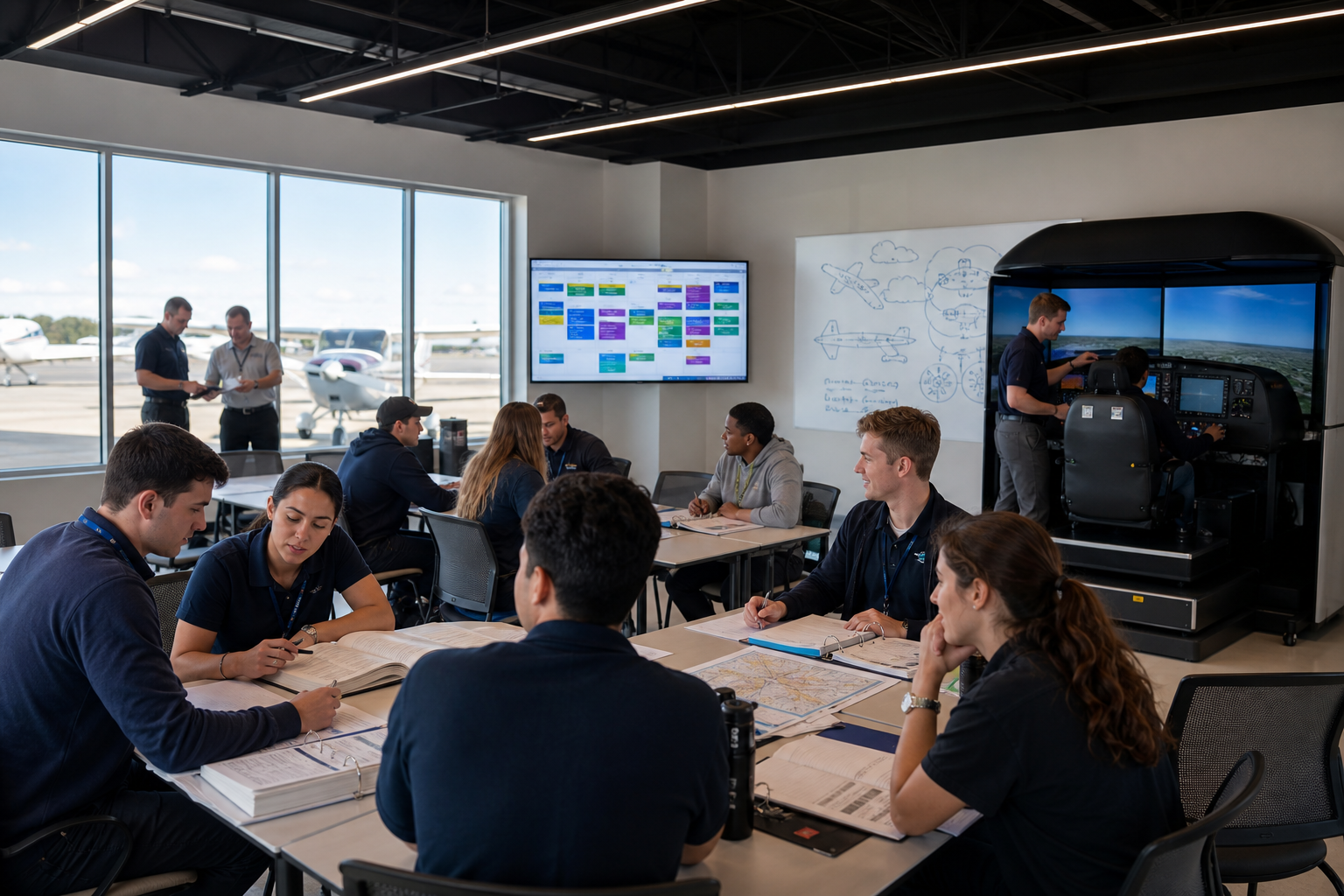
Flight schools prevent scheduling conflicts by booking aircraft, instructors, and students in one connected system, such as FlightLogger, where every booking is automatically checked against aircraft maintenance status and the student's training progress.
Scheduling is the operational backbone of every flight school. Every lesson depends on the right student, instructor, aircraft, and training objective being available at exactly the right time. Add weather changes, aircraft maintenance, instructor availability, simulator bookings, and regulatory requirements, and it's easy to see why scheduling becomes one of the biggest operational challenges for growing flight schools.
Fortunately, most scheduling conflicts are preventable.
The problem usually isn't too few aircraft or instructors—it's a lack of operational visibility and disconnected workflows.
This guide explains how modern flight school scheduling works, why conflicts happen, and the practical steps flight schools can take to prevent them through centralized planning and connected flight training management.
Quick Answer
The most effective way to prevent flight school scheduling conflicts is to centralize scheduling for students, instructors, aircraft, and simulators in one system with real-time availability. Connected flight training management software such as FlightLogger helps prevent double bookings, improves operational visibility, and automatically updates schedules when operational conditions change.
Why Scheduling Conflicts Happen
Every flight lesson depends on multiple resources.
Before a lesson can begin, a flight school must coordinate:
- The student
- The instructor
- The aircraft
- The training syllabus
- The lesson type
- Aircraft availability
- Instructor qualifications
- Weather conditions
- Maintenance status
If any one of these changes without updating the rest of the operation, scheduling conflicts occur.
That's why scheduling should be viewed as an operational workflow—not simply a calendar.
The Most Common Scheduling Conflicts
Growing flight schools typically experience recurring scheduling problems such as:
- Double-booked aircraft
- Double-booked instructors
- Students scheduled before completing prerequisites
- Aircraft becoming unavailable due to maintenance
- Instructor absences not reflected in the schedule
- Weather-related rescheduling bottlenecks
- Simulator conflicts
- Manual booking errors
- Last-minute cancellations
Nearly all of these problems stem from fragmented information rather than poor planning.
1. Centralize Scheduling in One System
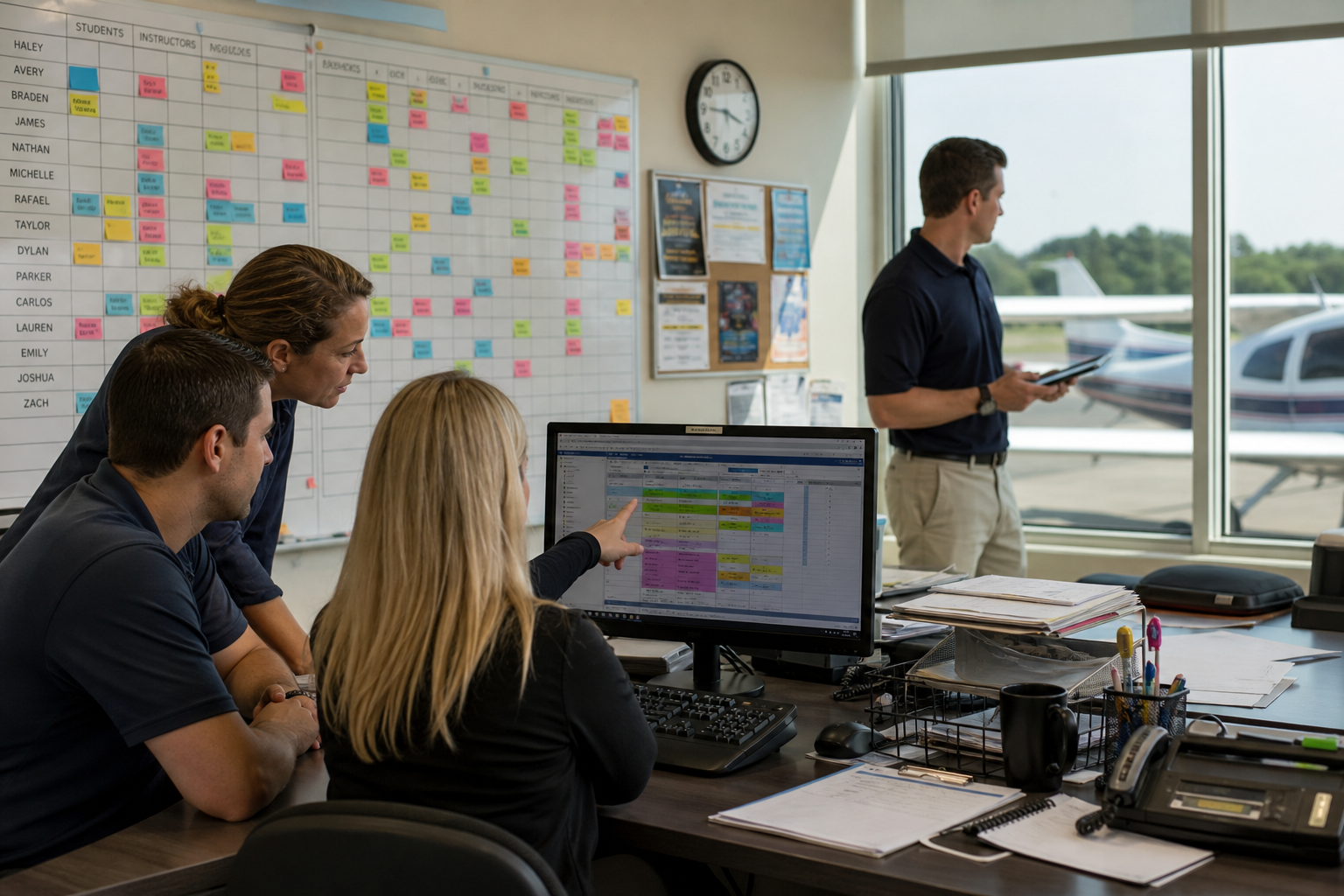
The biggest cause of scheduling conflicts is managing schedules across multiple tools.
Many schools still rely on combinations of:
- Excel spreadsheets
- Shared calendars
- Whiteboards
- Messaging apps
Each tool contains only part of the operational picture.
Instead, use one centralized scheduling platform where every operational resource is managed together.
A single source of truth makes it much easier to identify conflicts before they happen.
2. Maintain Live Availability
Availability changes throughout the day.
Examples include:
- An instructor calls in sick.
- A lesson runs longer than expected.
- An aircraft develops a technical issue.
- Weather delays multiple flights.
If availability isn't updated immediately, administrators continue making decisions based on outdated information.
Modern scheduling systems provide live operational visibility so every booking reflects current conditions.
3. Schedule Aircraft and Instructors Together
Aircraft and instructor scheduling should never happen independently.
Every booking should consider:
- Instructor qualifications
- Aircraft availability
- Student requirements
- Aircraft type
- Lesson objectives
Coordinating these resources together reduces scheduling conflicts while improving aircraft utilization.
4. Connect Scheduling with Student Progression
Scheduling should support learning—not just fill calendar slots.
Students should only be booked for lessons they are ready to complete.
Connected flight training management allows scheduling to reflect:
- Completed lessons
- Competencies achieved
- Syllabus progression
- Checkride readiness
- Instructor approvals
This helps keep training moving efficiently.
5. Integrate Aircraft Maintenance
Unexpected maintenance is one of the most common causes of schedule disruption.
Without integrated aircraft scheduling, administrators often discover conflicts only after an aircraft becomes unavailable.
A connected operational platform automatically updates aircraft availability whenever maintenance affects the fleet.
This reduces last-minute cancellations and unnecessary administrative work.
6. Standardize Instructor Scheduling Workflows
Every instructor should follow the same scheduling procedures.
Standardization improves:
- Lesson preparation
- Student handovers
- Availability updates
- Lesson completion
- Schedule accuracy
Consistent workflows reduce communication gaps that often lead to scheduling errors.
7. Automate Routine Communication
Every schedule change creates communication work.
Students and instructors need updates about:
- New bookings
- Cancellations
- Instructor changes
- Aircraft changes
- Lesson reminders
Automated notifications ensure everyone receives accurate information without requiring administrators to contact each person manually.
8. Give Everyone Operational Visibility
Scheduling isn't only the responsibility of dispatch or operations.
Instructors, maintenance teams, administrators, and managers all make decisions that affect the schedule.
Providing shared visibility helps everyone understand:
- Aircraft availability
- Instructor workload
- Student readiness
- Maintenance activities
- Daily operational capacity
Better visibility leads to better decisions.
9. Use Operational Data to Prevent Future Conflicts
The best flight schools don't just solve today's scheduling problems.
They identify patterns.
Useful scheduling KPIs include:
- Aircraft utilization
- Instructor utilization
- Student wait time
- Schedule fulfillment rate
- Cancellation rate
- Rescheduling frequency
- Training delays
Monitoring these metrics helps schools continuously improve scheduling performance.
Build Scheduling Around Workflows—Not Individual Bookings
Many scheduling problems happen because schools think in terms of individual lessons.
Modern aviation school administration focuses on complete workflows.
For example:
A lesson is completed.
↓
The student's training record updates automatically.
↓
The next lesson becomes available.
↓
Instructor availability is confirmed.
↓
Aircraft availability is verified.
↓
The next lesson is scheduled.
↓
The student receives confirmation.
Instead of multiple manual handoffs, scheduling becomes one connected process.
Characteristics of Conflict-Resistant Flight School Scheduling
The most efficient flight schools typically have:
- One centralized scheduling platform
- Real-time instructor availability
- Integrated aircraft scheduling
- Student progression linked to scheduling
- Standardized instructor workflows
- Automated notifications
- Maintenance connected to operations
- Shared operational dashboards
- Real-time reporting
These capabilities reduce manual work while improving scheduling reliability.
How Flight Training Management Prevents Scheduling Conflicts
Modern flight training management software connects scheduling with every operational function.
Instead of treating scheduling as a standalone calendar, it integrates with:
- Student records
- Instructor qualifications
- Aircraft maintenance
- Training records
- Compliance
- Reporting
- Operational planning
This allows scheduling decisions to reflect the current state of the entire operation rather than isolated pieces of information.
The result is fewer conflicts, fewer manual adjustments, and more efficient training operations.
Signs Your Scheduling Process Needs Improvement
Ask yourself:
- Do instructors get double-booked?
- Are aircraft sometimes unavailable after being scheduled?
- Do students experience frequent rescheduling?
- Are schedule changes communicated manually?
- Does maintenance rely on phone calls or emails?
- Do multiple departments maintain separate calendars?
- Does weather create hours of administrative work?
If the answer is yes to several of these questions, improving your scheduling workflow can significantly increase operational efficiency.
FAQs About Flight School Scheduling Conflicts
How do flight schools avoid scheduling conflicts?
Flight schools avoid flight school scheduling conflicts by centralizing scheduling, maintaining live visibility into instructor and aircraft availability, linking bookings to student progression, and integrating maintenance with scheduling. Platforms such as FlightLogger do all four in one system.
Why is centralized scheduling important?
Centralized scheduling gives administrators, instructors, and operations teams access to the same real-time information. This reduces double bookings, communication delays, and manual coordination.
How does aircraft scheduling reduce conflicts?
Integrated aircraft scheduling automatically reflects maintenance status, inspections, and operational availability, helping administrators avoid assigning unavailable aircraft.
What role does flight instructor coordination play?
Strong flight instructor coordination ensures instructors, students, and aircraft are scheduled together based on qualifications, availability, and training requirements, reducing operational disruptions.
What software helps prevent flight school scheduling conflicts?
Flight training management software such as FlightLogger combines scheduling, digital training records, instructor management, aircraft scheduling, compliance, and reporting into one connected operational platform, helping schools prevent conflicts before they occur.
Smarter Scheduling Starts with Connected Operations
Preventing scheduling conflicts isn't about making faster scheduling decisions—it's about making better-informed ones.
When scheduling is connected to training records, instructor availability, aircraft maintenance, compliance, and operational reporting, flight schools spend less time resolving conflicts and more time delivering consistent, high-quality training.
FlightLogger is the Flight School Operating System, bringing together Operations, Training, People, Safety, Maintenance, Finance, Insights, and Connect in one platform. With digital training records, competency tracking, integrated scheduling, compliance workflows, and operational reporting, FlightLogger helps flight schools replace manual administration with connected, efficient operations.
Book a demo to see how FlightLogger can help you prevent scheduling conflicts.