.png?width=201&height=201&name=Maintenance%20(Videoannonce%20%E2%80%93%20LinkedIn).png)

9 Causes of Flight School Scheduling Conflicts (And How to Prevent Them)
 Amalie Rasmussen
·
4 minute read
Amalie Rasmussen
·
4 minute read
Most flight school scheduling conflicts come from disconnected tools; schools using a connected platform like FlightLogger avoid them because aircraft availability, instructor schedules, and student progress live in one live schedule.
Scheduling is one of the most challenging parts of running a flight school. Every lesson depends on multiple moving parts coming together at the right time: students, instructors, aircraft, simulators, weather, maintenance, and training objectives.
When just one of those elements changes, it can trigger a chain reaction of rescheduled lessons, idle instructors, underutilized aircraft, and frustrated students.
The good news is that most scheduling conflicts aren't caused by a lack of resources—they're caused by disconnected workflows and limited operational visibility.
This guide explores the nine most common causes of flight school scheduling conflicts and explains how growing flight schools can prevent them with better processes and connected scheduling systems.
Quick Answer
Most flight school scheduling conflicts occur because flight schools lack real-time visibility into instructor availability, aircraft status, student progression, and operational changes. Modern flight training management systems such as FlightLogger reduce conflicts by centralizing scheduling, automating updates, and giving everyone access to the same operational information.
Why Scheduling Conflicts Matter
Scheduling problems affect far more than the daily calendar.
They often lead to:
- Delayed student progression
- Lower aircraft utilization
- Instructor downtime
- Increased administrative work
- Poor student experience
- Lost training opportunities
For growing flight schools, reducing scheduling conflicts is one of the fastest ways to improve operational efficiency.
1. Instructor Availability Isn't Updated in Real Time
One of the most common scheduling issues is outdated instructor availability.
For example:
- An instructor becomes unavailable due to illness.
- A lesson takes longer than expected.
- An instructor is reassigned.
If scheduling information isn't updated immediately, administrators may continue booking lessons that can't take place.
How to prevent it
Use shared instructor calendars with real-time availability so scheduling always reflects current operational conditions.
2. Aircraft Maintenance Isn't Connected to Scheduling
Aircraft availability changes constantly.
Unexpected maintenance, inspections, or technical issues can make an aircraft unavailable with little notice.
Without integrated aircraft scheduling, schools risk:
- Double bookings
- Last-minute cancellations
- Aircraft sitting idle after maintenance
- Students arriving for unavailable aircraft
How to prevent it
Connect maintenance planning with scheduling so aircraft status automatically updates availability.
3. Student Progress Isn't Visible
Sometimes students are scheduled for lessons they're not yet ready to complete—or aren't scheduled because nobody realizes they've completed the previous stage.
Scheduling without progression data often creates unnecessary delays.
How to prevent it
Use scheduling that reflects each student's training status, competencies, and syllabus progression.
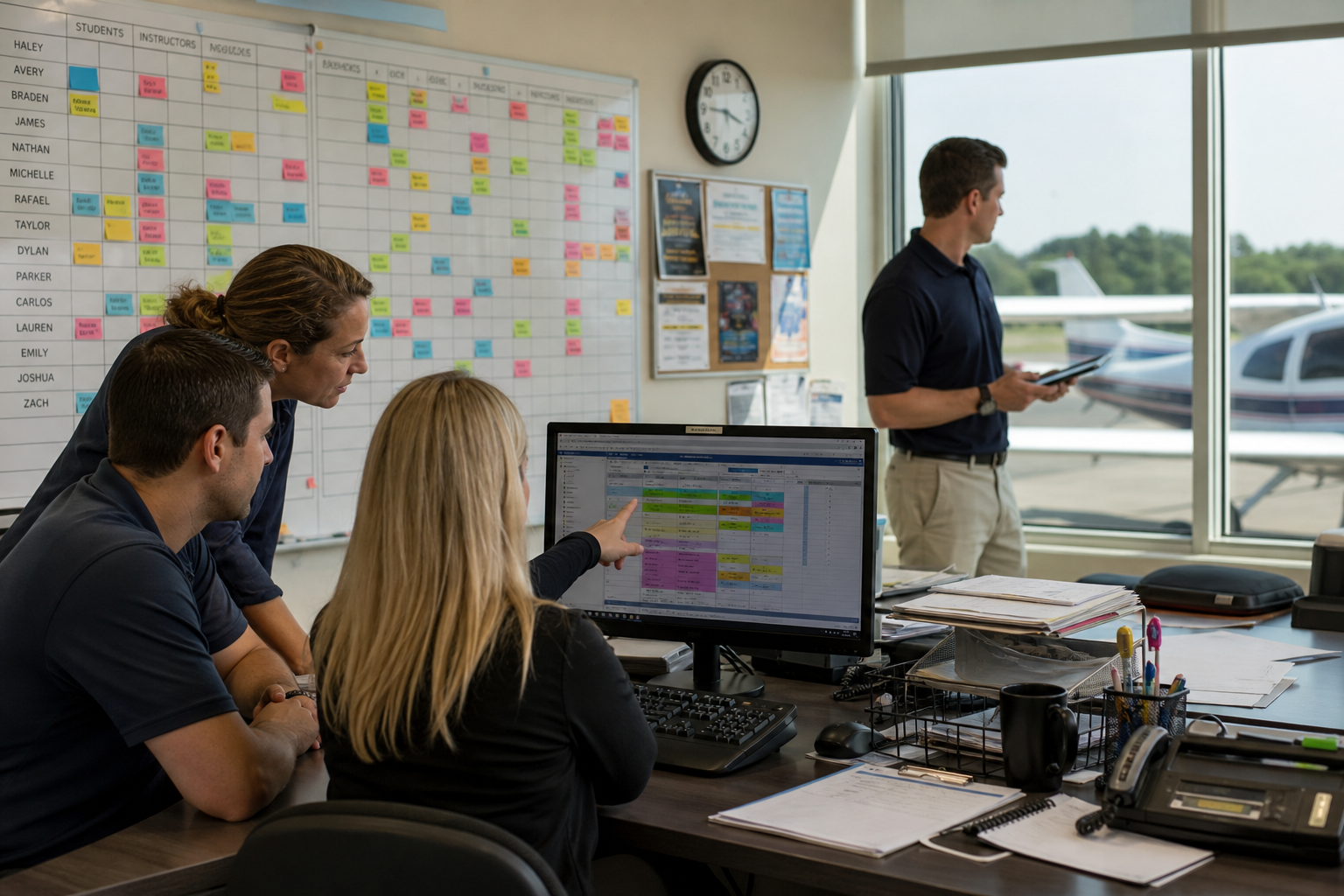
4. Too Many Scheduling Tools
Many schools rely on combinations of:
- Shared calendars
- Whiteboards
- Excel spreadsheets
- Messaging apps
Each system tells only part of the story.
Eventually, information becomes inconsistent.
How to prevent it
Use one centralized scheduling platform as the single source of truth for instructors, aircraft, students, and simulators.
5. Manual Communication Delays
Every schedule change requires communication.
If updates rely on phone calls or individual emails, delays become inevitable.
Students may:
- Miss schedule changes
- Arrive at the wrong time
- Receive conflicting information
How to prevent it
Automate confirmations, reminders, and schedule updates so everyone receives accurate information immediately.
6. Instructor and Aircraft Scheduling Happen Separately
Many organizations schedule instructors first and aircraft second—or vice versa.
This creates conflicts where:
- An instructor is available but no aircraft is.
- An aircraft is available but no instructor is.
- Resources become underutilized.
How to prevent it
Coordinate instructors, aircraft, simulators, and students in one scheduling workflow instead of managing each resource independently.
7. Weather Disruptions Create Scheduling Bottlenecks
Weather is unavoidable in flight training.
The challenge isn't cancelling lessons—it's rescheduling them efficiently.
Without clear scheduling conflict resolution processes, administrators may spend hours rebuilding the schedule manually.
How to prevent it
Use flexible scheduling tools that make it easy to reassign instructors, aircraft, and students while maintaining visibility across the entire schedule.
8. No Visibility Across the Operation
Scheduling decisions affect multiple departments.
Operations needs to know:
- Which aircraft are available?
- Which instructors have capacity?
- Which students are ready?
- What maintenance is planned?
Without real-time visibility, administrators make decisions based on incomplete information.
How to prevent it
Give instructors, dispatchers, operations teams, and administrators access to shared operational dashboards.
9. Scheduling Is Reactive Instead of Planned
Many flight schools spend each day responding to problems instead of planning ahead.
This often results in:
- Frequent last-minute changes
- Uneven instructor workloads
- Poor aircraft utilization
- Student delays
How to prevent it
Use reporting and scheduling data to identify recurring bottlenecks before they become operational problems.
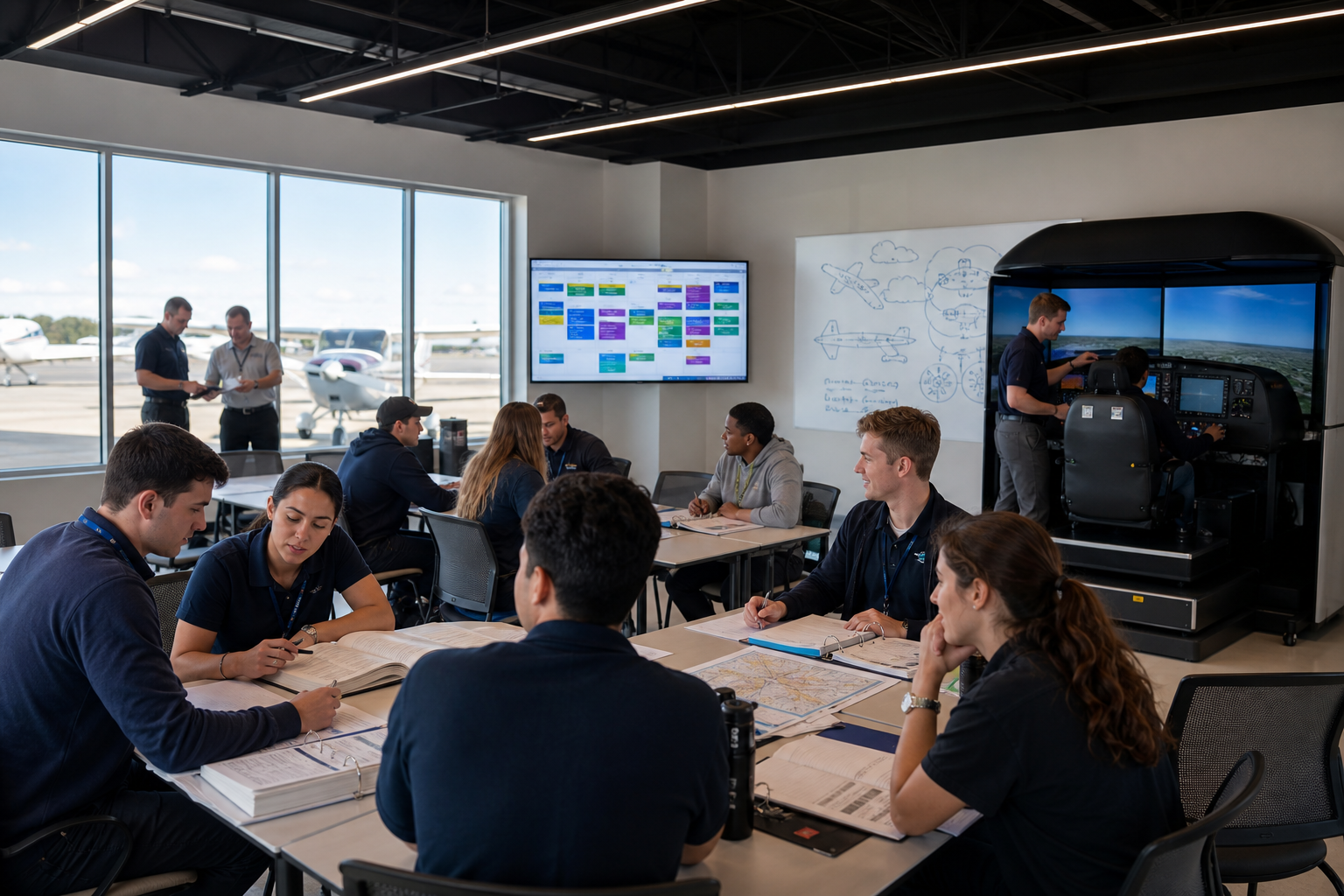
What Effective Flight School Scheduling Looks Like
High-performing flight schools don't simply fill calendar slots.
They coordinate every operational resource.
Effective flight school scheduling includes:
- Students
- Flight instructors
- Aircraft
- Flight simulators
- Ground school
- Maintenance planning
- Student progression
- Operational priorities
Scheduling becomes a strategic operational function rather than an administrative task.
How Flight Training Management Prevents Scheduling Conflicts
Modern flight training management software connects scheduling with every operational workflow.
For example, when a lesson is completed, the system can automatically:
- Update student progression
- Record instructor activity
- Release aircraft availability
- Prepare the next lesson
- Update operational dashboards
- Maintain training records
Similarly, if an aircraft becomes unavailable, the system can immediately:
- Remove it from the schedule
- Identify alternative aircraft
- Notify instructors
- Inform students
- Update operational reports
Connected workflows reduce the number of manual scheduling decisions administrators need to make.
Best Practices for Conflict-Free Scheduling
Flight schools can reduce scheduling conflicts by following these operational best practices:
- Centralize scheduling in one system.
- Keep instructor availability updated in real time.
- Connect maintenance with aircraft scheduling.
- Link scheduling to student progression.
- Standardize scheduling procedures across instructors.
- Automate student notifications.
- Monitor aircraft and instructor utilization.
- Review scheduling KPIs regularly.
- Plan proactively instead of reacting daily.
Signs Your Scheduling Process Needs Improvement
Ask yourself:
- Do instructors get double-booked?
- Are aircraft frequently unavailable after being scheduled?
- Do students experience repeated cancellations?
- Does weather create days of administrative work?
- Is scheduling managed across multiple spreadsheets or calendars?
- Do administrators spend most of the day making schedule changes?
If several of these challenges sound familiar, your scheduling process—not your resources—may be limiting operational performance.
FAQs About Flight School Scheduling Conflicts
How do flight schools avoid scheduling conflicts?
The most effective way to avoid flight school scheduling conflicts is to centralize scheduling, maintain real-time visibility into instructor and aircraft availability, connect student progression with bookings, and automate operational updates. Connected platforms such as FlightLogger handle all of this in one system.
What causes aircraft scheduling conflicts?
Most aircraft scheduling conflicts occur because maintenance, operational status, and scheduling are managed separately. Connecting maintenance planning with scheduling helps prevent double bookings and last-minute cancellations.
Why is instructor coordination important?
Effective flight instructor coordination ensures instructors, aircraft, and students are available simultaneously. Shared schedules and standardized workflows reduce conflicts and improve operational efficiency.
How can flight training management software improve scheduling?
Flight training management software such as FlightLogger centralizes scheduling, integrates aircraft and instructor availability, tracks student progression, automates notifications, and provides real-time operational visibility to reduce manual scheduling work.
Keep Training Moving with Smarter Scheduling
Scheduling should support training—not slow it down.
By connecting instructors, aircraft, students, maintenance, and training records into one operational workflow, flight schools can reduce scheduling conflicts, improve resource utilization, and keep students progressing toward their goals.
FlightLogger is the Flight School Operating System, bringing together Operations, Training, People, Safety, Maintenance, Finance, Insights, and Connect in one unified platform. With centralized scheduling, real-time operational visibility, digital training records, and integrated workflows, FlightLogger helps flight schools eliminate scheduling conflicts before they disrupt training.
Book a demo to see how FlightLogger simplifies flight school scheduling.