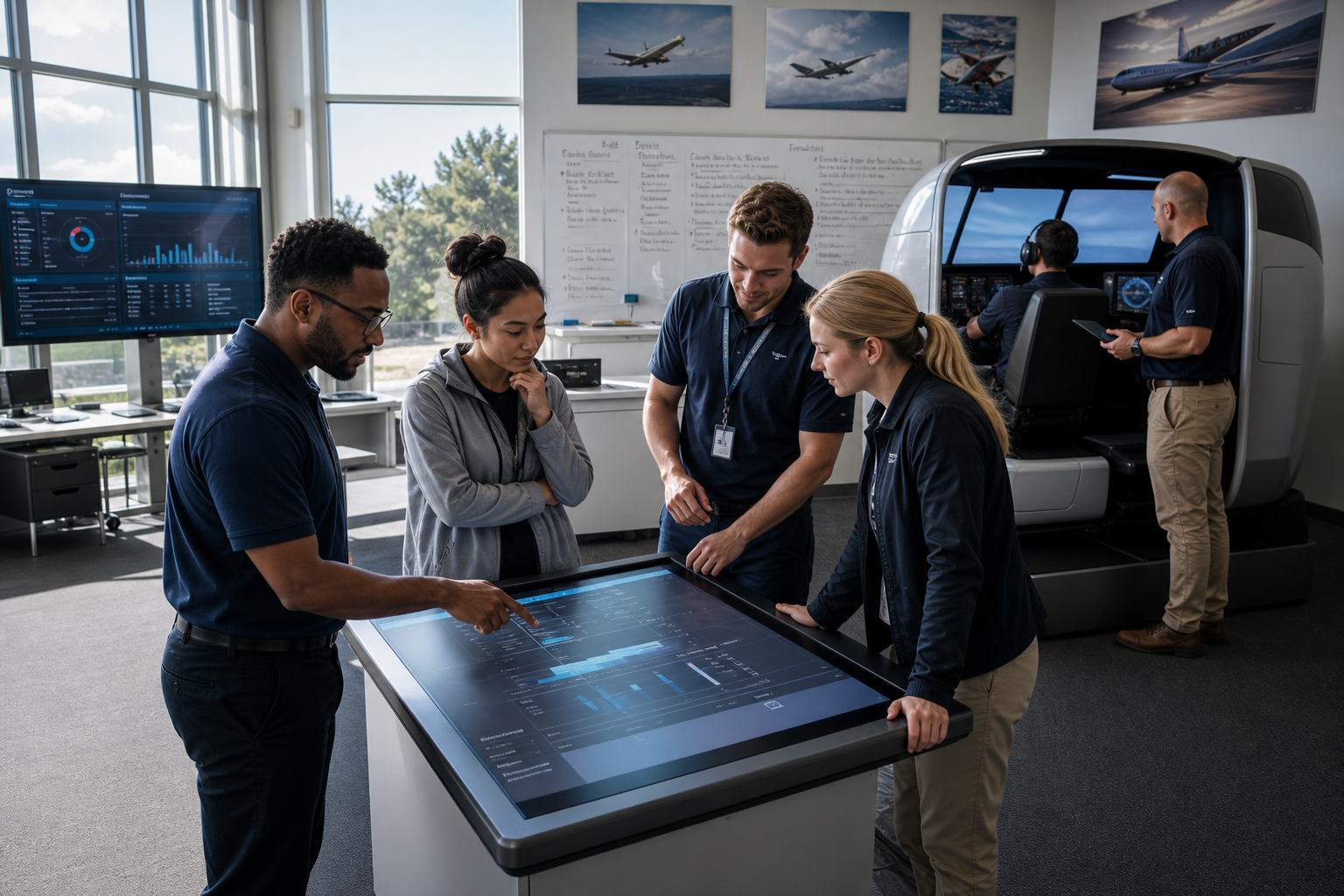
.png?width=201&height=201&name=Maintenance%20(Videoannonce%20%E2%80%93%20LinkedIn).png)

8 Flight School Workflows That Reduce Delays
 Amalie Rasmussen
·
4 minute read
Amalie Rasmussen
·
4 minute read
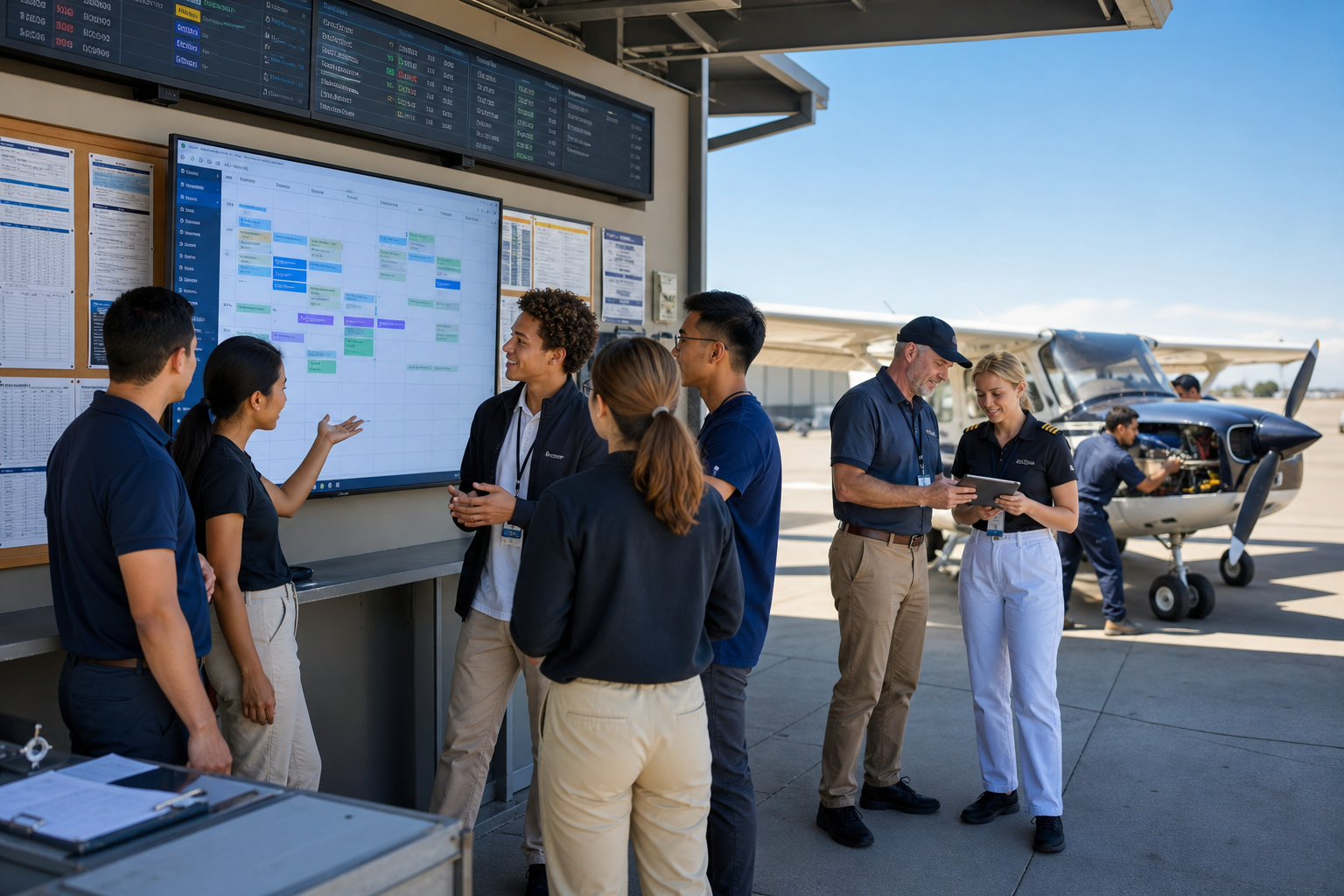
Modern flight school management isn't about working harder—it's about creating connected workflows that keep students flying, instructors teaching, and operations running smoothly.
Quick Answer
The most effective way to reduce delays in flight training operations is to connect scheduling, aircraft availability, instructor coordination, maintenance, and student records in one workflow. Modern flight school management software helps eliminate manual administration, reduce scheduling conflicts, improve resource utilization, and keep training on schedule.
Why Flight Schools Experience Operational Delays
Running a flight school involves coordinating dozens—sometimes hundreds—of moving parts every day.
A delayed aircraft inspection, an unavailable instructor, or outdated student records can quickly impact the day's schedule.
Many delays don't originate from flying itself. They originate from disconnected operational processes.
Common causes include:
- Manual scheduling
- Separate instructor calendars
- Paper training records
- Poor aircraft visibility
- Duplicate administrative work
- Limited communication between departments
The good news? Many of these challenges can be solved with better operational workflows.
1. Centralize Flight Scheduling
Scheduling is the operational backbone of every flight school.
Instead of managing separate calendars for students, instructors, aircraft, and classrooms, leading flight schools centralize scheduling in one platform.
A connected scheduling workflow helps:
- Reduce double bookings
- Improve resource visibility
- Respond faster to changes
- Keep instructors informed
- Improve student progression
When everyone works from the same schedule, delays become easier to prevent.
2. Connect Aircraft Availability to Scheduling
One of the most common causes of delays is scheduling aircraft without considering operational availability.
Aircraft scheduling should always reflect:
- Maintenance status
- Inspections
- Existing bookings
- Fleet utilization
- Aircraft suitability
By connecting scheduling with aircraft availability, operations teams can make better decisions before confirming bookings.
3. Standardize Instructor Scheduling
Instructor availability changes constantly.
Without a centralized system, instructors may become overbooked, students may lose continuity, and administrators spend valuable time resolving conflicts.
A standardized instructor scheduling workflow provides:
- Shared availability
- Balanced workloads
- Better communication
- Fewer scheduling conflicts
This keeps training moving even when schedules change.
4. Digitize Student Training Records
Paper records and spreadsheets slow down daily operations.
Instead, flight schools should maintain digital training records that include:
- Lesson history
- Instructor evaluations
- Student progression
- Training milestones
- Outstanding requirements
Digital records give instructors immediate access to the information they need before every lesson while reducing administrative work.
5. Coordinate Maintenance with Daily Operations
Maintenance shouldn't exist in a separate operational silo.
When maintenance planning and scheduling work together, flight schools can:
- Prevent avoidable cancellations
- Improve fleet utilization
- Reduce unexpected downtime
- Improve operational planning
Connected maintenance workflows help operations teams make informed scheduling decisions.
6. Automate Routine Administrative Tasks
Many operational delays begin in the office.
Manual processes such as:
- Updating spreadsheets
- Sending reminder emails
- Recording lesson completion
- Preparing reports
- Tracking student documentation
consume valuable administrative time.
Modern flight scheduling software automates many of these routine tasks, allowing staff to focus on supporting students rather than updating systems.
7. Give Every Team One Operational View
Operations teams, instructors, management, and administrators should all work from the same operational information.
Instead of asking:
"Which spreadsheet has the latest schedule?"
everyone should have access to one connected platform showing:
- Student progress
- Instructor availability
- Aircraft status
- Daily schedules
- Training activity
- Operational updates
Shared visibility reduces confusion and speeds up decision-making.
8. Build Connected Operational Workflows
The most efficient flight schools don't optimize individual tasks—they connect them.
A modern operational workflow links:
Student Progress
↓
Scheduling
↓
Instructor Assignment
↓
Aircraft Allocation
↓
Training Delivery
↓
Lesson Assessment
↓
Compliance Records
↓
Management Reporting
Each activity automatically supports the next, reducing duplicate work and improving operational efficiency across the entire organization.
Traditional Workflows vs Connected Flight School Management
| Traditional Operations | Connected Flight School Management |
|---|---|
| Multiple spreadsheets | One operational platform |
| Separate scheduling systems | Centralized scheduling |
| Paper training records | Digital student records |
| Manual instructor coordination | Shared instructor availability |
| Maintenance managed separately | Connected maintenance planning |
| Duplicate administration | Automated workflows |
| Limited operational visibility | Real-time operational oversight |
How Flight Schools Improve Operational Efficiency
Improving operational efficiency isn't about adding more people—it's about improving how information moves through the organization.
Flight schools that connect their operational workflows often benefit from:
- Reduced administrative workload
- Fewer scheduling conflicts
- Better aircraft utilization
- Improved instructor coordination
- Faster student progression
- Better operational visibility
- More consistent compliance documentation
- Easier organizational growth
These improvements compound over time, helping schools deliver more training with less administrative effort.
Why Connected Workflows Matter
Every delay affects more than a single lesson.
One scheduling conflict can impact instructors, aircraft availability, student progression, and daily operations across the school.
That's why modern flight school management focuses on connecting workflows instead of optimizing isolated tasks.
When scheduling, training records, maintenance, compliance, and reporting work together, flight schools become more efficient, more resilient, and better prepared for future growth.
Frequently Asked Questions
What causes inefficiencies in flight training operations?
The most common causes include disconnected scheduling systems, manual administration, paper records, poor resource visibility, duplicate data entry, and limited coordination between instructors, aircraft, and training records.
How do flight schools avoid scheduling conflicts?
Flight schools reduce scheduling conflicts by using centralized flight scheduling software that provides shared visibility into aircraft availability, instructor schedules, student bookings, and operational changes.
How can flight schools reduce administrative workload?
Administrative workload can be reduced by digitizing training records, automating repetitive tasks, centralizing scheduling, and replacing spreadsheets with connected operational workflows.
How can flight schools improve operational efficiency?
Flight schools improve operational efficiency by connecting scheduling, maintenance, student progress, instructor management, and compliance within one integrated platform.
How Leading Flight School Platforms Support Operational Efficiency
Many modern flight school management platforms aim to reduce operational delays by connecting scheduling, training, and administration. While their approaches differ, most focus on replacing manual workflows with centralized digital operations.
| Platform | Strengths | Best For |
|---|---|---|
| FlightLogger | Connected scheduling, student progress, compliance, maintenance coordination, operational insights | Flight schools looking for an all-in-one Flight School Operating System |
| Flight Schedule Pro | Scheduling, dispatch, and resource management | Schools focused primarily on scheduling |
| Aviatize | Training management and operational administration | Growing flight schools seeking cloud-based management |
| Flight Circle | Scheduling and student management | Smaller and medium-sized flight schools |
| Talon Systems | Training administration and operational tools | Organizations with complex training requirements |
| Tailplane | Flight operations and scheduling | Schools looking for scheduling-focused software |
How FlightLogger Supports Connected Flight School Workflows
FlightLogger brings every operational workflow together in one platform.
Instead of managing scheduling, training records, instructor availability, compliance, and reporting separately, flight schools gain a connected operational view that supports every stage of pilot training.
By reducing manual administration and improving visibility across the organization, FlightLogger helps schools spend less time coordinating operations—and more time delivering exceptional flight training.
Ready to Reduce Operational Delays?
Disconnected workflows slow down flight training. Connected workflows keep your operation moving.
Book a personalized FlightLogger demo and discover how one platform can help your flight school reduce delays, improve operational efficiency, and simplify day-to-day administration.