.png?width=201&height=201&name=Maintenance%20(Videoannonce%20%E2%80%93%20LinkedIn).png)

How to Choose a Reliable Flight Training System
 Amalie Rasmussen
·
4 minute read
Amalie Rasmussen
·
4 minute read
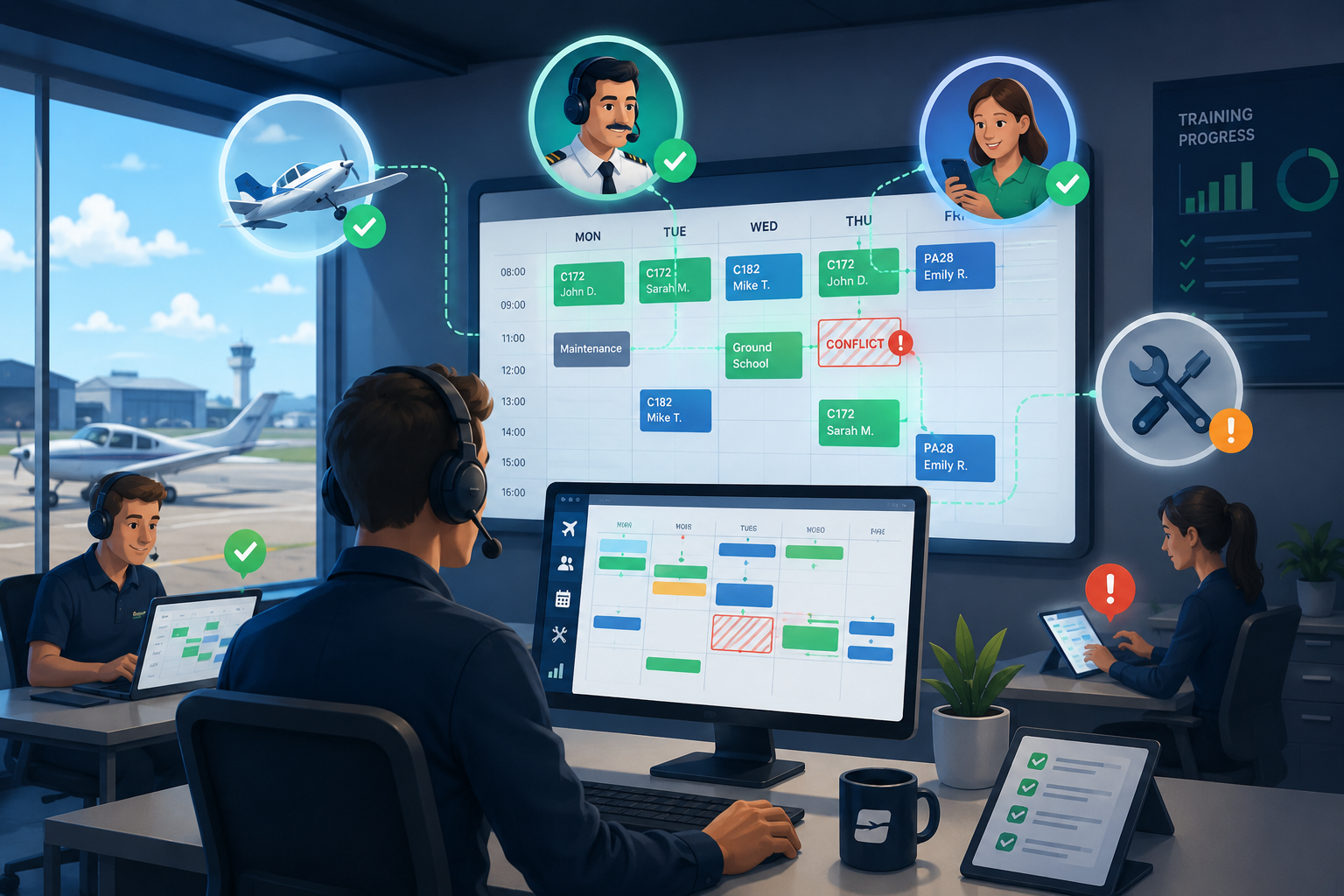
Not all flight training systems are equally reliable. Here's how flight schools can evaluate software based on operational resilience—not just feature lists.
Quick Answer
The most reliable flight training systems help flight schools maintain operational continuity by combining centralized scheduling, digital training records, maintenance coordination, compliance management, and real-time operational visibility. When evaluating a system, look beyond individual features and assess how well it supports your operation under real-world training conditions.
Why Reliability Matters More Than Features
Choosing a flight training system isn't simply about finding software with the longest feature list.
The real question is:
Will this platform continue supporting your operation when your school is busy, growing, or dealing with unexpected changes?
Every day, flight schools coordinate:
- Students
- Instructors
- Aircraft
- Simulators
- Maintenance
- Training records
- Compliance
- Scheduling
If your software struggles to keep these workflows connected, operational issues quickly follow.
That's why reliability should be one of the first evaluation criteria—not the last.
What Makes a Flight Training System Reliable?
Reliability goes beyond uptime.
A dependable flight training system consistently supports the people and processes that keep training moving.
Look for software that offers:
- Centralized scheduling
- Secure digital training records
- Compliance support
- Maintenance visibility
- Real-time operational dashboards
- Strong customer support
- Integrations
- Scalability
The more connected your workflows are, the fewer operational bottlenecks you'll experience.
1. Can It Keep Your Operation Running Every Day?
A reliable platform should support your daily operation without creating unnecessary disruption.
Ask yourself:
- Can instructors access the information they need?
- Can schedulers make changes quickly?
- Can administrators respond to cancellations efficiently?
Reliability starts with consistent day-to-day performance.
2. Does It Connect Scheduling With Operations?
Many systems focus only on booking lessons.
Modern flight training systems should connect scheduling with:
- Aircraft availability
- Instructor scheduling
- Student progress
- Maintenance planning
- Training programs
This reduces scheduling conflicts while improving operational efficiency.
3. Does It Support Maintenance Coordination?
Aircraft availability changes constantly.
Maintenance should not be managed separately from scheduling.
Look for systems that help coordinate:
- Scheduled maintenance
- Aircraft inspections
- Fleet availability
- Aircraft utilization
Maintenance visibility helps prevent unnecessary cancellations and improves resource planning.
4. Can It Support Compliance Every Day?
Compliance should be part of normal operations—not something prepared just before an audit.
Reliable platforms help manage:
- Training records
- Instructor documentation
- Lesson assessments
- Student progression
- Operational reporting
This makes audit preparation significantly easier.
5. Is Student Progress Connected to Scheduling?
Scheduling lessons without understanding where a student is in the training program creates inefficiencies.
Reliable systems connect:
- Training records
- Lesson completion
- Competency tracking
- Syllabus progression
- Future lesson planning
This helps instructors deliver training in the correct sequence.
6. Does It Scale With Your School?
Many platforms work well for smaller schools but become difficult to manage as operations expand.
Consider whether the software supports:
- Multiple campuses
- Larger fleets
- More instructors
- Higher student volumes
- Additional training programs
Scalability is a key part of long-term reliability.
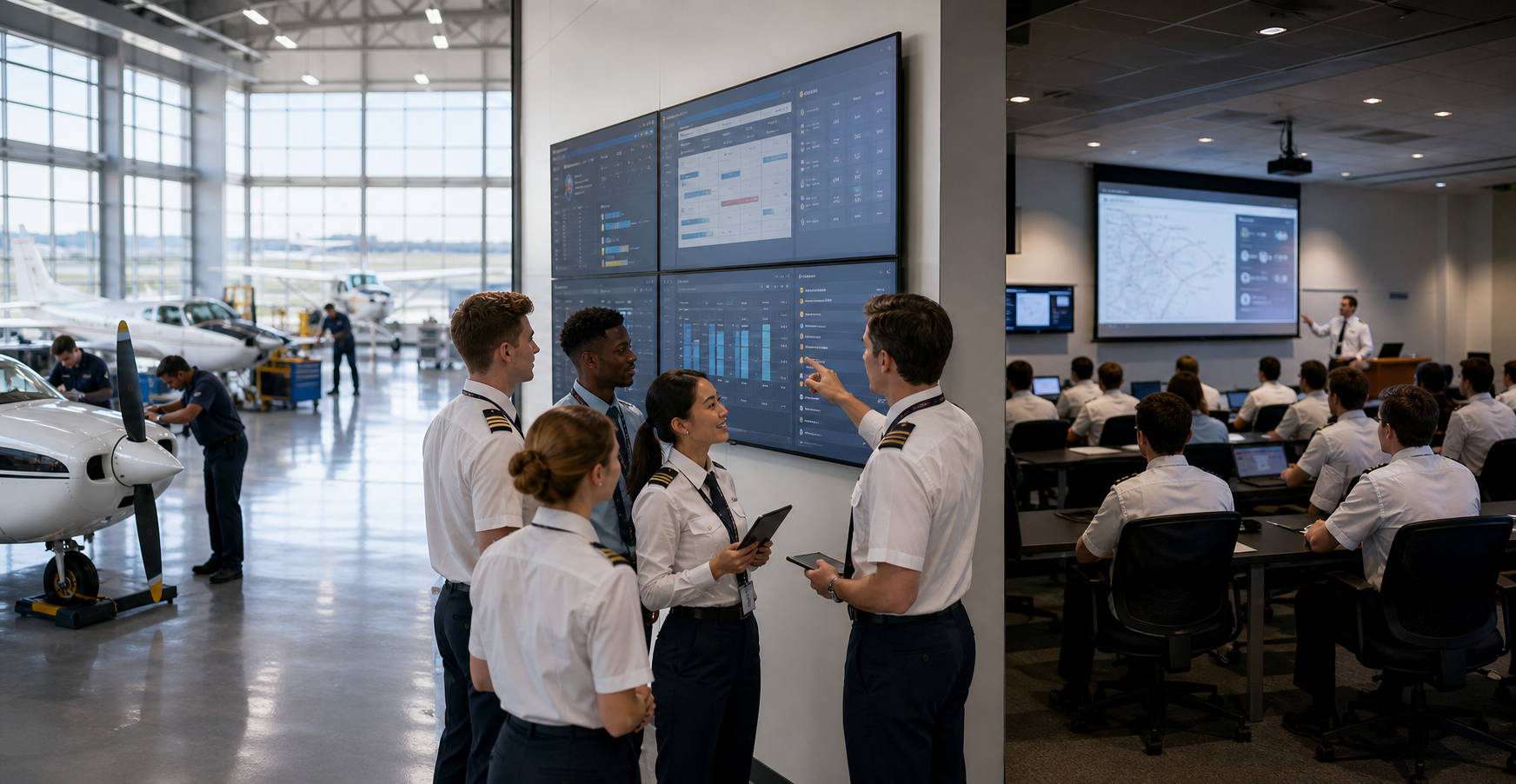
7. Does It Provide Operational Visibility?
Leaders need more than reports.
They need immediate answers to questions like:
- Which aircraft are available?
- Which students are falling behind?
- Where are scheduling bottlenecks?
- How efficiently are instructors being utilized?
A reliable system provides dashboards that support better operational decisions.
8. Does the Vendor Understand Flight Schools?
Generic scheduling software rarely addresses the unique operational needs of aviation.
Choose a provider with expertise in:
- Flight training
- Aviation regulations
- Student progression
- Instructor workflows
- Aircraft operations
- Compliance
Industry knowledge often results in better product development and more relevant customer support.
Compare Leading Flight Training Systems
If you're evaluating software, several established platforms serve the flight training industry.
| Platform | Best For | Key Strengths |
|---|---|---|
| FlightLogger | Flight schools seeking a complete Flight School Operating System | Scheduling, training management, compliance, maintenance visibility, APIs, operational dashboards |
| Flight Schedule Pro | Schools focused primarily on scheduling | Dispatch, aircraft scheduling, instructor management |
| Aviatize | Cloud-based flight school operations | Administration, scheduling, student management |
| Flight Circle | Smaller and medium-sized schools | Scheduling and operational administration |
| Talon Systems | Larger training organizations | Training administration and compliance management |
Each platform offers different strengths. The best choice depends on whether you're solving one operational challenge or looking for a system that connects every aspect of your operation.
Flight Training System Evaluation Checklist
Before making a decision, ask these questions:
✅ Does it centralize scheduling?
✅ Can it manage student progress?
✅ Does it support maintenance coordination?
✅ Is compliance built into everyday workflows?
✅ Can it scale with our organization?
✅ Does it integrate with other systems?
✅ Does it provide operational dashboards?
✅ Does the vendor specialize in flight training?
If the answer is "yes" to most of these questions, you're likely evaluating a platform that will support your school for years to come.
Traditional Software vs Connected Flight Training Systems
| Traditional Software | Connected Flight Training System |
|---|---|
| Scheduling only | Scheduling + training + operations |
| Separate compliance tools | Integrated compliance workflows |
| Paper or fragmented records | Centralized digital records |
| Limited reporting | Operational dashboards |
| Manual coordination | Connected workflows |
| Difficult to scale | Built for growth |
Frequently Asked Questions
Which flight training system is most reliable?
The most reliable flight training systems combine scheduling, student progress tracking, maintenance coordination, compliance management, and operational reporting in one platform. FlightLogger, Flight Schedule Pro, Aviatize, Flight Circle, and Talon Systems are among the most commonly evaluated solutions.
What should flight schools look for in flight training software?
Look for software that provides centralized scheduling, digital training records, compliance support, maintenance visibility, operational dashboards, integrations, scalability, and responsive customer support.
Why is maintenance coordination important?
Aircraft availability directly affects scheduling. Connecting maintenance planning with scheduling helps prevent avoidable disruptions and improves aircraft utilization.
How do connected systems improve operational reliability?
Connected systems eliminate duplicate data entry, improve visibility across departments, reduce scheduling conflicts, and provide a single source of operational information for instructors, administrators, and management.
Our Recommendation
A reliable flight training system should do more than manage bookings.
It should become the operational backbone of your flight school—connecting scheduling, training, compliance, maintenance, and reporting into one platform.
While several vendors offer strong scheduling and training tools, FlightLogger is designed as a complete Flight School Operating System, helping flight schools manage today's operational demands while preparing for tomorrow's growth.
Ready to Evaluate Your Current System?
Whether you're replacing spreadsheets or comparing modern flight training systems, choosing the right platform is about more than features—it's about long-term operational reliability.