.png?width=201&height=201&name=Maintenance%20(Videoannonce%20%E2%80%93%20LinkedIn).png)

How to Plan Around Aircraft Downtime in Flight Schools
 Amalie Rasmussen
·
4 minute read
Amalie Rasmussen
·
4 minute read
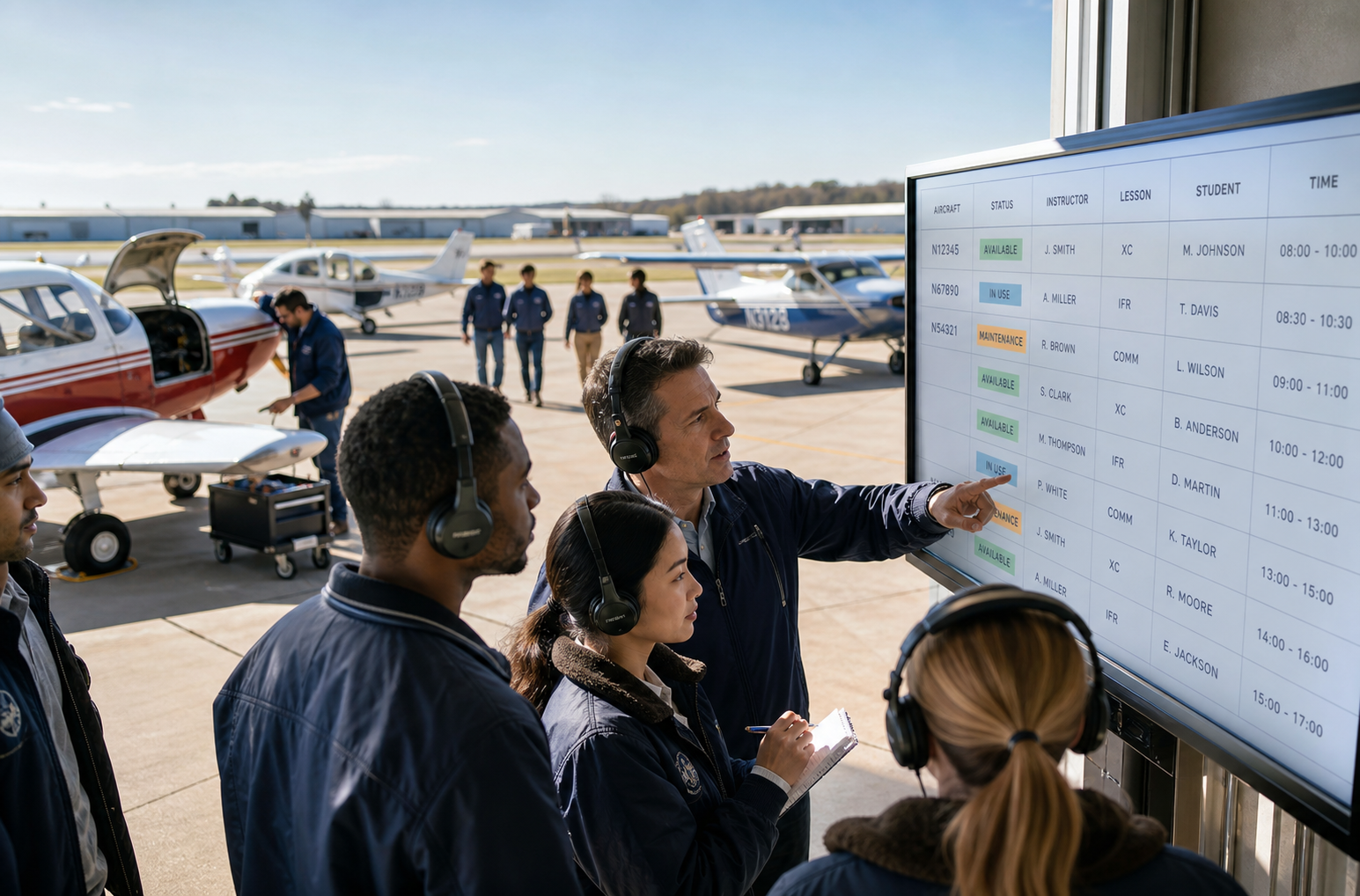
Aircraft maintenance is unavoidable. Scheduling disruptions aren't.
Every aircraft requires inspections, routine servicing, repairs, and regulatory maintenance to remain safe and airworthy. The challenge for flight schools isn't maintenance itself—it's coordinating maintenance with student lessons, instructor availability, and daily operations.
Without a structured planning process, a single aircraft becoming unavailable can trigger a chain reaction of canceled lessons, instructor downtime, frustrated students, and additional administrative work.
Modern flight school scheduling software helps schools treat maintenance as part of operational planning rather than an unexpected interruption.
In this guide, you'll learn how to balance aircraft downtime with instructor and student availability to keep training moving while maintaining safety and compliance.
Quick Answer
The best way to manage aircraft downtime is to integrate maintenance planning with flight school scheduling software. When aircraft availability, instructor schedules, student bookings, and maintenance windows are managed in one connected platform, flight schools can reduce scheduling conflicts, improve aircraft utilization, and minimize training disruptions.
Why Aircraft Downtime Creates Scheduling Problems
Every scheduled lesson depends on multiple resources being available simultaneously:
- A student
- A qualified instructor
- An available aircraft
- The correct training lesson
- Suitable weather
- An airworthy aircraft
If an aircraft unexpectedly becomes unavailable, instructors often need to reschedule multiple lessons while administrators manually coordinate new aircraft, instructors, and timeslots.
The larger the operation, the greater the impact.
The goal isn't to eliminate downtime—it's to plan for it.
Step 1: Schedule Maintenance Before It Becomes Urgent
Reactive maintenance creates reactive scheduling.
Routine inspections, recurring maintenance, and known service intervals should be planned weeks—or even months—in advance.
This allows operations teams to:
- Reserve maintenance windows
- Reduce last-minute aircraft changes
- Plan instructor workloads
- Notify students early
Planned downtime creates far fewer disruptions than unexpected maintenance.
Step 2: Connect Maintenance With Aircraft Scheduling
One of the biggest causes of scheduling conflicts is treating maintenance and scheduling as separate processes.
Many flight schools still use:
- One system for maintenance
- Another for scheduling
- Manual communication between departments
This creates unnecessary coordination work.
Modern aircraft scheduling automatically reflects maintenance status so unavailable aircraft cannot accidentally be assigned to training.
Step 3: Prioritize Training That Requires Specific Aircraft
Not every lesson requires the same aircraft.
Some training flights depend on:
- Specific aircraft types
- Instrument-equipped aircraft
- Multi-engine aircraft
- Advanced avionics
Planning these lessons first reduces the impact of planned maintenance on specialized training.
More flexible lessons can then be scheduled around remaining fleet availability.
Step 4: Balance Instructor Availability With Fleet Capacity
Instructor availability is often planned independently from aircraft availability.
This creates situations where:
- Instructors are available but aircraft are not.
- Aircraft are available but instructors are fully booked.
Effective instructor scheduling considers aircraft availability before confirming workloads.
When both schedules are connected, resources can be allocated more efficiently.
Step 5: Build Flexibility Into the Schedule
No maintenance plan survives the year unchanged.
Unexpected inspections, defects, weather delays, and operational changes happen.
High-performing flight schools intentionally build flexibility by:
- Keeping buffer availability
- Avoiding overbooking aircraft
- Leaving room for schedule adjustments
- Maintaining instructor flexibility
Small scheduling buffers often prevent major operational disruptions.
Step 6: Keep Students Informed
Aircraft downtime directly affects the student experience.
When communication is delayed, students may:
- Arrive for canceled lessons
- Lose confidence in scheduling
- Experience unnecessary training delays
Modern scheduling platforms help notify students and instructors immediately when schedules change, reducing confusion and administrative follow-up.
Step 7: Use Operational Data to Improve Future Planning
Every maintenance event provides valuable operational insight.
Review metrics such as:
- Aircraft utilization
- Maintenance frequency
- Lesson cancellations
- Student delays
- Instructor downtime
- Fleet availability
These insights help training managers improve future scheduling decisions rather than simply reacting to problems.
Common Scheduling Mistakes Around Aircraft Downtime
Many scheduling conflicts stem from avoidable operational practices.
Managing Maintenance Separately
When maintenance teams and scheduling teams use different systems, communication delays become inevitable.
Scheduling Every Aircraft at Maximum Capacity
Operating with no scheduling flexibility leaves no room for unexpected maintenance.
Ignoring Instructor Availability
Moving lessons to another aircraft isn't helpful if instructors aren't available.
Prioritizing Convenience Over Training Progression
Students should be rescheduled according to their training needs—not simply the next available slot.
Waiting Until Maintenance Becomes Critical
Proactive planning creates significantly fewer operational disruptions than reactive maintenance.
Best Practices for Scheduling Around Aircraft Downtime
Successful flight schools typically follow these operational principles:
Treat Maintenance as Part of Scheduling
Maintenance planning should influence scheduling—not interrupt it.
Share One Operational Calendar
Aircraft, instructors, and students should all be managed within the same scheduling environment.
Plan Weeks Ahead
Routine inspections should already exist in the schedule long before they occur.
Monitor Aircraft Utilization
Highly utilized aircraft often require more careful maintenance planning.
Review Scheduling Performance
Measure:
- Aircraft utilization
- Instructor utilization
- Lesson completion rates
- Cancellations
- Maintenance-related delays
Continuous improvement leads to fewer scheduling conflicts over time.
Benefits of Connected Scheduling
When maintenance planning is integrated with flight training management, flight schools often achieve:
- Fewer canceled lessons
- Better aircraft utilization
- Improved instructor productivity
- Faster scheduling adjustments
- Less manual administration
- Improved student experience
- Greater operational visibility
- Reduced scheduling conflicts
Instead of reacting to aircraft downtime, schools can plan around it.
How FlightLogger Connects Scheduling and Maintenance
FlightLogger – The Flight School Operating System helps flight schools coordinate aircraft maintenance alongside scheduling, instructor management, and student training.
With FlightLogger, schools can:
- Connect aircraft availability with maintenance planning
- Schedule instructors and aircraft together
- Track student progression alongside scheduling
- Reduce maintenance-related scheduling conflicts
- Monitor fleet utilization
- Improve operational planning through real-time insights
Rather than treating maintenance as a separate workflow, FlightLogger brings scheduling, training, maintenance, and operations together in one connected platform.
Frequently Asked Questions
How do flight schools plan around aircraft downtime?
The most effective approach is to integrate maintenance planning with flight school scheduling software. This allows maintenance windows to be scheduled alongside student lessons, instructor availability, and aircraft utilization, reducing operational disruptions.
What's the best way to manage aircraft and instructor scheduling?
Aircraft and instructors should be scheduled together within one platform. Connected scheduling improves resource allocation, reduces conflicts, and helps schools respond quickly when aircraft become unavailable.
How can flight schools reduce scheduling conflicts?
Schools can reduce conflicts by centralizing aircraft scheduling, instructor scheduling, maintenance planning, and student bookings in one system. Real-time visibility helps coordinators identify conflicts before they affect training.
Why should maintenance be connected to flight scheduling?
Maintenance directly impacts aircraft availability. When maintenance planning is integrated with scheduling, unavailable aircraft are automatically removed from booking availability, preventing double bookings and reducing administrative work.
Maintenance Doesn't Have to Interrupt Training
Aircraft downtime is a normal part of running a safe and compliant flight school.
The difference between efficient and inefficient operations lies in how that downtime is managed.
By connecting aircraft scheduling, instructor scheduling, maintenance planning, and student training in one platform, flight schools can minimize disruptions, improve operational planning, and keep students progressing.
That's why more organizations are choosing FlightLogger – The Flight School Operating System to coordinate scheduling, maintenance, compliance, and training through one connected operational platform.
Book a Walkthrough!
See FlightLogger in action and discover how we can help you achieve significant efficiency gains, streamline compliance, and make your daily operations smoother.