.png?width=201&height=201&name=Maintenance%20(Videoannonce%20%E2%80%93%20LinkedIn).png)

How to Standardize Multi-Base Pilot Training in 2026
 Amalie Rasmussen
·
4 minute read
Amalie Rasmussen
·
4 minute read
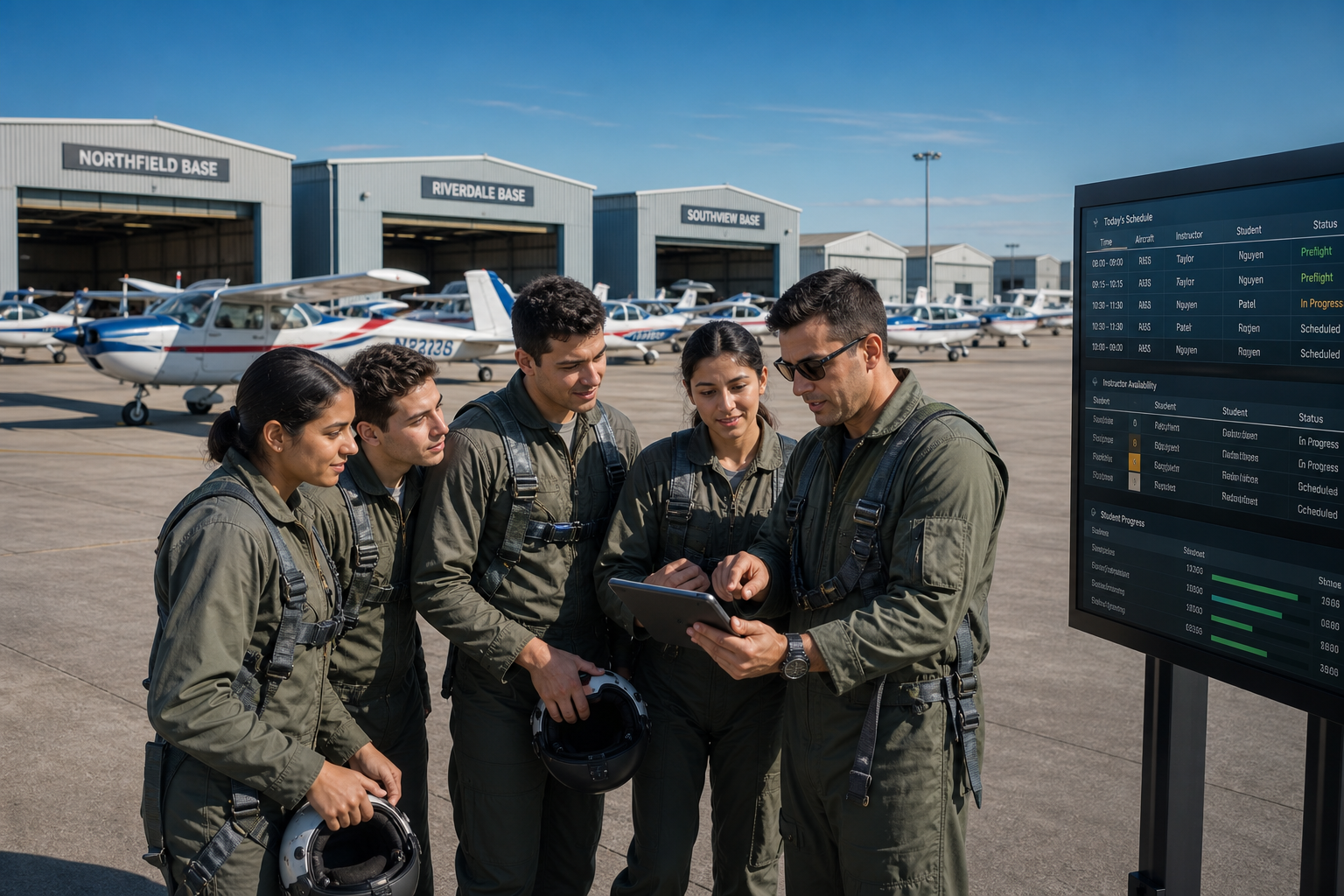
Expanding from one training location to multiple bases is a major milestone for any flight school. It allows you to serve more students, grow your instructor team, and increase fleet capacity.
But growth also introduces a new challenge: maintaining consistency.
Without standardized processes, each base can develop its own way of scheduling flights, recording training, tracking student progress, and managing compliance. Over time, this leads to operational inefficiencies, inconsistent training experiences, and increased administrative work.
The solution isn't more procedures—it's a connected operating model supported by modern flight school management software.
In this guide, we'll explain how multi-base flight schools can standardize operations in 2026 while improving efficiency, visibility, and training quality across every location.
Quick Answer
The best way to standardize multi-base pilot training is to use flight school management software that centralizes scheduling, student records, instructor management, compliance, reporting, and operational workflows. A single connected platform ensures every training base follows the same standards while giving local teams the flexibility to manage daily operations.
Why Multi-Base Flight Schools Become More Complex
Opening a second training base doesn't double complexity—it often multiplies it.
Instead of managing one operation, you're coordinating:
- Multiple instructor teams
- Multiple aircraft fleets
- Different student groups
- Shared training standards
- Local scheduling
- Regulatory compliance
- Central reporting
Without standardized systems, every location gradually develops its own processes.
That creates inconsistency for instructors, administrators, and students.
What Does Standardization Mean?
Standardization doesn't mean every base operates identically.
It means every base follows the same operational framework.
That includes:
- Training programs
- Student records
- Scheduling processes
- Instructor workflows
- Compliance documentation
- Operational reporting
Local teams continue managing daily activities, while leadership gains confidence that every location is operating to the same standard.
1. Standardize Student Training
Students should receive the same quality of training regardless of location.
Modern platforms standardize:
- Training syllabi
- Competency frameworks
- Lesson structures
- Assessments
- Student progression
- Digital training records
This ensures instructors follow consistent training methods across every base.
2. Use One Scheduling Platform
One of the biggest challenges in pilot training operations is inconsistent scheduling.
Different bases often use:
- Separate calendars
- Local spreadsheets
- Manual booking systems
This makes coordination difficult.
A centralized flight scheduling software platform allows every location to work from the same scheduling framework while managing its own daily bookings.
Benefits include:
- Consistent scheduling rules
- Shared instructor availability
- Fleet visibility
- Resource planning
- Reduced scheduling conflicts
3. Keep Student Records in One Place
Students may:
- Transfer between locations
- Train at multiple bases
- Complete different stages elsewhere
Paper records or local databases make this difficult.
Centralized digital records ensure instructors can immediately access:
- Training history
- Flight hours
- Assessments
- Competencies
- Certifications
- Student progression
The student has one record—not one record per base.
4. Standardize Instructor Workflows
Every instructor should follow the same operational process.
That includes:
- Recording lessons
- Completing assessments
- Logging competencies
- Updating progression
- Managing documentation
Consistent workflows improve both training quality and administrative efficiency.
5. Manage Aircraft Across Multiple Bases
Aircraft utilization becomes increasingly complex as fleets grow.
Schools need visibility into:
- Aircraft location
- Availability
- Maintenance status
- Utilization
- Future bookings
Connected software provides one operational view of the entire fleet instead of separate systems for each base.
6. Simplify Compliance Across Locations
Compliance becomes more challenging with every additional base.
Leadership must ensure consistent:
- Training documentation
- Instructor qualifications
- Student records
- Medical certificates
- Audit preparation
Instead of auditing multiple systems, standardized digital documentation provides one source of truth.
7. Improve Operational Visibility
Leadership shouldn't need to contact every base to understand what's happening.
Modern aviation training administration platforms provide centralized dashboards showing:
- Student progression
- Instructor utilization
- Aircraft utilization
- Training completion
- Operational KPIs
- Compliance status
This allows decisions to be made using real-time operational data rather than isolated reports.
8. Reduce Administrative Duplication
One of the biggest flight school challenges in multi-base organizations is duplicate work.
Different locations often:
- Maintain separate spreadsheets
- Produce separate reports
- Manage separate records
- Follow different processes
This increases workload and introduces inconsistencies.
Connected workflows eliminate duplicate administration while improving data accuracy across the organization.
Common Signs Your Bases Need Better Standardization
Your organization may benefit from centralized operations if:
- Each base schedules differently.
- Student records aren't consistent.
- Reporting requires manual consolidation.
- Compliance preparation is time-consuming.
- Students transferring between bases create administrative work.
- Leadership lacks visibility into daily operations.
- Instructors follow different documentation processes.
These are often signs that systems—not people—need standardization.
Best Practices for Multi-Base Flight Schools
Successful organizations typically follow these principles:
Create One Operational Framework
Every base follows the same workflows.
Standardize Training Programs
Use shared syllabi, competencies, and progression standards.
Centralize Operational Data
Maintain one source of truth for students, instructors, aircraft, and records.
Empower Local Teams
Allow each location to manage daily operations while maintaining organization-wide standards.
Measure Performance Consistently
Use standardized dashboards and KPIs across every training base.
Benefits of Standardized Flight School Operations
Organizations that standardize operations often experience:
- More consistent student training
- Better instructor collaboration
- Faster administrative processes
- Improved flight school efficiency
- Easier compliance
- Better operational visibility
- Simplified reporting
- More scalable growth
Most importantly, expansion becomes significantly easier because every new base follows an established operational model.
How FlightLogger Supports Multi-Base Flight Schools
FlightLogger – The Flight School Operating System is designed to help flight schools manage multiple training locations through one connected platform.
FlightLogger allows organizations to standardize:
- Student training and progression
- Flight and ground scheduling
- Instructor management
- Aircraft operations
- Digital training records
- Compliance documentation
- Maintenance planning
- Operational reporting
Instead of operating separate systems at each location, every base works from the same connected workflows while maintaining the flexibility needed for local operations.
The result is greater consistency, better visibility, and more efficient management across the entire organization.
Frequently Asked Questions
How do you standardize pilot training across multiple locations?
The most effective approach is to use centralized flight school management software that standardizes training programs, scheduling, student records, instructor workflows, and compliance while allowing each base to manage daily operations locally.
What are the biggest challenges for multi-base flight schools?
The biggest challenges include inconsistent scheduling, fragmented student records, duplicate administration, compliance management, limited operational visibility, and maintaining consistent training standards across locations.
Can students train across multiple flight school locations?
Yes. When training records are centralized, students can continue their training at different locations while instructors access the same progression history, competencies, and documentation.
Why is centralized flight scheduling important?
Centralized flight scheduling software provides visibility into instructors, aircraft, and student bookings across the organization, helping reduce scheduling conflicts and improve resource utilization.
Building a Connected Multi-Base Operation
Growth shouldn't create inconsistency.
The most successful flight schools don't standardize by adding more procedures—they standardize by connecting their operations.
By using flight school management software to unify scheduling, training, records, compliance, and reporting, multi-base organizations can deliver a consistent training experience while improving efficiency across every location.
That's why more aviation training organizations are choosing FlightLogger – The Flight School Operating System to standardize operations, simplify administration, and support sustainable growth.
Book a Walkthrough!
See FlightLogger in action and discover how we can help you achieve significant efficiency gains, streamline compliance, and make your daily operations smoother.