.png?width=201&height=201&name=Maintenance%20(Videoannonce%20%E2%80%93%20LinkedIn).png)

11 Causes of Flight School Management Breakdowns (And How to Prevent Them)
Why Is Flight Training Management So Complex?
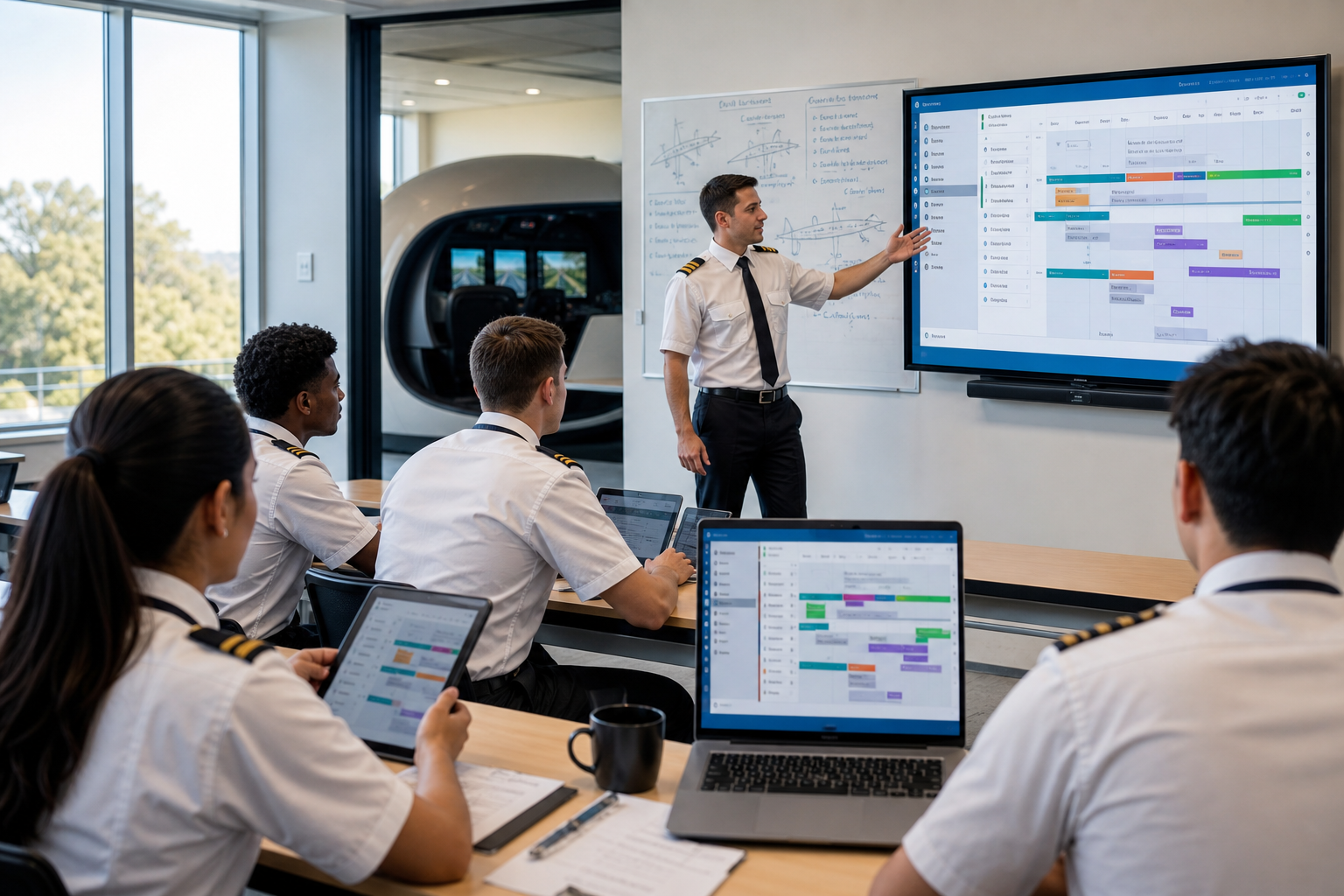
Running a successful flight school requires far more than scheduling lessons and maintaining aircraft. Every training flight depends on students, instructors, aircraft, maintenance, compliance, safety, finance, and administration working together.
When even one of these processes breaks down, delays ripple across the entire operation.
Modern flight school management is about creating connected workflows that give every department access to accurate, real-time information. In this guide, we'll explore the most common causes of operational breakdowns—and how flight schools can prevent them.
Why Flight School Management Becomes Difficult
Flight schools manage more moving parts than most training organizations.
Every day, they must coordinate:
- Student progression
- Instructor availability
- Aircraft scheduling
- Maintenance planning
- Regulatory compliance
- Billing
- Safety management
- Operational reporting
As schools grow, manual processes become increasingly difficult to manage, making it harder to maintain efficiency and consistency.
1. Disconnected Systems Create Information Silos
One department uses spreadsheets.
Another relies on paper records.
Scheduling happens in one system, while compliance documents are stored somewhere else.
When information lives in different places, staff spend valuable time searching for data, updating multiple systems, and correcting mistakes.
A connected platform gives every department access to the same operational information.
2. Manual Scheduling Creates Operational Bottlenecks
Scheduling affects nearly every part of a flight school.
Without centralized scheduling, administrators often struggle to coordinate:
- Aircraft
- Instructors
- Students
- Simulators
- Classrooms
Manual scheduling increases the risk of double bookings, delays, and underutilized resources.
Modern aviation management software allows schools to manage all training resources from one live schedule.
3. Student Progress Is Difficult to Monitor
Training leaders need to know who is progressing as planned—and who is falling behind.
Without digital visibility, delays often go unnoticed until they become significant.
Effective pilot training programs rely on real-time tracking of:
- Lesson completion
- Competencies
- Instructor assessments
- Syllabus milestones
- Flight hours
Early visibility enables timely intervention and better student outcomes.
4. Administrative Work Consumes Too Much Time
Many flight schools still spend hours each week on repetitive administrative tasks.
Examples include:
- Updating spreadsheets
- Filing paperwork
- Entering duplicate data
- Creating reports
- Coordinating schedules manually
As operations grow, these manual processes limit scalability and increase the risk of human error.
5. Compliance Is Treated as a Separate Process
Compliance should be built into everyday operations—not managed only before an audit.
When documentation is created manually or stored in multiple locations, schools spend unnecessary time preparing for inspections.
Integrated systems help maintain:
- Student records
- Instructor qualifications
- Training documentation
- Safety records
- Audit-ready reports
Keeping documentation current makes compliance significantly easier.
6. Communication Breaks Down Between Departments
Operations teams, instructors, maintenance personnel, and administrators all rely on accurate information.
When updates are shared through email, phone calls, or paper notes, important details can be delayed or missed.
A shared operational platform improves collaboration by ensuring everyone works from the same information.
7. Aircraft Downtime Causes Scheduling Disruptions
Maintenance is a normal part of flight training.
The real challenge is responding quickly when aircraft become unavailable.
Without operational visibility, administrators must manually:
- Find replacement aircraft
- Reassign instructors
- Contact students
- Update schedules
Connected scheduling helps minimize disruption and keeps training moving.
8. Leadership Lacks Operational Visibility
Growing schools often struggle to answer simple operational questions:
- Which students are behind schedule?
- Which aircraft are underutilized?
- Where are scheduling bottlenecks occurring?
- Which instructors have the highest workload?
Without centralized reporting, these answers require manual analysis.
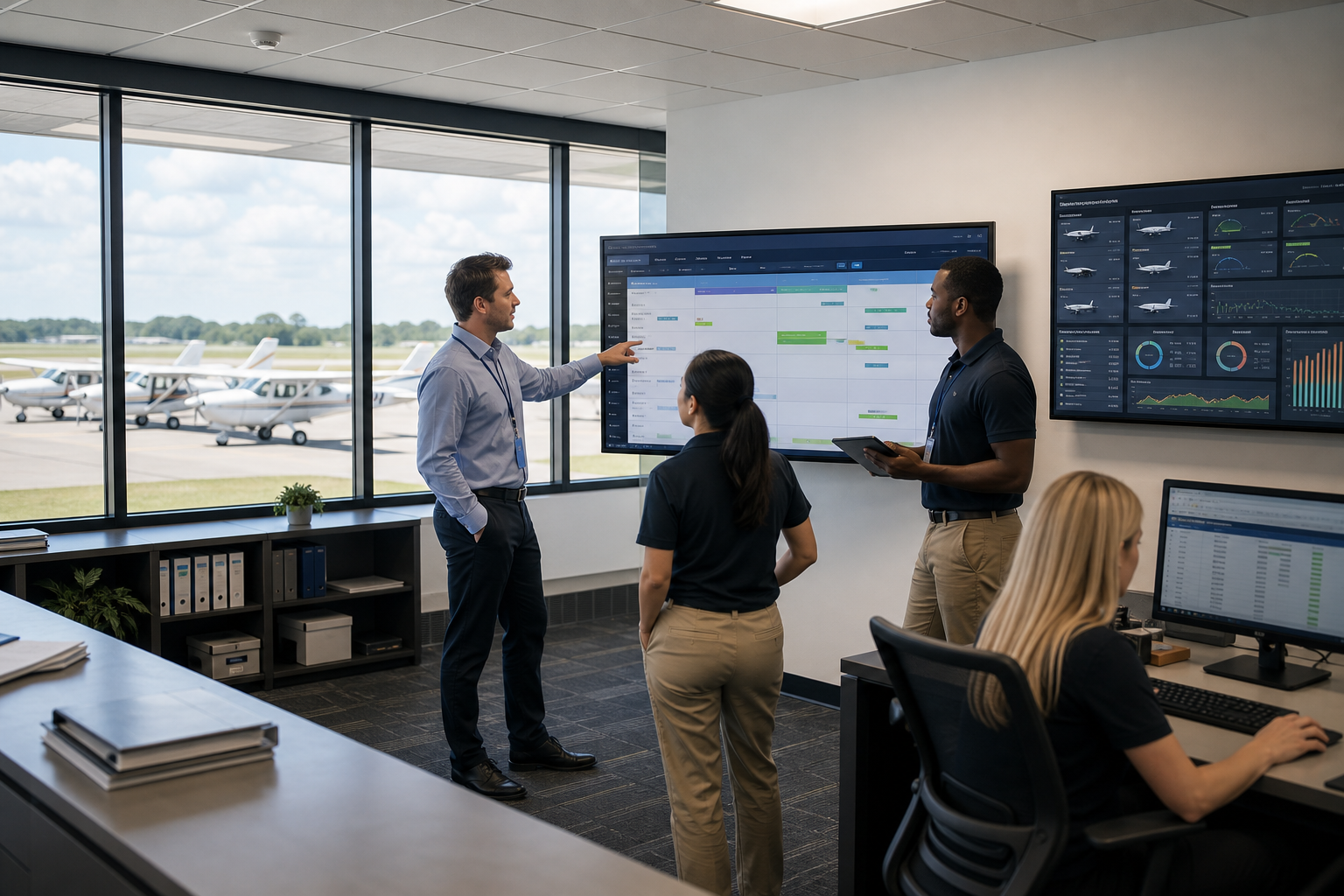
Operational dashboards provide leadership with real-time insight across the organization.
9. Instructor Workflows Are Inconsistent
When instructors document lessons differently, it becomes difficult to maintain consistent training standards.
Standardized digital workflows help instructors:
- Record lessons consistently
- Track competencies
- Document student performance
- Maintain complete training histories
Consistency improves both training quality and regulatory readiness.
10. Data Is Entered Multiple Times
Duplicate data entry wastes time and increases the likelihood of errors.
For example, the same student information may be entered into:
- Scheduling software
- Training records
- Billing systems
- Compliance documents
- Reporting spreadsheets
Integrated platforms eliminate duplicate work by connecting operational workflows.
11. Technology Doesn't Scale with Growth
Processes that work for 30 students often become unmanageable with 300.
As flight schools expand, they need systems that can support:
- More students
- More instructors
- Larger fleets
- Multiple training locations
- Additional compliance requirements
Scalable technology enables growth without proportionally increasing administrative workload.
Best Practices for Modern Flight School Management
The most efficient flight schools share several characteristics.
They:
- Centralize operational data
- Standardize instructor workflows
- Digitize training records
- Monitor student progression continuously
- Connect scheduling with operations
- Maintain compliance as part of daily work
- Use reporting to guide decision-making
- Eliminate unnecessary manual processes
These practices improve both operational performance and the student experience.
How Aviation Management Software Supports Better Operations
Modern aviation management software connects every major operational workflow.
Instead of relying on separate systems for scheduling, training, compliance, finance, and reporting, schools manage everything from one platform.
This helps organizations:
- Improve operational visibility
- Reduce administrative workload
- Optimize aircraft utilization
- Coordinate instructors more effectively
- Maintain audit-ready documentation
- Scale with confidence
Connected systems help prevent operational breakdowns before they occur.
Frequently Asked Questions
Why do flight schools struggle with manual processes?
Flight schools often rely on paper records, spreadsheets, and disconnected software to manage scheduling, student records, compliance, and reporting. As operations grow, these manual processes become time-consuming, increase the risk of errors, and reduce operational visibility.
Why is flight training management so complex?
Flight training management involves coordinating students, instructors, aircraft, simulators, maintenance, compliance, safety, and scheduling simultaneously. Because these activities are interconnected, changes in one area can affect the entire training operation.
What causes inefficiencies in flight training operations?
Common causes include manual scheduling, duplicate data entry, disconnected systems, inconsistent documentation, poor communication, limited operational visibility, and reactive compliance management.
What are the biggest challenges in running a flight school?
Flight schools commonly face challenges related to scheduling, instructor coordination, aircraft availability, compliance, student progression, administrative workload, and maintaining visibility across daily operations.
What is the best way to manage pilot training programs?
The most effective approach is to use integrated flight school management software that connects scheduling, student records, instructor workflows, compliance, reporting, and operational data in one platform. This improves efficiency, consistency, and decision-making.
Modern Flight School Management Starts with Connected Operations
Operational breakdowns rarely happen because of a single problem. More often, they result from disconnected systems, manual workflows, and limited visibility across the organization.
By connecting scheduling, student progression, compliance, instructor management, safety, finance, and reporting, flight schools can reduce administrative workload, improve operational efficiency, and create a more consistent training experience.
FlightLogger is purpose-built for aviation training organizations, helping more than 220 flight schools in 50+ countries replace fragmented processes with one connected operational platform.
Book a demo to see how FlightLogger helps simplify flight school management and keep training operations running smoothly.