.png?width=201&height=201&name=Maintenance%20(Videoannonce%20%E2%80%93%20LinkedIn).png)

Why Flight Training Management Gets Complex at Scale

Running a flight school with 20 students and five aircraft is operationally straightforward. Running one with 200 students, 30 aircraft, and three campuses is a fundamentally different challenge. The same processes that worked at small scale (scheduling, compliance tracking, maintenance coordination, student progress monitoring) become sources of operational strain when they're stretched across larger, more complex operations.
This article breaks down the specific areas of flight training management where complexity compounds as schools grow, and what it takes to keep your operation running with visibility and control at every stage of expansion.
Key Takeaways: Flight Training Management at Scale
- Scheduling dependencies between aircraft, instructors, and students multiply as flight schools add locations and fleet.
- Compliance requirements grow more demanding when a flight school operates under multiple regulatory authorities simultaneously.
- Maintenance coordination directly affects training capacity, and disconnected tracking across a growing fleet creates costly scheduling gaps.
- Student progress tracking across larger cohorts requires structured data, not ad hoc record keeping scattered across locations.
- FlightLogger centralizes scheduling, compliance, maintenance, and student tracking so complexity doesn't scale with your operation.
What Is Flight Training Management?
Flight training management covers every operational process involved in running a flight school. That includes scheduling aircraft and instructors, tracking student progression through training milestones, coordinating aircraft maintenance windows, and maintaining regulatory compliance records.
At a single-location school with a small fleet, these tasks are manageable. An operations coordinator can keep schedules in order, instructors stay informed through direct communication, and compliance documentation follows familiar routines.
The challenge appears when the operation grows. More students, more aircraft, more instructors, and especially more locations introduce scheduling dependencies and documentation demands that outpace manual processes.
Why Does Scheduling Get Harder as Flight Schools Grow?
Scheduling is the operational heartbeat of every flight school. A single lesson depends on the simultaneous availability of an aircraft, an instructor, and a student, with the aircraft confirmed airworthy and the student's training requirements aligned.
At one campus with ten aircraft, your operations team can often resolve conflicts in real time. Add a second campus, a shared instructor pool, or a growing fleet, and those same conflicts multiply fast.
According to CAE's 2025 Aviation Talent Forecast, the commercial aviation sector will need 267,000 new pilots over the next decade. For flight schools absorbing that demand, scheduling strain is a structural reality.
Cross-campus instructor assignments add constraints. When an instructor teaches at two bases, a single reschedule at one location can cascade across the other. Without real-time flight scheduling visibility across every base, your team spends hours reconciling calendars.
How Compliance Demands Multiply Across Locations
A single-campus flight school typically operates under one regulatory authority (FAA, EASA, or a national aviation authority). Compliance tracking follows one set of documentation standards, and your team builds audit routines around that single framework.
Growth changes the equation. A school opening a satellite campus in another jurisdiction may now report to EASA and DGCA simultaneously. Each authority has distinct record-keeping expectations, audit timelines, and documentation formats.
Training records, instructor qualifications, and compliance documentation all need to meet the specific requirements of each authority. When compliance data sits in separate files or regional systems, audit preparation shifts from a routine task to a multi-week coordination project.
Why Maintenance Coordination Breaks Down at Scale
Aircraft maintenance is tightly linked to training output. Every hour of scheduled maintenance is an hour that aircraft can't fly training sorties. At a small operation, the connection between maintenance windows and the training schedule is visible enough to manage manually.
As fleet size grows, that manual visibility disappears. An aircraft pulled for an unscheduled inspection at one campus may have been booked for three training flights at another. If maintenance status isn't reflected in the operational schedule immediately, students arrive for lessons that can't happen, and instructors stand idle.
Proactive coordination between maintenance planning and training scheduling eliminates most of these disruptions. The challenge is that proactive coordination requires all operational data to live in one connected place, not in separate maintenance logs and booking calendars.
How Student Progress Tracking Changes With Growth
When a flight school trains 30 students, a chief flight instructor can monitor individual progress through direct observation and weekly check-ins. Training milestones, check ride readiness, and areas of concern stay visible through personal knowledge and a manageable number of records.
Scale that to 150 or 300 students across multiple programs, and personal oversight is no longer enough. Inconsistent grading standards between instructors at different locations create documentation gaps. Students who fall behind on specific competencies may not be identified until they miss a milestone deadline.
Structured student progression tracking ensures every training event, evaluation, and sign-off follows the same data structure across your entire operation. This is where the difference between ad hoc tracking and a centralized system becomes operationally significant.
How FlightLogger Addresses Scaling Complexity
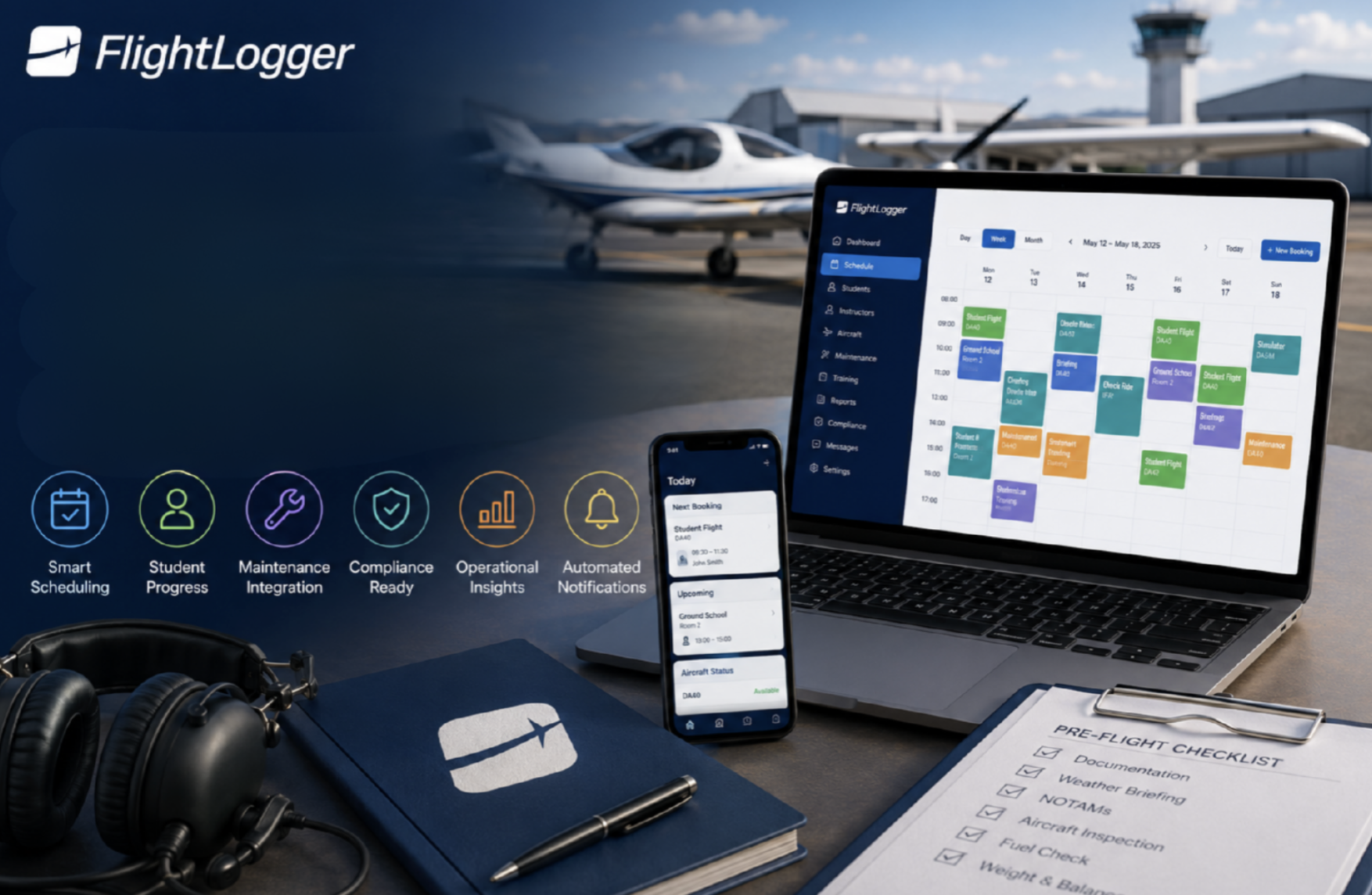
FlightLogger is the Flight School Operating System, built specifically for flight training operations. Because scheduling, compliance, maintenance, and student tracking are deeply interconnected, FlightLogger connects all of them in one platform.
For scheduling, FlightLogger gives you real-time visibility into aircraft, instructor, and student availability across every campus. For compliance, the platform supports audit-ready documentation aligned with EASA, FAA, CASA, DGCA, and other regulatory frameworks.
Maintenance coordination is integrated directly into scheduling, so aircraft status and training bookings stay connected. And multi-campus operations run on the same data structures and workflows, whether you have two locations or ten.
Organizations using FlightLogger have documented 30 to 50 percent efficiency gains and more than 20 hours of monthly admin time saved.
In Conclusion: Managing Complexity Before It Manages Your Operation
Growth is the goal for every ambitious flight school. The operational complexity that comes with it doesn't have to be the barrier. Scheduling dependencies, multi-authority compliance, maintenance coordination, and student progress tracking all get harder at scale, but they get harder primarily when data and processes remain disconnected.
Centralizing your operation into one connected system is how you grow without proportional overhead. FlightLogger never sleeps, so your operation keeps moving, even as it expands.
FAQs About Flight Training Management at Scale
What makes flight training management more complex at scale?
Growth introduces more scheduling dependencies, additional regulatory requirements, larger fleets requiring coordinated maintenance, and bigger student cohorts. FlightLogger connects scheduling, compliance, maintenance, and student tracking in one platform, so these areas stay coordinated as your operation expands.
How does scheduling change for multi-campus flight schools?
Multi-campus operations require cross-location visibility into aircraft, instructor, and student availability. A scheduling conflict at one base can cascade to another. FlightLogger's centralized scheduling helps prevent conflicts by showing real-time availability across every campus.
Why does compliance get harder when flight schools grow?
Expanding into new jurisdictions means reporting to multiple aviation authorities simultaneously. Each has distinct documentation and audit requirements. FlightLogger supports multi-authority compliance from one system, helping your team stay audit-ready across every location.
How can flight schools keep maintenance and training schedules aligned?
By connecting maintenance planning with training scheduling in the same platform. When aircraft status updates automatically reflect in your booking system, your team avoids assigning students to unavailable aircraft. FlightLogger integrates maintenance coordination directly with operational scheduling.
What role does student tracking play in scaling a flight school?
At scale, individual oversight isn't enough. Standardized data structures and consistent grading across instructors and locations are what help you identify at-risk students early. FlightLogger's student progression tracking enforces structured documentation across your entire operation.