.png?width=201&height=201&name=Maintenance%20(Videoannonce%20%E2%80%93%20LinkedIn).png)

10 Maintenance Scheduling Rules Every Flight School Should Follow
How Do Flight Schools Reduce Scheduling Conflicts Caused by Aircraft Maintenance?
Aircraft maintenance is one of the few variables every flight school knows will happen—but many schools still treat it as an unexpected disruption.
When maintenance isn't coordinated with flight scheduling, the result is canceled lessons, frustrated students, instructor downtime, and underutilized aircraft. The problem usually isn't maintenance itself. It's the lack of visibility between maintenance planning and daily operations.
Modern flight school scheduling connects aircraft availability, instructor schedules, student bookings, and operational planning in one system, allowing schools to minimize disruptions and keep training on schedule.
This guide outlines ten practical rules every flight school can follow to coordinate maintenance with scheduling more effectively.
Why Maintenance and Scheduling Must Work Together
Maintenance and scheduling shouldn't operate independently.
Every maintenance event affects:
- Aircraft availability
- Student bookings
- Instructor schedules
- Simulator demand
- Graduation timelines
- Revenue opportunities
The earlier maintenance is reflected in the schedule, the easier it is to adjust resources without disrupting training.
1. Schedule Maintenance Before Aircraft Become Unavailable
Reactive maintenance creates reactive scheduling.
Whenever possible, scheduled inspections and planned maintenance should be entered into the scheduling system well in advance.
This allows operations teams to:
- Avoid booking unavailable aircraft
- Shift lessons proactively
- Plan instructor availability
- Communicate changes early
Planning ahead reduces last-minute cancellations.
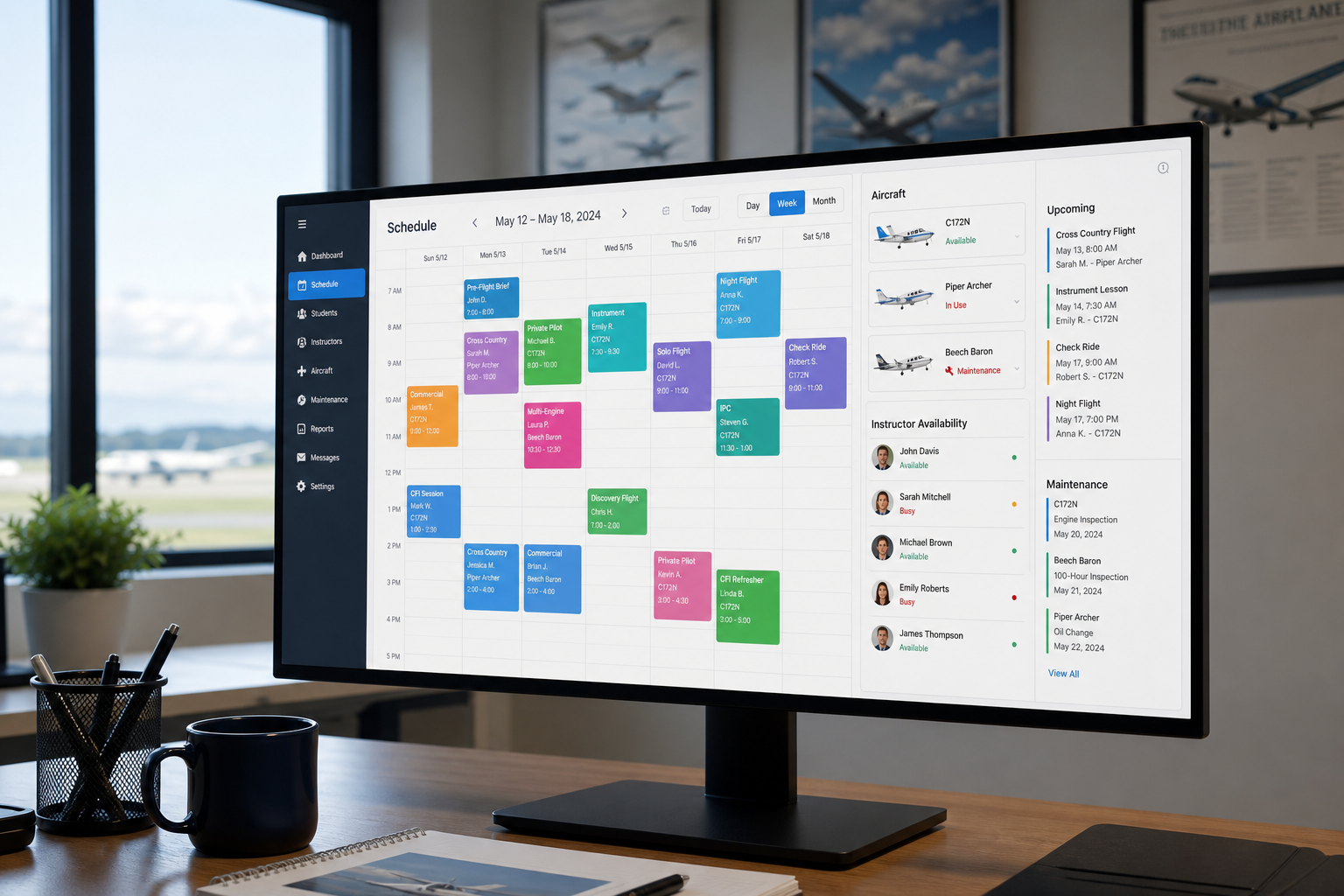
2. Use One Live Aircraft Schedule
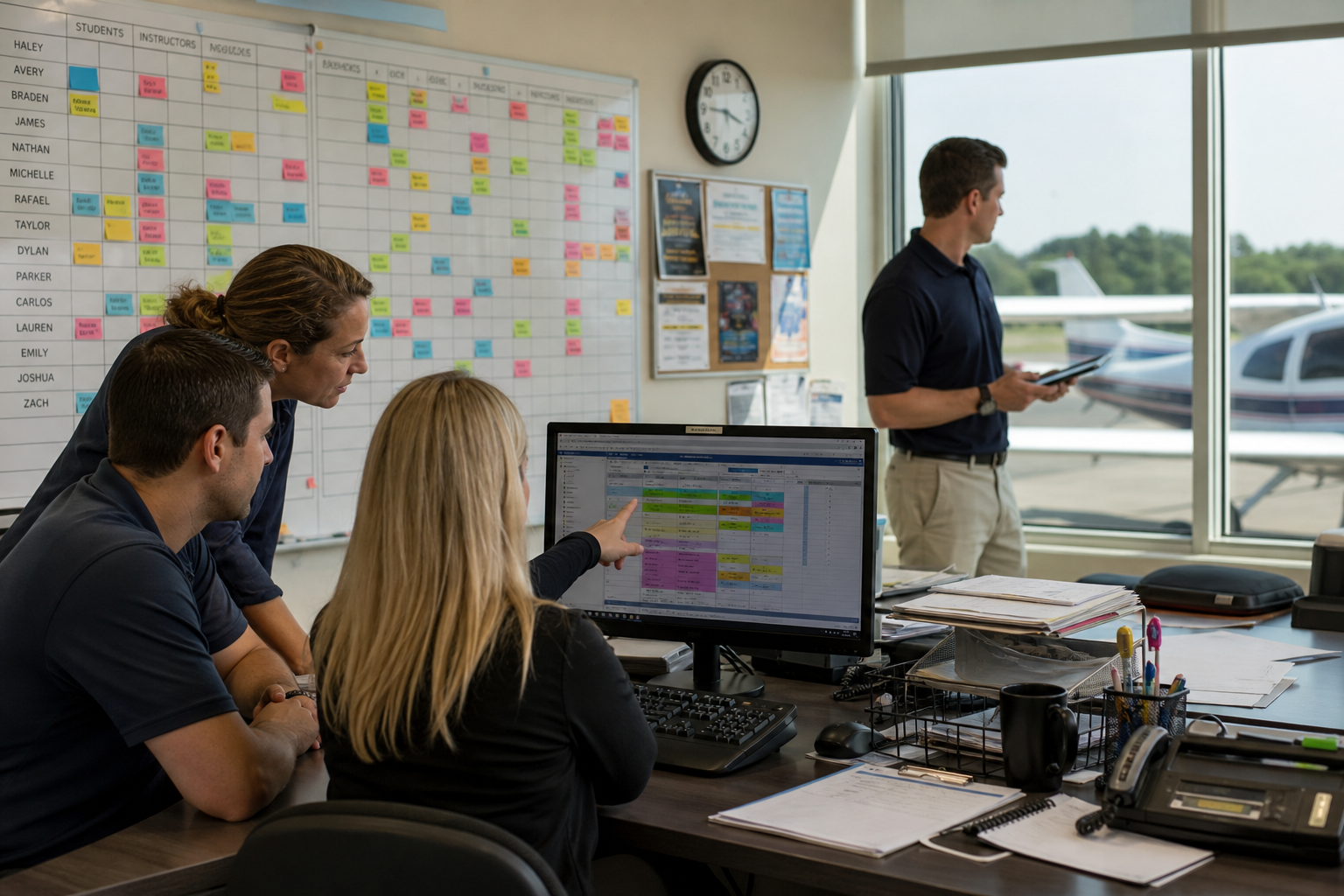
Aircraft availability should exist in one centralized schedule—not separate spreadsheets or maintenance calendars.
A live aircraft scheduling system allows everyone to see:
- Scheduled flights
- Planned maintenance
- Aircraft status
- Temporary restrictions
- Resource availability
When everyone works from the same information, scheduling conflicts become much easier to prevent.
3. Protect High-Demand Aircraft
Not every aircraft has the same operational impact.
Schools should identify aircraft that are:
- Used for check rides
- Required for advanced ratings
- In high daily demand
- Shared between locations
Maintenance planning should consider training priorities to minimize disruption to critical programs.
4. Coordinate Instructor Scheduling with Maintenance
Aircraft changes often require instructor schedule changes as well.
Effective instructor scheduling means instructors can be reassigned quickly if aircraft availability changes.
When instructor and aircraft schedules are connected, operations teams can:
- Reallocate instructors
- Reschedule students
- Balance workloads
- Reduce idle instructor time
5. Build Recovery Time Into the Schedule
Schedules with no flexibility are difficult to recover when maintenance takes longer than expected.
Leaving limited buffer time helps schools:
- Recover from unexpected repairs
- Minimize cascading delays
- Protect instructor availability
- Keep students progressing
Operational flexibility is often more valuable than maximizing every available flight slot.
6. Prioritize Students Near Completion
Not every canceled lesson has the same impact.
When aircraft availability becomes limited, schools should prioritize students who are:
- Preparing for check rides
- Completing course milestones
- Near graduation
- On accelerated training programs
Connected flight training management systems make it easier to identify these students and adjust schedules accordingly.
7. Monitor Aircraft Utilization Trends
Maintenance planning should be informed by operational data.
Regularly reviewing utilization helps schools identify:
- Aircraft approaching maintenance intervals
- Overused aircraft
- Underutilized fleet resources
- Seasonal demand patterns
This supports better maintenance planning while maximizing fleet availability.
8. Communicate Schedule Changes Immediately
Maintenance delays become much more disruptive when communication is slow.
Operations teams should notify:
- Students
- Instructors
- Dispatch
- Administration
as soon as schedule changes occur.
A connected scheduling platform keeps everyone working from current information, reducing confusion and unnecessary coordination.
9. Review Scheduling Conflicts After Every Maintenance Event
Every disruption is an opportunity to improve.
After significant maintenance events, review:
- Number of canceled lessons
- Rescheduling time
- Instructor downtime
- Student delays
- Aircraft utilization
- Communication effectiveness
These insights help improve future scheduling decisions.
10. Connect Maintenance with Flight School Operations
Maintenance shouldn't operate separately from scheduling.
It should be part of the school's overall flight school operations strategy.
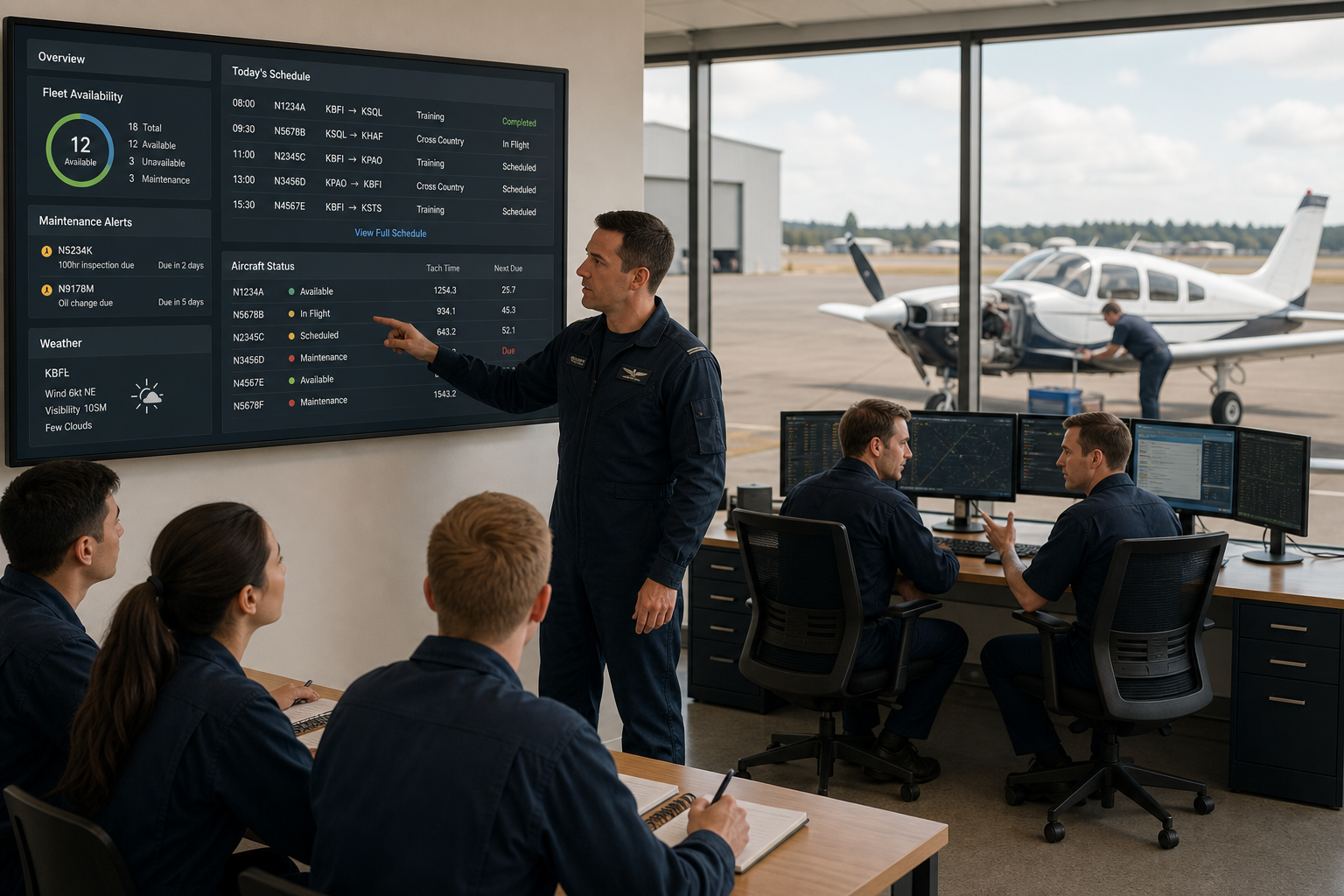
When maintenance information connects with scheduling, student progression, instructor availability, and reporting, schools gain complete operational visibility.
Instead of reacting to disruptions, operations teams can plan around them.
Best Practices for Reducing Scheduling Conflicts
Successful flight schools consistently:
- Schedule maintenance in advance
- Use one centralized scheduling system
- Share aircraft availability across departments
- Monitor fleet utilization
- Coordinate instructors with aircraft
- Communicate schedule changes quickly
- Review operational performance regularly
- Use data to improve future planning
These practices reduce administrative workload while improving operational reliability.
How Modern Flight School Scheduling Software Helps
Modern flight school scheduling software connects scheduling with operational data.
Instead of managing aircraft, instructors, and students separately, schools coordinate resources from one platform.
Benefits include:
- Real-time aircraft availability
- Connected instructor scheduling
- Faster schedule recovery
- Improved aircraft utilization
- Better operational visibility
- Reduced scheduling conflicts
- More efficient resource planning
Integrated systems help flight schools maintain consistent training even when maintenance plans change.
Frequently Asked Questions
What is the best way to manage aircraft and instructor scheduling?
The best approach is to use integrated flight school scheduling software that connects aircraft availability, instructor schedules, student bookings, and operational data in one platform. This improves coordination and reduces scheduling conflicts.
How do flight schools reduce scheduling conflicts?
Flight schools reduce scheduling conflicts by centralizing scheduling, planning maintenance in advance, monitoring resource availability in real time, coordinating instructors with aircraft, and communicating schedule changes quickly.
How do you optimize flight scheduling for a flight school?
Optimizing flight scheduling involves balancing aircraft utilization, instructor availability, student progression, maintenance planning, and operational priorities within one connected scheduling system.
Why should maintenance and scheduling be connected?
Maintenance directly affects aircraft availability. Connecting maintenance planning with scheduling helps prevent double bookings, reduces last-minute cancellations, improves communication, and minimizes disruptions to student training.
What should flight school scheduling software include?
A modern scheduling platform should include:
- Aircraft scheduling
- Instructor scheduling
- Student bookings
- Simulator scheduling
- Resource management
- Conflict detection
- Operational dashboards
- Reporting and analytics
These capabilities help schools coordinate training efficiently while reducing administrative workload.
Better Scheduling Starts with Better Visibility
Maintenance is unavoidable. Training disruptions don't have to be.
The most efficient flight schools coordinate aircraft maintenance, scheduling, instructors, and student progression through one connected operational platform. With complete visibility into aircraft availability and training resources, operations teams can make faster decisions, reduce scheduling conflicts, and keep students on track.
FlightLogger brings scheduling, student records, instructor management, compliance, reporting, and—soon—native maintenance management together in one platform, helping flight schools operate more efficiently as they grow.
Book a demo to see how FlightLogger helps simplify flight school scheduling and reduce operational disruptions.