.png?width=201&height=201&name=Maintenance%20(Videoannonce%20%E2%80%93%20LinkedIn).png)

How to Manage Pilot Training Across Multiple Campuses
 Amalie Rasmussen
·
8 minute read
Amalie Rasmussen
·
8 minute read
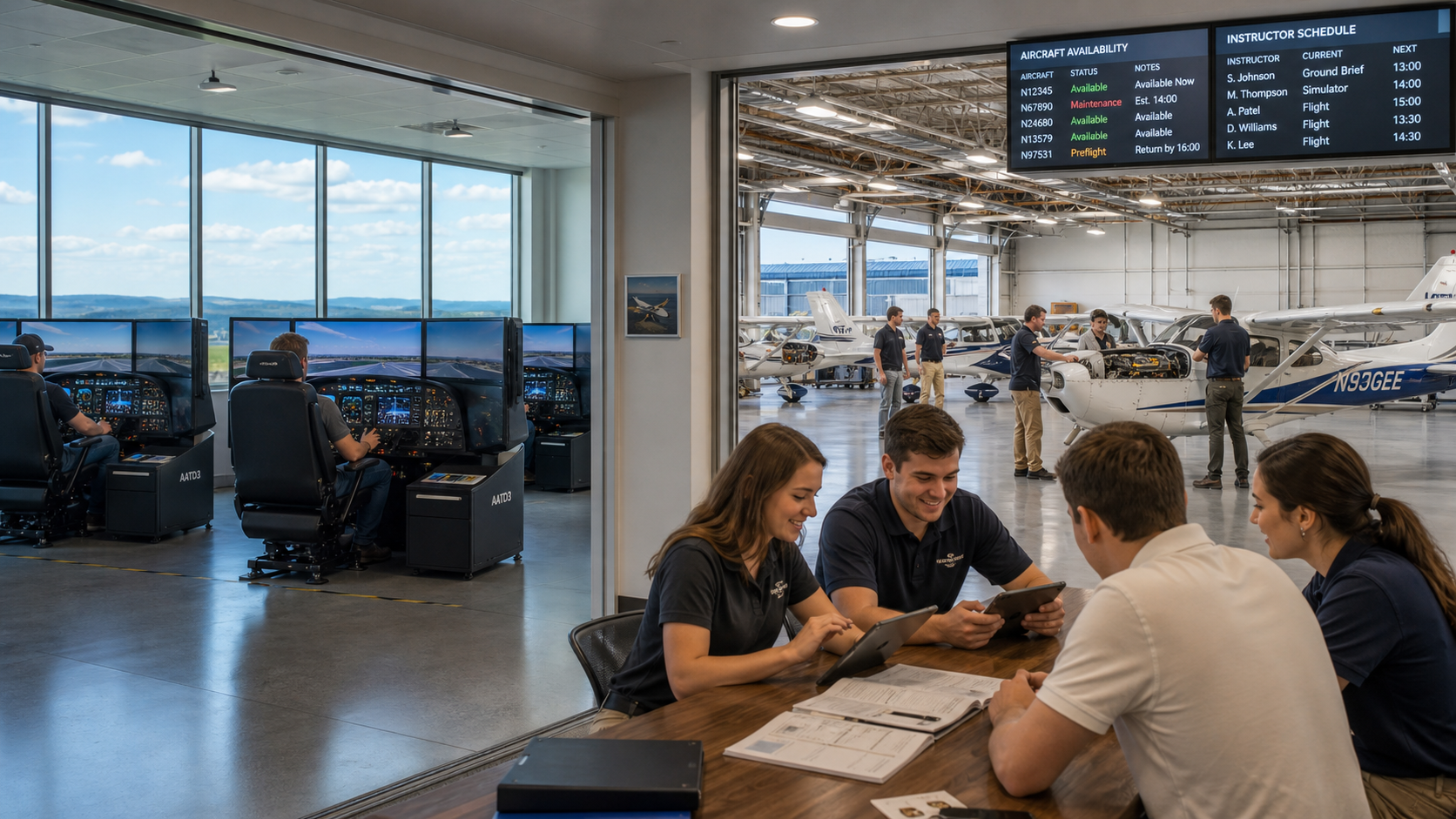
Managing pilot training across multiple campuses creates operational challenges that single-location schools never face. When your instructors, aircraft, and students are spread across different sites, coordination becomes significantly more difficult. Training standards drift. Records fragment. Scheduling conflicts multiply. The good news: flight school management software built specifically for aviation training can connect your entire operation through one structured system.
This guide walks through the core challenges of multi-campus pilot training management and shows you how to address each one with practical, proven methods. You'll learn how to standardize training delivery, centralize records, coordinate scheduling, and maintain compliance across every location.
Key Takeaways: How to Manage Pilot Training Across Multiple Campuses
- Multi-campus operations require standardized training programs, workflows, and assessment methods to maintain consistent quality across every location.
- Centralized student records eliminate duplicate documentation and allow instructors at any campus to access complete training histories instantly.
- Integrated scheduling connects aircraft availability, instructor schedules, and maintenance requirements across all locations in real time.
- FlightLogger's centralized platform helps multi-campus flight schools maintain visibility, standardize operations, and reduce administrative overhead.
- Compliance becomes simpler when training documentation, instructor qualifications, and audit records exist in one structured system.
What Makes Multi-Campus Pilot Training So Complex?
Opening a second training location doesn't double operational complexity. It multiplies it. Instead of managing one instructor team, one fleet, and one group of students, you're coordinating multiple sets of resources that need to work together while operating independently.
The core challenge isn't distance or logistics. The core challenge is information fragmentation. When each campus maintains its own scheduling system, training records, and operational processes, you lose visibility into the overall operation. Instructors at one location can't see what's happening at another. Students transferring between sites encounter inconsistent processes.
This fragmentation creates real operational problems: scheduling conflicts that waste aircraft time, inconsistent grading that affects training quality, compliance gaps that create audit risk, and administrative duplication that increases costs without adding value.
Why Standardization Matters for Multi-Campus Training
Standardization doesn't mean every campus operates identically. It means every campus follows the same operational framework. Training programs use the same syllabi. Instructors follow the same grading criteria. Records maintain the same structure. Compliance documentation meets the same standards.
When your operational framework is standardized, local teams can manage daily activities while leadership maintains confidence that every location delivers the same quality of training. Students receive consistent instruction regardless of where they train. Instructors can collaborate across locations because they're working from the same playbook.
The schools that scale successfully aren't those with the most detailed procedures. They're the schools with connected systems that make standardization automatic rather than manual.
How to Centralize Student Training Records
Students in multi-campus operations often train at different locations. They might start at one campus, complete specific training blocks at another, and finish at a third. When records are managed separately at each site, tracking progression becomes a coordination exercise that consumes administrative time.
Centralized digital records solve this problem by creating one training record per student that follows them across every location. Any instructor can immediately access:
- Complete training history and flight hours
- Assessment records and competency evaluations
- Course progression and certification status
- Previous instructor notes and recommendations
The student has one record, not one record per campus. This eliminates duplicate data entry, reduces errors, and ensures instructors always have current information about student capabilities.
How to Coordinate Scheduling Across Multiple Locations
Flight training scheduling is already one of the most complex operational challenges for any flight school. Add multiple campuses, and the complexity increases dramatically.
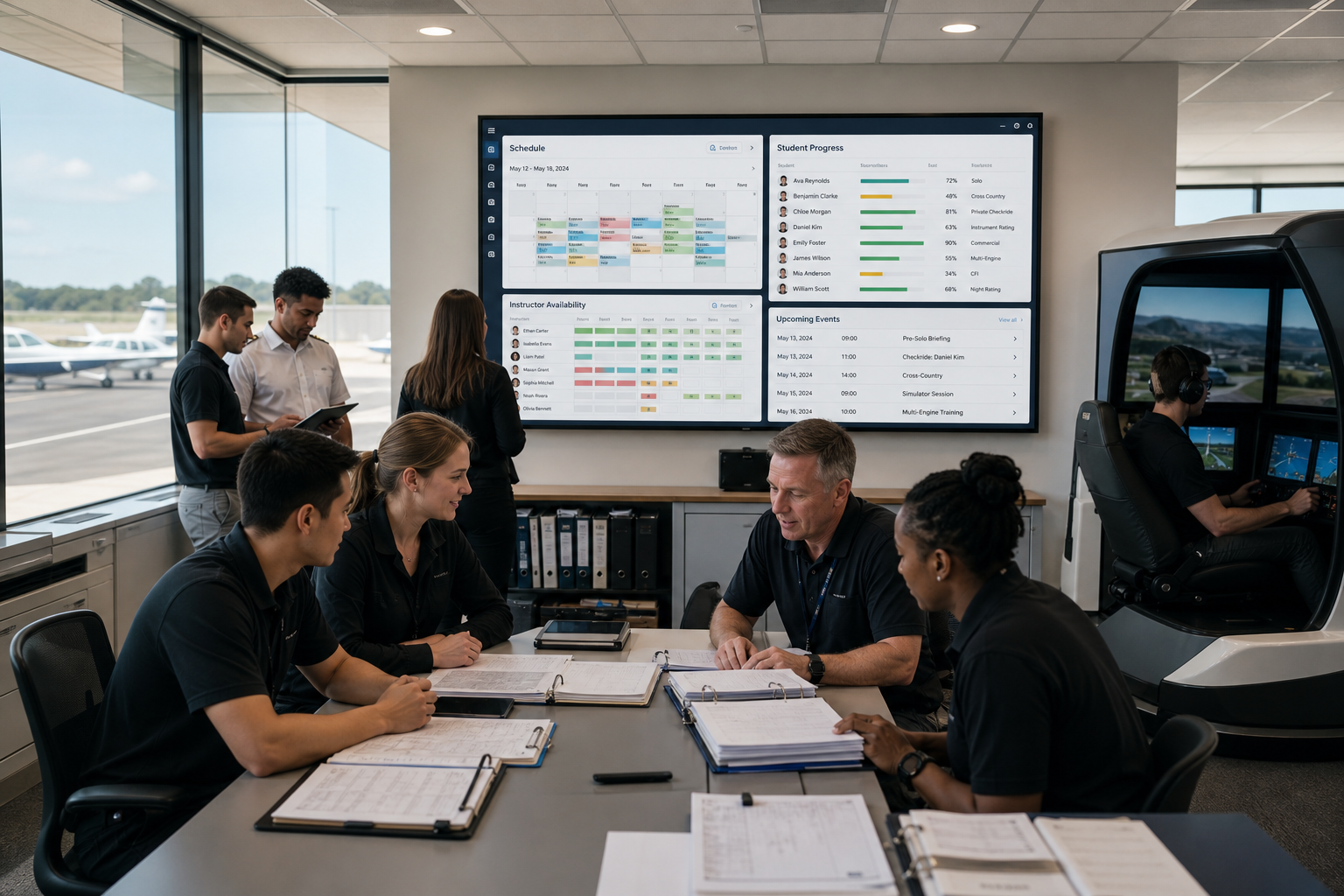
Effective multi-campus scheduling requires visibility into resources at every location. Operations managers need to see aircraft availability, instructor schedules, student bookings, and maintenance requirements across the entire organization. Without this visibility, conflicts multiply: aircraft get double-booked, instructors are assigned to overlapping lessons, and students arrive for flights that can't happen.
What Centralized Scheduling Makes Possible
When scheduling data exists in one connected system, several things become possible that aren't feasible with separate location-based calendars:
- Real-time conflict detection before bookings are confirmed
- Automatic integration with maintenance schedules across all fleets
- Instructor sharing between locations during high-demand periods
- Aircraft reallocation based on utilization patterns
- Student transfers without administrative delays
FlightLogger connects aircraft scheduling, instructor scheduling, and student bookings from one platform. This gives operations teams the visibility they need to make better scheduling decisions and reduces the coordination burden on administrative staff.
How to Standardize Training Programs Across Campuses
Training quality depends on consistency. When instructors at different locations grade differently, use different training methods, or follow different syllabi, students receive inconsistent instruction. This creates problems for students transferring between sites and raises questions during regulatory audits.
Components of Standardized Training
Effective standardization typically includes:
- Unified syllabi: Every location follows the same training structure and lesson sequences
- Consistent competency frameworks: Assessment criteria remain identical across campuses
- Standardized grading scales: Instructors evaluate performance using the same benchmarks
- Shared lesson structures: Briefings, flight content, and debriefings follow the same format
- Digital training records: All documentation uses the same structure and data fields
The goal isn't to remove instructor judgment or local flexibility. The goal is to ensure that "proficient" means the same thing at every campus, that training sequences build skills in the same order, and that documentation meets the same compliance requirements everywhere.
How to Manage Instructors Across Multiple Bases
Instructor management becomes more challenging when your team is distributed across locations. Workload imbalances develop when one campus has more students than another. Communication gaps emerge when instructors at different sites rarely interact. Calibration drifts when instructors don't train together or observe each other's teaching.
Instructor Workflow Standardization
Every instructor should follow the same operational process regardless of where they teach:
- Recording lessons using the same documentation format
- Completing assessments against the same competency standards
- Logging flight time and training events in the same system
- Updating student progression using the same milestones
- Managing compliance documentation to the same standard
When instructor workflows are standardized, new hires onboard faster because they learn one system. Instructors can move between locations without relearning processes. Operations managers gain visibility into instructor utilization and workload across the organization.
How to Maintain Compliance Across Locations
Compliance becomes more challenging with every additional campus. You're not just maintaining one set of training records, instructor qualifications, and audit documentation. You're maintaining separate sets at each location that all need to meet the same regulatory standards.
When compliance documentation is spread across multiple systems, audit preparation becomes time-consuming. Staff at each location gather records independently. Central management consolidates information manually. The process takes days instead of hours and introduces risk of missing or inconsistent documentation.
Centralized Compliance Management
FlightLogger supports audit-ready compliance for EASA, FAA, CASA, TCCA, and other regulatory environments through centralized documentation. Instead of auditing multiple systems, inspectors access one source of truth that contains:
- Training records for all students across all locations
- Instructor qualifications and currency status
- Medical certificates and expiration tracking
- Digital sign-offs and lesson completion records
- Historical reports generated instantly for regulatory review
Schools using centralized compliance systems report faster inspector interactions and reduced audit stress because records are always current, always accessible, and always formatted for regulatory requirements.
How to Coordinate Aircraft and Maintenance Across Campuses
Aircraft utilization becomes increasingly complex as fleets grow across multiple locations. Operations teams need visibility into aircraft location, availability, maintenance status, and utilization patterns across the entire organization, not just at individual campuses.
When maintenance schedules don't sync with training schedules, problems multiply. Aircraft get scheduled for training when they're due for inspection. Unplanned groundings disrupt schedules at one location and ripple through the entire operation. Maintenance tracking systems that don't connect to scheduling platforms create gaps that lead to conflicts.
Integrated Fleet Management
Connected software gives you one operational view of the entire fleet instead of separate systems for each campus. This includes:
- Aircraft location tracking across all bases
- Maintenance status integrated with scheduling
- Automatic booking blocks when aircraft approach inspection intervals
- Utilization reporting across the organization
- Resource reallocation based on demand patterns
FlightLogger Maintenance integrates directly with training schedules. Aircraft approaching maintenance intervals are automatically flagged. Scheduled inspections block booking automatically. This prevents scenarios where students arrive for flights and aircraft are unavailable.
How to Improve Communication Between Campuses
Communication gaps between locations create operational friction. Schedule changes at one campus don't reach other sites quickly enough. Student issues go unreported to instructors at transfer locations. Operational decisions get made without input from affected teams.
Ad-hoc communication channels often make this worse. When information travels through text messages, email chains, and phone calls, important updates get lost. Staff spend time tracking down information instead of managing operations.
Building Connected Communication
Centralized communication systems reduce the coordination burden by keeping all stakeholders informed automatically:
- Schedule changes sync across all locations immediately
- Student notes and flags are visible to instructors at any campus
- Operational updates reach affected teams without manual outreach
- Documentation is accessible to authorized staff everywhere
When everyone works from the same information, communication becomes proactive rather than reactive. Staff spend less time asking questions and more time taking action.
How to Scale Without Adding Administrative Overhead
Growth exposes the limits of manual processes. What worked with 50 students at one location doesn't work with 200 students across three campuses. Administrative overhead increases faster than enrollment when coordination relies on manual effort.
The schools that scale successfully are those that address operational challenges before growth exposes them. They build connected systems that handle increased coordination complexity automatically. Staff focus on student success rather than administrative tasks.
Building for Sustainable Growth
FlightLogger gives you the operational foundation to grow without sacrificing quality or compliance. Schools using the platform have documented the ability to increase enrollment significantly without proportionally increasing administrative staff. The system handles coordination, documentation, and reporting that would otherwise require manual effort.
Every new campus follows an established operational model. New instructors onboard using standardized workflows. New students enter a system that tracks their progression automatically. Growth becomes an expansion of existing operations rather than a recreation of manual processes.
Common Signs Your Multi-Campus Operation Needs Better Systems
Your organization may benefit from centralized operations if any of these situations sound familiar:
- Each campus schedules differently, using different tools or processes
- Student records aren't consistent or accessible across locations
- Reporting requires manual consolidation from multiple systems
- Compliance preparation is time-consuming and stressful
- Students transferring between campuses create administrative work
- Leadership lacks visibility into daily operations at all sites
- Instructors follow different documentation processes at different locations
These are often signs that systems need standardization, not people. Connected platforms solve coordination problems that procedures alone cannot address.
What Connected Multi-Campus Operations Look Like
When your multi-campus operation runs on connected systems, daily work feels different. Scheduling decisions are based on real availability across the organization. Student records are always current and always accessible. Compliance documentation is organized and audit-ready at all times.
Operations managers get real-time visibility into aircraft utilization, student progress, instructor availability, and training throughput across every location. Decisions are made using current operational data rather than isolated reports that were outdated the moment they were compiled.
FlightLogger serves more than 215 flight training organizations across 50+ countries because the platform addresses these aviation-specific challenges directly. Schools using the system report documented efficiency gains, improved on-time lesson starts, and streamlined compliance processes.
In Conclusion: Building a Connected Multi-Campus Training Operation
Managing pilot training across multiple campuses requires more than adding procedures and coordination meetings. It requires connected systems that make standardization automatic and visibility constant.
The most successful multi-campus flight schools don't standardize by creating more manual processes. They standardize by connecting their operations through one platform that handles scheduling, training records, compliance, and reporting across every location.
By using flight school management software built specifically for aviation training, multi-campus organizations can deliver consistent training quality while improving efficiency across every campus. FlightLogger helps flight schools streamline daily operations, scale with control, and stay fully compliant, regardless of how many locations they operate.
FlightLogger never sleeps, so your operation never falls behind.
FAQs About How to Manage Pilot Training Across Multiple Campuses
What is the biggest challenge in managing pilot training across multiple campuses?
Information fragmentation creates the biggest challenge for multi-campus flight schools. When scheduling, training records, and compliance documentation exist in separate systems at each location, coordination becomes difficult and errors multiply. FlightLogger addresses this by centralizing all operational data in one connected platform that every campus can access.
How do you maintain consistent training quality across different locations?
Consistent training quality requires standardized syllabi, unified grading criteria, and shared assessment frameworks across all campuses. FlightLogger enables flight schools to standardize training programs and grading while maintaining flexibility for local operations. Instructors at every location work from the same structured system.
Can students train at multiple flight school locations without administrative delays?
Yes, when training records are centralized. FlightLogger maintains one training record per student that follows them across every campus. Instructors at any location can immediately access complete training history, assessment records, and progression status without requesting transfers or waiting for documentation.
How does centralized scheduling improve multi-campus operations?
Centralized scheduling gives operations teams visibility into aircraft, instructors, and student bookings across all locations. FlightLogger's scheduling platform helps reduce conflicts by connecting maintenance schedules with training bookings and providing real-time availability information organization-wide.
What makes compliance easier for flight schools with multiple locations?
Centralized compliance documentation eliminates the need to audit multiple systems during inspections. FlightLogger maintains training records, instructor qualifications, and regulatory documentation in one structured system that's always audit-ready. Schools report faster inspector interactions and reduced compliance preparation time.