.png?width=201&height=201&name=Maintenance%20(Videoannonce%20%E2%80%93%20LinkedIn).png)

The Complete Guide to Pilot Training Management
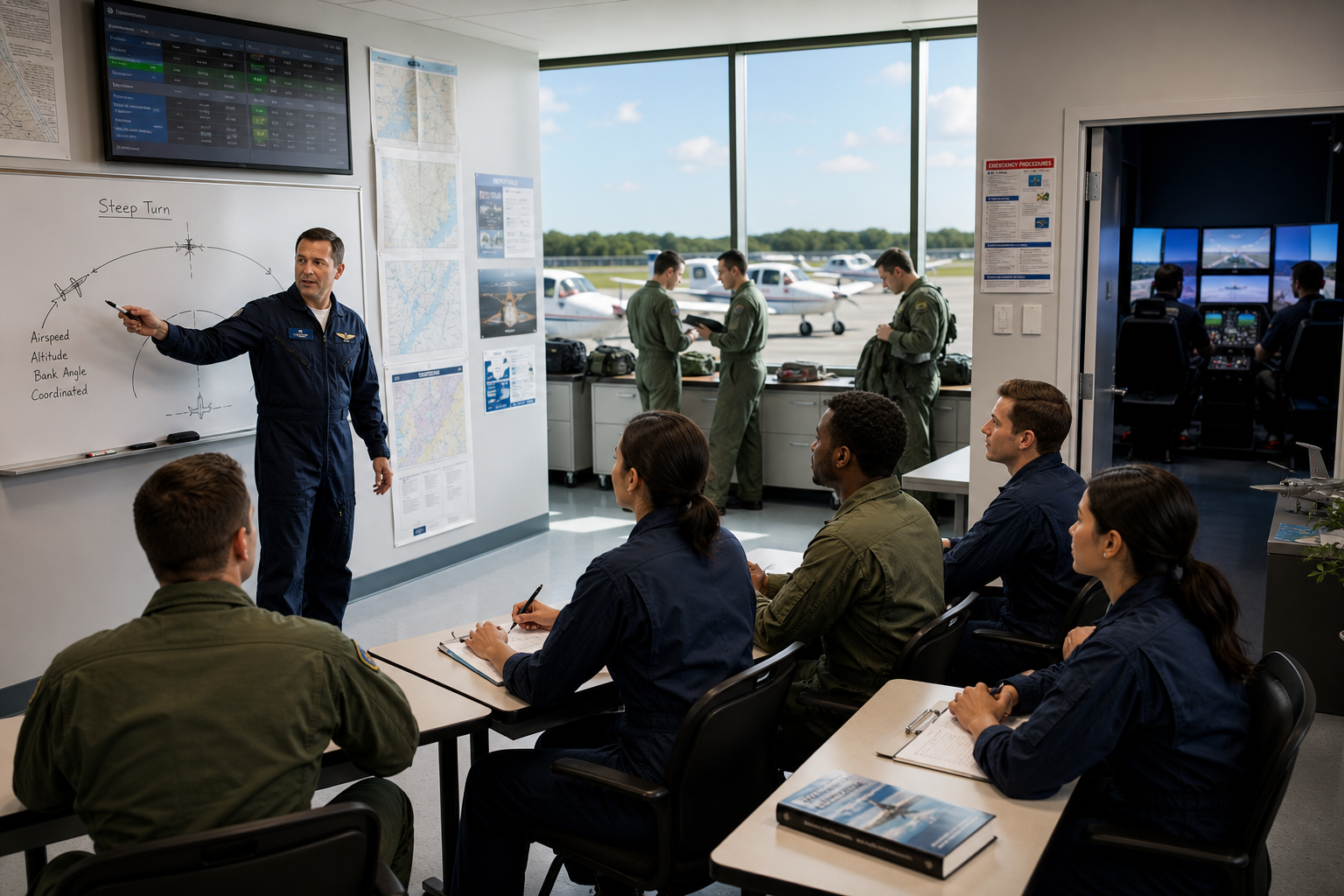
Pilot certification records spread across three different binders. A scheduling conflict that cancels a training flight 20 minutes before engine start. An instructor who discovers mid-lesson that a student hasn't completed the prerequisite ground module.
These aren't edge cases. They're the daily reality at flight schools operating without a centralized approach to pilot training management. And as regulatory environments grow more complex across EASA, FAA, CASA, and DGCA jurisdictions, the cost of fragmented operations compounds.
This guide covers every layer of managing a pilot training program, from certification tracking and scheduling to compliance documentation and stage-based student progression. You'll walk away with a structured framework for running your training operation with visibility, control, and confidence.
Key Takeaways: Pilot Training Management
- Pilot training management connects scheduling, certification tracking, compliance, and student progression into one structured operation.
- Certification tracking across regulators (EASA, FAA, CASA) demands structured record-keeping that survives audits without last-minute preparation.
- Stage-based progression tracking helps you identify at-risk students early and keep entire cohorts on schedule.
- FlightLogger centralizes training records, maintenance logs, and compliance documentation in a single platform built for flight schools.
- Scheduling, maintenance coordination, and instructor assignment require a shared, real-time data source to stay aligned and avoid conflicts.
What Is Pilot Training Management?
Pilot training management is the structured coordination of every operational element involved in producing qualified pilots. That includes scheduling, instructor assignment, aircraft allocation, student progression, grading, compliance documentation, and certification tracking.
For a Part 141 or EASA ATO, this isn't one function. It's a network of interdependent workflows. A missed maintenance check grounds an aircraft. A grounded aircraft cancels three student flights. Those cancellations push graduation dates. Pushed graduation dates affect revenue forecasts.
The operational chain is long, and every link matters. Effective pilot training management brings all of those links into a single view so nothing falls through the gaps.
Why Does Pilot Training Management Matter for Flight Schools?
Flight schools operate under conditions that most training organizations never face. Aircraft have finite availability windows tied to maintenance cycles. Instructors hold individual currency and qualification requirements. Weather disrupts schedules without notice. Regulators expect documentation that's accurate, current, and immediately retrievable.
Without a structured management approach, your team absorbs all of that complexity manually. Instructors spend time chasing paperwork instead of teaching. Administrators spend hours reconciling records before an audit. Schedulers work around conflicts they can't see coming.
The operational cost of an unstructured approach isn't abstract. Organizations consistently report 20+ hours of monthly admin time recovered after centralizing their training management workflows.
How to Track Pilot Certifications Across Regulators
Understanding the Regulatory Landscape
Pilot certification requirements vary significantly across regulatory bodies. EASA structures training around competency-based frameworks and specific type-rating pathways. The FAA distinguishes between Part 61 and Part 141 training environments, each with distinct record-keeping obligations. CASA, TCCA, and DGCA have their own documentation standards.
If your operation trains students across multiple jurisdictions, you need a record structure that satisfies all of them simultaneously. A student completing an integrated ATPL program under EASA and also logging hours recognized by DGCA requires documentation that maps to both frameworks.
Building a Certification Tracking System
Start by mapping every certification milestone your students need to reach, from PPL through CPL, IR, and type ratings. For each milestone, document the required flight hours, ground training modules, check rides, examinations, and medical certificate validity.
Then build a tracking structure around those milestones. Each student's record should show completed requirements, pending items, and upcoming deadlines at a glance. When an inspector asks for documentation during an audit, your team should be able to retrieve it in seconds, not hours.
FlightLogger supports audit-ready compliance across EASA, FAA, CASA, TCCA, DGCA, GCAA, and CAAP by capturing training data in real time and storing it in structured, instantly retrievable formats. That means compliance documentation becomes part of daily operations, not a pre-audit scramble.
How to Structure Training Stages and Student Progression
Defining Training Stages for Your Programs
Every pilot training program follows a sequence. Ground school leads to initial flight training. Solo flights follow dual instruction blocks. Stage checks precede cross-country and instrument phases. Type-rating modules cap off the progression.
Clearly defined stages give your team a framework for evaluating where each student stands. They also make it possible to spot delays before they cascade. A student who stalls at the pre-solo stage check affects not just their own timeline, but aircraft and instructor availability for everyone behind them.
Tracking Individual and Cohort-Level Progress
Individual tracking shows whether a specific student is on pace. Cohort-level tracking shows whether your program as a whole is performing as designed. Both perspectives are essential for an operation running multiple concurrent programs.
With student progression tracking built into your operational platform, you can see required hours versus actual hours, compare booked versus completed lessons, and flag students who haven't logged activity in a defined window. That visibility lets you intervene early, before a minor delay becomes a graduation postponement.
Using Competency-Based Training and Assessment
ICAO's competency-based training and assessment (CBTA) framework shifts the focus from hours logged to skills demonstrated. According to ICAO's CBTA guidelines, this approach evaluates pilot performance against defined competency indicators rather than simple pass-or-fail metrics.
For your operation, CBTA means grading becomes more granular. Instructors assess specific competencies (decision-making, communication, situational awareness) rather than just overall proficiency. That granularity produces training records that tell a more complete story about each student's readiness.
FlightLogger's CBTA PRO module supports competency-based evaluation aligned with EASA and ICAO standards, giving instructors structured grading tools that capture performance data at the competency level.
How to Manage Flight Training Scheduling
Coordinating Aircraft, Instructors, and Students
Scheduling in a flight school involves three resources that must align simultaneously: an available aircraft, a qualified instructor, and a prepared student. Miss any one of those three, and the lesson doesn't happen.
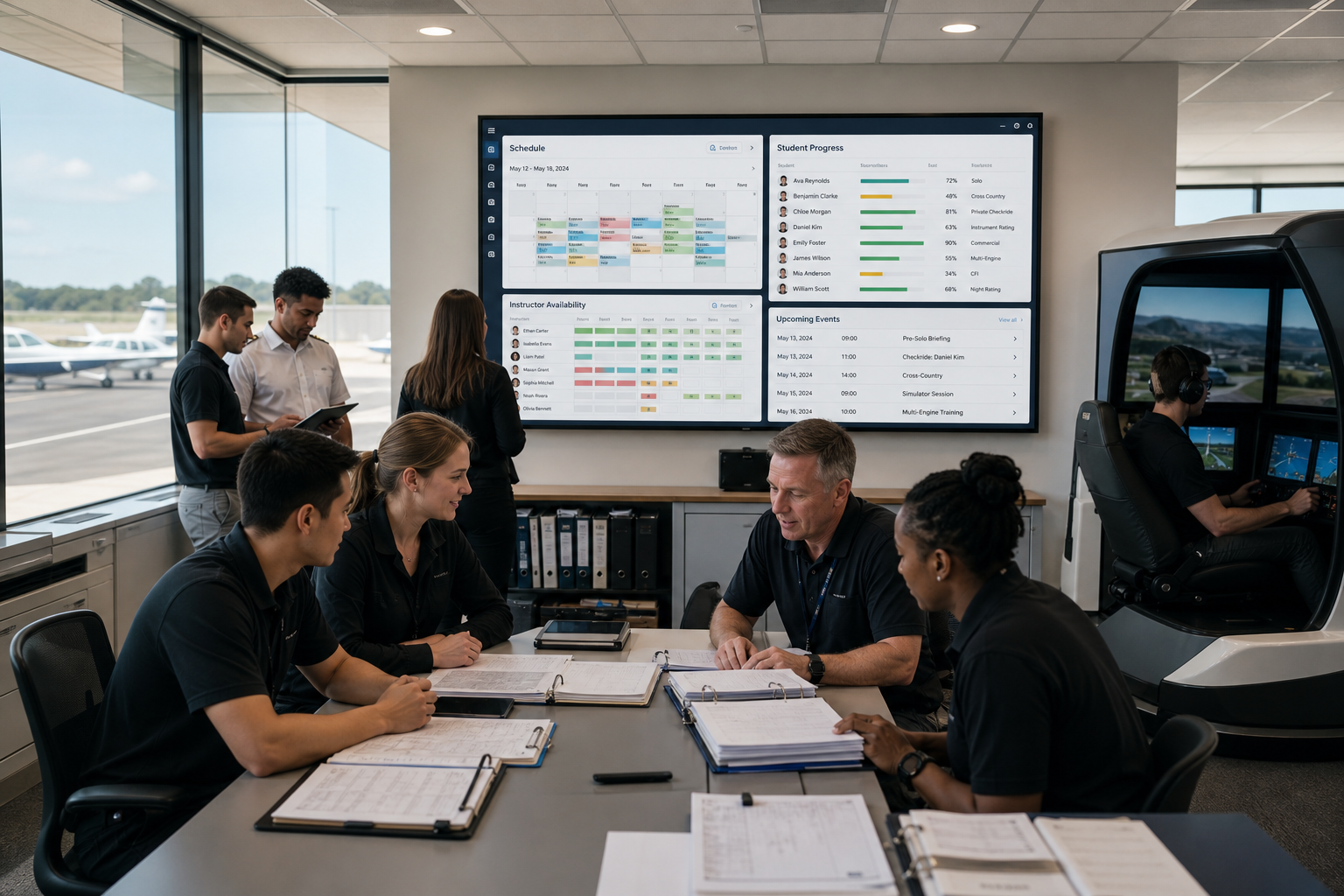
Effective scheduling starts with real-time visibility into all three. Your scheduling system should show instructor qualifications and availability, aircraft maintenance status and upcoming service windows, and student readiness based on their current training stage.
Handling Disruptions and Rescheduling
Weather cancellations, unscheduled maintenance, and instructor illness are inevitable. The question isn't whether disruptions happen. It's how quickly your operation recovers.
A structured scheduling system lets you identify affected lessons, reassign resources, and notify students and instructors immediately. If an aircraft goes down for maintenance at 6 AM, every lesson booked on that aircraft for the day should trigger an alert and a rescheduling workflow before instructors arrive.
Preventing Scheduling Conflicts in Multi-Program Operations
Schools running PPL, CPL, IR, and type-rating programs simultaneously face overlapping demand for the same aircraft and instructors. Conflict prevention requires centralized resource planning that accounts for each program's scheduling patterns, aircraft requirements, and instructor qualifications.
Without centralized visibility, double-bookings and resource shortages become recurring problems, especially during high-demand periods around holidays and exam cycles.
What Role Does Maintenance Coordination Play in Pilot Training?
Aligning Maintenance Schedules With Training Blocks
Aircraft availability drives your entire training schedule. When maintenance isn't coordinated with training operations, you discover at the last minute that the Cessna 172 booked for four student flights today is due for a 100-hour inspection.
Syncing maintenance with scheduling means your training calendar reflects aircraft readiness in real time. Maintenance windows get built into the schedule proactively, and training slots adjust automatically when service timelines shift.
Integrated Maintenance Tracking in Your Training Platform
When maintenance data lives in a separate system from training records, your schedulers work with incomplete information. They can't see which aircraft are approaching service intervals or which squawks are pending resolution.
An integrated approach keeps maintenance logs, service intervals, squawk reports, and airworthiness documentation in the same platform where scheduling and training management happen. FlightLogger's maintenance features connect aircraft status to your daily schedule, helping prevent unplanned groundings that disrupt student progression.
How to Build Compliance Documentation for Pilot Training
What Regulators Expect From Training Records
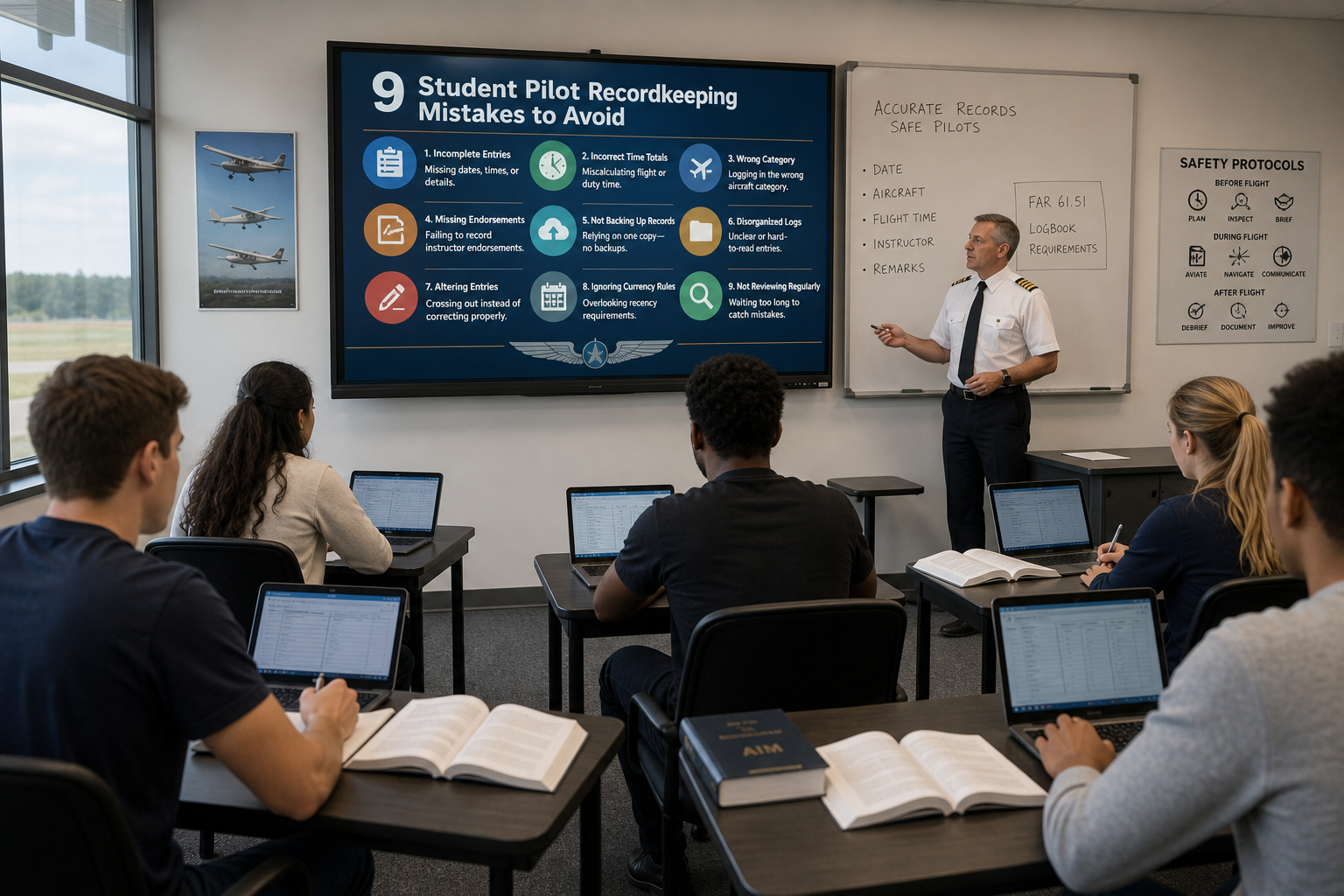
EASA, FAA, and other authorities expect training records that are complete, accurate, time-stamped, and retrievable on demand. That includes lesson records with instructor sign-offs, grade sheets, flight time logs, ground training completion records, stage check results, and medical certificate validity.
During an audit, the speed at which you can produce documentation matters. According to the FAA's pilot school guidelines, Part 141 schools must maintain records of each student's enrollment, training progress, and certification status. A delay in retrieval signals a gap in your record-keeping process.
Moving From Periodic Compliance to Daily Compliance
The traditional approach treats compliance as an event: audit coming, time to prepare. The operational approach treats compliance as a daily standard. When every lesson, grade, and sign-off is captured digitally at the point of activity, your records stay audit-ready by default.
This shift eliminates the admin surge before inspections. Your team spends zero hours reconstructing records because the records were built correctly from the start. Flight schools using this approach have reported faster inspector interactions and documented zero audit findings.
How to Manage Ground Training Alongside Flight Programs
Integrating Ground and Flight Training Records
One of the most common operational gaps in pilot training management is the separation between ground and flight training. Students complete theory modules in one system (or on paper) and flight lessons in another. The result is two incomplete views of each student's progress.
Bringing ground training into your core training management platform means both streams of data feed into a single student record. Instructors can confirm ground module completion before signing off on the corresponding flight lesson. Program managers can verify that ground and flight phases stay synchronized.
Planning and Delivering Theory Modules
Ground training includes air law, meteorology, navigation, communications, human performance, and flight planning, among others. Each module has defined learning objectives and assessment criteria.
Delivering ground training digitally lets you track attendance, quiz scores, and module completion rates at the individual and cohort level. It also creates a documented record that satisfies regulatory requirements for ground instruction hours.
How to Scale Pilot Training Across Multiple Locations
Challenges of Multi-Campus Flight Training Operations
Running training across two or more locations multiplies the coordination challenge. Each campus may operate under a different regulatory environment, use different fleet types, and staff different instructor pools. Reporting needs to roll up into a single operational picture for management.
Without centralized data, campus-level reporting becomes disconnected. Instructors at one location can't see student records from another. Aircraft utilization data stays siloed. Compliance documentation fragments across sites.
Centralizing Data for Multi-Location Visibility
A centralized data hub connects all locations through a shared platform. Instructors, administrators, and management access the same real-time information regardless of which campus they're at.
FlightLogger supports multi-campus operations with a centralized data hub that standardizes workflows, grading structures, and compliance documentation across locations. That standardization means a student transferring between campuses carries their complete training record with them.
What Does an Effective Pilot Training Management Workflow Look Like?
Step 1: Centralize All Training Data
Consolidate student records, instructor profiles, aircraft logs, maintenance records, and compliance documentation into a single platform. Every team member should work from the same data source.
Step 2: Structure Your Training Programs
Define the stages, milestones, and assessment criteria for each program you run. Map certification requirements to specific training activities so progress tracking aligns with regulatory expectations.
Step 3: Build Scheduling Around Real-Time Availability
Configure your scheduling to reflect live instructor availability, aircraft maintenance status, and student readiness. Build in conflict detection and automated alerts for resource overlaps.
Step 4: Integrate Maintenance and Safety Operations
Connect maintenance scheduling to your training calendar. Ensure squawk reporting, service intervals, and safety management data flow into the same operational view.
Step 5: Implement Reporting and Visibility Tools
Set up dashboards that give management real-time insight into utilization rates, student progression, cancellation trends, and compliance status. Business insights turn operational data into actionable decisions.
Step 6: Standardize Grading and Documentation
Enforce consistent grading criteria across all instructors and programs. Digital sign-offs and structured grade sheets eliminate variability and create reliable records that hold up during inspections.
How to Choose a Pilot Training Management Platform
What to Evaluate in a Training Management System
Look beyond feature checklists. The right platform should reflect how your operation actually runs. Evaluate whether the system supports your specific regulatory environment (EASA, FAA, CASA, or others), your fleet types, your training programs, and your organizational structure.
Ask how scheduling, maintenance, compliance, and student tracking connect. In many systems, these functions live in separate modules that don't share data. The operational impact of disconnected modules is wasted time, inconsistent records, and avoidable errors.
Why Aviation-Specific Platforms Differ From Generic Tools
Generic project management or scheduling tools can be configured for flight training, but configuration takes time and rarely captures the full complexity. Aviation-specific platforms are built around flight training workflows from the start, with prebuilt structures for syllabi, regulatory compliance, aircraft maintenance, and student progression.
That built-for difference matters at implementation and in daily use. Instead of building workflows from scratch, your team starts with a system that already reflects how a flight school operates.
In Conclusion: How to Manage Pilot Training Programs Effectively
Pilot training management touches every part of your operation. Scheduling, certification tracking, compliance documentation, student progression, maintenance coordination, and ground training all need to work together, not in parallel.
The question for any flight school evaluating its current approach isn't whether improvement is needed. It's whether your current systems give you the visibility, structure, and control to act on what you already know needs attention.
FlightLogger connects training, operations, maintenance, compliance, and reporting into one platform built specifically for flight schools. Your operation doesn't stop. Neither does FlightLogger.
Want a walkthrough? See FlightLogger in action and discover how your operation could run with complete visibility.
FAQs About Pilot Training Management
What is pilot training management?
Pilot training management is the coordination of scheduling, student progression, certification tracking, compliance, and maintenance to run a structured flight training operation. It connects every workflow involved in producing qualified pilots.
How does FlightLogger help with pilot certification tracking?
FlightLogger captures training data in real time and stores certification records in structured, audit-ready formats. This means your team can retrieve documentation for EASA, FAA, or CASA inspections instantly.
What is CBTA in pilot training?
CBTA (competency-based training and assessment) evaluates pilot performance against defined competency indicators rather than hours alone. FlightLogger's CBTA PRO module supports competency-level grading aligned with ICAO and EASA standards.
How do flight schools manage compliance across multiple regulators?
Flight schools operating under multiple regulatory bodies need documentation structures that satisfy all applicable standards simultaneously. FlightLogger supports compliance for EASA, FAA, CASA, TCCA, DGCA, GCAA, and CAAP from a single platform.
Can pilot training management software handle multi-campus operations?
Yes. Platforms like FlightLogger centralize data across multiple locations, standardizing workflows, grading, and compliance documentation. Students transferring between campuses retain their complete training record.
Why is maintenance coordination important in flight training?
Aircraft availability directly controls your training schedule. Without integrated maintenance tracking, unplanned groundings disrupt student flights and delay progression. Coordinating maintenance and scheduling from one system prevents these disruptions.