·
5 minute read
How can a flight school stop relying on people to remember the rules? According to Michael Rasmussen, Product Manager at FlightLogger, three features do the checking automatically: combined syllabus puts ground and flight training in one program, prerequisites block bookings until required lessons and hours are complete, and aircraft model requirements make sure only certified instructors are booked on each aircraft type. In the first episode of The Climb Briefing, he walks through them with FlightLogger CEO Kasper Valgren.
Key takeaways
- Combined syllabus: ground, simulator and flight training in one program, with progress visible in one place from zero to license.
- Prerequisites: rules such as "ground session before flight" or "minimum hours before solo" are checked automatically at booking, with an override manager for justified exceptions.
- Aircraft model requirements: only instructors certified on an aircraft model can be booked or registered on it, a rule under both EASA and FAA regulation.
- Start here: if you switch on one thing this week, make it aircraft model requirements.
About the guest
Michael Rasmussen is Product Manager at FlightLogger and owns the product roadmap. Before moving into product, he spent years on FlightLogger's client success team onboarding flight schools of every size.
Every flight school runs on rules. A student needs certain ground lessons before a specific flight. An instructor can only fly the aircraft they are certified on. Some sessions have to happen in a fixed order. Until now, many of those rules lived in someone's head, on a spreadsheet or in a report pulled before every booking.
In this episode of The Climb, Kasper Valgren asks Michael Rasmussen what flight schools should remember from these releases. His answer: that they don't have to remember as much anymore. The rules are set once, and the system checks them every time. That leaves people more room for the judgment calls that actually need a human.
Why is student progress hard to see across separate programs?
Most students train across several tracks at once: ground school, simulator sessions and flight training. Before combined syllabus, schools usually tracked these as separate programs, sometimes with overlap between them.
That made progress hard to see. A student might be 20% through one program and 10% through another, and someone had to work out how those numbers fit together. Instructors also had to check separately whether the right ground lessons were completed before moving on in the aircraft.
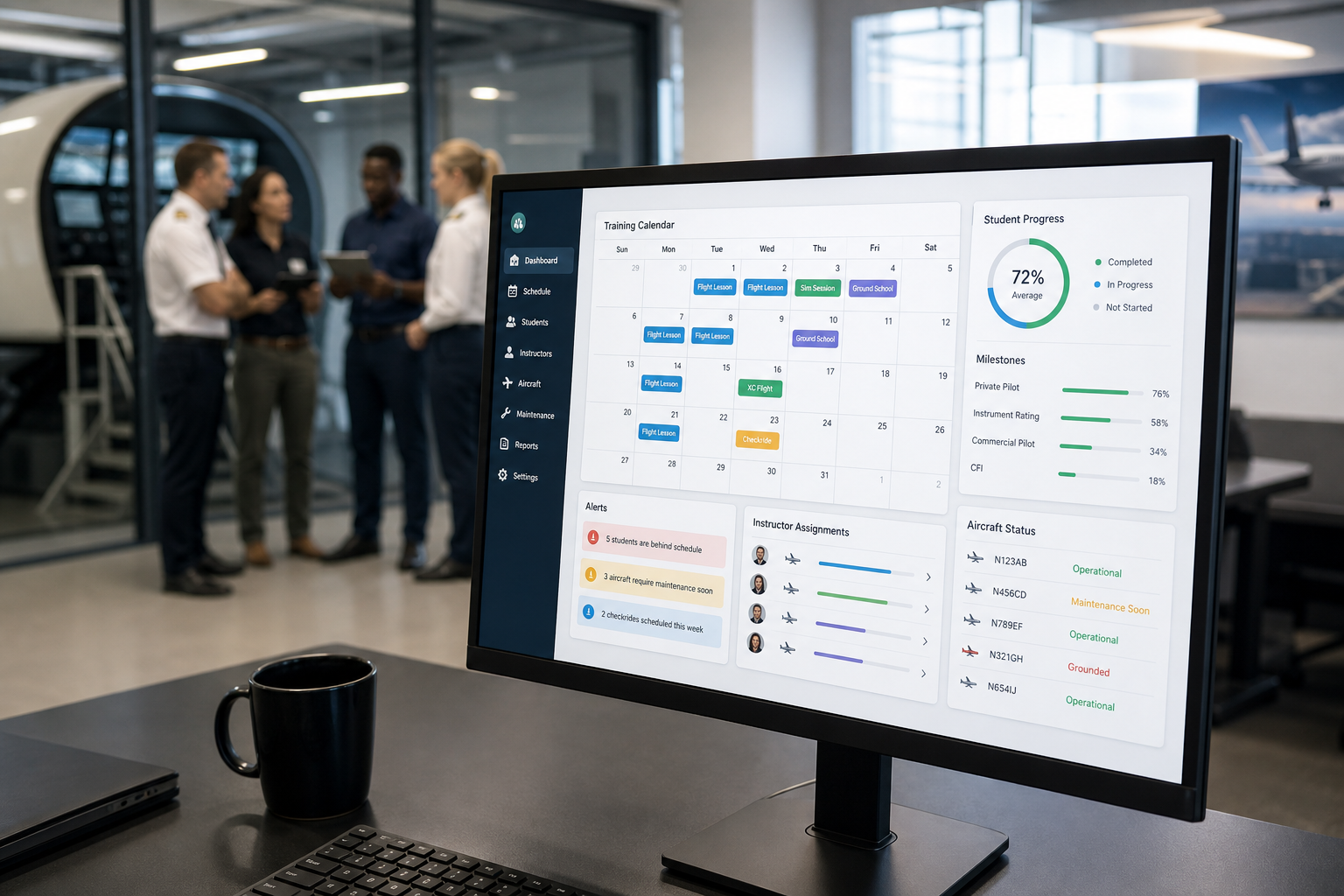
With combined syllabus, ground and flight training live in one program. Administrators, instructors and students see progress in a single place, from zero to license, or for any other program a school runs, such as recurrent training.
How hard is it to move existing programs into a combined syllabus?
According to Michael, not hard at all. Schools import their existing program content, rename it as one program and drag and drop the pieces into place. As long as the building blocks are there, it's quick to set up.
Why do prerequisites matter so much in flight training?
Prerequisites are the rules that have to be met before something can be booked. A ground session has to be finished before a flight lesson, or a student needs a set number of hours before going solo.
Without them, someone has to pull a report on the student before each booking and check which topics and hours are complete. Across several programs, and several times a week, that adds up quickly. Often the administration and the scheduler end up checking the same thing twice.
Michael's reasoning is simple. People are good at reviewing a lot of information, but the more they review, the more likely they are to miss something. Let the system handle the standard rules, and let people handle the harder judgment calls.
What happens when a rule needs an exception?
Every rule has exceptions, which is why prerequisites come with an override manager. Say a student has flown 10.5 hours and the requirement is 11, but the instructor judges them ready to go solo. Or some training is completed but not yet registered. The instructor can request an override with a short explanation, which can then be approved or declined.
Who feels the difference first?
That depends on how the school is organized. FlightLogger works with flight schools in more than 50 countries, and each one is set up a little differently. In most schools, the administration and schedulers save the most time, because they no longer have to verify every requirement by hand. Instructors who book their own students benefit too, and students can see how ready they are for the next step.
How do aircraft model requirements prevent scheduling mistakes?
Under both EASA and FAA regulation, instructors may only fly the aircraft models they are certified for. Aircraft model requirements make that rule part of scheduling, so only qualified instructors can be booked on a given aircraft model.
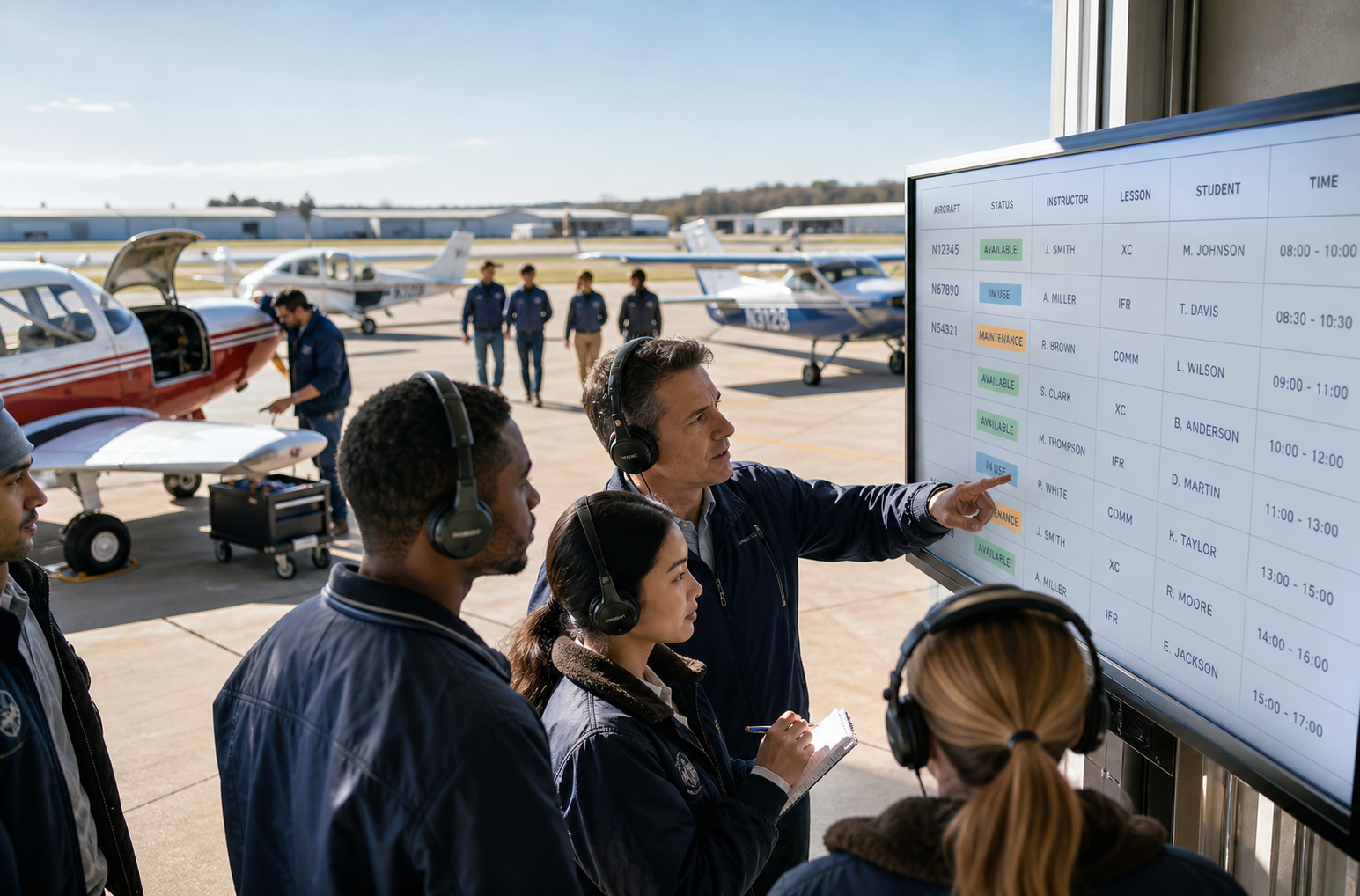
Michael gives a concrete example. A new scheduler who doesn't yet know the operation by heart is booking a multi-engine lesson. Without aircraft model requirements, nothing stops them from picking an instructor who isn't certified on multi-engine aircraft. With the feature switched on, that booking isn't possible, and neither is registering a flight on it.
This works hand in hand with prerequisites, and FlightLogger is now releasing aircraft model prerequisites as the other side of the same coin. Schools decide which aircraft models can be used for a specific program or session. The right aircraft for the session, and the right instructor for the aircraft.
What are flight schools saying so far?
The response since launch has been strong. Schools that have set up prerequisites have really embraced them, and some smaller schools already have more than 500 prerequisites in place, from session-to-session rules to instructor certificates that control who can teach which lessons. Setting it up takes some time, depending on how many programs a school runs. Once it's in place, it runs automatically on every booking.
Are these features only relevant in North America?
These features matter most where regulation is strictest. The FAA, for example, places heavy weight on sessions being completed in chronological order, and schools in the US and especially Canada have been quick to adopt them. But European schools run the same kinds of checks every day, from minimum hour requirements to sessions that must come before others, and the aircraft model rule applies under both EASA and FAA regulation.
The rules differ by authority, but the need to enforce them consistently is the same everywhere.
Where should a flight school start?
If you only switch on one thing this week, Michael recommends aircraft model requirements, especially for schools operating several aircraft types. It removes the risk of scheduling the wrong instructor on the wrong aircraft. Need help setting it up? Talk to your account manager or reach out to us through flightlogger.net.
What's next for The Climb Briefing?
In the next episode, Kasper and Michael look ahead at where scheduling is heading, and how these releases lay the groundwork for smarter scheduling in FlightLogger.
FAQs About Combined Syllabi, Prerequisites and Aircraft Model Requirements
What is a combined syllabus in flight training?
A combined syllabus puts ground school, simulator and flight training in one program instead of separate ones, so administrators, instructors and students see a student's full progress in one place. In FlightLogger, existing programs can be imported and combined by drag and drop.
What are prerequisites in flight school scheduling?
Prerequisites are rules that must be met before a lesson can be booked, such as completing a ground session before a flight or reaching minimum hours before solo. FlightLogger checks them automatically at booking, and instructors can request a justified override.
How do flight schools make sure instructors are certified on the aircraft they fly?
With aircraft model requirements in FlightLogger, only instructors certified on an aircraft model can be booked or registered on it, which supports the instructor rules under both EASA and FAA regulation.
Who is Michael Rasmussen?
Michael Rasmussen is Product Manager at FlightLogger and owns its product roadmap. He previously onboarded flight schools of every size on FlightLogger's client success team.
Watch The Climb Briefing: Combined Syllabi, Prerequisites and Aircraft Model Requirements
Watch or listen to the full conversation with Michael Rasmussen, Product Manager at FlightLogger, on The Climb.
The Climb — conversations from the world's most ambitious flight schools.