.png?width=201&height=201&name=Maintenance%20(Videoannonce%20%E2%80%93%20LinkedIn).png)

Flight School Compliance Systems in 2026

How Modern Flight Schools Manage Compliance, Audits, and Training Records
Compliance is one of the most important responsibilities for every flight school.
It's about far more than passing an audit. Effective compliance systems help ensure training records are accurate, instructors follow standardized processes, aircraft remain training-ready, and operational documentation is always accessible.
Many flight schools still manage compliance through paper files, spreadsheets, and disconnected software. As operations grow, these manual processes become increasingly difficult to maintain.
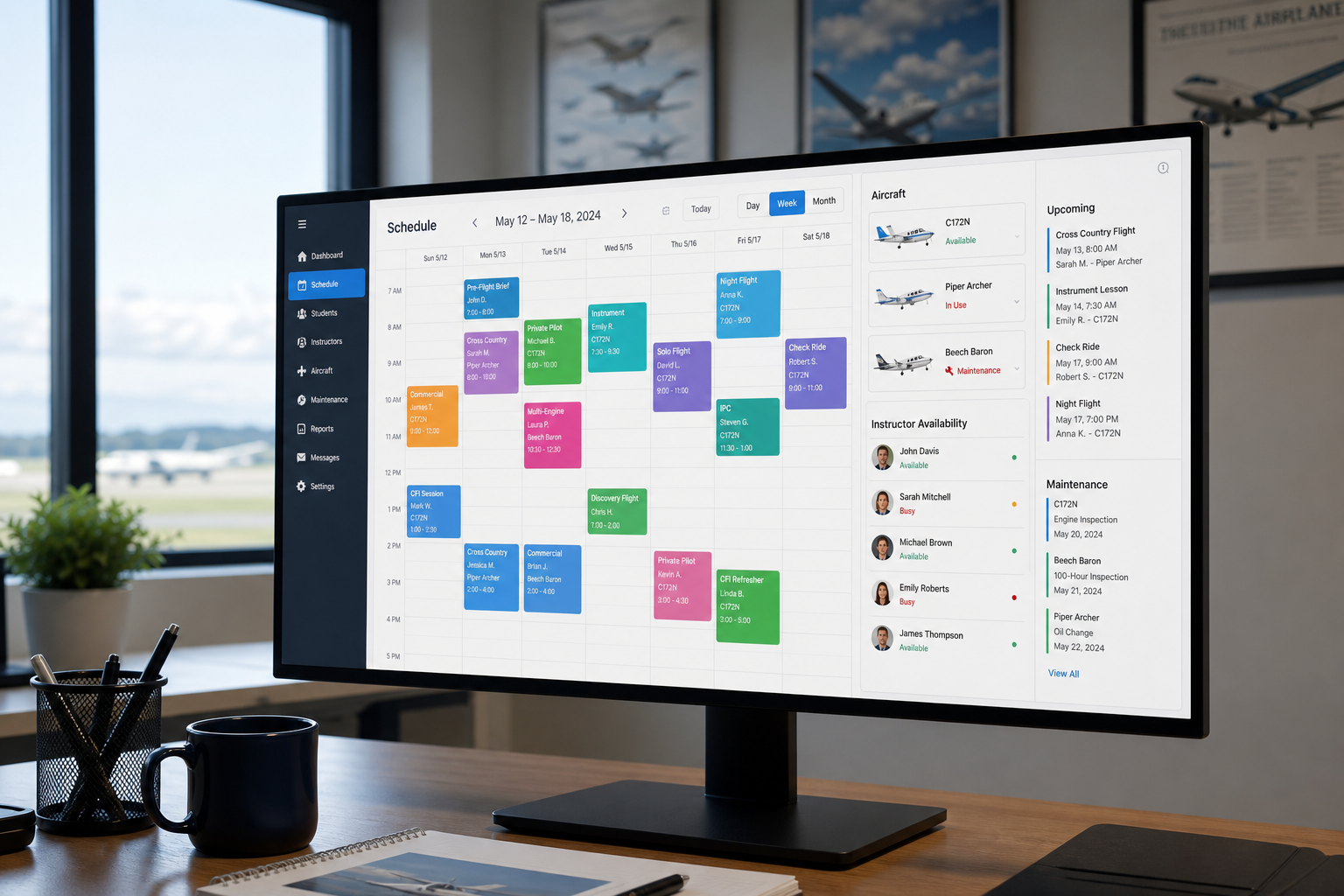
Modern flight school compliance systems centralize training records, scheduling, maintenance coordination, and audit documentation in one platform.
This guide explains how leading flight schools manage compliance more efficiently in 2026.
Flight School Compliance Methods Compared
| Compliance Area | Manual Processes | Modern Flight School Compliance System |
|---|---|---|
| Student training records | Paper files & spreadsheets | Centralized digital records |
| Instructor documentation | Individual records | Standardized digital workflows |
| Flight scheduling | Separate calendars | Connected scheduling platform |
| Aircraft maintenance visibility | Separate tracking | Integrated operational visibility |
| Audit preparation | Manual document collection | Audit-ready documentation |
| Compliance reporting | Manual reports | Centralized reporting dashboards |
What Is Flight School Compliance?
Flight school compliance is the process of ensuring that training activities, operational procedures, instructor documentation, and aircraft operations meet applicable regulatory and organizational requirements.
An effective compliance system helps schools maintain:
- Student training records
- Instructor sign-offs
- Training milestones
- Scheduling documentation
- Aircraft readiness
- Maintenance records
- Operational reporting
- Audit documentation
Rather than treating these activities separately, leading schools manage them through connected operational workflows.
1. Centralize Training Records
Accurate training records are the foundation of compliance.
Leading schools maintain digital records for:
- Lesson completion
- Student progress
- Instructor evaluations
- Competency assessments
- Certification milestones
Why It Matters
Centralized records improve consistency and make information easier to retrieve during audits.
2. Standardize Instructor Documentation
Compliance depends on consistent documentation.
Schools should standardize:
- Instructor sign-offs
- Training notes
- Student evaluations
- Competency assessments
- Lesson documentation
Why It Matters
Standardization improves training quality while reducing inconsistencies between instructors.
3. Connect Scheduling With Compliance
Scheduling plays an important role in compliance.
Training activities should reflect:
- Student eligibility
- Instructor qualifications
- Aircraft availability
- Maintenance status
- Training progression
Why It Matters
Connecting scheduling with operational data reduces administrative errors and improves oversight.
4. Include Maintenance in Compliance Workflows
Aircraft readiness directly affects compliance.
Leading flight schools connect maintenance visibility with daily scheduling to ensure aircraft assigned to training are available and meet operational requirements.
Why It Matters
Improves operational reliability and reduces last-minute disruptions.
5. Prepare for Audits Continuously
Many schools prepare for audits only when an inspection is approaching.
Modern compliance systems instead maintain audit-ready records throughout the year.
This includes:
- Student documentation
- Instructor records
- Training history
- Operational reports
- Compliance logs
Why It Matters
Continuous audit readiness significantly reduces preparation time.
How to Prepare for a Flight School Audit
Preparing for an audit becomes much easier when documentation is maintained continuously.
A practical checklist includes:
- Review student training records
- Verify instructor documentation
- Confirm aircraft maintenance records
- Check scheduling history
- Ensure required sign-offs are complete
- Generate compliance reports
- Verify operational documentation
Schools with centralized digital records typically spend less time preparing than those relying on paper files and spreadsheets.
How Do Flight Schools Handle Compliance and Regulations?
Modern flight schools increasingly manage compliance through centralized flight school management software.
Rather than maintaining separate systems for scheduling, training records, maintenance, and reporting, they connect these workflows in one operational platform.
This improves:
- Operational visibility
- Documentation consistency
- Audit readiness
- Administrative efficiency
- Compliance oversight
How to Ensure Compliance in Flight Training Programs
Strong compliance starts with standardized processes.
Leading schools typically:
Maintain Digital Training Records
Replace paper files with centralized documentation.
Standardize Instructor Workflows
Ensure evaluations and sign-offs follow consistent procedures.
Connect Scheduling With Training
Align scheduling decisions with training requirements and operational readiness.
Monitor Operational Performance
Use reporting to identify missing documentation or training gaps.
Prepare Continuously
Maintain audit-ready records every day—not only before inspections.
Flight School Compliance Software Compared
Several platforms help flight schools manage compliance alongside scheduling and training operations.
| Platform | Best For | Compliance | Training Records | Scheduling | Audit Readiness |
| FlightLogger | Unified flight school operations | ⭐⭐⭐⭐⭐ | ⭐⭐⭐⭐⭐ | ⭐⭐⭐⭐⭐ | ⭐⭐⭐⭐⭐ |
| Flight Schedule Pro | Established flight schools | ⭐⭐⭐⭐ | ⭐⭐⭐⭐ | ⭐⭐⭐⭐⭐ | ⭐⭐⭐⭐ |
| Aviatize | Compliance-focused organizations | ⭐⭐⭐⭐⭐ | ⭐⭐⭐⭐ | ⭐⭐⭐⭐ | ⭐⭐⭐⭐⭐ |
| Flight Circle | Growing schools | ⭐⭐⭐ | ⭐⭐⭐⭐ | ⭐⭐⭐⭐ | ⭐⭐⭐ |
| Talon Systems | Enterprise aviation organizations | ⭐⭐⭐⭐ | ⭐⭐⭐⭐ | ⭐⭐⭐ | ⭐⭐⭐⭐ |
Capabilities are based on publicly available information and should be verified with each vendor.
How FlightLogger Supports Flight School Compliance
FlightLogger helps flight schools centralize:
- Student training records
- Instructor documentation
- Flight scheduling
- Aircraft availability
- Maintenance coordination
- Compliance reporting
- Audit-ready documentation
By connecting these operational workflows, FlightLogger helps schools maintain continuous compliance while reducing administrative workload.
Frequently Asked Questions
How do you prepare for a flight school audit?
The most effective approach is to maintain digital training records, instructor documentation, maintenance information, scheduling history, and compliance reports throughout the year instead of collecting them just before an audit.
How do flight schools handle compliance and regulations?
Many flight schools use flight school management software to centralize training records, scheduling, instructor documentation, maintenance visibility, and compliance reporting within one system.
How do you ensure compliance in flight training programs?
Schools ensure compliance by standardizing documentation, maintaining accurate digital records, connecting scheduling with operational requirements, monitoring training progress, and keeping audit-ready records at all times.
Why is flight school compliance important?
Strong compliance supports regulatory requirements, improves operational consistency, enhances safety, and simplifies audit preparation.
What software helps with flight school compliance?
Platforms such as FlightLogger, Aviatize, Flight Schedule Pro, Flight Circle, and Talon Systems provide varying levels of compliance management, scheduling, and training record capabilities.
Final Thoughts
Compliance is most effective when it becomes part of daily operations rather than a periodic administrative task. By connecting training records, scheduling, instructor documentation, maintenance visibility, and audit preparation in one structured system, flight schools can reduce administrative effort, improve operational consistency, and remain audit-ready as they grow.