.png?width=201&height=201&name=Maintenance%20(Videoannonce%20%E2%80%93%20LinkedIn).png)

Flight School Waitlists and Standby Scheduling: How to Fill Cancelled Slots and Cut No-Shows
 Amalie Rasmussen
·
4 minute read
Amalie Rasmussen
·
4 minute read

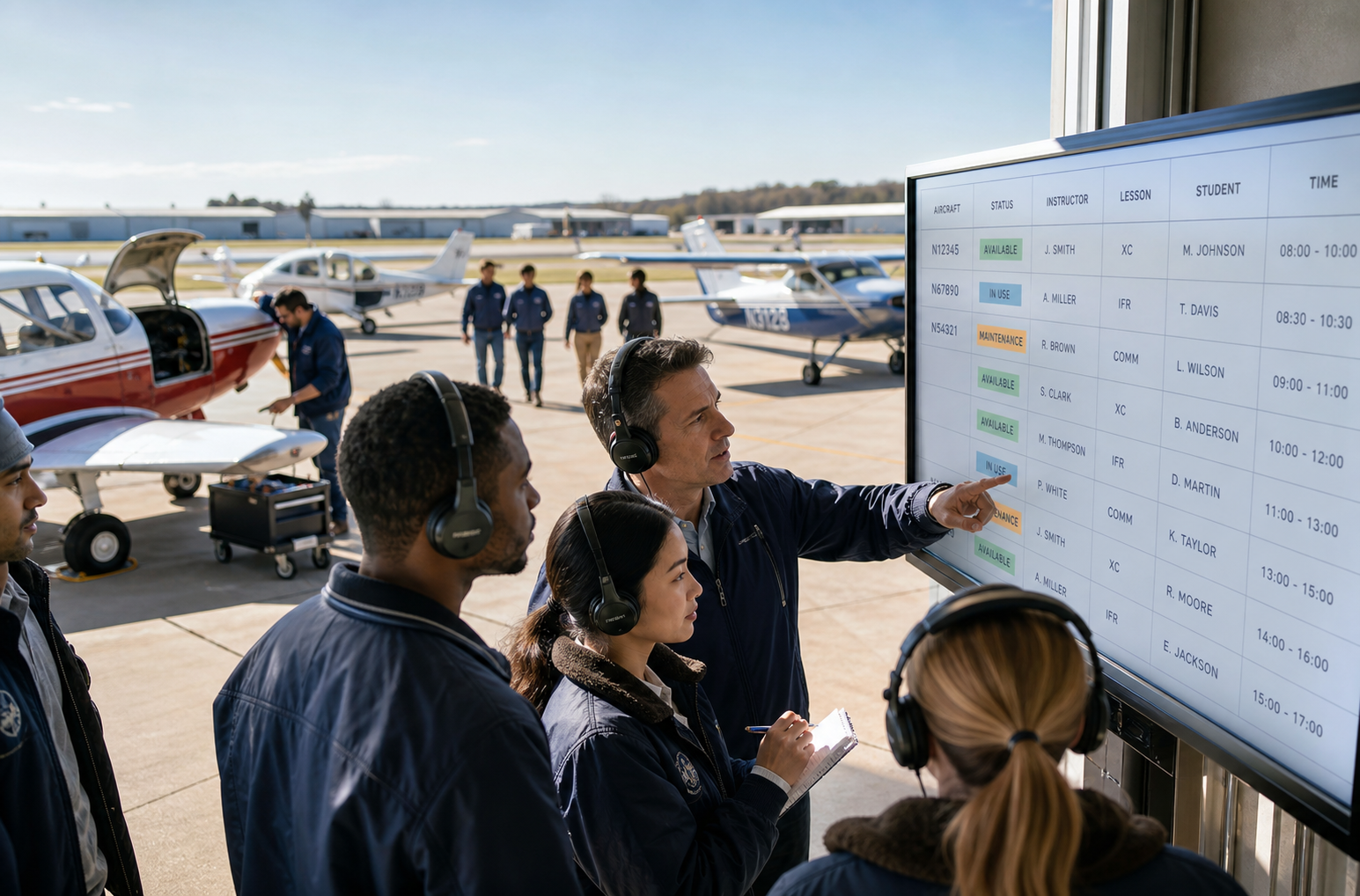
An empty slot in a flight school schedule is expensive twice over. The aircraft and instructor sit idle, and a student somewhere is waiting for exactly that lesson. Cancellations from weather, maintenance, sickness, and no-shows are unavoidable. Losing the slot is not.
This guide explains how flight schools use standby lists and waitlists to refill cancelled slots fast, how to set cancellation and no-show policies that students accept, and which numbers tell you whether it's working.
Key Takeaways: Flight School Waitlists and Standby Scheduling
- A standby list is a ready pool of students who can take a cancelled slot at short notice.
- Standby only works if every student on it is actually ready for the lesson: the right stage, the right aircraft type, and a matching instructor.
- Clear priority rules, such as students behind their training timeline first, keep the process fair.
- Clear cancellation rules and automated reminders reduce no-shows before they happen.
- Track fill rate, no-show rate, and cancellations by cause to see whether your process is improving.
What Is Standby Scheduling at a Flight School?
Standby scheduling means keeping a list of students who have told the school they can fly at short notice. When a booking is cancelled, the school offers the slot to someone on that list instead of leaving it empty. A waitlist is the related idea for fully booked periods: students queue for a specific day, aircraft, or instructor and move up when a booking opens.
Why Flight School Slots Go Empty
- Weather. A front moves in and a whole morning of VFR lessons disappears.
- Maintenance. An aircraft is grounded after a squawk or reaches an inspection limit earlier than planned. See how to plan around aircraft downtime.
- Instructor availability. Sickness, duty-time limits, or a checkride that runs long.
- Student cancellations and no-shows. Late cancellations and simply not turning up.
Some of these you can prevent. The rest you can only recover from, and that is where standby comes in.
How to Build a Standby List That Actually Fills Slots
Only add students who are ready
A standby student is only useful if they can fly the lesson that opened up. Before a student goes on the list, confirm their training stage, prerequisites, and currency, including medical and any required ground training. Offering a slot to someone who then can't legally or practically fly it wastes the few minutes you have.
Match on aircraft, instructor, and lesson
A cancelled multi-engine slot can't go to a student who needs a single-engine circuit lesson. Record each standby student's aircraft type, preferred instructors, and next lesson so a dispatcher can match them in seconds.
Set clear availability windows
Ask students when they can realistically arrive: within an hour, same morning, or next day. A student who lives 90 minutes away can't take a slot that starts in 45.
Agree on priority rules in advance
Decide who gets offered a slot first and write it down. Common priorities include students behind their planned training timeline, students preparing for a checkride, and students whose own bookings were recently cancelled by the school. Published rules prevent complaints about favoritism.
How to Refill a Cancelled Slot in Minutes
- Confirm the resources. Check that the aircraft and an instructor are still available for the slot.
- Filter the standby list. Keep only students who match the aircraft, lesson stage, and arrival window.
- Offer by priority. Contact students in priority order, with a short response deadline, for example 15 minutes.
- Book and notify. Once accepted, update the schedule and notify the instructor immediately.
- Log the outcome. Record whether the slot was filled, so you can measure your fill rate.
Handling Weather Days
Weather cancellations usually hit many slots at once, so one-by-one refilling isn't enough. Plan alternatives ahead of time: simulator sessions, ground school briefings, or IFR lessons for students at that stage. Keep a weather-day plan that turns cancelled flights into productive training instead of lost days.
How to Reduce No-Shows and Late Cancellations
- Publish a cancellation policy. Many schools set a notice period, often 24 hours, and some charge a fee for late cancellations or no-shows. Whatever you choose, make it clear at enrollment and apply it consistently.
- Send automated reminders. A reminder the day before and a confirmation on the morning of the lesson catch forgotten bookings.
- Make cancelling easy. If cancelling is a hassle, students simply don't show up. An easy way to cancel gives you the notice you need to refill the slot.
- Watch for patterns. Repeated no-shows are often an early sign that a student is losing motivation or struggling financially. Treat it as a conversation, not just a fee.
Metrics That Show Whether It's Working
- Fill rate: the share of cancelled slots that were refilled.
- No-show rate: no-shows as a share of all booked lessons.
- Cancellations by cause: weather, maintenance, instructor, or student.
- Time to refill: how long it takes from cancellation to a confirmed replacement.
For more scheduling KPIs, see 11 Flight School Scheduling Metrics to Track.
How FlightLogger Helps Keep the Schedule Full
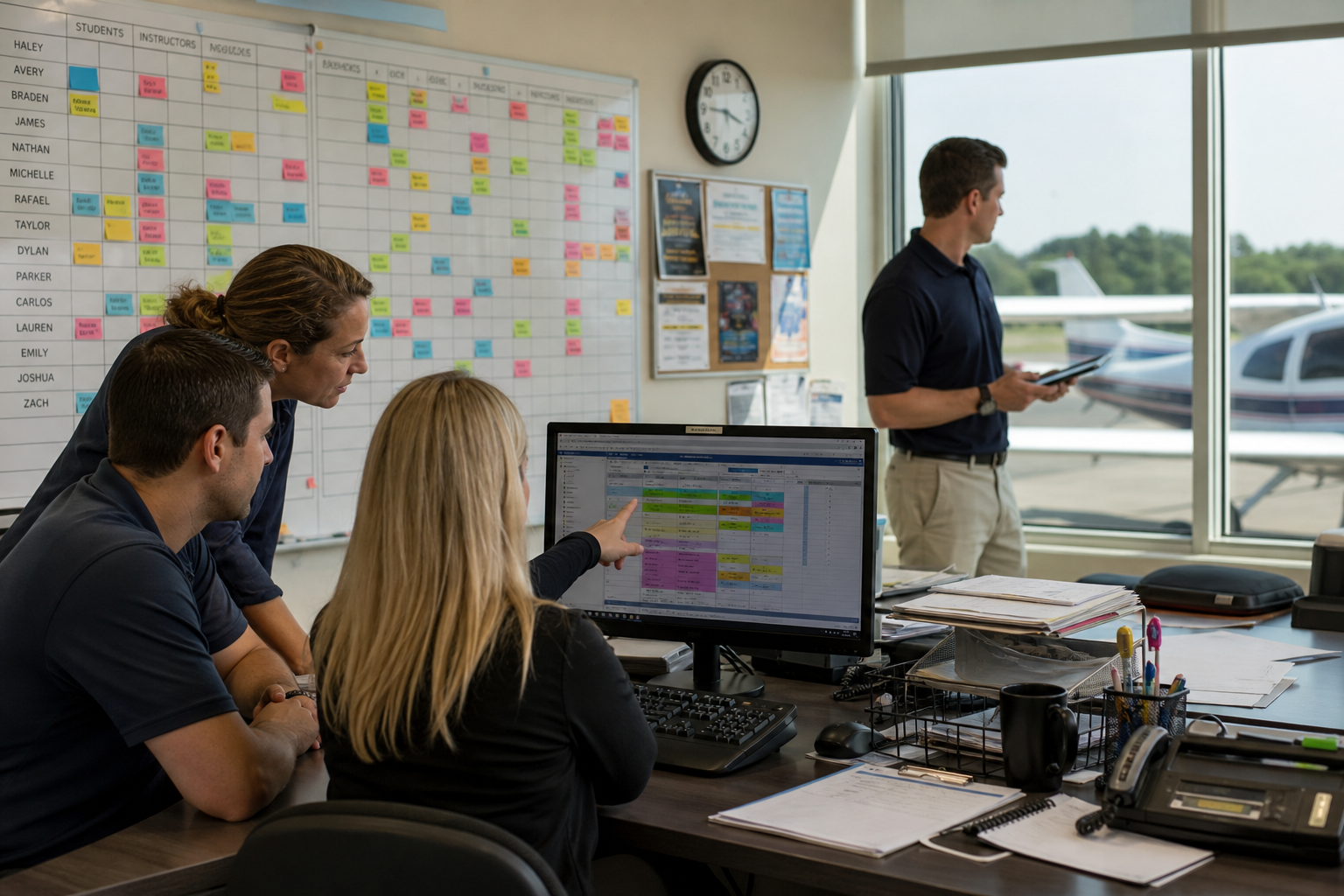
Standby only works when you can see everything at once: which aircraft are airworthy, which instructors are available, and which students are ready for which lesson. FlightLogger, the Flight School Operating System, connects scheduling, student progression, maintenance, and training records in one platform, and sends automated notifications that help reduce no-shows. Book a demo to see it in action.
In Conclusion: Treat Every Empty Slot as Recoverable
You can't stop the weather or every late cancellation. You can have a ready, well-matched standby list, clear rules, and a fast refill routine. Schools that do this recover training hours other schools write off.
FAQs About Flight School Waitlists and Standby Scheduling
What is a standby list at a flight school?
A standby list is a group of students who can fly at short notice. When a booking is cancelled, the school offers the free aircraft and instructor slot to a suitable student on the list instead of leaving it empty.
Who should be on a flight school standby list?
Only students who are ready for the lesson that might open up: at the right training stage, current on medical and prerequisites, trained on the aircraft type, and able to arrive within the time available.
How do flight schools decide who gets a cancelled slot?
With written priority rules agreed in advance. Common priorities are students behind their training timeline, students preparing for a checkride, and students whose own bookings were recently cancelled by the school.
How can a flight school reduce no-shows?
Publish a clear cancellation policy, send automated reminders before each lesson, make cancelling easy, and follow up with students who repeatedly miss lessons.
What should a flight school do on weather days?
Have a weather-day plan ready: move affected students to simulator sessions, ground school, or IFR lessons where appropriate, so cancelled flights become productive training time.
Which metrics show if standby scheduling is working?
Track fill rate for cancelled slots, no-show rate, cancellations by cause, and the time it takes to refill a slot. Improving fill rate and falling no-show rate mean the process is working.