.png?width=201&height=201&name=Maintenance%20(Videoannonce%20%E2%80%93%20LinkedIn).png)

10 Scheduling Breakdown Lessons for Flight Schools
 Amalie Rasmussen
·
4 minute read
Amalie Rasmussen
·
4 minute read

Flight schools run on schedules. Students arrive expecting aircraft and instructors ready. When scheduling breaks down, training stops, revenue disappears, and frustration builds across your entire operation.
Every flight training operation has experienced some version of this. An instructor calls in sick. An aircraft goes down for maintenance. A weather delay cascades into a week of rescheduling. These moments reveal whether your scheduling approach can absorb disruption or collapse under pressure.
FlightLogger helps flight schools build scheduling systems that anticipate problems before they derail training. This article covers ten lessons drawn from real operational breakdowns and the patterns that prevent them.
Key Takeaways: Scheduling Breakdown Lessons for Flight Schools
- Scheduling breakdowns often stem from disconnected systems rather than individual mistakes or poor planning decisions.
- Real-time visibility into instructor availability and aircraft status prevents most last-minute cancellations and conflicts.
- Maintenance windows scheduled during training hours create predictable aircraft shortages that compound throughout the week.
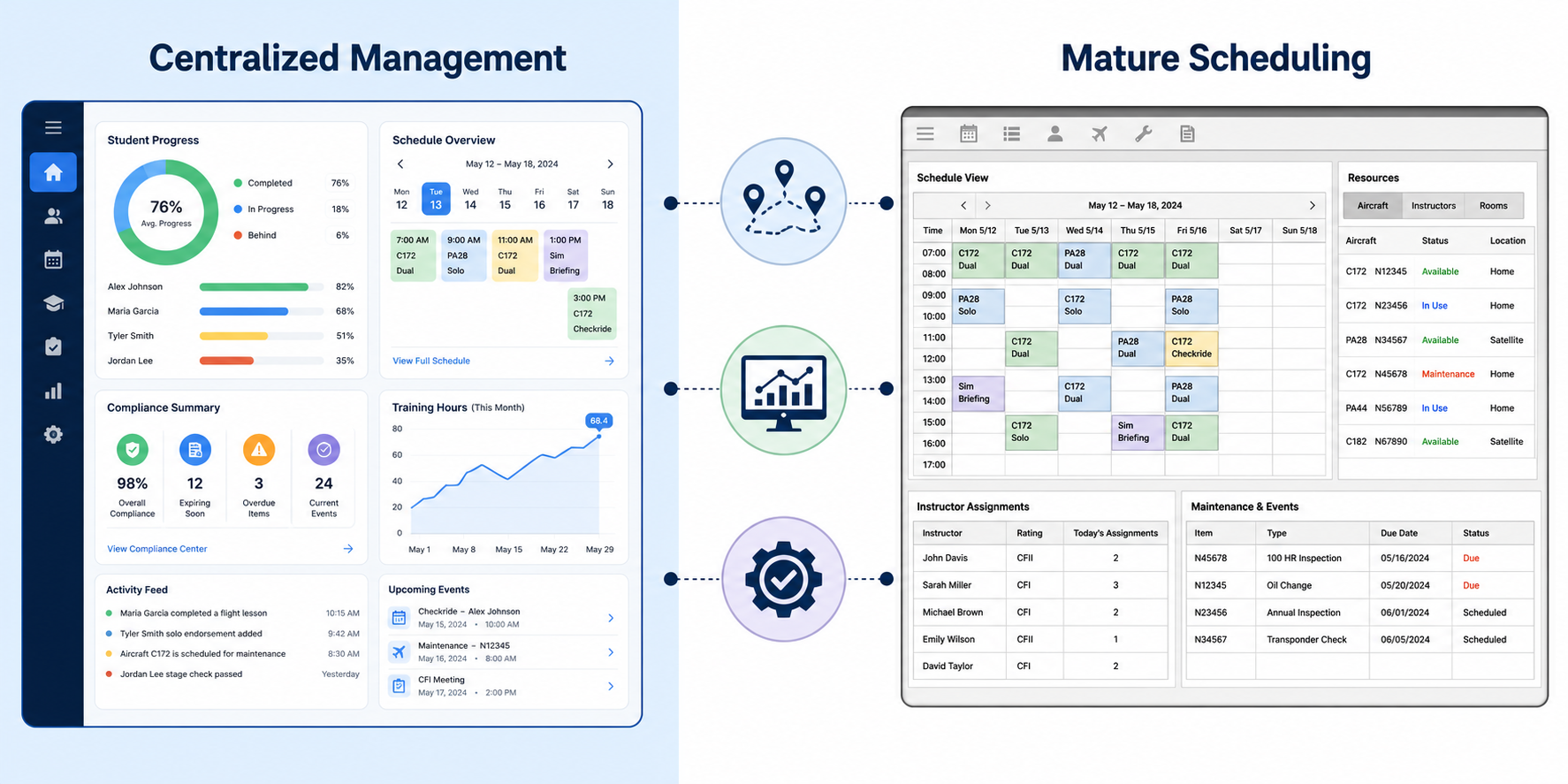
- FlightLogger centralizes scheduling, maintenance, and instructor data to eliminate gaps that cause operational disruptions.
- Building buffer time and backup protocols into daily schedules reduces the ripple effect of unexpected changes.
10 Lessons From Instructor and Aircraft Scheduling Breakdowns
1. Disconnected Systems Create Hidden Conflicts
When scheduling lives in one system and maintenance tracking lives in another, conflicts hide until someone discovers them manually. An aircraft scheduled for a student flight might already be booked for an oil change.
Integrating scheduling with maintenance tracking eliminates these blind spots. Every booking reflects real aircraft availability in real time.
2. Instructor Availability Data Gets Stale Fast
An instructor's schedule changes constantly. Vacation requests, sick days, and personal commitments create moving targets. When availability data lags behind reality, double bookings happen.
Dynamic availability tracking that updates in real time keeps every booking grounded in current information rather than outdated assumptions.
3. Single Points of Failure Multiply Risk
If only one aircraft can fly a specific training mission or only one instructor holds a required rating, your schedule depends entirely on their availability. One unexpected absence grounds multiple students.
Building redundancy into your operation means cross-training instructors and maintaining backup aircraft qualified for critical training stages.
4. Weather Delays Expose Weak Rescheduling Processes
A single weather day can affect dozens of flights. Without a clear rescheduling protocol, staff spend hours making phone calls and juggling calendars. Students fall behind. Instructors lose billable hours.
Automated notifications and centralized rescheduling tools allow rapid recovery. Students receive updates instantly, and alternative slots appear automatically.
5. Maintenance Timing Matters More Than Maintenance Frequency
Scheduling routine maintenance during peak training hours removes aircraft from your busiest periods. The timing creates more disruption than the maintenance itself.
Coordinating maintenance windows around training demand keeps aircraft flying when students need them most.
6. Student No-Shows Create Cascading Inefficiencies
An unreported student cancellation leaves an instructor waiting and an aircraft sitting. That lost slot could have gone to another student on the waitlist.
Automated reminders sent 24 hours before scheduled flights reduce no-shows significantly. When cancellations happen, notification systems can immediately alert waitlisted students to open slots.
7. Manual Scheduling Cannot Scale With Growth
A ten-aircraft operation running on shared calendars and phone calls reaches a breaking point quickly. Adding instructors, students, or locations multiplies complexity beyond what manual processes can handle.
Centralized scheduling platforms built for flight school capacity allow growth without proportional increases in administrative overhead.
8. Communication Gaps Cause More Breakdowns Than Equipment Failures
An aircraft returned with a squawk that never reached maintenance. An instructor scheduled for a flight they never knew about. A student waiting at the wrong location. These breakdowns trace back to communication failures.
Integrated messaging and resource management tools ensure every stakeholder receives relevant updates the moment changes occur.
9. Holiday Periods Amplify Existing Weaknesses
Reduced staff during holiday seasons exposes every scheduling vulnerability in your operation. Backup processes that worked during normal periods fall apart when half your team takes vacation.
Automated notifications, self-service booking adjustments, and clear escalation paths keep operations running when human oversight decreases.
10. Recovery Speed Determines Operational Impact
Every operation experiences disruptions. The difference between a minor inconvenience and a major setback depends on how quickly you can identify affected flights, notify stakeholders, and implement alternatives.
Systems with real-time visibility across scheduling, maintenance, and training status enable rapid response. When problems appear immediately, solutions follow faster.
Building Scheduling Resilience at Your Flight School
Scheduling breakdowns rarely happen in isolation. They reflect systemic gaps in visibility, communication, and coordination. Addressing individual incidents without fixing underlying patterns guarantees recurrence.
FlightLogger gives flight schools the connected platform needed to eliminate scheduling blind spots. With real-time data flowing between scheduling, maintenance, instructor management, and student records, problems surface before they disrupt training.
FAQs about Scheduling Breakdown Lessons for Flight Schools
What causes most flight school scheduling breakdowns?
Disconnected systems create the majority of scheduling breakdowns. When scheduling, maintenance, and instructor availability live in separate tools, conflicts hide until someone discovers them manually.
Integrating these functions into a single platform eliminates the gaps where problems develop unnoticed.
How can flight schools reduce instructor scheduling conflicts?
Real-time availability tracking keeps instructor schedules current as changes happen. Dynamic updates replace static spreadsheets that become outdated within hours of creation.
Cross-training instructors for multiple aircraft types and training stages also reduces dependency on specific individuals.
What role does maintenance timing play in scheduling efficiency?
Maintenance scheduled during peak training hours removes aircraft when demand peaks. Coordinating maintenance windows with training schedules keeps aircraft available during busy periods.
Integrated maintenance tracking also prevents bookings on aircraft already flagged for service.
How do weather delays affect flight school operations?
Weather cancellations create ripple effects across multiple days. Without efficient rescheduling processes, staff spend hours manually coordinating alternatives while students fall behind in their training progression.
Centralized scheduling with automated notifications enables rapid recovery from weather disruptions.
Why do manual scheduling processes fail as flight schools grow?
Manual processes work for small operations but cannot scale with complexity. Adding aircraft, instructors, or locations multiplies scheduling variables beyond what calendars and phone calls can manage effectively.
Dedicated flight school management software handles this complexity without proportional increases in administrative work.
How does FlightLogger help prevent scheduling breakdowns?
FlightLogger centralizes scheduling, maintenance, instructor management, and student records in one platform. Real-time data flows between all functions, surfacing conflicts before they disrupt operations.
Automated notifications, conflict detection, and integrated workflows eliminate the communication gaps that cause most scheduling breakdowns.