.png?width=201&height=201&name=Maintenance%20(Videoannonce%20%E2%80%93%20LinkedIn).png)

The Complete Guide to Flight School Scheduling Policy
 Amalie Rasmussen
·
9 minute read
Amalie Rasmussen
·
9 minute read

Key Takeaways: The Complete Guide to Flight School Scheduling Policy
- A written scheduling policy eliminates ambiguity and gives your instructors, students, and dispatchers one set of rules to follow.
- Connecting aircraft maintenance windows to your booking calendar prevents the most disruptive last-minute cancellations.
- Clear instructor availability rules and qualification checks stop double bookings before they happen.
- FlightLogger centralizes scheduling, maintenance, and student progress so your policy enforces itself automatically.
- Exception handling procedures for weather, illness, and equipment changes keep your operation moving when plans shift.
What Is a Flight School Scheduling Policy?
A flight school scheduling policy is a documented set of rules that govern how your operation books aircraft, assigns instructors, and schedules student training sessions. It defines who can book what, how far in advance, under what conditions, and what happens when things change.
Without a policy, scheduling decisions depend on whoever picks up the phone first. Two instructors get assigned the same aircraft. A student books a cross-country flight in a plane due for its 100-hour inspection. A check ride gets bumped because someone forgot to block the examiner's time.
A strong policy replaces these ad-hoc decisions with clear rules that protect your aircraft utilization, your instructor capacity, and your students' progression.
Why Does Your Flight School Need a Scheduling Policy?
Every flight lesson depends on at least three resources being available at the same time: a student, a qualified instructor, and an airworthy aircraft. As your operation grows past 50 or 100 students, the number of possible scheduling conflicts increases exponentially.
A scheduling policy does more than prevent double bookings. It creates operational consistency. Your front desk staff, dispatchers, chief flight instructor, and maintenance team all work from the same set of expectations. When a conflict arises, the policy tells them how to resolve it without escalating every decision to management.
Flight schools that operate under EASA, FAA, CASA, or other regulatory frameworks also benefit from a documented scheduling process. Inspectors expect to see structured operational procedures, and a clear scheduling policy supports audit readiness across your training records and resource documentation.
How to Define Aircraft Booking Rules
Aircraft are your primary revenue-generating assets. Your scheduling policy should spell out exactly how they get booked, by whom, and under what constraints.
Set Minimum and Maximum Booking Windows
Define how far in advance students and instructors can reserve aircraft. A booking window of 7 to 14 days works for many operations, giving students enough lead time to plan while keeping your schedule flexible enough to absorb changes.
Set a minimum booking duration as well. Many schools require a two-hour minimum for dual instruction flights. This protects your aircraft from being reserved for unreasonably short blocks that leave gaps too small for other lessons.
Establish Priority Rules for Aircraft Access
Not all bookings carry equal weight. Stage checks, check rides, and proficiency flights often need priority over routine dual instruction. Your policy should specify which training events take precedence and how conflicts between booking types get resolved.
For example, a student preparing for their FAA practical exam might receive scheduling priority over a student in early cross-country training. Documenting these rules eliminates arguments and gives dispatchers clear authority to reassign resources when conflicts arise.
Link Aircraft Status to Booking Availability
An aircraft that's due for inspection or undergoing maintenance should never appear as bookable. Your policy should require that maintenance status gets updated before any booking is confirmed.
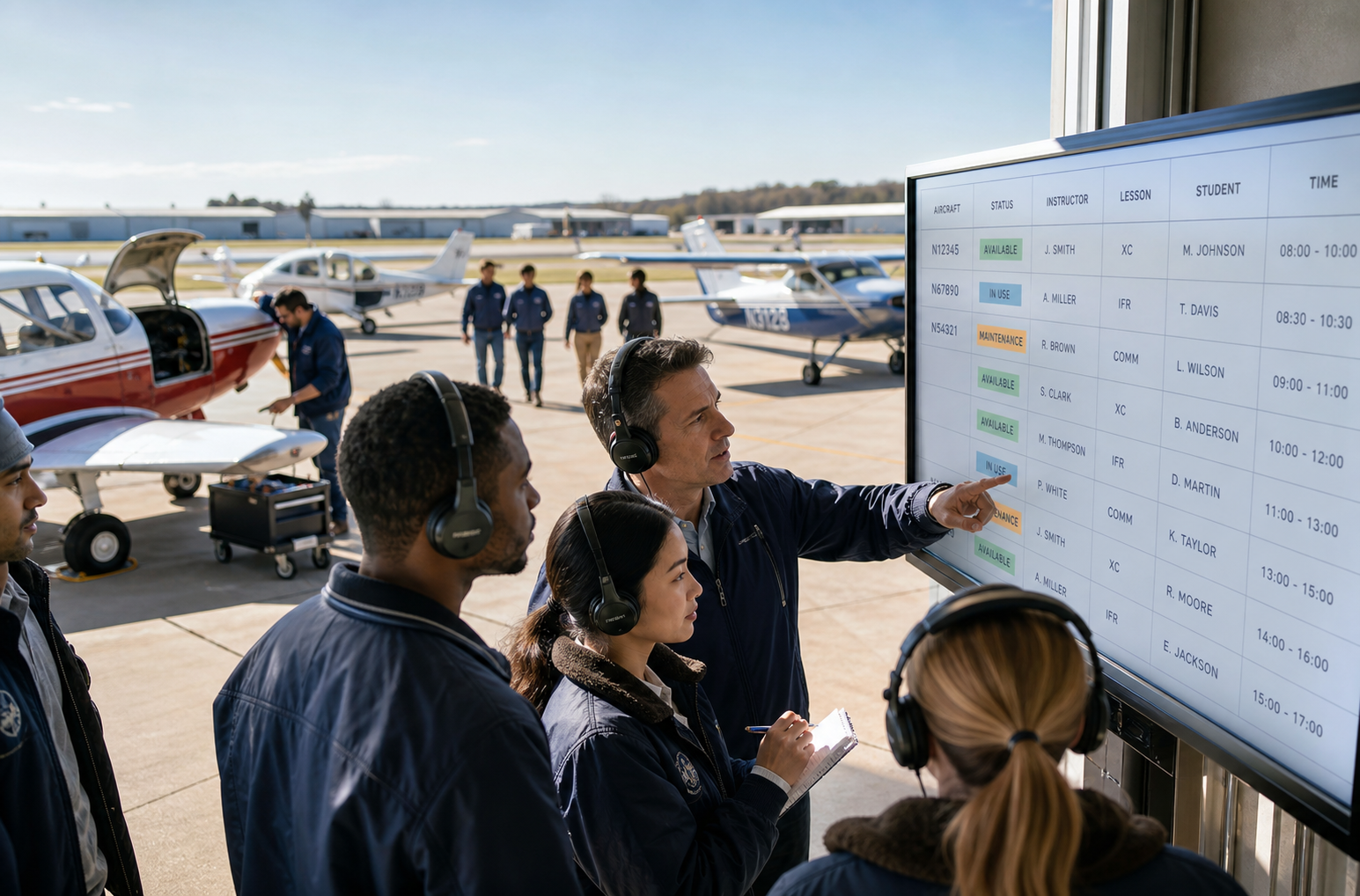
Syncing maintenance with flight scheduling eliminates the most common cause of last-minute cancellations. When your scheduling system reflects real-time aircraft status, dispatchers stop booking planes that aren't ready to fly.
How to Set Instructor Availability and Assignment Rules
Instructor capacity often becomes the bottleneck as your school grows. Your scheduling policy should define how instructor time gets managed, assigned, and protected.
Require Instructors to Update Availability in the System
Every instructor should maintain their availability in your scheduling platform, not through text messages or verbal updates. Your policy should set a deadline for availability submissions (for example, instructors submit their next week's availability by Friday noon).
When instructor availability lives in one system, dispatchers can see open slots, instructor qualifications, and duty time limits in a single view. This visibility is what prevents double bookings and overallocation.
Match Instructor Qualifications to Lesson Types
Your policy should enforce qualification checks before any booking is confirmed. A CFI authorized for instrument instruction is not interchangeable with one who holds a basic certificate. Check ride preparation requires a different instructor profile than a first solo lesson.
Documenting these matching rules protects training quality and regulatory compliance. It also reduces the back-and-forth that happens when a dispatcher assigns the wrong instructor and needs to reschedule mid-day.
Define Duty Time Limits and Workload Balancing
Your policy should reference applicable duty time regulations and set internal limits that keep instructors rested and effective. Beyond regulatory compliance, uneven workload distribution leads to burnout for some instructors and underutilization for others.
Include rules for workload balancing, such as maximum daily flight hours per instructor and required rest periods between teaching blocks. Monitoring instructor utilization data helps operations managers rebalance assignments before fatigue becomes a safety concern.
How to Coordinate Maintenance Windows with Training Schedules
Maintenance is one of the most common sources of scheduling disruption. When maintenance planning operates independently from your booking calendar, aircraft get scheduled for lessons they can't fly.
Build Maintenance Forecasting into Your Policy
Your scheduling policy should require operations staff to review upcoming maintenance events (100-hour inspections, annual inspections, component life limits) at least two weeks in advance. This lead time lets you route training around planned downtime rather than scrambling when an aircraft goes offline.
FlightLogger connects maintenance tracking with scheduling so your operations team sees inspection due dates alongside active bookings. When a maintenance window approaches, the system alerts staff before a conflict develops.
Establish Squawk Reporting Procedures
Your policy should require every pilot and instructor to complete a post-flight status report noting any discrepancies. Consistent squawk reporting catches small issues before they ground aircraft unexpectedly.
Define what constitutes a grounding discrepancy versus a deferred maintenance item. When instructors know exactly what to report (and how urgently), your maintenance team can address problems during scheduled downtime instead of pulling aircraft from the line without warning.
Define Aircraft Swap Procedures
When an aircraft becomes unavailable, your policy should outline how the dispatcher reassigns the lesson. Which aircraft serve as backups for which training types? Does the student need to be checked out in the replacement aircraft? Who has the authority to approve an aircraft swap?
Clear swap procedures keep operations moving. Instead of spending 30 minutes on phone calls and texts, your dispatcher follows a documented process and notifies everyone involved through the scheduling system.
What Should Your Cancellation and No-Show Policy Include?
Cancellations and no-shows waste instructor time and aircraft availability. Your scheduling policy needs clear rules that discourage late cancellations while remaining fair to students dealing with legitimate circumstances.
Set Cancellation Deadlines
A 24- to 48-hour cancellation window is standard across many flight schools. Students who cancel after the deadline may face a fee equivalent to one hour of aircraft and instructor time. Students who fail to show without any notice may be charged the full scheduled lesson rate.
These rules need to be communicated to students during enrollment and posted in your scheduling system. Consistent enforcement is key: a policy that gets waived regularly loses its effect.
Automate Reminders to Reduce No-Shows
Automated lesson reminders (sent 24 and 48 hours before the scheduled time) give students a chance to cancel or confirm. This reduces the no-show rate significantly and gives your dispatcher time to fill the open slot.
FlightLogger sends automated notifications that reduce no-shows during high-demand periods. When a student cancels through the system, the slot opens up immediately for rebooking.
Define Weather Cancellation Procedures
Weather-related cancellations are different from student-initiated cancellations. Your policy should clearly state that weather cancellations carry no penalty and outline how rescheduling works when weather delays affect multiple lessons.
Include a decision authority chain: who has the authority to cancel a full day of operations due to weather? Typically, the chief flight instructor or operations manager makes this call, and the scheduling system broadcasts the cancellation to all affected students and instructors.
How to Handle Exception Scenarios in Your Scheduling Policy
No scheduling policy can cover every situation. Your policy should include structured procedures for the exceptions that come up regularly in flight training operations.
Instructor Illness or Emergency Absence
When an instructor calls in sick, your policy should define the escalation path. Who gets notified first? Which backup instructors are qualified to take over? Can the lesson be reassigned, or does the student need to reschedule?
Maintaining a structured scheduling workflow with backup assignments reduces the disruption caused by unexpected absences. The goal is to keep the student's training on track even when the primary instructor isn't available.
Check Ride and Stage Check Priority
Check rides and stage checks represent critical milestones in a student's training. Your policy should give these events elevated scheduling priority, including reserved aircraft blocks and dedicated examiner time slots.
Some schools designate specific days or time windows for check rides so they don't compete with regular training for aircraft access. Document this approach in your policy so instructors and students can plan accordingly.
Holiday and Peak Season Scheduling
Training demand often shifts during holidays and summer months. Your policy should address how scheduling rules change during peak periods: tighter booking windows, adjusted cancellation deadlines, or restrictions on extended aircraft reservations.
FlightLogger's automated notifications during high-risk no-show periods help your operation maintain utilization even when student schedules become less predictable.
How to Enforce Your Scheduling Policy Across the Operation
A policy that exists on paper but isn't followed is worse than no policy at all. It creates false expectations and undermines trust between students, instructors, and administration.
Centralize Scheduling in One Platform
Enforcement starts with a single scheduling system that everyone uses. When bookings happen through one platform, your policy rules can be built into the system itself: minimum booking durations, qualification checks, maintenance blocks, and cancellation deadlines all get enforced automatically.
FlightLogger centralizes scheduling, maintenance, and student progress so your policy becomes part of daily operations rather than a document that sits in a binder.
Train Every Team Member on the Policy
Dispatchers, instructors, maintenance staff, and front desk personnel all need to understand the scheduling policy and their role in enforcing it. Include scheduling policy training in your onboarding process for new hires and review the policy during regular staff meetings.
When everyone understands the rules and the reasoning behind them, compliance improves naturally. Staff who understand why a 48-hour cancellation window exists are more likely to enforce it consistently.
Review and Update the Policy Regularly
Your scheduling policy should evolve as your operation grows. A policy written for a 30-student school won't serve a 200-student operation. Schedule quarterly reviews to assess whether current rules still fit your fleet size, instructor roster, and student volume.
Use operational data to inform updates. If your cancellation rate is climbing despite the current policy, the cancellation window or penalty structure may need adjustment. If certain aircraft are consistently overbooked, your priority rules may need recalibration.
What Metrics Should You Track to Evaluate Your Scheduling Policy?
A scheduling policy isn't finished once it's written. You need data to confirm it's working and to identify areas for improvement.
Aircraft Utilization Rate
Track the percentage of available flight hours that result in actual training. Low utilization often points to booking gaps, excessive buffer time, or maintenance conflicts that your policy should address.
No-Show and Late Cancellation Rate
Monitor how often students miss lessons or cancel after the deadline. A rising no-show rate may indicate that your reminder system needs improvement or that cancellation penalties aren't deterring late changes.
Schedule Fulfillment Rate
Measure how many booked lessons actually fly as scheduled. A low fulfillment rate suggests that your policy isn't preventing conflicts effectively. Dig into the causes: are they maintenance-related, weather-related, or instructor availability issues?
Rescheduling Frequency
High rescheduling rates consume dispatcher time and frustrate students. Track how often lessons get moved and categorize the reasons. Patterns in rescheduling data reveal which parts of your policy need strengthening.
How Does a Scheduling Policy Differ for Multi-Location Flight Schools?
Operating across multiple campuses introduces additional complexity. Your scheduling policy needs to account for shared resources, consistent standards, and campus-specific variables.
Define Resource-Sharing Rules
If aircraft or instructors move between locations, your policy must specify how shared resources get scheduled. Who has priority when two campuses need the same instructor? How far in advance must a cross-campus aircraft transfer be requested?
FlightLogger supports multi-campus operations with centralized data and location-specific scheduling views, giving your dispatchers visibility across the entire operation while respecting each campus's local workflow.
Standardize Core Rules, Localize Details
Your cancellation deadlines, booking windows, and priority rules should be consistent across locations. Local variables like weather patterns, airport operating hours, or campus-specific aircraft types can be adapted for each site.
Standardization ensures that a student transferring between campuses experiences the same scheduling expectations. It also makes cross-campus reporting and performance comparison possible.
In Conclusion: How to Build a Scheduling Policy That Works for Your Flight School
A scheduling policy prevents conflicts before they happen. It gives your dispatchers decision-making authority, your instructors predictable schedules, and your students confidence that their training stays on track.
Start by documenting your booking rules, instructor assignment procedures, maintenance coordination, cancellation deadlines, and exception handling processes. Then enforce those rules through a centralized scheduling platform that makes compliance automatic rather than optional.
Because behind every efficient flight school is a scheduling policy that connects aircraft, instructors, students, and maintenance into one operational workflow. FlightLogger never sleeps, so your operation keeps moving even when plans change.
Want a walkthrough? See how FlightLogger helps your flight school build and enforce a scheduling policy that keeps training on schedule.
FAQs About Flight School Scheduling Policy
What should a flight school scheduling policy include?
A flight school scheduling policy should cover aircraft booking rules, instructor assignment procedures, maintenance coordination, cancellation and no-show penalties, weather-related cancellation procedures, and exception handling for check rides and instructor absences. FlightLogger helps you enforce these rules automatically through centralized scheduling.
How do you prevent instructor and aircraft conflicts at a flight school?
You prevent conflicts by scheduling instructors and aircraft together in one system that checks qualifications, availability, and maintenance status before confirming any booking. FlightLogger gives dispatchers real-time visibility into every resource so double bookings get caught before they happen.
How far in advance should students book flight lessons?
A booking window of 7 to 14 days works for many flight schools. This gives students enough lead time to plan while keeping the schedule flexible for maintenance windows and instructor changes. Your scheduling policy should define the exact window based on your fleet size and student volume.
What is a good cancellation policy for a flight school?
A 24- to 48-hour cancellation deadline is common. Students who cancel after the deadline may be charged for instructor and aircraft time. No-shows are typically charged the full lesson rate. Communicate these rules clearly during enrollment and enforce them consistently.
How do weather cancellations affect flight school scheduling?
Weather cancellations should carry no penalty for students. Your policy should define who has the authority to cancel operations (typically the chief flight instructor) and how the scheduling system notifies all affected parties. FlightLogger broadcasts weather cancellations automatically to every student and instructor on the day's schedule.
How often should a flight school update its scheduling policy?
Review your scheduling policy at least quarterly. As your student count, fleet size, and instructor roster change, your booking rules and priority structures may need adjustment. Use scheduling data (utilization, no-show rates, rescheduling frequency) to identify which rules are working and which need revision.